How to Safely Remove Creases from Leather Air Jordan 1s at Home
The Air Jordan 1 is a timeless silhouette. From its OG colorways to modern releases, the 1 has become a staple for collectors, sneakerheads, and casual wearers alike. But there’s one common issue that almost every Air Jordan 1 owner faces: creases in the leather.
Creasing happens naturally over time as the sneaker bends while walking, especially in the toe box area. While some sneaker enthusiasts embrace this as a sign of authentic wear, others prefer to maintain a pristine, “deadstock” look. Fortunately, there are safe, effective ways to reduce or remove creases at home, preserving the structure and aesthetics of your leather Air Jordan 1s.
In this guide, we’ll focus on the steam and cloth method, one of the safest and most accessible techniques. We’ll also discuss preventive tools like crease protectors and shoe trees, helping you keep your kicks fresh from day one.
Crease management is key to preserving sneaker value and aesthetics. Explore our Sneaker Care & Longevity hub for a complete guide to maintaining leather, midsoles, and other materials across your collection.
Why Leather Air Jordan 1s Crease
Understanding why creases form is the first step to addressing them:
- Material properties: Leather is flexible and stretches with movement. Over time, repeated bending creates permanent folds.
- Toe box pressure: Most creases appear in the toe area because that’s where the foot flexes most.
- Size and fit: Sneakers that are slightly too big or too small can crease more, as your foot moves excessively inside the shoe.
- Daily wear: Regular walking naturally causes creasing, even in perfectly fitted shoes.
Because the leather on Air Jordan 1s is generally full-grain or premium synthetic leather, it responds well to careful, controlled techniques like steaming, but aggressive methods can permanently damage the shoe.
Tools You’ll Need for the Steam and Cloth Method
Before starting, gather the following items:
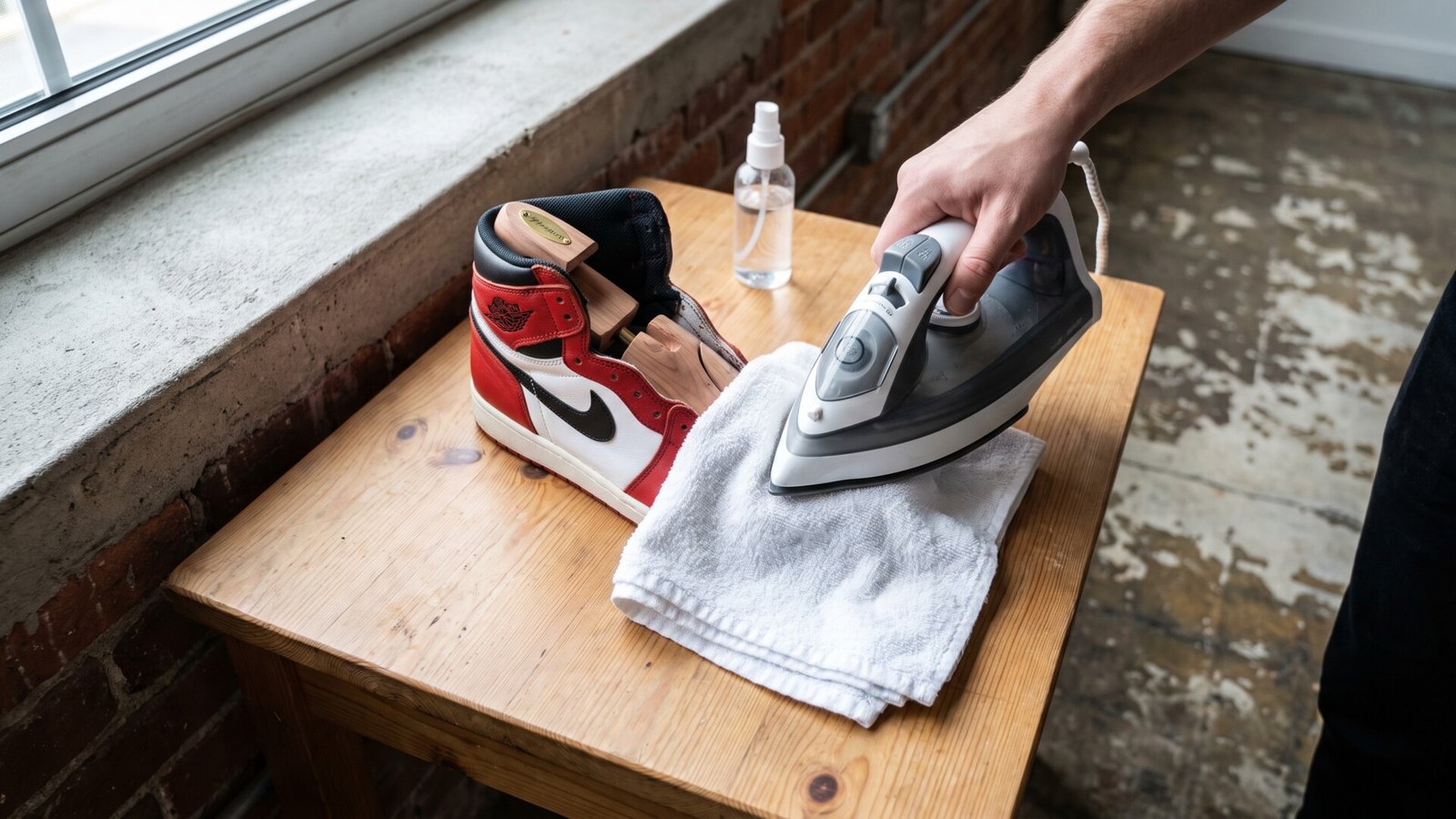
- A clean cotton cloth or microfiber towel – This acts as a buffer between the heat and leather.
- An iron or steam source – For generating gentle, controlled heat.
- Crease protectors or shoe trees – Prevent future creasing while the shoe dries.
- Spray bottle (optional) – For lightly misting the cloth if needed.
- Protective surface – Ironing board, towel, or countertop to work safely.
Affiliate tip: Many sneakerheads pair this method with Air Jordan crease protectors or high-quality wooden shoe trees, which help maintain shape over time.
Step 1: Clean the Sneakers
Before applying heat, it’s essential to remove dirt and dust from the leather:
- Wipe the entire shoe with a dry microfiber cloth.
- If necessary, use a small amount of leather cleaner to remove stains, then let the shoe dry completely.
Why this matters: Heat applied to dirty leather can set dirt into the surface, making stains harder to remove later. Clean leather also responds better to reshaping.
Step 2: Insert Crease Protectors or Shoe Trees
- Slide crease protectors or shoe trees into the sneakers to fill out the toe box.
- Make sure the shoe is snugly supported; the goal is to gently push the leather back to its original shape.
Tip: Plastic or silicone crease protectors are easy to use for daily wear, while wooden shoe trees are excellent for long-term sneaker maintenance.
Step 3: Prepare the Cloth for Heat Application
- Take a clean, slightly damp cotton cloth.
- The cloth acts as a barrier between the heat and the leather, preventing scorching or shiny marks.
- Ensure it’s not soaking wet—too much water can damage the leather.
Step 4: Generate Gentle Steam
There are multiple ways to produce steam safely at home:
- Steam from an iron:
- Hold the iron slightly above the cloth (do not touch the leather directly).
- Use the steam function to lightly moisten the cloth.
- Boiling water method:
- Boil a small pot of water and hold the sneaker above the steam for a few seconds.
- Keep the shoe at a safe distance (6–8 inches) to avoid over-saturating the leather.
Important: Excessive steam can saturate the leather, causing warping, discoloration, or water stains. The goal is to soften the fibers, not soak them.
Step 5: Press and Smooth the Leather
Once the leather is slightly softened:
- Place the damp cloth over the creased area.
- Using your hands, gently press and smooth the leather through the cloth.
- Apply light pressure along the crease line, working from the edges toward the center.
Tip: Avoid using excessive force—air Jordan leather is durable, but aggressive pressure can leave permanent marks.
Step 6: Allow the Leather to Dry
- Keep the crease protector or shoe tree inside the sneaker while the leather dries.
- Let the shoe dry naturally at room temperature; avoid direct sunlight or heaters, which can stiffen or crack the leather.
Drying can take 1–2 hours, depending on the moisture level and ambient temperature.
Step 7: Inspect and Repeat if Necessary
- Once dry, check the crease.
- If the leather is still slightly folded, repeat the steam-and-press process.
- Multiple light applications are safer than one aggressive session.
Tip: Consistency is key. Over time, gentle maintenance will reduce creasing significantly without risking the leather.
Preventive Measures for Air Jordan 1s
While you can remove creases, prevention is always easier than correction.
1. Use Crease Protectors
- These inserts are placed inside the toe box before wearing.
- They keep the leather stretched and absorb pressure from walking.
- Affordable and effective, perfect for daily wear sneakers.
2. Use Shoe Trees
- Wooden shoe trees expand gently inside the sneaker to maintain structure.
- They also absorb moisture, reducing odor and premature wear.
- Best for Air Jordan 1s stored at home or for collectors keeping shoes pristine.
3. Proper Fit
- Shoes that are too loose allow the foot to slide, increasing creasing.
- Shoes that are too tight put excess pressure on the toe box.
- Ensure your Air Jordan 1s fit snugly but comfortably.
4. Avoid Excessive Walking in New Shoes
- Limit walking on hard surfaces in brand-new sneakers.
- Break them in slowly while wearing crease protectors to shape the leather gradually.
Additional Tips and Considerations
- Leather Conditioner: After steaming, apply a light leather conditioner to maintain softness and prevent drying. Use sparingly to avoid altering the finish.
- Avoid Hair Dryers: Direct heat from hair dryers can damage the leather, leaving shiny spots or cracking.
- Spot Test First: If your Air Jordan 1s are vintage or limited edition, test the steam-and-cloth method on a small, hidden area first.
- Be Patient: Removing creases takes time. Multiple gentle sessions are safer than aggressive treatment.
Common Mistakes to Avoid
- Direct Iron Contact: Never press an iron directly on leather; it will leave permanent marks.
- Over-Saturating: Excess water or steam can warp leather or leave stains.
- Ignoring Fit: Crease protection is less effective if the shoe is poorly fitted.
- Rushing Drying: Let the leather air-dry fully before removing shoe trees or protectors.
- Using Harsh Chemicals: Avoid standard cleaning sprays or solvents—they can discolor or stiffen leather.
Affiliate Recommendations for Crease Prevention
- Plastic Crease Protectors – Perfect for daily wear to prevent future toe box creasing. (affiliate link)
- Wooden Shoe Trees – Ideal for long-term storage and structural maintenance. (affiliate link)
- Leather Conditioner – Optional step to keep leather soft and supple after steaming. (affiliate link)
Conclusion
Creases on Air Jordan 1s are a normal part of wearing leather sneakers, but they don’t have to be permanent. Using the steam-and-cloth method combined with crease protectors or shoe trees allows you to safely reduce existing creases while preventing future ones.
The key is gentle, consistent care: soft steaming, careful smoothing, and slow drying. Aggressive approaches may risk damaging the leather, but with patience and the right tools, your Air Jordan 1s can maintain a crisp, near-deadstock look for years.
Whether you’re a collector wanting to keep your OG colorways pristine or a casual wearer aiming for clean, stylish sneakers, this method is an accessible, safe, and effective solution. Pair it with preventive measures, and creases will become far less of a concern in your sneaker rotation.