Converse All Star Maintenance Guide
Converse All Stars are about as simple as a sneaker gets: a cotton canvas upper, a rubber sole and not much else. That simplicity is why they are easy to love and also why they get dirty fast. Canvas soaks up whatever it touches, and white rubber shows every scuff. The good news is that you do not need a pile of products to keep a pair looking good. You need the right method for each material, patience while they dry, and a couple of habits that stop small marks becoming permanent ones.
This guide covers how to clean Converse by hand, which supplies are worth having, how to deal with specific stains and yellowing soles, how to care for the Converse range differently depending on the model, and what a sensible maintenance routine costs compared with replacing the shoes. If you are still choosing a pair, our Converse sneakers overview and the wider sneaker brands hub are good places to start.
Quick Answer: How to Clean Converse All Stars
- Remove the laces and, if you can, the insoles.
- Dry-brush off loose dirt and dried mud.
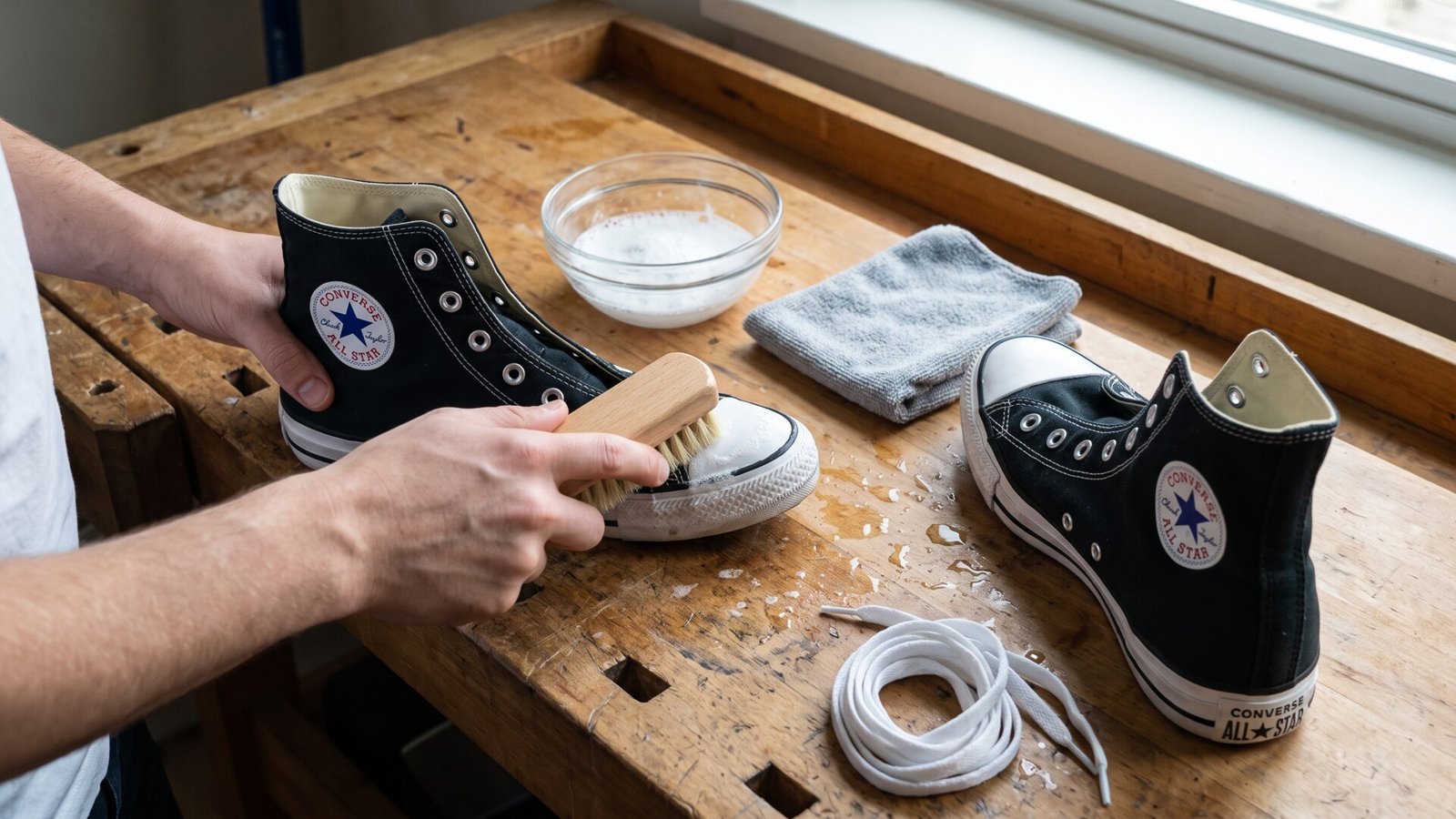
- Scrub the canvas gently with a soft brush and a little mild detergent in lukewarm water.
- Clean the rubber sidewalls and toe cap with a melamine (magic) sponge.
- Blot with a clean cloth, stuff with paper and air-dry away from heat and direct sun.
Cleaning Converse All Star
Understanding the Material
Before you start scrubbing, know what you are working with. A classic Chuck Taylor All Star has a canvas upper, a rubber toe cap and foxing strip, and a vulcanized rubber sole. There is no leather or suede on the standard canvas models, which keeps care simple.
Canvas is a woven cotton fabric. It is breathable and flexible, but it is also porous, so dirt and liquids sink into the fibers if you leave them. Rubber is tougher but scuffs easily and can yellow with age, sun exposure and some chemicals. The practical takeaway is that canvas and rubber need different treatment: gentle and damp for the fabric, slightly more abrasive for the rubber.
Chuck Taylor All Star vs. Chuck 70: Does Care Differ?
The method is the same, but the two versions behave a little differently. The Chuck 70 uses a heavier canvas (Gear Patrol cites 12-ounce canvas), a thicker, more cushioned insole and a rubber foxing with a creamier, slightly glossy finish. Heavier canvas holds more water, so it takes noticeably longer to dry. The cream-toned rubber also shows yellowing less obviously than the bright white of the standard All Star, but it picks up scuffs the same way. Colored and black pairs fade faster than white if you scrub hard, so use less pressure and test any cleaner on a hidden spot first.
| Model | Typical US price | Care notes |
|---|---|---|
| Chuck Taylor All Star (classic) | Roughly $60-$80 | Lighter canvas, dries faster, bright white rubber shows scuffs and yellowing most |
| Chuck 70 | Roughly $85-$100 | Heavier canvas and more cushioned insole, slower to dry, avoid soaking the insole |
Essential Cleaning Supplies
You do not need a full lab setup. Start with the basics and add more later:
- Soft-bristle brush – A sneaker brush such as the Reshoevn8r brush, or a soft nail or toothbrush for edges. Avoid wire brushes, which shred canvas.
- Mild detergent – A dye-free liquid detergent such as Tide Free & Gentle works well. Avoid bleach, which can discolor canvas and yellow rubber.
- White vinegar – Useful diluted for some stains and odors.
- Microfiber cloths – For blotting and drying without leaving lint.
- Melamine sponge – Mr. Clean Magic Eraser is the usual choice for rubber sidewalls and toe caps.
- Optional: sneaker cleaner – Jason Markk Premium Shoe Cleaner is a popular option and its maker lists it as suitable for canvas, leather, suede and mesh.
A basic kit costs far less than a new pair of shoes, and you can build it up over time. If you are shopping for supplies, our Converse hub links related guides.
Step-by-Step Cleaning Process
1. Preparation
Remove the laces and insoles and clean them separately. Knock the shoes together outside to shed loose dirt. If there is dried mud, scrape and brush it off dry first. Adding water to caked mud turns it into a paste that works deeper into the weave.
2. Surface cleaning
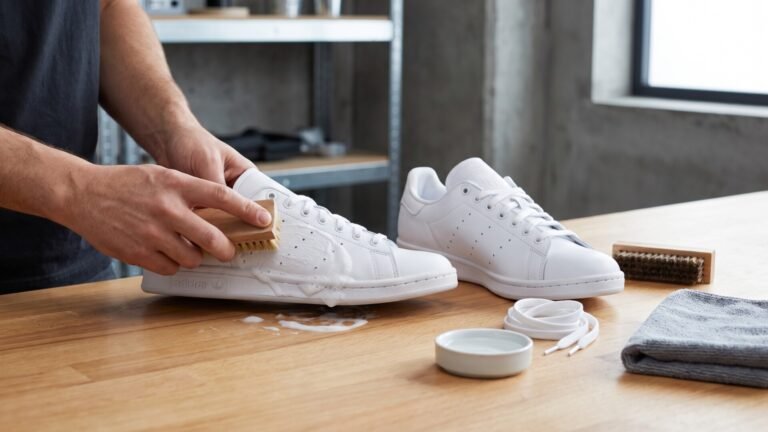
Fill a bowl with lukewarm water and add a small amount of mild detergent. Dip the brush and scrub the canvas in small circles with light pressure. Too much force frays the weave. For the rubber, dampen a melamine sponge and wipe the sidewalls, foxing strip and toe cap. It lifts scuffs well on white rubber; on colored or printed rubber, test a small area first, because the sponge is mildly abrasive and can dull the finish.
3. Deep cleaning for stubborn marks
For set-in stains, mix one part white vinegar with two parts water and blot the area with a microfiber cloth. Let it sit a few minutes, then brush gently. For tougher spots, a paste of baking soda and water applied to the stain, left to dry and brushed off is a long-standing home method. Keep vinegar and baking soda away from colored canvas until you have spot-tested them.
4. Drying
Do not use a dryer, radiator or hairdryer, and keep the shoes out of strong direct sun. Heat can weaken the adhesive that bonds the sole to the upper and can warp the rubber. Stuff the shoes with white paper towels or clean cloth, which helps them hold their shape and pulls out moisture, and let them air-dry in a ventilated spot. Expect around a day, and longer for a Chuck 70. Reinsert dry laces and insoles once everything is fully dry.
Washing Machine: Should You?
Hand cleaning is the safer choice. Machine agitation and heat are what most often damage the glue, warp the toe cap and leave canvas misshapen, which is why we do not recommend it. Some owners do run canvas pairs on a cold, gentle cycle in a laundry bag, but we have not tested this and cannot say it is safe for every model, so treat it as a last resort and never use hot water or a dryer.
Fixing Specific Problems
Yellowing Soles
White rubber yellows with age, sun exposure and some residues. Regular cleaning with a melamine sponge slows it down, and storing shoes out of sunlight helps. Heavy yellowing is hard to reverse at home. Avoid bleach and strong solvents, which can make it worse or damage nearby canvas. If the discoloration bothers you, a dedicated sole-restoration service is the usual route.
Odor
Wash the insoles by hand, let the shoes dry completely, and leave baking soda inside overnight, then tap it out. Rotating pairs so each gets a day to dry between wears prevents most smell problems, because Chucks have little ventilation beyond the side eyelets.
Laces
Laces are the cheapest way to make an old pair look new. Wash them by hand in detergent and water, or swap in a fresh pair of the same length and color.
Common Stains
- Grass – Blot with diluted white vinegar, rinse with a damp cloth and air-dry.
- Mud – Let it dry fully, brush off the excess, then clean with your detergent solution.
- Food and drink – Blot (do not rub) to lift as much as possible, then spot-treat with mild detergent.
- Oil or grease – Blot, sprinkle on baking soda or cornstarch for a few hours to absorb it, brush off, then clean as normal.
Speed matters most. A stain treated the same day usually comes out; one that has been through a few wears often does not.
Maintenance Tips for Longevity
Regular Upkeep
You do not need to wash Chucks after every wear. A quick dry-brush after wearing removes surface dust, and spot-treating marks right away saves a full wash later. A deeper clean every few weeks is plenty for casual wear.
Store pairs on a shelf or in a box rather than in a pile, away from heat and sunlight. Tissue or a shoe tree helps the high-tops keep their shape, and rotating between pairs lets the canvas dry out fully.
Preventative Care
A water-and-stain repellent spray makes cleaning easier. Nikwax Fabric & Leather Proof is one option made for fabric uppers; Crep Protect is another sneaker-specific spray. Apply it to clean, dry shoes in a ventilated area, let it dry fully, and reapply after washing or heavy wear. Repellents slow staining but do not make canvas waterproof, so you will still need to clean the shoes.
Small Repairs
Check the eyelets, the join between sole and canvas, and the heel for early wear. Small gaps in the sole bond can often be fixed by a cobbler with shoe-specific adhesive, which is far cheaper than replacing the pair. Rusting metal eyelets are cosmetic at first but can stain surrounding canvas, so keep shoes dry and avoid storing them damp.
When to Seek Professional Help
DIY has limits. If you are dealing with deep-set stains, persistent odor or structural damage, a professional sneaker-cleaning service or a cobbler is worth considering. Signs it is time to hand them off:
- Stains that will not budge after several gentle methods.
- Heavily yellowed soles on a pair you want to keep.
- Odor that returns after cleaning and thorough drying.
- Glue separation or sole damage, which is a repair job rather than a cleaning one.
Prices vary widely by city and service, so get a quote first and compare it with the cost of a replacement pair.
Cost-Per-Wear Analysis
A pair of classic Chuck Taylor All Stars typically retails for roughly $60 to $80, with the Chuck 70 around $85 to $100. Say you pay $70 and wear them three times a week for a year, about 156 wears. That works out to roughly $0.45 per wear. If good care gets you two years out of them, it drops to about $0.22. If neglect means the sole separates or the canvas rots after six months, you are closer to $0.90 per wear, around double. These are illustrative numbers, not a lab result, but the direction is clear: a small supply kit and 15 minutes every few weeks is the cheapest way to stretch a pair.
Why Converse Care Matters
The All Star dates back to 1917, and the Chuck Taylor name was added in the early 1920s. Converse has been owned by Nike since 2003, and the Chuck 70 reissue arrived in 2013 with heavier canvas and a more cushioned insole than the standard model. The shoe has stayed a streetwear staple, and the Chuck 70 in particular has been the base for collaborations with labels including Comme des Garçons PLAY and Off-White. Whether you wear a plain black pair or chase limited releases, clean canvas simply looks better, and cared-for pairs keep their shape for longer. If you collect collaborations, see our guide to limited-edition Converse collaborations.
Resale prices for collaboration pairs swing widely by platform and release, so we do not quote figures here. As a general rule, pairs in clean condition with the box tend to be easier to sell than worn ones.
Which Care Routine Fits You?
- Casual weekend wearer – A soft brush, mild detergent and a melamine sponge are enough. Clean every few weeks.
- Rotation owner – Add a sneaker cleaner, repellent spray and shoe trees. Rotating pairs is your biggest durability win.
- Student or tight budget – A brush, dish soap and vinegar do the job. Skip premium products.
- Office or smart-casual wearer – Keep a small cloth and sponge at your desk for quick touch-ups. Black or navy pairs hide marks best.
- Frequent traveler – Use a repellent spray and pack a cloth. Do not pack damp shoes in a bag.
Related Reading
- Converse Sneakers: A Legacy of Culture, Style, and Timeless Design
- Limited Edition Converse Collaborations
- Sneaker Brands
Conclusion
Good Converse care comes down to a few habits: brush off dirt early, clean by hand with mild products, keep heat and bleach away, dry slowly with paper inside, and rotate pairs. Do that and a pair that costs well under $100 can look good for years rather than months.
Frequently Asked Questions About Cleaning Converse All Star
How often should I clean my Converse All Stars?
Brush off loose dirt after wearing and spot-clean marks as they appear. A fuller hand clean every few weeks is enough for regular wear; if you wear one pair daily, expect to clean more often.
Can I put my Converse All Stars in the washing machine?
We don’t recommend it. Agitation and heat can weaken the glue, warp the rubber and misshape the canvas. Hand cleaning is the safer option, and you should never put them in a dryer.
What's the best way to remove stubborn stains?
Blot with diluted white vinegar, or apply a baking soda and water paste, then brush gently with a soft brush and wipe with a damp cloth. Spot-test on colored canvas first.
How can I keep the white soles of my Converse clean?
Wipe them regularly with a damp melamine sponge and store the shoes out of direct sunlight. Yellowing from age is hard to fully reverse, and bleach can make it worse.
Are there any tips for cleaning colored or black Converse?
Test any cleaner on a hidden area first, use light pressure and mild detergent, and avoid bleach, acetone and abrasive scrubbing, which can fade dye.
Do Chuck 70s need different care from regular Chuck Taylors?
The method is the same, but the Chuck 70 has heavier canvas and a more cushioned insole, so it holds more water and takes longer to dry. Avoid soaking the insole.