New Balance 990 vs 574 Comparison
A deep, practical look at comfort, quality, style, and long-term wear
Few sneaker brands balance heritage and everyday usability like New Balance. And within their lineup, two models come up again and again when people are choosing a pair they can actually live in: the New Balance 990 and the New Balance 574. On the surface, they share a similar retro-running DNA. In practice, they’re built for very different types of wearers, budgets, and expectations.
This guide breaks things down clearly. We’ll look at materials, construction, comfort, sizing, durability, styling, and value, all from the perspective of real-world, all-day wear—not marketing hype. If you’re trying to decide between the 990 and the 574, this should give you a confident answer by the end.
This head-to-head is part of our complete Sneakers Comparisons series, where we break down the most iconic models side by side.
Quick Overview: What These Sneakers Represent
Before getting into details, it helps to understand what each model is meant to be.
The New Balance 990 is the brand’s flagship lifestyle-running hybrid. It’s positioned as a premium sneaker, originally designed as a high-performance runner and now worn mostly as an everyday shoe. It’s made in the USA, uses higher-grade materials, and is built for long hours on foot.
The New Balance 574, on the other hand, is the accessible classic. It’s one of New Balance’s most recognizable silhouettes and serves as an entry point into the brand. It’s casual, versatile, and designed to be worn comfortably without feeling overengineered.
Both are icons—but they serve different purposes.
Design & Aesthetic Differences
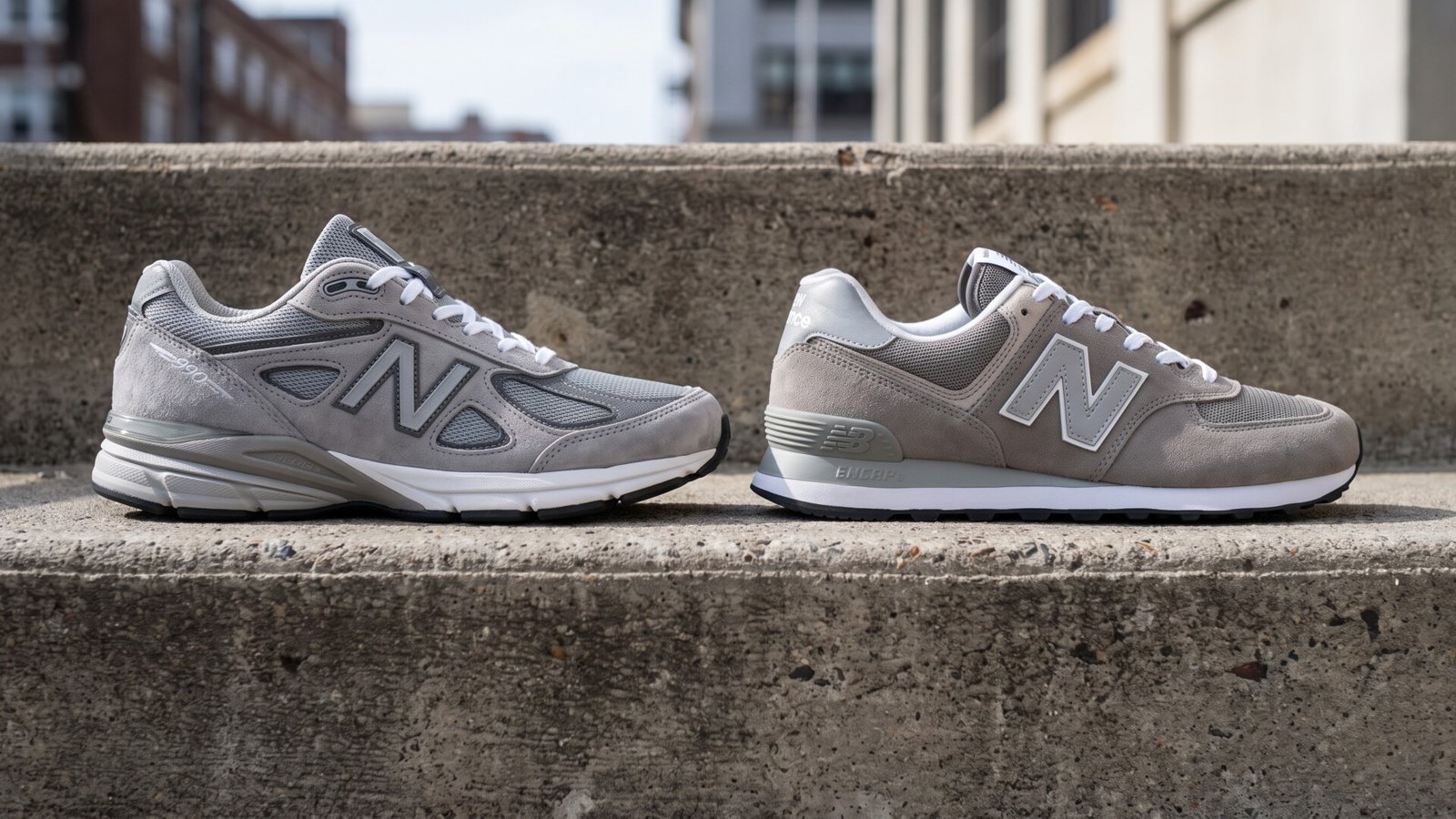
At first glance, the 990 and 574 look closely related. But once you wear them side by side, the design intent becomes obvious.
New Balance 990 Design Language
The 990 has a more complex, layered construction. You’ll notice:
- Multiple suede and mesh panels
- A thicker midsole with visible tech cues
- A slightly more technical, performance-oriented shape
The silhouette feels intentional and structured. It doesn’t try to be sleek. Instead, it embraces that “dad sneaker” look—but in a refined, confident way. The proportions are balanced, not exaggerated, which is why the 990 works with modern outfits despite its bulk.
Different versions (v3, v4, v5, v6) tweak the design slightly, but the overall visual identity stays consistent: understated, premium, and functional.
New Balance 574 Design Language
The 574 is simpler and more relaxed. The paneling is cleaner, the midsole slimmer, and the overall shape more casual. It feels less technical and more lifestyle-focused.
This simplicity is part of why the 574 works so well:
- It doesn’t dominate an outfit
- It pairs easily with jeans, chinos, or shorts
- It feels familiar, almost timeless
If the 990 looks like a performance runner that evolved into a lifestyle icon, the 574 looks like a lifestyle sneaker that borrowed running cues.
Materials & Build Quality
This is where the difference becomes impossible to ignore.
990 Materials
The 990 is known for premium suede, breathable mesh, and dense foam components. The suede panels feel thicker and more substantial, with a soft texture that holds its shape over time. Stitching is clean, consistent, and reinforced in high-stress areas.
Because most 990s are Made in USA, quality control tends to be higher. You can feel it when you pick them up:
- The shoe has noticeable weight
- The sole feels dense, not hollow
- The upper resists creasing better than cheaper models
This is a sneaker designed to be worn hard without falling apart.
574 Materials
The 574 uses suede and mesh as well, but the quality is more variable depending on the colorway and production run. The suede is thinner, and the mesh is more basic. That’s not necessarily a negative—it keeps the shoe lightweight and affordable—but it does affect longevity.
Over time, you may notice:
- Faster creasing
- Suede flattening or losing texture
- Less structural support in the heel and midfoot
The 574 isn’t fragile, but it’s clearly built to a different price and performance point.
Comfort & Cushioning
Comfort is often the deciding factor—and this is where the two models separate completely.
990 Comfort for All-Day Wear
The 990 is built for people who are on their feet for hours. It uses ENCAP midsole technology, combining soft EVA foam with a firmer polyurethane rim. This setup provides:
- Plush cushioning without sinking too much
- Stability during long walks
- Reduced foot fatigue
The midsole absorbs impact well, especially on concrete. The heel feels supportive, the arch has structure, and the forefoot allows natural movement. It’s the kind of comfort that doesn’t feel impressive for five minutes—but becomes obvious after five hours.
Many people choose the 990 specifically because it helps with:
- Standing all day
- Long city walks
- Lower back or knee discomfort
574 Comfort for Casual Use
The 574 is comfortable—but in a lighter, simpler way. The EVA foam midsole is soft initially, but it compresses faster. For short walks, commuting, or casual wear, it feels perfectly fine.
However, during extended wear:
- Cushioning feels thinner
- Support becomes less noticeable
- Fatigue sets in sooner compared to the 990
The 574 is ideal for everyday errands, light walking, and relaxed use. It’s not designed to be a workhorse comfort sneaker.
Fit & Sizing Comparison
Fit is another area where intent matters.
990 Fit
The 990 generally fits true to size, but it has a more structured feel. The toe box is moderately roomy, and the midfoot offers solid support without squeezing.
Key fit traits:
- Good option for wider feet
- Stable heel lockdown
- Supportive arch
Because of its structure, the 990 feels secure without feeling restrictive. If you’re between sizes or have orthotics, it’s usually more forgiving.
574 Fit
The 574 also fits true to size, but it feels narrower and less supportive overall. The toe box is slightly tighter, and the midfoot doesn’t offer the same level of containment.
This works fine for:
- Normal-width feet
- Casual wear
- Short-term use
If you have wider feet or need more structure, the 574 may feel less stable over time.
Durability & Long-Term Wear
990 Longevity
The 990 is built to last. With regular wear, it tends to:
- Hold its shape longer
- Maintain cushioning integrity
- Show wear slowly and evenly
Many people wear the same pair of 990s for years. Even when the outsole starts to show wear, the upper often still looks good.
574 Longevity
The 574 holds up reasonably well, but it’s not designed for heavy daily use. Over time:
- The midsole compresses
- The outsole wears faster
- The upper loses structure
It’s still durable for the price—but it’s not a sneaker you buy expecting multi-year daily wear.
Style & Outfit Versatility
990 Styling
The 990 works best with:
- Relaxed or straight-leg jeans
- Tailored joggers
- Casual trousers
- Minimal streetwear fits
It leans into that “intentional dad sneaker” aesthetic. It looks best when styled confidently—not hidden.
574 Styling
The 574 is more flexible in casual outfits:
- Slim or straight jeans
- Shorts
- Everyday casual fits
It blends in easily, which is part of its appeal. It doesn’t demand attention.
Price & Value Perspective
This isn’t about numbers—it’s about what you’re paying for.
The 990 costs more, but you’re paying for:
- Premium materials
- Better comfort
- Made-in-USA craftsmanship
- Long-term durability
The 574 costs less, and offers:
- Solid everyday comfort
- Classic design
- Easy styling
- Good value for casual wear
Neither is overpriced—they’re just built for different expectations.
Who Should Choose the New Balance 990?
Choose the 990 if:
- You walk or stand a lot
- Comfort is a top priority
- You want a sneaker that lasts years
- You appreciate premium construction
- You like a more substantial silhouette
It’s a sneaker you buy once and rely on.
Who Should Choose the New Balance 574?
Choose the 574 if:
- You want a classic, easy sneaker
- You don’t need all-day cushioning
- You prefer lighter shoes
- You’re building a casual rotation
- You want strong value without overthinking it
It’s simple, familiar, and dependable.
Final Thoughts
The New Balance 990 vs 574 comparison isn’t about which shoe is better—it’s about which one fits your life.
The 990 is a premium, comfort-first sneaker built for real wear. It’s structured, supportive, and designed to handle long days without breaking down. The 574 is relaxed, accessible, and versatile—a sneaker that works effortlessly in casual settings.
Both represent New Balance at its best, just at different levels of intention.
If you want something you can forget about while wearing all day, the 990 is worth it. If you want something classic, comfortable, and easy to style, the 574 still delivers.
And honestly, many people end up owning both—for good reason.
Still deciding? Explore more model breakdowns in our full Sneakers Comparisons collection.
If you’re mad about New Balance, make sure to also check our New Balance 550 vs 2002R Comparison page.