Tinker Hatfield’s Top Design Lessons
When people talk about sneaker design, Tinker Hatfield isn’t just part of the conversation—he is the conversation. His work reshaped how sneakers look, feel, and communicate ideas. More importantly, his philosophy changed how designers think about footwear as a system of storytelling, performance, and emotion.
Hatfield didn’t come from a traditional design background. He was trained as an architect, and that outsider perspective allowed him to question assumptions others accepted as rules. Over decades at Nike, he helped create some of the most influential sneakers ever made, while consistently explaining why design matters—not just how it’s done.
This article breaks down Tinker Hatfield’s most important design lessons, using his own words as much as possible. Not as motivational soundbites, but as practical frameworks that still apply today.
1. Design Should Start With the Human, Not the Product
One of Hatfield’s most consistent beliefs is that design only works when it starts with people—not trends, not marketing decks, not technology for its own sake.
“If you solve the problem for the athlete or the person wearing the shoe, the design almost takes care of itself.”
This mindset explains why Hatfield’s designs feel intuitive. He didn’t design shoes to impress designers. He designed them to feel right on foot, to move correctly, and to make sense visually once you understood the purpose behind each choice.
In practice, this meant:
- Observing how people actually move
- Listening to athlete feedback, not just performance data
- Designing for real-world wear, not ideal conditions
That human-first approach is why many of his sneakers transitioned so smoothly from sport to everyday life.
2. Don’t Hide Innovation—Show It
Hatfield’s most famous contribution to sneaker culture came from a single question: Why hide the technology?
“Why not make the technology visible? Why not let people see what they’re paying for?”
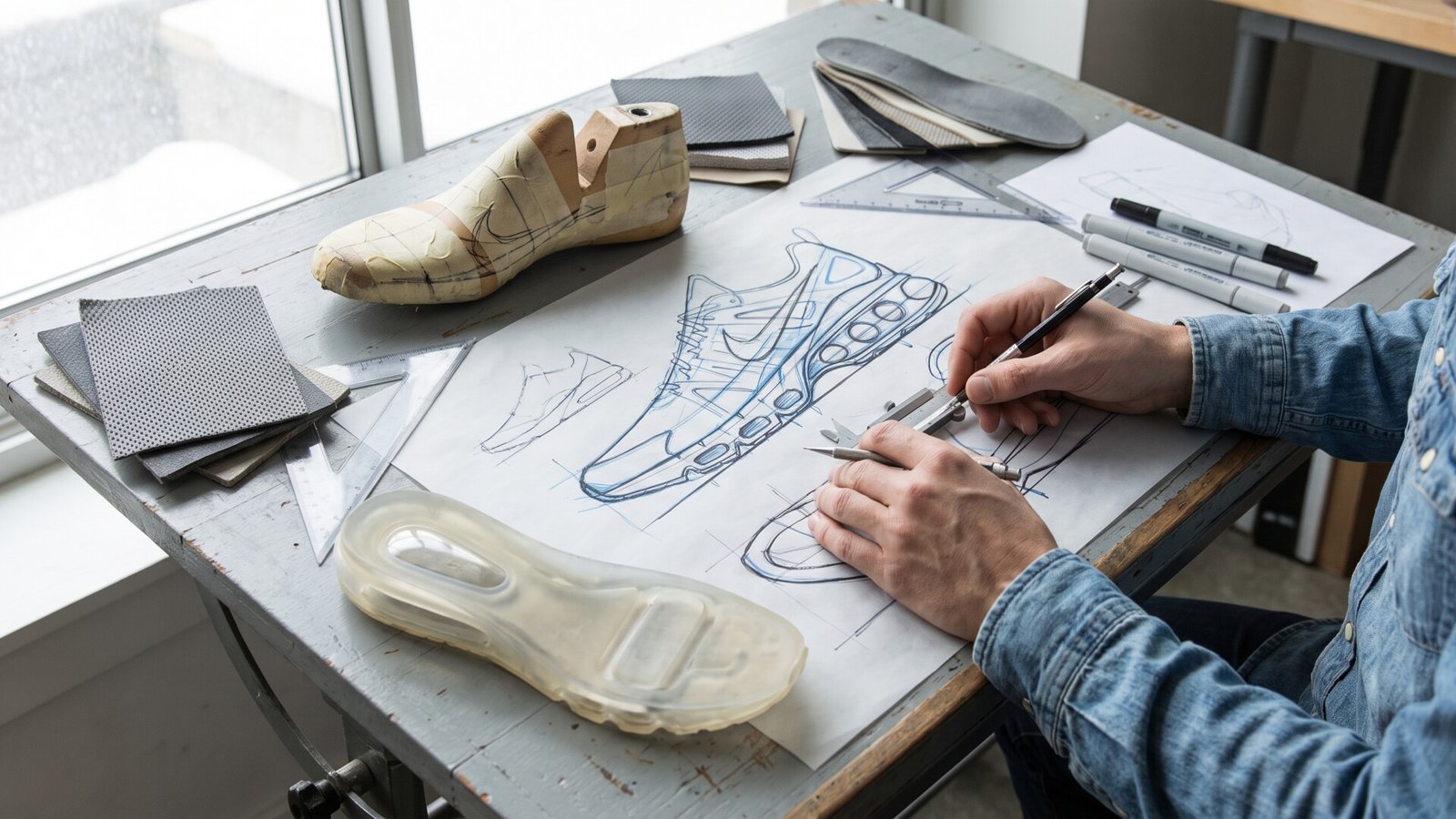
This thinking led directly to the Nike Air Max 1, the first sneaker to feature visible Air cushioning. At the time, the idea was controversial. Cutting a hole in the midsole felt risky, even irresponsible, to many inside Nike.
Hatfield saw it differently. Coming from architecture, he was inspired by buildings that exposed their structure instead of concealing it.
Visible Air did three things at once:
- It explained the technology visually
- It created emotional trust with the consumer
- It turned function into identity
This lesson goes beyond sneakers. Transparency in design builds connection.
3. Rules Are Suggestions, Not Laws
Hatfield never treated design conventions as sacred. He questioned everything—especially the rules that existed simply because “that’s how it’s always been done.”
“If nobody’s uncomfortable, you’re probably not pushing hard enough.”
This attitude allowed him to take risks others avoided:
- Exposed cushioning
- Aggressive color blocking
- Architectural lines in athletic footwear
Many of his most iconic designs were initially criticized internally. What saved them was Hatfield’s ability to articulate why the risk made sense.
Innovation often looks wrong—until it works.
4. Context Matters as Much as Aesthetics
Hatfield believed great design doesn’t exist in isolation. It responds to culture, timing, and environment.
“A shoe doesn’t live on a shelf. It lives on people, in places, at moments in time.”
That awareness is why his designs feel anchored in their era without becoming dated. The Air Max 1 made sense in the late ’80s. The Air Jordan III captured the spirit of basketball culture at a pivotal moment. Each shoe told a story that aligned with its context.
Designers who ignore context risk creating objects that feel disconnected—even if they look good.
5. Athletes Are Collaborators, Not Just Endorsements
Hatfield’s work with athletes—especially Michael Jordan—reshaped how designer-athlete relationships function.
“The best designs come from collaboration, not dictation.”
Rather than treating athletes as marketing tools, Hatfield involved them in the creative process. He listened to their frustrations, preferences, and emotional reactions.
That approach led to:
- Performance improvements
- Stronger storytelling
- Deeper authenticity
When athletes believe in the product, consumers can feel it.
6. Storytelling Is Part of the Design
For Hatfield, a sneaker wasn’t complete until its story made sense.
“People don’t just buy products. They buy ideas and beliefs.”
This is why many of his designs include symbolic elements:
- Elephant print representing strength and luxury
- Visible Air symbolizing honesty and innovation
- Color choices tied to team identity or personal narrative
The shoe didn’t just perform—it communicated.
That storytelling helped sneakers move from equipment to cultural objects.
7. Comfort Is Non-Negotiable
Despite his reputation for bold visuals, Hatfield never sacrificed comfort for style.
“If it doesn’t feel right, nothing else matters.”
This grounded perspective explains why many of his designs remain wearable decades later. They weren’t designed as display pieces. They were meant to be lived in.
Comfort, in Hatfield’s view, wasn’t a feature—it was the foundation.
8. Design Is a Long Game
Hatfield often spoke about patience and long-term thinking.
“You’re not designing for today. You’re designing for memory.”
Many of his sneakers gained appreciation over time. Some were misunderstood at launch, only to become classics years later.
This lesson is especially relevant in a trend-driven era. Designs that chase short-term attention rarely age well.
9. Cross-Disciplinary Thinking Creates Breakthroughs
Hatfield never saw his architectural background as unrelated to sneaker design.
“Design principles apply everywhere. Scale changes, but thinking doesn’t.”
Structure, balance, rhythm, and flow—all architectural concepts—translated naturally into footwear.
This cross-disciplinary mindset allowed him to see solutions others missed.
10. Confidence Comes From Preparation
Hatfield’s boldest ideas weren’t reckless. They were deeply thought through.
“You earn the right to take risks by doing the work.”
He backed intuition with research, observation, and logic. That combination made it easier to defend unconventional ideas in corporate environments.
Risk without reasoning is luck. Risk with preparation is design.
Why Tinker Hatfield’s Lessons Still Matter
Sneaker culture has changed dramatically, but Hatfield’s principles remain relevant:
- Design for people
- Be honest with innovation
- Respect context
- Think long-term
His work reminds us that great design isn’t loud—it’s clear, intentional, and human.