How to Clean & Protect Leather Sneakers
There is a unique heartbreak that comes with seeing a fresh pair of leather sneakers meet their first scuff. Perhaps it was a stray kick against a concrete step, an errant splash of mud, or the slow creep of salt stains after a wet winter walk. For sneaker enthusiasts, a pristine pair of leather kicks is a source of pride—but in the real world, wear is inevitable.
The good news? Leather is one of the most durable and forgiving materials in the footwear world. Unlike delicate knit or canvas, high-quality leather can last for decades if treated with the proper care. At Street Sneakers Vault, we believe that cleaning your sneakers isn’t just about maintenance; it’s about extending the life of your investment.
Whether you own a pair of classic white Vans Leather Old Skools, luxurious designer leather trainers, or durable workwear-inspired boots, this guide will walk you through every step of the process. From daily maintenance to deep cleaning and long-term protection, here is how to keep your leather sneakers looking like they just came out of the box.
Understanding Your Leather
Before you pick up a cloth or apply any product, you need to identify what type of leather you are dealing with. Different finishes require different care techniques, and using the wrong method can cause permanent damage.
Full-Grain and Top-Grain Leather
These are the highest quality leathers, often found on premium sneakers. They retain the natural grain of the hide, developing a unique patina over time. They are durable but porous, meaning they need regular conditioning to prevent drying and cracking.
Smooth Finished Leather
This is the most common leather used in mainstream sneakers like Vans, Nike, and Adidas. It has a protective top coating that makes it resistant to stains and water. This coating means cleaning is generally easier, but conditioning is less critical because the finish prevents the leather from absorbing oils.
Suede and Nubuck
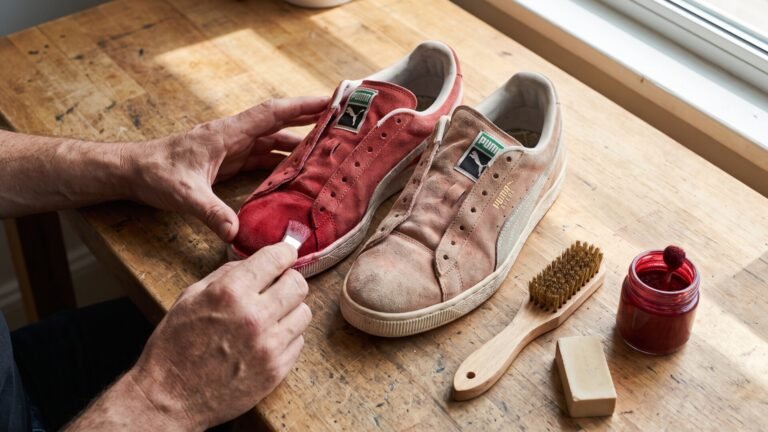
While technically leather, these materials have a brushed, fibrous surface. They require a completely different cleaning method. This guide will focus primarily on smooth and finished leathers. For suede, we recommend a dedicated suede eraser and brush kit.
Patent Leather
Characterized by its high-gloss, mirror-like finish, patent leather is coated with a lacquer. It is prone to scuffing and color scratching, but it wipes clean easily. Avoid using conditioners or oils on patent leather, as they can damage the shiny coating.
The Tools of the Trade
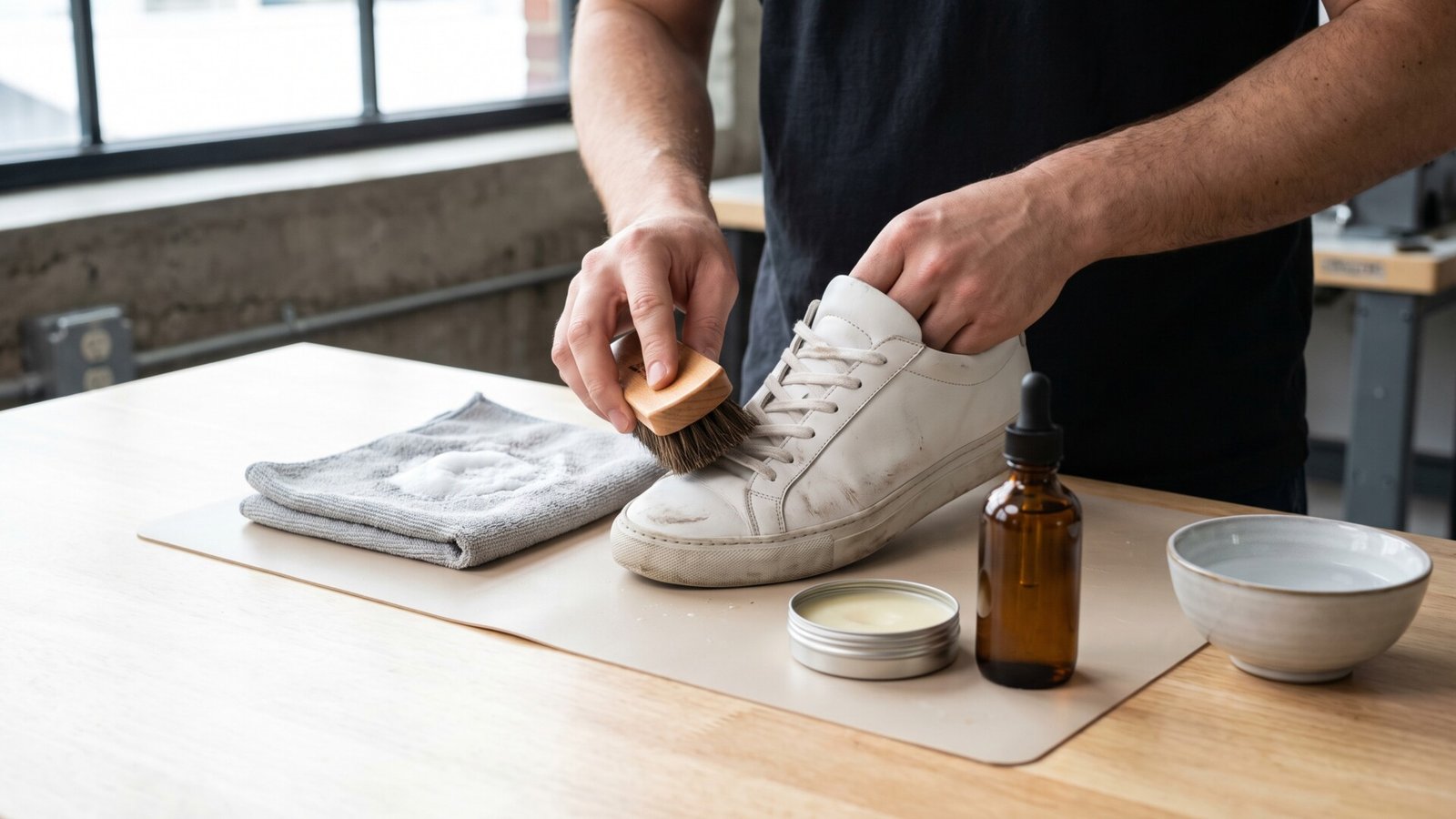
You don’t need a professional shoe cleaner’s arsenal to get great results, but using the right tools makes a significant difference. Here is what you should have in your cleaning kit:
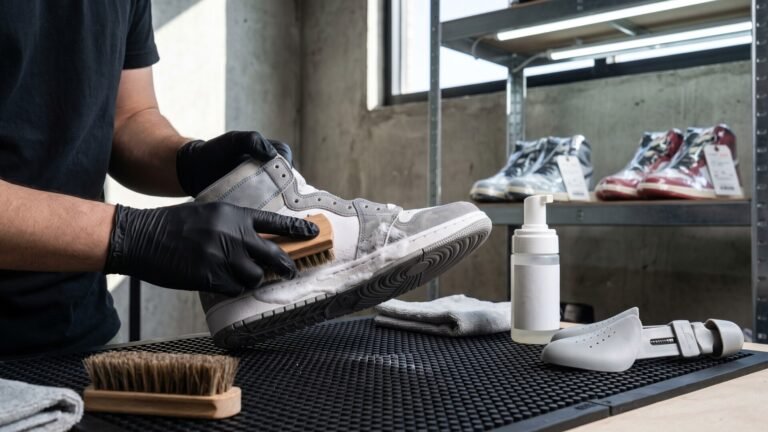
- Soft-Bristled Brush: A horsehair brush is ideal for dry brushing loose dirt without scratching the leather.
- Microfiber Cloths: These are non-abrasive and perfect for applying cleaners and buffing the leather to a shine. Avoid paper towels, which can leave lint and cause fine scratches.
- Mild Dish Soap or Saddle Soap: For basic cleaning, a drop of gentle dish soap mixed with water works wonders. For deeper cleaning, saddle soap is a traditional product that cleans and lightly conditions leather.
- Leather Cleaner (Commercial): Brands like Jason Markk, Reshoevn8r, and Angelus make excellent pH-balanced solutions specifically designed for sneakers.
- Cotton Swabs or Soft Toothbrush: Essential for getting into the tight spaces around the laces, eyelets, and midsole seams.
- Leather Conditioner: This replenishes the natural oils in the leather, preventing it from drying out and cracking. Look for conditioners that are free of harsh chemicals and silicones.
- Leather Protector / Water Repellent Spray: A crucial final step to shield your sneakers from future stains, water, and salt.
The Cleaning Process – Step by Step
Now that you have identified your leather type and assembled your tools, it is time to get to work. Follow these steps for a thorough, safe clean.
Step 1: Prepare Your Workspace
Lay down some newspaper or an old towel. Remove the laces from your sneakers. Cleaning them separately ensures you get the grime hiding behind the eyelets and allows the leather to dry more evenly. You can wash fabric laces by hand with soapy water or simply replace them with a fresh pair for a truly “new shoe” feel.
Step 2: Dry Brushing
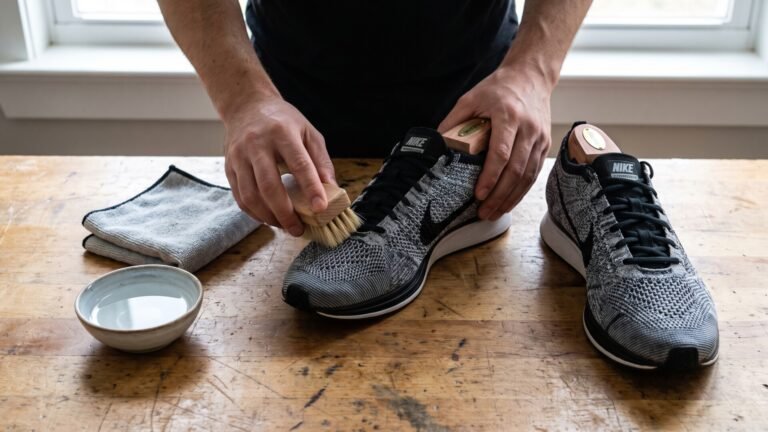
Before you introduce any liquid, use your soft-bristled brush to gently whisk away all loose dirt, dust, and debris from the surface of the leather. Pay special attention to the welt (where the upper meets the sole) and the tongue. This prevents you from rubbing grit into the leather during the wet cleaning phase, which can cause scratches.
Step 3: Create Your Cleaning Solution
If you are using a commercial cleaner, follow the instructions on the bottle. If you are making a DIY solution, mix a small drop of mild dish soap (like Dawn or a natural castile soap) with warm water in a bowl. The water should look slightly cloudy, not sudsy. Too much soap can be difficult to rinse out and may leave a residue.
Step 4: The Gentle Scrub
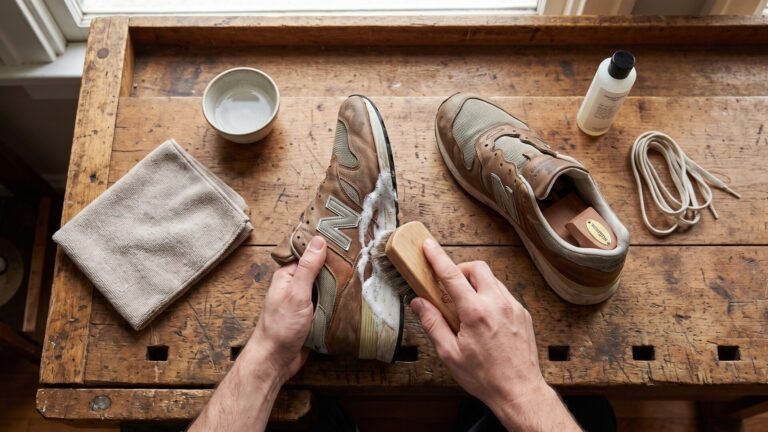
Dip your microfiber cloth or soft brush into the solution. Crucially, do not soak the leather. Wring out your cloth or brush until it is damp, not wet. You want to clean the surface, not saturate the interior of the shoe.
- For the Uppers: Gently scrub the leather in circular motions. For scuffs, you can apply a little more pressure, but always let the cleaner do the work. You will see the dirt transfer from the shoe to the cloth.
- For the Midsoles: The rubber midsole often holds the most grime. Use a slightly stiffer brush (like an old toothbrush) with the same soapy solution to scrub away black marks and built-up dirt.
Step 5: Wipe Away Residue
Once you have scrubbed the entire surface, it is vital to remove the soap residue. Dampen a clean microfiber cloth with plain water, wring it out thoroughly, and wipe down all the areas you just cleaned. Repeat this with a dry section of the cloth until no soap suds remain. Soap left to dry on leather can cause it to dry out or discolor.
Step 6: The Deep Clean – Saddle Soap (Optional)
For heavily soiled vintage leather or work boots, saddle soap is a powerful option. It comes in a tin as a paste. Dampen your cloth, rub it into the soap to create a lather, and then apply it to the leather. Saddle soap has a slight conditioning effect, making it a great two-in-one product for thirsty leather. However, for modern finished leathers with a plastic coating, this step is usually overkill.
Step 7: Air Dry
Stuff your sneakers with clean, white paper towels or shoe trees. The paper will absorb moisture from the inside and help the shoes hold their shape as they dry.
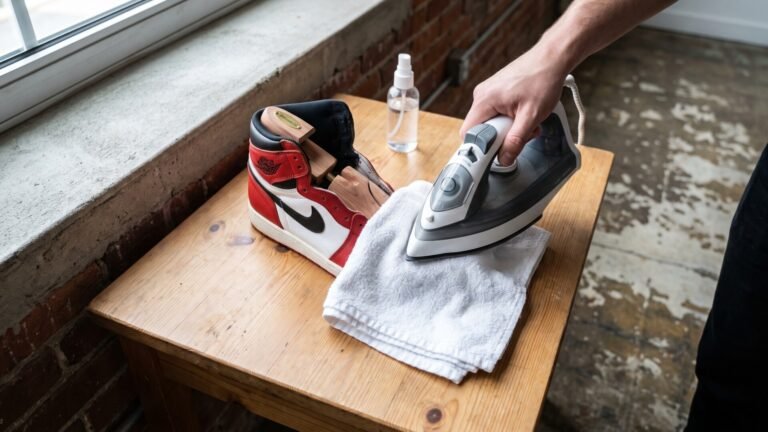
Critical Rule: Never, ever put leather sneakers near a direct heat source like a radiator, hairdryer, or in direct sunlight. High heat causes leather to shrink, crack, and become brittle. Let them air dry naturally in a room-temperature environment for at least 12–24 hours.
Conditioning – The Secret to Longevity
Once your sneakers are completely dry, it is time to assess the leather. Has it started to look a little dull or dry? If so, conditioning is your next step. This is the phase that most sneaker owners skip, and it is the difference between shoes that last one season and shoes that last a lifetime.
Leather is skin. Just like your skin, it can lose moisture and become dry and cracked, especially after being cleaned with soaps that strip natural oils. A good conditioner replenishes these oils, keeping the leather supple, soft, and flexible.
How to Apply Conditioner
- Choose a high-quality leather conditioner. Products like Bickmore Bick 4, Angelus Leather Conditioner, or Venetian Shoe Cream are excellent choices. They condition without significantly darkening the leather.
- Apply a small amount of conditioner to a soft, clean microfiber cloth. A little goes a long way.
- Rub the conditioner into the leather using firm, circular motions. You should see the leather begin to take on a richer, deeper color and a healthy sheen.
- Allow the conditioner to absorb for 10–20 minutes.
- Buff the surface with a clean, dry part of the cloth to remove any excess product and bring out the shine.
A Note on Finished Leather: If your sneakers have a thick, plasticky topcoat (common on sporty sneakers), they will not absorb conditioner very well. In this case, conditioning is optional, as the protective layer does the work of keeping the underlying leather safe. You can still buff them to a shine, but the conditioner may just sit on the surface.
Protection – Building an Invisible Shield
You have put in the work to get your sneakers clean and conditioned. Now, you need to keep them that way. The single best thing you can do for a new pair of leather sneakers—or a freshly cleaned pair—is to apply a quality water and stain repellent.
This protective spray creates an invisible barrier on the surface of the leather. When you inevitably step in a puddle or get caught in a summer shower, water will bead up and roll off instead of soaking into the leather and leaving water stains. It also makes future cleaning easier, as dirt has a harder time bonding to the protected surface.
How to Apply Protector Spray
- Work in a well-ventilated area. Take the spraying outdoors or open a garage door. The fumes from these sprays can be strong.
- Ensure your sneakers are 100% clean and dry.
- Hold the can about 6–8 inches away from the shoe.
- Apply a light, even coat, covering the entire leather upper. Don’t soak the shoe; you just need a fine, even mist.
- Let the shoes sit for about 10–15 minutes.
- Apply a second light coat for maximum protection.
- Allow the shoes to dry completely (another 30–60 minutes) before wearing them.
For the best results, reapply the protector every few months, or more often if you wear the shoes frequently in wet conditions.
Dealing with Common Leather Disasters
Even with the best protection, life happens. Here is how to tackle some of the most common leather sneaker emergencies.
Scuffs and Black Marks
For light scuffs on smooth leather, a simple eraser (the white, pencil-top kind or a Mr. Clean Magic Eraser) can often buff them away. For deeper scuffs, use a damp cloth with a tiny bit of baking soda to gently rub the mark. For scuffs that have actually displaced color, you may need to move to a leather paint or marker, but this is a more advanced restoration technique.
Salt Stains
Winter walking leaves white, crusty salt stains that can be stubborn. Mix one part white vinegar with two parts water. Dampen a cloth with the solution and gently dab (do not rub) the salt-stained area. The mild acid in the vinegar helps dissolve the salt crystals. Once the salt is gone, wipe the area with a clean, damp cloth to remove any vinegar residue, then condition the leather, as vinegar can be drying.
Ink Stains
Ink is a formidable enemy. Act fast. Dab the stain with a cotton swab dipped in rubbing alcohol. Do not rub, as this will spread the ink. Blot the area gently, and the ink should transfer to the cotton. This can take multiple attempts. Once the ink is lifted, rinse the area with a damp cloth and condition immediately, as alcohol severely dries out leather.
Odor Control
Leather is breathable, but feet can still cause odor. The best prevention is to let your shoes rest. Never wear the same leather sneakers two days in a row. This gives them a full 24 hours to air out and dry completely. Using cedar shoe trees is the gold standard; they absorb moisture and impart a fresh, woodsy scent. For a quick fix, you can sprinkle baking soda inside the shoes, let it sit overnight, and vacuum it out in the morning.
Storage – Out of Sight, Not Out of Mind
How you store your leather sneakers when you are not wearing them is just as important as how you clean them.
- Avoid Plastic Bags: Never store leather in a plastic bag or an airtight container. Leather needs to breathe. Plastic traps moisture, which leads to mold and mildew growth.
- Use Shoe Trees: For high-quality leather sneakers, investing in cedar shoe trees is wise. They absorb moisture, maintain the shoe’s shape (preventing the toe box from collapsing), and fight odor.
- Keep Them Cool and Dark: Store your sneakers in a cool, dry place away from direct sunlight. Prolonged exposure to UV rays can fade the color of the leather.
- Stuff Them: If you don’t have shoe trees, loosely stuff the toes with acid-free tissue paper to help them hold their shape.
The Quick Maintenance Routine
You don’t need to do a deep clean every week. In fact, over-cleaning can wear down leather. Instead, adopt a simple maintenance routine to keep them looking fresh between washes.
- After Each Wear: If you see a scuff or a spot of dirt, spot-clean it immediately with a damp cloth. The longer dirt sits, the harder it is to remove.
- Weekly Wipe-Down: At the end of the week, give your leather sneakers a quick once-over with a dry microfiber cloth to remove dust.
- Monthly Refresh: Once a month, do a light cleaning with a damp, soapy cloth, followed by a quick buff with a dry cloth.
- Seasonal Deep Clean: Every 3–4 months (or as needed), perform the full cleaning, conditioning, and protecting routine outlined in this guide.
Wear Them Well
Leather sneakers are an investment in style, comfort, and durability. They have the unique ability to look sharp with tailored trousers or perfectly casual with a pair of jeans. By following the steps in this guide, you are not just cleaning your shoes; you are curating them.
There is a beauty in a well-worn leather sneaker that has been cared for—the subtle creases that tell a story of a thousand walks, the rich patina that only develops with age. The goal is not to keep them in a glass box, but to keep them looking their best as you live your life in them.
At Street Sneakers Vault, we know that a clean sneaker is a confident sneaker. So gear up, give your collection the care it deserves, and step out in style.
Want to keep your entire collection in rotation-ready condition? Mastering leather care is just the beginning. From washing delicate knit runners to deodorizing well-worn trainers and storing your sneakers for the long haul, proper maintenance is the secret to a healthier wallet and a fresher rotation. Head over to our Sneaker Care & Longevity hub for expert guides, product recommendations, and pro tips to ensure every pair in your collection stands the test of time.