Nike Dunk: The Complete Guide to the Iconic Sneaker Phenomenon
Some sneakers define an era. The Nike Dunk defines multiple eras. It started as a college basketball shoe, became a skateboarding cult classic, then exploded into a global streetwear phenomenon that has dominated the last decade. In 2026, the Dunk is still everywhere – on feet, on resale charts, and at the top of wish lists.
How did a silhouette that nearly faded into obscurity become one of the biggest sneakers in the world?
The answer is a perfect storm: a simple, clean retro design, endless colorways, a rabid resale culture, and a versatility that works with everything from baggy jeans to tailored trousers. Whether you‘re a sneakerhead chasing limited collabs, a skater looking for durability, or just someone who wants a clean everyday sneaker, there’s a Dunk for you.
This hub covers everything: the rich history, the different versions (including the crucial SB vs. regular Dunk breakdown), sizing quirks, comfort realities, styling tips, the best colorways, alternatives, and whether Dunks are still worth buying in 2026.
Let‘s dive in.
The History of the Nike Dunk
Basketball Origins (1985)
The story begins in 1985. Fresh off the success of the Air Jordan 1, Nike designer Peter Moore set out to create a team shoe for college basketball programs. The result was the Dunk, which debuted as part of the “Be True to Your School” campaign – a line of sneakers color-matched to top universities including Michigan, Kentucky, Georgetown, Syracuse, St. John’s, UNLV, and Iowa.
The Dunk was designed, developed, and dispatched over a frantic six‑week span, borrowing design elements from the Legend, Terminator, and Air Jordan 1. It was a hit on the courts, but by the early 1990s, advancements in basketball shoe technology made the Dunk obsolete for serious players.
Rise in Skateboarding (1990s – 2002)
But a new audience discovered the Dunk: skateboarders. In the late ‘80s and early ‘90s, skaters began adopting high‑top Dunks because they were durable, protective, and – crucially – often available at discount shops for cheap. The Dunk’s board feel and affordability made it a skate favorite.
Nike took notice. In 2002, they launched Nike SB (Skateboarding) and introduced the Dunk Low Pro SB, retooling the classic silhouette with skate‑specific upgrades: a padded tongue, Zoom Air cushioning, and more durable materials. Original team riders Reese Forbes, Gino Iannucci, Richard Mulder, and Danny Supa were given creative freedom to design their own colorways, resulting in the iconic “Colors By” series.
The Hype Explosion (2000s – 2020)
The SB Dunk ignited a fire. Collaborations with Diamond Supply Co. (the legendary “Tiffany” Dunk of 2005), Supreme (the elephant‑print White Cement Dunk), and Concepts (the “Ugly Duckling” pack) became instant grails. The sneaker’s cultural footprint exploded beyond skating. Tom Cruise, Marc Jacobs, and Kanye West were all spotted in SB Dunks.
But the Dunk’s true mainstream takeover happened later. In the late 2010s and early 2020s, the Dunk Low – especially the Panda colorway – became a global phenomenon. In 2026, the Panda Dunk remains the most resold sneaker of all time on StockX, topping both men’s and women‘s charts. The simple black-on-white design became the uniform of a generation.
Modern Era (2026)
In 2026, the Dunk is no longer a niche collector’s item or a skater’s secret. It‘s a mainstream staple – and that comes with both pros and cons. Oversaturation is a real concern; some argue that Nike has flooded the market with colorways, and the “hype“ of walking into a mall and seeing Panda Dunks on every third person has cooled. But the Dunk’s status as a versatile, affordable, and endlessly customizable canvas remains unshaken.
Why Nike Dunks Became So Popular
What’s the secret behind the Dunk‘s enduring appeal?
- Clean Retro Design – The silhouette is simple, balanced, and rooted in 1980s basketball. It’s not too chunky, not too slim – just right.
- Huge Variety of Colorways – From OG college colors to experimental collabs, there‘s a Dunk for every personality.
- Strong Hype & Resale Market – Limited SB releases and collaborations still command serious premiums.
- Easy Styling – Works with jeans, cargos, shorts, and even some smart‑casual outfits.
- Collectibility – The Dunk’s deep history and vast collaboration archive make it a favorite among collectors.
Quick Picks (If You’re in a Hurry)
| Award | Model | Price (USD) | Why |
|---|---|---|---|
| Best Overall | Nike Dunk Low Panda | 115–150 | The most versatile, iconic modern Dunk. |
| Best Premium Version | Nike SB Dunk Low | 130–180 | Better cushioning and materials. |
| Best High‑Top Option | Nike Dunk High | 130–170 | Retro basketball aesthetic. |
| Best Comfort Alternative | Nike SB Dunk Low Pro | 140–180 | Zoom Air + padded tongue. |
| Best Underrated Dunk | Nike Dunk Low Retro (Classic colleges) | 115–140 | OG “Be True” vibes. |
Nike Dunk Versions
| Model | Price | Comfort | Hype | Durability | Best For |
|---|---|---|---|---|---|
| Nike Dunk Low Panda | 115–150 | ⭐⭐⭐ | ⭐⭐⭐⭐⭐ | ⭐⭐⭐⭐ | Everyday streetwear |
| Nike SB Dunk Low | 130–180 | ⭐⭐⭐⭐ | ⭐⭐⭐⭐⭐ | ⭐⭐⭐⭐⭐ | Skating + collectors |
| Nike Dunk High | 130–170 | ⭐⭐⭐ | ⭐⭐⭐⭐ | ⭐⭐⭐⭐ | Retro style |
| Nike Dunk Low Retro | 115–140 | ⭐⭐⭐ | ⭐⭐⭐⭐ | ⭐⭐⭐⭐ | General casual wear |
| Nike SB Dunk Low Pro | 140–180 | ⭐⭐⭐⭐ | ⭐⭐⭐⭐⭐ | ⭐⭐⭐⭐⭐ | Better cushioning |
The Different Nike Dunk Versions Explained
Not all Dunks are the same. Here’s what you need to know.
Nike Dunk Low – The People‘s Champion
The low‑top is the most popular version today. It features a slim mesh tongue, a leather upper, and a flat EVA insole. It’s the model you see on the streets, at the mall, and on resale charts. The simplicity is its strength.
Best for: Everyday casual wear, easy styling.
Nike Dunk High – Vintage Basketball Feel
The high‑top offers more ankle coverage and a stronger retro aesthetic. It was the original 1985 silhouette and remains a favorite for those who want that old‑school hoops vibe. The collar can feel restrictive at first but softens over time.
Best for: Retro basketball style, cooler weather fits.
Nike SB Dunk – The Skater‘s Upgrade
This is where things get different. The SB Dunk has a padded tongue (much thicker than the regular Dunk) for protection, Zoom Air cushioning in the heel, and Poron foam in the forefoot. It also features round, thicker laces that withstand skate abuse, and a different outsole traction pattern for better board feel. The SB version is generally chunkier and more comfortable for all‑day wear, even if you’re not skating.
Best for: Skaters, collectors, and anyone who wants a more comfortable Dunk.
Premium & Collaborative Dunks
These are limited releases with luxury materials – higher‑grade leather, suede, and unique design details. They command the highest resale prices and are aimed at collectors.
Comfort: Are Nike Dunks Comfortable?
Let’s address the elephant in the room. The standard Nike Dunk Low is moderately comfortable – not terrible, not amazing.
Strengths:
- Stable, flat platform
- Decent everyday comfort for short to medium wear
- Leather upper molds to the foot over time
Weaknesses:
- EVA insole is thin and offers little shock absorption
- Minimal arch support
- Leather can feel stiff out of the box
The SB Dunk Advantage: The SB version is significantly more comfortable. The Zoom Air unit in the heel and padded tongue make a noticeable difference for all‑day walking. Many non‑skaters prefer SBs just for the comfort upgrade.
Better Alternatives for Max Comfort: If you need heavy cushioning for standing or walking all day, consider the Nike Zoom Vomero 5 or ASICS Gel‑1130. The Dunk is a style‑first shoe.
Sizing Guide: Do Nike Dunks Run True to Size?
Short answer: Yes, generally true to size, but there are nuances.
Nike‘s official guidance states that Dunk Low and High models fit true to size. If you normally wear a size 10 in Nike shoes, a size 10 should fit well.
Narrow foot feel: Some users find the Dunk slightly snug at first due to the leather upper. It will loosen with wear.
SB Dunk Fit: SB Dunks fit tighter because of the extra padding and Zoom Air unit. Many users recommend going up half a size for SBs.
Wide feet: Consider going up half a size for a roomier fit.
Lacing style: If you plan to lace your Dunks loosely (a common streetwear style), go down half a size to prevent heel slippage.
How to Style Nike Dunks
The Dunk‘s versatility is one of its superpowers. Here’s how to wear them in 2026.
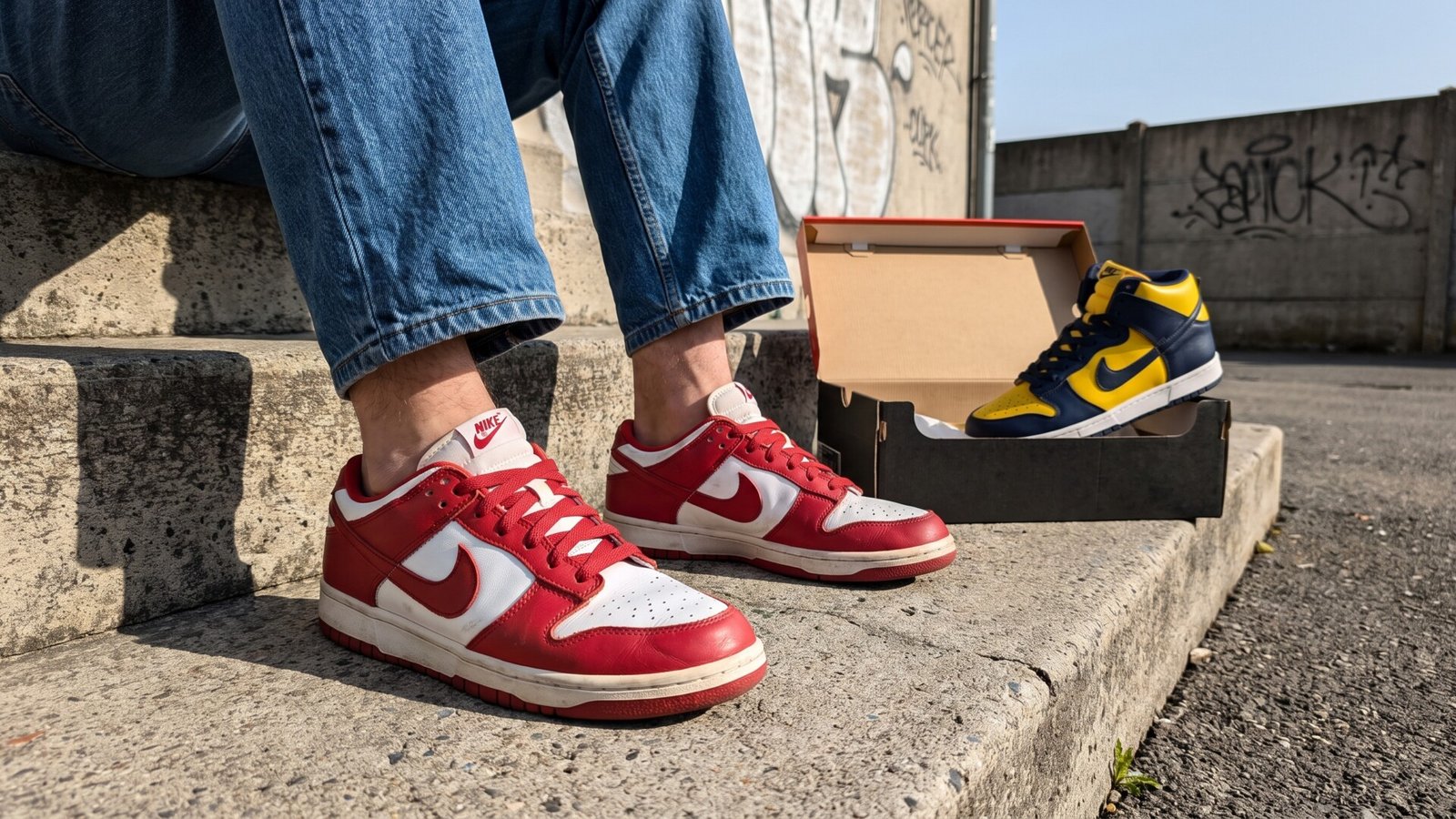
With baggy jeans: The classic streetwear fit. Let the denim stack over the shoe. High‑top Dunks add structure and visual weight, making them ideal for layered looks.
With shorts: Low‑top Dunks are perfect with shorts. Pair with no‑show socks for a clean summer look, or crew socks for a retro vibe.
With wide‑leg trousers: Yes, even tailored wide trousers can work. Stick to neutral colorways (white/black/grey) for a clean, minimalist aesthetic.
With minimalist streetwear: The Dunk’s clean lines shine in monochrome outfits. Try black Dunks with an all‑black fit, or white Dunks with an all‑white fit.
Why Dunks work in modern streetwear: They have the right amount of chunk – not as massive as a New Balance 550, not as slim as a Samba. They anchor an outfit without overpowering it.
Outfit formula for beginners: Straight‑leg jeans, a white tee, and Panda Dunks. It’s simple, timeless, and impossible to mess up.
Best Nike Dunk Colorways
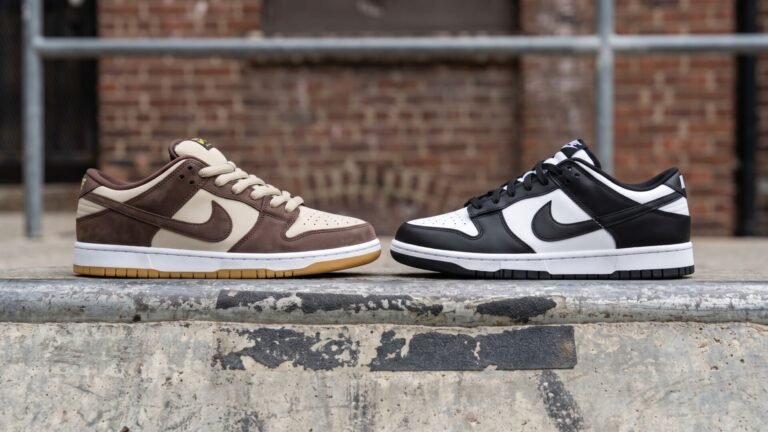
- Panda (Black/White) – The most recognizable modern Dunk. Clean, goes with everything, and the best‑selling sneaker on StockX for the last decade.
- Kentucky (Blue/White) – One of the original “Be True to Your School” colorways from 1985. A favorite among collectors.
- Syracuse (Orange/White) – Another OG college color. Bold, vibrant, and instantly recognizable.
- Chicago‑inspired (Red/White/Black) – Borrows the legendary palette from the Air Jordan 1. Timeless.
- Neutral earth tones (Cacao Wow, Anthracite Grey) – More subtle, wearable daily. The “Cacao Wow” has been praised for its sophisticated, muted palette.
Nike Dunk vs Competitors
Dunk Low vs. New Balance 550
The 550 is chunkier, with more layered suede panels and a rounder toe box. The Dunk is cleaner and more aerodynamic. In terms of comfort, the 550 often edges out the standard Dunk.
Dunk vs. Adidas Samba
The Samba is sleeker, with a leather/suede mix and a gum sole. The Dunk is more substantial and rooted in basketball heritage. Choose Samba for terrace style, Dunk for streetwear presence.
Dunk vs. Vans Old Skool
Vans is flatter, more flexible, and skate‑focused. The Dunk is more structured and has stronger resale culture. Choose Vans for board feel, Dunk for hype.
Are Nike Dunks Worth It in 2026?
Yes – but with a caveat: buy them for style and culture, not for maximum comfort or as a pure investment.
Why they still matter:
- Iconic, timeless design
- Easy to style with almost anything
- Strong collector appeal
- SB versions offer legit comfort upgrades
Main criticisms:
- Oversaturation – the Panda is everywhere
- Comfort limitations for all‑day wear
- Resale inflation – some GR colorways are overpriced
Who should buy Dunks: Streetwear fans, collectors, casual fashion wearers, and skaters (get SB).
Who might want alternatives: People needing heavy cushioning (look at Asics or New Balance), or those who prefer a chunkier silhouette (New Balance 550).
Best Alternatives to Nike Dunks
The Nike Dunk is iconic, but it’s not the only retro basketball sneaker with streetwear appeal. Whether you want better comfort, a chunkier silhouette, or just something different, these 6 alternatives are worth considering.
1. New Balance 550
- Price: 110–140
- Why it’s a great alternative: The 550 has become a streetwear staple in its own right, offering a chunkier, more layered take on the retro basketball aesthetic. It features a durable leather upper, a padded collar, and a cupsole that provides slightly better cushioning than the Dunk.
- Key differences: Heavier, rounder toe box, more prominent “N” logo.
- Best for: People who want a similar 1980s hoop vibe but with more visual presence and better all‑day comfort.
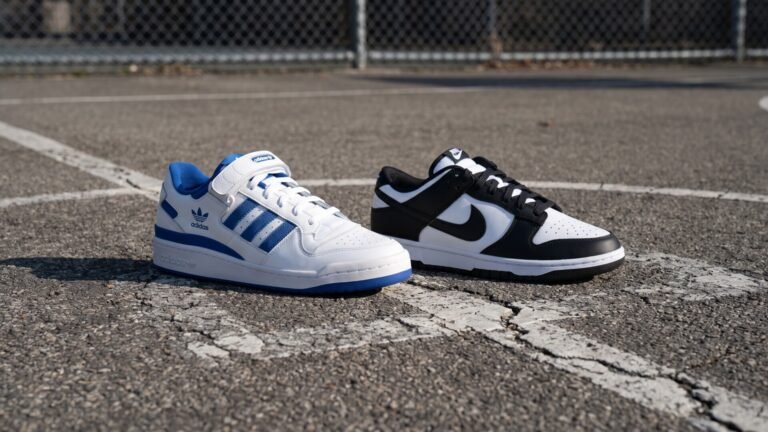
2. Adidas Forum Low
- Price: 90–120
- Why it’s a great alternative: Originally a 1984 basketball shoe, the Forum Low features a clean leather upper, a unique ankle strap, and a slightly chunkier sole. It’s often available for under $100, making it a budget‑friendly Dunk alternative.
- Key differences: Ankle strap (removable on some versions), rounder toe, thicker padding.
- Best for: Budget buyers, retro basketball fans, and anyone who wants a less hyped alternative.
3. Nike Terminator Low
- Price: 110–140
- Why it’s a great alternative: The Terminator was Nike’s original college basketball shoe from 1985 (predating the Dunk by a few months). It has a very similar silhouette but with a larger, blockier “NIKE” text on the heel instead of a Swoosh. It’s a deep cut for Nike historians.
- Key differences: Heel branding, slightly more padded collar, less common colorways.
- Best for: Nike purists and collectors who want something adjacent to the Dunk but more niche.
4. Puma Slipstream
- Price: 90–120
- Why it’s a great alternative: The Slipstream is Puma’s 1987 basketball sneaker, featuring a chunky, layered design with a prominent formstrip. It’s a direct competitor to the Dunk and the Air Jordan 1, but it’s far less hyped, so you can often grab clean colorways for under $100.
- Key differences: Chunky formstrip logo, suede overlays, thicker sole.
- Best for: People who want a retro basketball sneaker without the Nike premium.
5. Reebok Club C 85
- Price: 70–90
- Why it’s a great alternative: The Club C 85 is a tennis shoe, not a basketball shoe, but its clean, low‑profile leather upper and minimalist design make it a versatile Dunk alternative. It’s also significantly cheaper and often more comfortable out of the box.
- Key differences: Tennis heritage, softer leather, thinner sole, no ankle padding.
- Best for: Budget buyers, minimalists, and anyone who prefers a sleeker silhouette.
6. ASICS EX89
- Price: 100–130
- Why it’s a great alternative: The EX89 is ASICS’ retro basketball model, originally from 1989. It features a leather and mesh upper, a GEL cushioning unit in the heel, and a clean, blocky silhouette that rivals the Dunk. It’s a hidden gem for sneakerheads.
- Key differences: Visible GEL pod, mesh panels, slightly more athletic look.
- Best for: Collectors who want something different and appreciate ASICS’ comfort tech.
Quick Comparison Table
| Model | Price ($) | Silhouette | Comfort | Hype Level | Best For |
|---|---|---|---|---|---|
| New Balance 550 | 110–140 | Chunky retro hoops | ⭐⭐⭐⭐ | Medium | Everyday style |
| Adidas Forum Low | 90–120 | ’80s basketball | ⭐⭐⭐ | Low | Budget retro |
| Nike Terminator Low | 110–140 | ’85 college hoops | ⭐⭐⭐ | Low | Nike purists |
| Puma Slipstream | 90–120 | Chunky ’80s hoop | ⭐⭐⭐ | Low | Affordable alternative |
| Reebok Club C 85 | 70–90 | Clean tennis | ⭐⭐⭐ | Low | Minimalist budget |
| ASICS EX89 | 100–130 | ’89 retro basketball | ⭐⭐⭐⭐ | Low | Comfort + uniqueness |
How to Choose
- If you want the closest look to a Dunk: New Balance 550 or Nike Terminator Low.
- If you’re on a tight budget: Adidas Forum Low or Reebok Club C 85.
- If you want better comfort than a Dunk: New Balance 550 (more padding) or ASICS EX89 (GEL cushioning).
- If you want something less common: Puma Slipstream or ASICS EX89.
None of these completely replace the Dunk’s specific shape and cultural weight, but each offers a unique flavor of retro basketball (or tennis) style – often at a lower price and with better availability.
Final Verdict
The Nike Dunk is one of the defining sneakers of modern streetwear. It has a rich history, an instantly recognizable silhouette, and a versatility that few other shoes can match.
- Best recommendation for casual buyers: Nike Dunk Low (any neutral colorway) – style icon, affordable.
- Best recommendation for comfort and quality: Nike SB Dunk Low Pro – better cushioning, more durable.
- Main takeaway: Buy Dunks for their style, heritage, and cultural relevance. If you need all‑day comfort, upgrade to the SB version or look elsewhere.
In 2026, the Dunk is no longer the hot, exclusive must‑have – it’s a staple. And staples never go out of style.
Frequently Asked Questions About Nike Dunk
Are Nike Dunks comfortable?
Moderately comfortable, but not heavily cushioned. The standard Dunk Low has a thin EVA insole, minimal arch support, and a stiff leather upper that requires a break‑in period. For casual wear (errands, hanging out, office), they‘re fine. For all‑day walking or standing, your feet may get sore. The Nike SB Dunk is a significant upgrade, featuring a Zoom Air unit in the heel and a padded tongue for better impact protection.
What is the difference between Nike Dunk and SB Dunk?
SB Dunks have a thicker tongue, a Zoom Air cushion in the heel, and stronger materials for skating. They feel more padded and comfortable than regular Dunks.
Are Nike Dunks still in style in 2026?
Yes, but they are everywhere now, especially the Panda colorway. They are still a classic look, just not as exclusive as before.
Do Nike Dunks run true to size?
For regular Dunks, yes. For SB Dunks, go up half a size because they fit tighter.
Why are Nike Dunks so expensive?
Hype and limited releases drive up resale prices. General release Dunks are usually around 115–130.
What is the best Nike Dunk colorway?
Panda is the most popular and easy to wear. College colorways like Kentucky and Syracuse are also very respected.
Street Sneakers Vault – Keeping you fresh since day one.
You might also like: [Nike Dunk Low vs. Air Jordan 1 Low: Which Fits Your Style?] | [Nike SB Dunk vs. Regular Dunk: What’s the Difference?] | [Best Retro Basketball Sneakers for 2026]