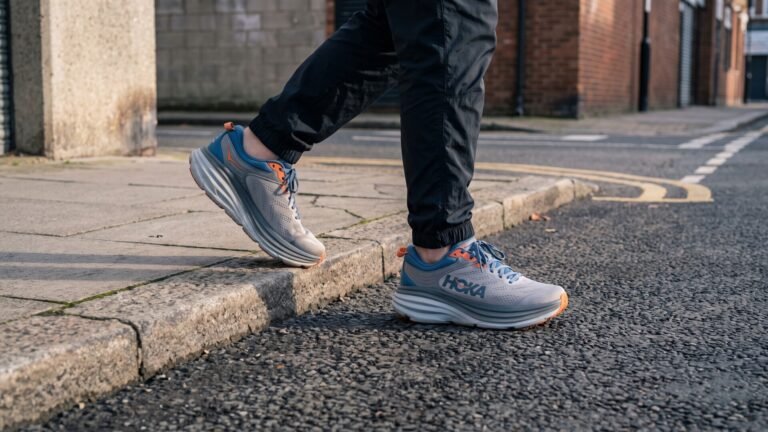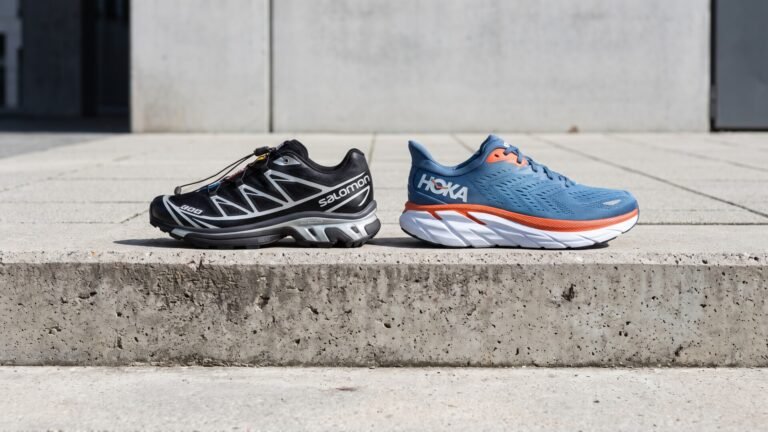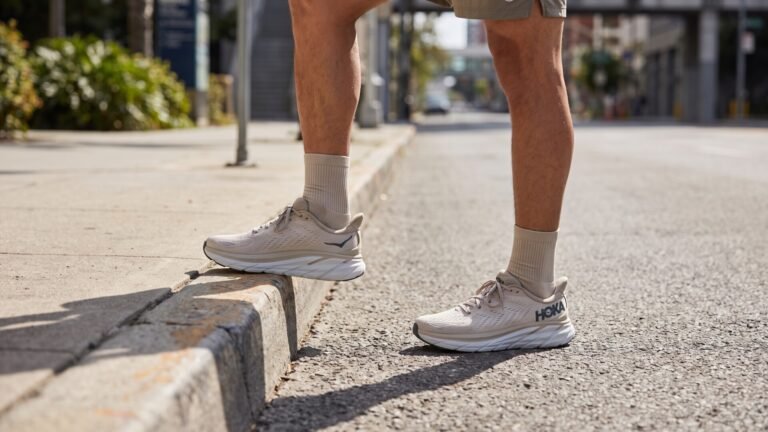
Hoka Shoes For Wide Feet
You asked for a wide Hoka, and the internet answered with a width label. Now you are here because you have learned what that label actually means: not much, until you know which model it is attached to.
The real question is not whether Hoka makes wide shoes. It is which Hoka gives your specific foot enough room through the forefoot without turning your heel into a slip-and-slide. Because a wide shoe that does not hold your heel is just a shoe that is too big, and a wide shoe that pinches your instep is a shoe you will stop wearing by lunch.
Here is the short version. The Hoka Bondi 9 Wide is the strongest pick for maximum cushioning and long walking days. The Hoka Clifton 10 Wide is the better lightweight everyday option. The Gaviota 5 Wide is the one for stability seekers. And the Transport 2 Wide is the smart money for commuting and travel.
The reason buyers get stuck is that Hoka models differ substantially in cushioning, stability, upper shape, weight, and which widths they actually offer. "Wide" is not identical across the lineup. If your foot is genuinely broad or high-volume, you need to assess the toe box and the upper, not just the box the shoe came in.
Best Hoka Shoes for Wide Feet at a Glance
| Model | Best for | Cushioning | Fit character | Main drawback |
|---|---|---|---|---|
| Hoka Bondi 9 Wide | Maximum-cushion walking and standing | Very high | Generous, structured wide fit | Bulky and less versatile for casual styling |
| Hoka Clifton 10 Wide | Everyday walking and easy running | High | Roomier than standard, relatively lightweight | Less stable for some high-volume feet |
| Hoka Gaviota 5 Wide | Stability and long periods on foot | Very high | Supportive, accommodating platform | Heavier and more noticeable underfoot |
| Hoka Arahi 8 Wide | Lightweight stability | Moderate to high | Secure midfoot with extra width | Firmer feel than Bondi or Gaviota |
| Hoka Transport 2 Wide | Commuting, travel, and casual wear | Moderate | Practical, structured, less running-specific | Less plush than the dedicated running models |
| Hoka Speedgoat 6 Wide | Trail running and hiking | High | Secure trail fit with a wider option | Toe box may still feel restrictive for very broad feet |
Editor’s choice for most wide-foot buyers: Hoka Clifton 10 Wide.
Best for maximum cushioning: Hoka Bondi 9 Wide.
Best for stability: Hoka Gaviota 5 Wide.
Best for everyday commuting: Hoka Transport 2 Wide.
How Hoka Wide Sizing Actually Works
Here is the part most guides skate past. A wide width label on a Hoka generally means the shoe is built on a wider last, which adds room across the forefoot and midfoot. It does not automatically make the toe box taller. It does not extend the heel area. And it does not add volume over the instep.
That distinction matters more than almost anything else in this article. If your problem is that your toes are jammed side to side, a wide Hoka will probably help. If your problem is that the top of your foot feels crushed under the laces, or your little toe is being squeezed from above rather than from the side, the wide label alone might not fix it.
Hoka typically offers standard and wide widths across many of its core models, with some availability in extra-wide depending on the model and the gender category. That availability shifts by season and region, so you need to verify the current size chart for the exact model you want. Do not assume that because the Bondi comes in wide, the Speedgoat does too, or that the wide width is the same shape across both.
How to measure properly
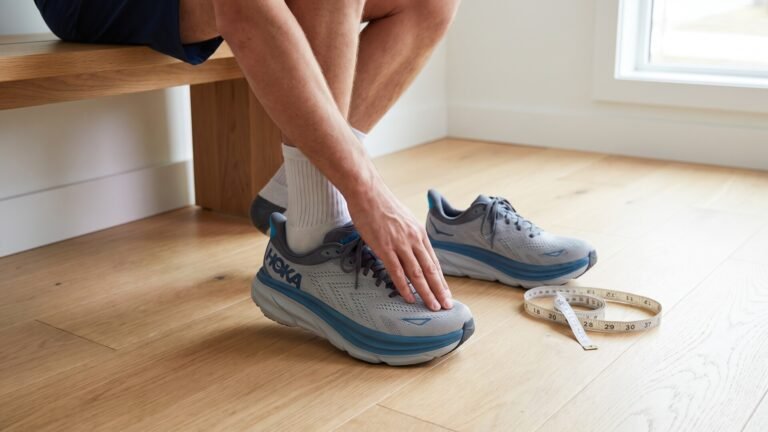
Measure both feet in the socks you plan to wear, at the end of the day when your feet are at their most swollen. Stand up, because your feet spread under your full weight. Trace each foot or use a proper measuring device, then take the length from your longest toe and the width at the widest point, which is usually across the ball of the foot.
Buy for the larger foot. Almost everyone has one foot slightly bigger than the other, and buying to fit the smaller one is how you end up with one sore foot and one shoe that feels loose.
Why some wide-foot buyers still dislike Hoka wide shoes
The reasons are rarely about the width label itself. Common complaints include a heel that feels narrow relative to the forefoot, a toe box that is not tall enough for toes that stack upward, feet that swell significantly through the day, bunions that need room in a very specific spot, and feet that need more overall volume rather than just extra width across the ball.
If any of those sound like you, the wide version of a model is a starting point, not a guarantee. You may need to look at how the upper is constructed, whether the material has any give, and how the lacing system lets you adjust pressure across the instep.
Signs You Need Wide Rather Than Standard
- Your toes touch the sides of the shoe, or you feel pressure over the little-toe joint.
- Your foot spills over the edge of the midsole or creates a visible bulge in the upper.
- You get numbness or hot spots after walking, even when the length feels correct.
- You have to loosen the laces substantially to relieve forefoot pressure.
Signs You May Need More Than Hoka Wide
- You feel persistent pressure on top of the toes or across the instep.
- Your heel slips after you size up to gain forefoot room.
- Your foot is broad from heel to toe, not just wide at the forefoot.
- The model you want does not offer the extra-wide option your foot actually needs.
The Best Hoka Models for Wide Feet
Hoka Bondi 9 Wide
The Bondi is the shoe most people picture when they think of Hoka: a thick slab of foam that makes you feel like you are walking on a firm marshmallow. The 9 Wide carries that reputation forward, and for wide-foot buyers whose priority is maximum cushioning for walking, standing, travel, or high daily mileage, it remains the benchmark.
The platform is substantial, and that is the point. If you spend hours on your feet, the Bondi’s cushioning takes the edge off impact in a way that lighter shoes cannot match. For tired feet, it genuinely feels like a relief.
But the bulk is real. This is not a shoe for the gym, for faster running, or for anyone who wants a low-profile sneaker that disappears on the foot. It is a lot of shoe, visually and physically, and it takes some getting used to if you are coming from conventional running shoes.
On fit, the wide version gives your forefoot meaningful extra room. The upper is structured rather than stretchy, which helps with security but means you should not expect it to mold dramatically to your foot. Buyers with high insteps should check for pressure across the top of the foot rather than assuming the width label solves every fit issue.
Value comes down to cost per wear. The Bondi 9 Wide is not cheap, but if you wear it daily for work, walking, or travel, the price spreads thin across hundreds of uses. If you want one shoe for every activity, though, the bulk and the single-purpose focus make it a harder sell. It is a specialist tool for cushioned comfort, and it knows it.
Hoka Clifton 10 Wide
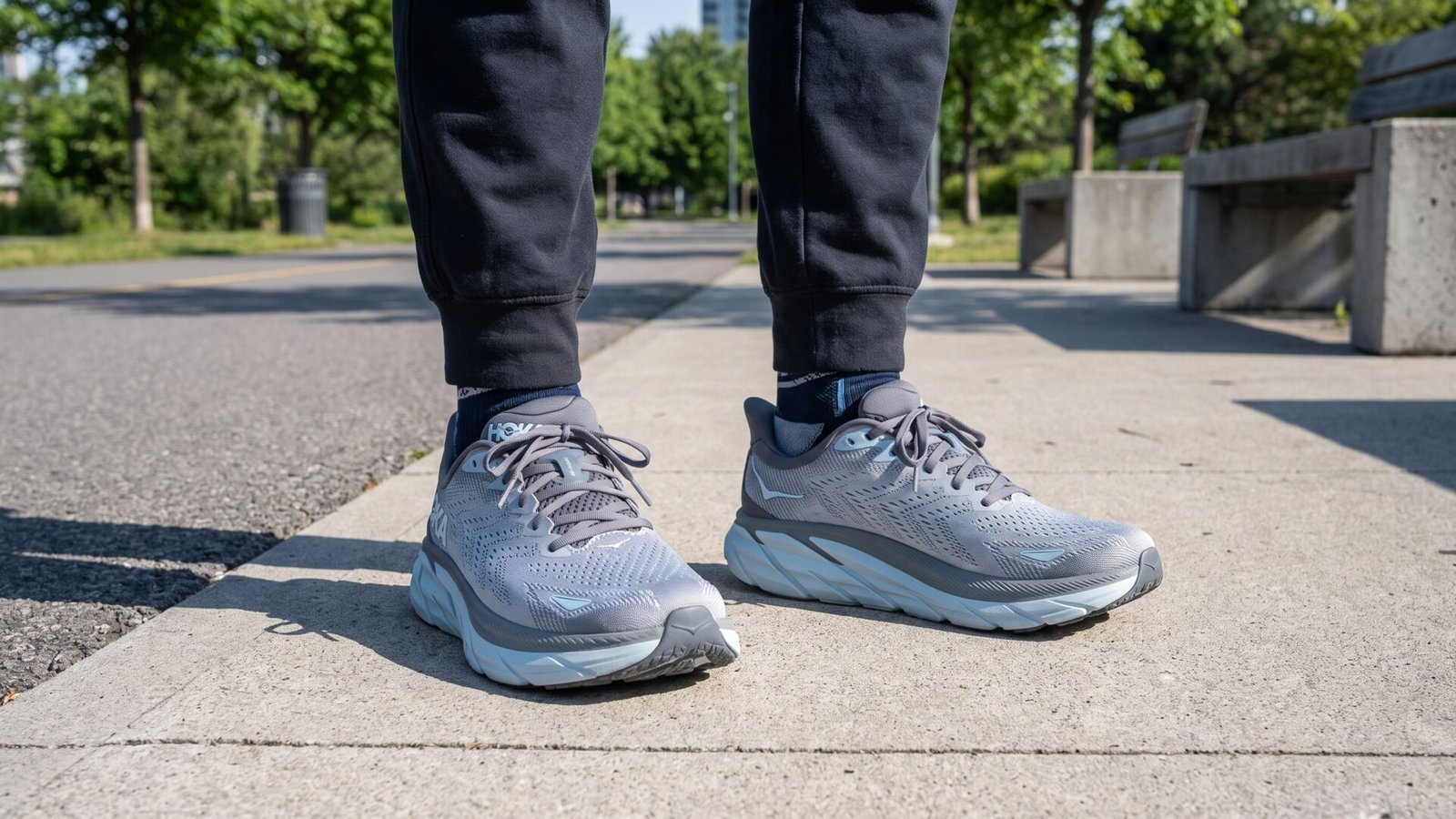
This is the one we would hand to most wide-foot buyers without a second thought. The Clifton 10 Wide takes the cushioning DNA of the Bondi and trims the weight and bulk, producing a shoe that works for walking, easy running, commuting, and daily wear without dominating your foot or your outfit.
The tradeoff is real. The Clifton is lighter and less protective than the Bondi, and it does not feel as planted. If you want maximum cushioning for all-day standing, the Bondi does that job better. If you want a shoe that does everything reasonably well and does not feel like a moon boot, the Clifton is the answer.
For first-time Hoka buyers, the Clifton is also the smarter entry point. The Bondi can feel visually and physically excessive if you have never worn a maximal-cushion shoe. The Clifton gives you the experience without the commitment.
Fit-wise, the wide version offers genuine extra room through the forefoot. But if your foot is very high-volume, especially through the instep, the Clifton may still feel snug. The upper is relatively light and flexible, which helps, but it is not a stretchy sock-like fit. If your issue is instep height rather than forefoot width, you may need to look at how the lacing sits across the top of your foot before committing.
Hoka Gaviota 5 Wide
The Gaviota is what you buy when you want a stable, highly cushioned shoe for long shifts, walking, and everyday support. It is Hoka’s maximum-stability model, and it shows. The platform is wide and planted, the guidance system keeps your foot tracking in a straight line, and the cushioning is deep enough to handle hours on hard floors.
For people who pronate heavily or simply prefer a shoe that feels secure underfoot, the Gaviota 5 Wide is a strong choice. That stability is the reason it works so well for standing all day: it does not just soften impact, it keeps your foot from rolling around inside the shoe as fatigue sets in.
The catch is weight and feel. Stability features add structure, and structure adds heft. The Gaviota is noticeably heavier and more rigid than the Clifton, and it does not have the natural, flexible feel that some buyers want. If you are looking for a low-profile casual sneaker or a shoe that disappears on your foot, this is not it.
The longer-term argument for the Gaviota is that it can be a better buy than a softer shoe that feels great for the first week but does not provide the support you actually need by month three. Stability is not a marketing gimmick for people who need it. It is the difference between a shoe that works all day and one that leaves you aching by evening.
Hoka Arahi 8 Wide
The Arahi is the lighter stability alternative to the Gaviota. It uses a different mechanism to control motion, with a firmer, more structured feel that some runners and walkers genuinely prefer over the soft, sinking sensation of maximum-cushion models.
If you dislike overly soft foam, the Arahi is worth a serious look. It gives you support and guidance without the bulk of the Gaviota, and it feels more responsive underfoot. For road running or faster walking, that controlled feel can be an advantage.
The fit story is interesting for wide-foot buyers. The Arahi Wide offers extra room through the forefoot while maintaining a secure heel, which is exactly the combination many wide-foot people need. The tradeoff is that the upper is more structured and less forgiving. If your foot is high-volume through the instep, the Arahi may feel restrictive in a way that the Clifton does not.
Value-wise, the Arahi makes sense if you want stability without paying for or carrying the bulk of a maximum-cushion model. It is a middle path: lighter than the Gaviota, more supportive than the Clifton, and priced accordingly.
Hoka Transport 2 Wide
The Transport is Hoka’s answer to the question "what do I wear when I am not running?" It is a lifestyle-oriented shoe designed for commuting, travel, casual outfits, and mixed city use. The 2 Wide carries that mission forward with a more practical, grounded design than the running models.
Its advantage over the running shoes is versatility. The Transport looks less like technical athletic gear and more like a modern everyday sneaker. It transitions from airport terminals to office walkways to weekend outfits without screaming "I just finished a marathon." The outsole is built for varied surfaces, which matters when you are crossing wet pavement, hotel carpets, and cobblestones in a single day.
Be clear about what it is not. The Transport is not the first choice for runners, and it is not the softest shoe underfoot. The cushioning is moderate rather than maximal, and the ride is firmer and more grounded than the Bondi or Clifton. If you want that plush Hoka feel, this is not where you will find it.
The cost-per-wear argument is strong, though. If you wear one pair across work, travel, and weekend use, the Transport’s higher price spreads across far more hours than a dedicated running shoe you only wear for exercise. For wide-foot commuters and travelers, it is often the smartest buy in the lineup.
Hoka Speedgoat 6 Wide
The Speedgoat is the trail specialist, and the 6 Wide brings genuine forefoot relief to off-road runners and hikers. If you need grip and foot security on uneven ground, this is the Hoka to buy. The outsole is aggressive, the cushioning is high, and the fit is designed to hold your foot securely when the terrain gets rough.
The wide version improves forefoot comfort significantly over the standard fit. But this remains a performance-oriented trail shoe, not a relaxed wide casual sneaker. The fit is secure and locked-in by design, which is exactly what you want on descents but not what you want if you are looking for a roomy shoe to wear around town.
The main risk for very broad feet is that the toe box, even in wide, can still feel restrictive. Trail shoes prioritize foot security over toe splay, and that is a deliberate tradeoff. If you need substantial toe-box volume, the Speedgoat may not be the answer even in wide.
When choosing a trail shoe, judge the fit while simulating what you will actually do. Walk downhill, pay attention to whether your toes are jamming into the front, and remember that feet swell on long hikes. A shoe that fits perfectly standing still in a store can feel completely different after three hours on a trail.
Choosing the Right Hoka Wide Shoe for Your Use
For Walking and Standing All Day
The Bondi 9 Wide is the default recommendation for maximum cushioning. The Gaviota 5 Wide is the pick if you want a more supportive, stable platform that keeps your foot from rolling as fatigue sets in.
Here is the thing most buyers get wrong: softness is not automatically better after several hours. A shoe that feels like a pillow for the first five minutes can become tiring if it is too unstable or if your foot is working to stay balanced inside it. Some buyers genuinely prefer the more controlled feel of the Arahi 8 Wide for long days.
Practical advice: try shoes later in the day when your feet are swollen, wear the socks you will actually use, and remember that your feet expand with heat and time on your feet. The right shoe is the one that keeps your toes relaxed and your heel secure after extended wear, not the one that feels softest for five minutes in the store.
For Running
The Clifton 10 Wide is the everyday easy-run pick. Runners seeking stability should look at the Arahi 8 Wide or the Gaviota 5 Wide, depending on how much structure they want. The Speedgoat 6 Wide is specifically for trails, not road running.
A wide road-running shoe still needs to hold your foot securely during turns and changes of pace. If you have to crank the laces down aggressively to stop your foot sliding, the shoe is wrong regardless of the width label. The wide version should give you forefoot room without turning your foot into a loose passenger.
Do not choose the Bondi solely because it has the most cushioning if you want a responsive running shoe. It is a walking and standing shoe first. For running, the Clifton or the stability models will serve you better.
For Travel and Commuting
The Transport 2 Wide is the most versatile option for travel and commuting. The Clifton 10 Wide is the softer alternative if you want more cushioning and do not mind a slightly more athletic look.
Think about what travel actually involves: packing, airport walking, city pavement, varied surfaces, and outfits that need to work across multiple settings. A bulky maximum-cushion shoe is a nuisance when you are trying to pack light, and it looks out of place in contexts where a cleaner silhouette works better.
The cost-per-wear framework applies strongly here. If you travel frequently or want one daily pair, the Transport’s versatility means you wear it far more hours per dollar than a specialist running shoe. That is the math that matters.
For Bunions, Swollen Feet, and High-Volume Feet
Start with the Bondi 9 Wide or Clifton 10 Wide, but check the exact pressure point rather than assuming the widest model is the best. A bunion at the base of the big toe needs different room than a bunion at the little toe, and a swollen foot needs different accommodation than a structurally broad foot.
Width, toe-box height, upper stretch, and lacing all affect comfort differently. A shoe that is wide enough but has a low toe box will still crush toes that sit upward. A shoe with plenty of forefoot room but a rigid upper will still press on a prominent joint.
If you have persistent pain, numbness, or a diagnosed foot condition, get professional footwear advice or see a medical professional. A product list is not a substitute for a proper assessment. And buy from a retailer with a clear return policy, especially if your issue is volume rather than simple width. You need the ability to wear the shoe around your house and decide honestly.
What Most Buyers Get Wrong About Hoka Wide Shoes
The biggest mistake is assuming every Hoka model fits the same. The Bondi, Clifton, Gaviota, Arahi, Transport, and Speedgoat have different shapes, different lasts, and different intended uses. A wide Bondi and a wide Speedgoat are both "wide Hokas" and they fit completely differently.
The second mistake is sizing up instead of going wide. Sizing up adds length everywhere, which creates heel slip, excessive creasing, and poor foot control, while leaving the pressure in exactly the wrong place. If your forefoot is being squeezed, a longer shoe does not fix that. It just makes your foot slide forward into the same narrow spot.
The third mistake is confusing initial softness with all-day comfort. A soft shoe can still be tiring if it is too unstable, too warm, or poorly secured. The foam might feel great in the store, but if your foot is working to stay in place, you will feel that fatigue by hour six.
The fourth mistake is focusing only on the toe box while ignoring midfoot and instep volume. Many wide-foot buyers discover that their real pressure point is across the top of the foot or through the arch, not at the toes. A wide shoe does nothing for those problems.
Value, Durability, and the Hidden Cost of Choosing Wrong
Let us talk about the real cost of a bad fit. A cheaper shoe that causes discomfort and gets replaced in three months is more expensive than a quality wide Hoka that you wear daily for two years. That is the cost-per-wear logic that should drive this purchase.
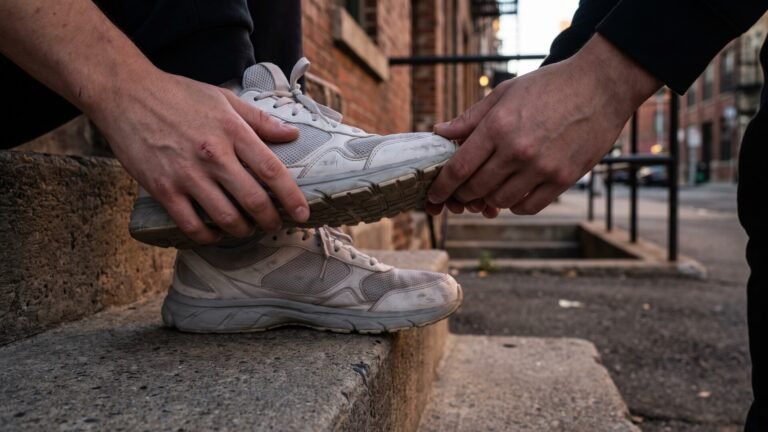
What typically wears first in heavily used cushioned shoes? The outsole rubber in high-contact areas goes first, especially at the heel and the outside edge of the forefoot. The upper shows creasing and rubbing where it flexes, and eventually the midsole loses its spring. That gradual loss of cushioning feel is normal, not a defect. A shoe that feels dead underfoot has reached the end of its useful life, regardless of how the upper looks.
The most expensive model is not automatically the best value. A Transport 2 Wide may provide far better value for a commuter than a Bondi 9 Wide that only gets worn on weekends. A Bondi 9 Wide is wasteful if you only walk occasionally. Match the shoe to the hours you will actually put on it.
Maintenance matters. Rotate pairs if you can, because foam needs time to recover between wears. Let shoes air out after sweaty days. Replace insoles if they wear out before the rest of the shoe. And do not treat a worn-out sole as a sizing problem. If the cushioning has gone flat, buying the same shoe in a bigger size will not fix it.
One more reality check: heavily worn performance shoes have limited resale appeal. Nobody wants your flattened, foot-molded Bondis. Fit and useful life matter more than any hope of recovering money later. Buy the shoe that works, wear it until it dies, and replace it.
Fit and Buying Checklist
Use this as your final decision process before you hand over your card.
- Measure both feet in the socks you expect to wear, at the end of the day, and choose the size based on the larger foot.
- Leave about a thumb’s width of space in front of your longest toe, then check that your heel does not lift excessively when you walk.
- Walk on a firm surface. Test stairs or inclines if you can. Pay attention to pressure over your bunion, little-toe joint, and instep.
- If the retailer allows returns, compare the standard and wide versions. Do not remove tags or wear the shoes outside before you have decided.
- Verify current model availability, width options, color availability, and return terms. Hoka sizing and inventory vary by model and season.
Which Hoka Wide Shoe Still Makes Sense in Three Years?
Trends come and go, but a shoe that solves a recurring problem stays relevant. Here is how these models look with a three-year lens.
The Clifton 10 Wide is the safest all-around purchase. It handles walking, commuting, light running, and daily wear without excelling at any one thing but failing at nothing. For most wide-foot buyers, it is the one pair that survives the test of time.
The Bondi 9 Wide makes sense if your main need is standing, walking, or cushioning, and you are comfortable with a substantial silhouette. It is a specialist tool, and specialists stay relevant when the job they do is one you face every day.
The Gaviota 5 Wide and Arahi 8 Wide are the picks when stability is the reason you are shopping, not just because they look supportive. If your foot needs guidance, a stable shoe is not a trend. It is a daily requirement.
The Transport 2 Wide earns its keep through clothing versatility and travel practicality. A shoe that works across your wardrobe and your travel schedule gets worn more, and more-worn shoes justify their price.
A model remains relevant longer when it solves a specific recurring problem rather than being bought only because Hoka is currently popular. Buy for the problem, not the hype.
Who Should Buy Each Model?
Buy the Hoka Bondi 9 Wide if
- You walk or stand for long periods and want maximum cushioning.
- You prefer a substantial, protective platform underfoot.
- You are comfortable sacrificing some lightness and styling versatility.
Buy the Hoka Clifton 10 Wide if
- You want the best balance of weight, cushioning, and everyday versatility.
- You need one pair for walking, commuting, and easy running.
- You are a first-time Hoka buyer who does not want the bulk of the Bondi.
Buy the Hoka Gaviota 5 Wide if
- You want a stable, highly cushioned shoe for long days.
- You prefer a planted ride over a lightweight feel.
- You need more structure than the Clifton typically provides.
Buy the Hoka Arahi 8 Wide if
- You want lighter stability and a more controlled ride.
- You dislike overly soft, heavy footwear.
- You need a road-running or walking shoe rather than a lifestyle sneaker.
Buy the Hoka Transport 2 Wide if
- Your priority is commuting, travel, and casual wear.
- You want a shoe that looks less like a technical running model.
- You value versatility and cost per wear over maximum cushioning.
Buy the Hoka Speedgoat 6 Wide if
- You need a wide trail-running or hiking shoe.
- You value grip and foot security on uneven ground.
- You do not need a relaxed, everyday toe box.
Final Verdict: The Best Hoka Shoes for Wide Feet
The Hoka Clifton 10 Wide is the overall winner. It offers the strongest balance of comfort, weight, versatility, and everyday value for the broadest group of wide-foot buyers. If you want one Hoka that does most things well, this is it.
Choose the Hoka Bondi 9 Wide instead if maximum cushioning for walking or standing is your priority and you can live with the bulk. Choose the Gaviota 5 Wide for stable all-day support, the Arahi 8 Wide for lighter stability, the Transport 2 Wide for commuting and travel, and the Speedgoat 6 Wide for trails.
One warning before you buy. The correct width is only useful if your heel and instep are also secure. A shoe that is labeled wide but creates pressure across the top of your foot or lets your heel slide is not a successful fit, no matter how much forefoot room it has. The width label is the start of the conversation, not the end of it.
Frequently Asked Questions About Hoka Shoes For Wide Feet
Are Hoka shoes good for wide feet?
Several Hoka models are available in wide widths and can work well for broad forefeet, but the fit varies by model. You still need to assess toe-box height, instep volume, heel security, and the exact width offered for the specific shoe you want.
Which Hoka shoe is widest?
Perceived width depends on your foot shape and the model’s construction, not just the width label. The Bondi and Gaviota are useful starting points for buyers seeking a roomy, cushioned platform, but you should verify the specific size and width options for the model you choose.
Is Hoka Bondi good for wide feet?
The Bondi 9 Wide is a strong option for walking and standing, with genuine forefoot room and maximum cushioning. Its bulk, weight, and less versatile styling are the tradeoffs. It may not solve pressure caused by a high instep or a need for extra toe-box height.
Should I size up in Hoka shoes for wide feet?
Sizing up can create heel slip and poor foot control while leaving pressure in the wrong place. Try the correct wide width first, then consider length only after checking toe clearance and heel security.
Are Hoka shoes good for bunions?
A wide Hoka model may reduce side pressure for some bunion shapes, but comfort depends on the upper, toe-box height, and the location of the bunion. Persistent pain or numbness should not be treated as a normal break-in issue. Seek professional advice if symptoms continue.
Which Hoka is best for standing all day?
The Bondi 9 Wide offers maximum cushioning, while the Gaviota 5 Wide suits buyers who prefer a more stable platform. The best choice depends on whether you are more bothered by impact, fatigue, or instability.
Do Hoka wide shoes work for high arches?
Width and arch shape are separate fit issues. A wide shoe may relieve forefoot pressure without resolving arch discomfort. Assess the insole, midfoot pressure, and overall support rather than choosing solely by width.