Best Travel Sneakers
The airport test is a liar. That is the first thing you need to understand.
You will stand in your kitchen, slide on a pair of sneakers, bounce on your toes for ten seconds, and think, “These feel great.” Then you will spend four hours in a metal tube, walk nine miles through a foreign city on cobblestones you did not know existed, stand in a museum queue for forty minutes, and eat dinner in the same shoes because you refused to pack a second pair. That is when you find out what a travel sneaker is actually made of.
The real question is not “which sneaker feels softest in the store?” It is “which pair can handle hour eight of a 20,000-step day and still look right at a nice restaurant?” Those are two completely different questions, and most travel sneakers only answer one of them.
Running shoes answer the comfort question but look like you raided a gym locker. Fashion sneakers answer the style question but leave your feet screaming by mid-afternoon. The best travel sneakers sit in the middle – they give you genuine walking support without making you look like you are heading to a spin class.
Our pick for the best all-around travel sneaker is the New Balance 990v6. It is not the flashiest choice, and it is not the cheapest. It is the one we would trust with a two-week trip where the sneaker has to do everything. If your itinerary is built around punishing walking days, the Hoka Transport takes the crown. And if you are a carry-on minimalist heading somewhere warm, the Allbirds Tree Runner Go is the lightweight answer.
Here is everything you need to know before you buy.
Quick Recommendations
| Sneaker | Best for | Main strength | Main drawback | Approximate price |
|---|---|---|---|---|
| New Balance 990v6 | Best overall | Cushioning, stability, everyday style | Expensive and slightly bulky | Around $200 |
| Hoka Transport | Long walking days | Supportive platform and durable upper | More technical appearance | Around $150 |
| Allbirds Tree Runner Go | Lightweight packing | Low weight and casual versatility | Less structured support | Around $160 |
| On Cloud 5 | Airport-to-city travel | Easy comfort and clean styling | Fit can feel narrow | Around $150 |
| Adidas Ultraboost Light | Active itineraries | Soft cushioning and athletic comfort | Takes up more luggage space | Around $190 |
| Nike Pegasus 41 | Best value performance option | Reliable walking and running comfort | Looks more like a running shoe | Around $140 |
| Veja Campo | Style-first travel | Smart casual appearance | Break-in and weight can be issues | Around $175 |
Editor’s choices:
- Best overall: New Balance 990v6
- Best for walking all day: Hoka Transport
- Best lightweight option: Allbirds Tree Runner Go
- Best for stylish city trips: Veja Campo
- Best value: Nike Pegasus 41
- Best for narrow feet and clean airport style: On Cloud 5, subject to trying the fit first
How the Best Travel Sneakers Were Chosen
We did not build this list from spec sheets. We built it around one question: what does a sneaker actually need to survive a trip?
Comfort after hour eight, not hour one. Anyone can make a shoe that feels plush in a store. The test is whether the cushioning stays supportive after miles of pavement, whether the midsole holds up its end of the bargain, and whether your feet feel wrecked by dinner time. Initial softness means nothing if the foam collapses by mid-afternoon.
Grip and stability. City streets are not forgiving surfaces. You will hit wet cobblestones, smooth museum floors, escalators, and uneven sidewalks. The outsole needs to grab all of them. Heel security matters too – a shoe that lets your foot slide around inside is a blister machine, no matter how good the cushioning feels.
Transition ability. The best travel sneaker moves from the airport to a walking tour to a casual dinner without screaming “athletic shoe” at everyone in the room. That is harder than it sounds. Most performance shoes fail this test. Most fashion sneakers fail the comfort test. The winners on this list manage both.
Honest packability. Here is the truth: the best travel sneaker is usually the one on your feet, not the one in your bag. A bulky, supportive shoe takes up serious luggage space, but if you wear it through the airport and on the plane, that barely matters. Packability only becomes critical if the sneaker is your backup pair or you are traveling carry-on only with a tiny bag.
Fit flexibility and width. Travel sneakers run narrower than most people expect. If you have wide feet, several models on this list are simply not going to work, no matter how good the reviews are. Width availability is a genuine deciding factor, not a footnote.
Weather tolerance and cleaning. A knit sneaker breathes beautifully and soaks through in the first rain shower. A leather option handles weather better but shows scuffs. Light colors look great in photos and look terrible after three days of transit. These tradeoffs decide whether a sneaker survives an actual trip, not just a photo shoot.
Cost per wear. A $200 sneaker worn on every trip for three years is better value than a $100 sneaker that hurts your feet and sits in the closet. We weighed long-term value against the sticker price throughout this list.
One more thing. We separated “best for travel” from “best for running.” A sneaker can handle long pavement days without being the right tool for serious training. The reverse is also true – some excellent running shoes make mediocre travel shoes because they are too aggressive, too stiff, or too loud in their styling. This list is about travel first.
The Best Travel Sneakers Ranked
New Balance 990v6 – Best Overall
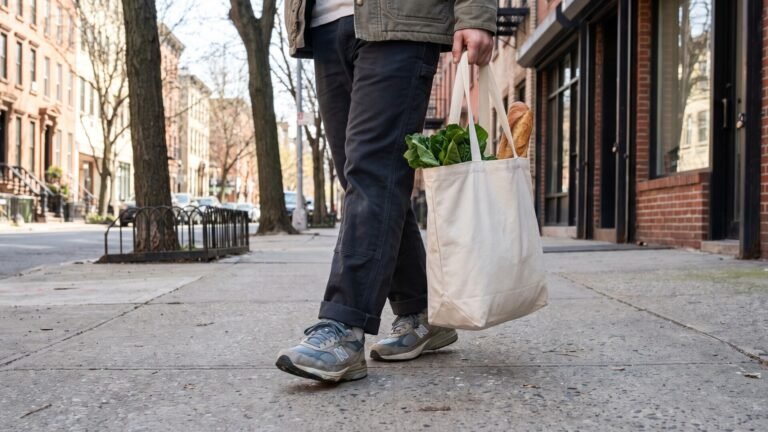
The 990v6 is not a hype shoe. It has never been a hype shoe. It is a dad shoe that somehow became the most trusted travel companion in sneaker culture, and there is a reason for that.
The cushioning is the headline. New Balance’s FuelCell foam in the midsole gives you a ride that is soft without being mushy – you get impact absorption on hard pavement, but the shoe does not wobble or feel unstable the way some plush sneakers do. That stability matters more than most people realize. After six hours of walking, a shoe that lets your foot roll around is exhausting. The 990v6 keeps you planted.
The upper is substantial without being heavy. It is a mix of mesh and suede and synthetic overlays that holds its shape trip after trip. This is not a shoe that stretches out and goes floppy after three months. The heel counter locks your foot in place, and the toe box gives you enough room that your feet can swell on a long flight without feeling trapped.
Style-wise, this is the sneaker that works with everything. Jeans, chinos, travel pants, even casual tailoring. The 990v6 does not look like a running shoe and it does not look like a fashion statement. It just looks like a quality sneaker that happens to be extremely comfortable. That versatility is the whole game for travel.
The drawbacks are real. It costs around $200, which is a lot for a sneaker that does not have a flashy collab attached to it. It is also heavier than the minimalist options on this list – if you are weighing every ounce in a carry-on, this is not the lightest choice. And the silhouette is traditional. If you want something sleek and modern, this will not scratch that itch.
The verdict: The safest all-purpose recommendation on this list. Buy it if you want one dependable pair that handles airports, long walking days, commuting, and dinner without demanding a second shoe. [Affiliate: Check the price on Amazon] For width options, [Affiliate: check the New Balance official store].
Hoka Transport – Best for Long Walking Days
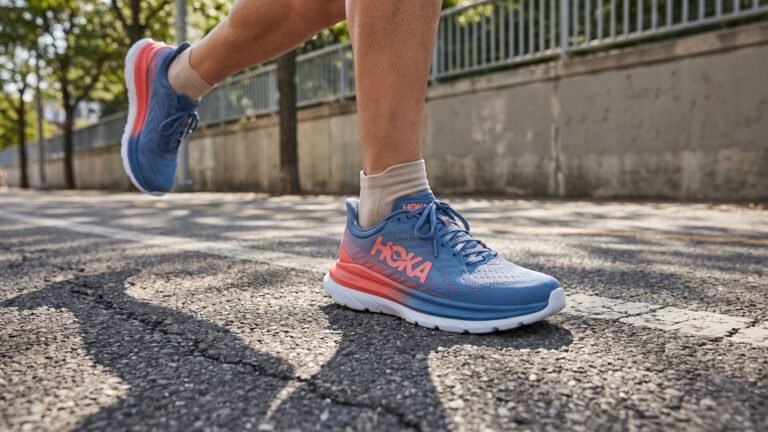
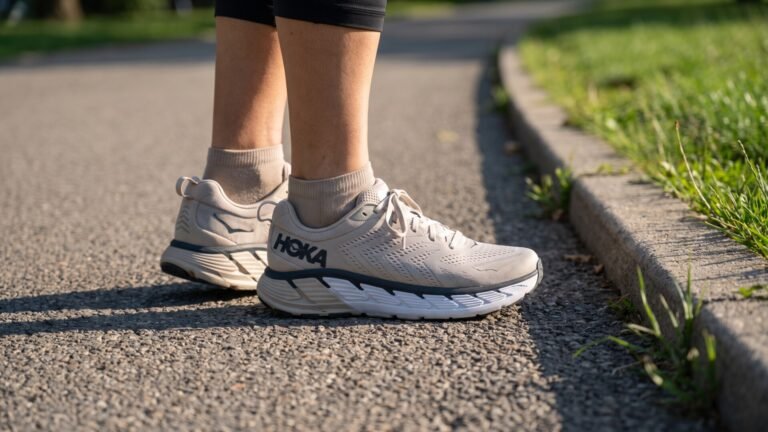
Hoka built its name on maximal cushioning, and the Transport takes that philosophy and points it at travel specifically. This is the sneaker for people whose itinerary reads like a punishment: 20,000 steps through museums, up hills, across plazas, onto public transport, repeat for a week.
The platform is what sets it apart. You get a thick, stable midsole that absorbs impact and keeps your feet fresh deep into the day. But unlike some Hoka models that feel like walking on marshmallows, the Transport has a firmer, more responsive feel. It is supportive rather than squishy. For all-day walking, that is exactly what you want.
The upper is more durable than most travel sneakers. It uses a reinforced mesh that handles scrapes and scuffs, and the outsole has serious grip – wet pavement, smooth stone, uneven cobbles, it grabs all of them. If your trip involves weather, this is one of the most practical choices on this list.
The tradeoff is appearance. The Transport has a technical, outdoor-influenced look. It is not ugly, but it is clearly a performance shoe, and it will not blend seamlessly with a dressier travel wardrobe. If your trip involves nice dinners or a smart-casual dress code, this shoe will stand out.
The verdict: The right choice when foot fatigue is your biggest worry. If you are walking all day, every day, and you care more about how your feet feel at hour ten than how the shoe looks at dinner, this is the pick. [Affiliate: Check the price on Amazon]
Allbirds Tree Runner Go – Best Lightweight Travel Sneaker
Allbirds built its reputation on comfort and sustainability, and the Tree Runner Go is the travel-focused version of that formula. It is light – genuinely light – and it packs down smaller than almost anything else on this list. If you are a carry-on minimalist heading somewhere warm, this shoe makes a compelling case.
The upper is made from eucalyptus tree fiber, which sounds like marketing nonsense until you feel how breathable it is. In hot climates, this is one of the most comfortable sneakers you can wear. Your feet stay cooler, and the shoe dries quickly if it gets wet. The sole is designed to be more substantial than the original Tree Runner, with better grip and a slightly more supportive ride.
Here is where the honest assessment comes in. This is not a maximum-support shoe. The construction is lighter and less structured than the 990v6 or the Hoka Transport, and on a genuinely punishing walking day, you will feel the difference. The upper is softer and less protective – it will not hold its shape as long as a traditional mesh or leather construction, and it offers minimal weather protection.
The other thing to know: Allbirds are not the most durable sneakers on the market. The materials are comfortable and sustainable, but they do not have the lifespan of a well-built leather or reinforced mesh shoe. Expect to replace them sooner than you would a 990v6.
The verdict: Buy this for warm-weather, casual trips where packability matters more than maximum support. Do not buy it as your only pair for a trip built around 20,000-step days. A lightweight sneaker that causes fatigue is a false economy – the ounces you save in your bag are not worth the misery on your feet. [Affiliate: Check the price on Amazon]
On Cloud 5 – Best for Airport and City Versatility
The On Cloud 5 has become the unofficial uniform of people who travel frequently and care about how they look doing it. You see them in airports constantly, and for good reason – they hit a sweet spot between athletic comfort and clean, minimal styling that most sneakers miss.
The ride is comfortable without being dramatic. On’s signature CloudTec sole gives you a cushioned feel that works well for moderate walking days, and the upper is soft and flexible with a sock-like fit. They are easy to slip on and off at security, which is a small but real travel advantage.
The design is the main draw. The Cloud 5 looks polished in a way that most walking shoes do not. It works with jeans, travel pants, even some casual chinos, and it does not scream “I am wearing athletic shoes.” For airport-to-city travel where you want one pair that looks put-together, this is a strong option.
The fit is the catch. On shoes run narrow, particularly in the forefoot. If you have wide feet or high-volume feet, the Cloud 5 can feel restrictive after a few hours. This is a shoe you need to try on with the socks you plan to travel in, not just assume will work because the reviews are good.
There is also a question of whether the Cloud 5 is genuinely practical or just attractive because it looks less athletic than alternatives. For moderate walking – airports, cafes, short city explorations – it is excellent. For genuinely long, demanding days, the 990v6 or Hoka Transport will serve you better.
The verdict: A great choice for travelers with moderate walking plans who want a polished, everyday sneaker. Try the fit first, especially if your feet run wide. [Affiliate: Check the price on Amazon]
Nike Pegasus 41 – Best Value Performance Option
The Pegasus line has been Nike’s reliable daily trainer for decades, and the Pegasus 41 continues that tradition. It is not flashy. It is not trendy. It is a proven, comfortable running shoe that also happens to be excellent for long days on your feet.
The cushioning is the story. Nike uses a combination of React foam and a Zoom Air unit in the forefoot, which gives you a responsive, comfortable ride that holds up for hours. The Pegasus is flexible and forgiving, and it works for a wide range of foot shapes. It is also widely available and frequently goes on sale, which makes it one of the best values on this list.
For travel, the Pegasus shines on active itineraries. If your trip involves a lot of walking plus the possibility of a run or a hotel gym session, this shoe does double duty. It is also a smarter buy than many travel-specific lifestyle sneakers because it is built for performance – the cushioning, outsole, and upper are all designed to handle serious mileage.
The tradeoff is style. The Pegasus looks like a running shoe, because it is one. It will not blend with smart-casual outfits the way the 990v6 or Veja Campo will. If your travel wardrobe is mostly jeans and casual wear, that is fine. If you need one pair for everything including nicer dinners, this is not the most versatile option.
The verdict: The best value on this list for travelers who prioritize walking comfort over fashion. If you do not mind a clear running-shoe look and want dependable performance without spending $200, this is the pick. [Affiliate: Check the price on Amazon]
Adidas Ultraboost Light – Best for Active Itineraries
The Ultraboost has been Adidas’s flagship running shoe for years, and the Light version trims some weight while keeping the plush, energetic ride that made the line famous. For travelers who want one shoe that handles sightseeing and a hotel gym session, this is a compelling option.
The cushioning is genuinely excellent. Boost foam is soft and responsive, and the Ultraboost Light feels great underfoot for hours. The Primeknit upper is comfortable and flexible, adapting to your foot shape in a way that structured shoes cannot match. If your itinerary involves high step counts plus some athletic activity, this shoe does both well.
Here is the problem: it is bulky. The sole is thick, and the shoe takes up serious space in a suitcase. This is not a packable sneaker. The answer is to wear it on the flight and pack something else, which works if you only need one pair but becomes awkward if you are trying to travel light.
The styling is also distinctly athletic. The Ultraboost looks like a performance running shoe, and it will not dress up well. For active, casual trips, that is fine. For anything with a dress code, you will need a second pair.
The verdict: Worthwhile if you will actually use the athletic performance after the trip – gym sessions, light runs, serious hiking. Less compelling if you just want a comfortable shoe for occasional city walking. If you buy it, wear it on the plane, do not pack it. [Affiliate: Check the price on Amazon]
Veja Campo – Best Style-First Travel Sneaker
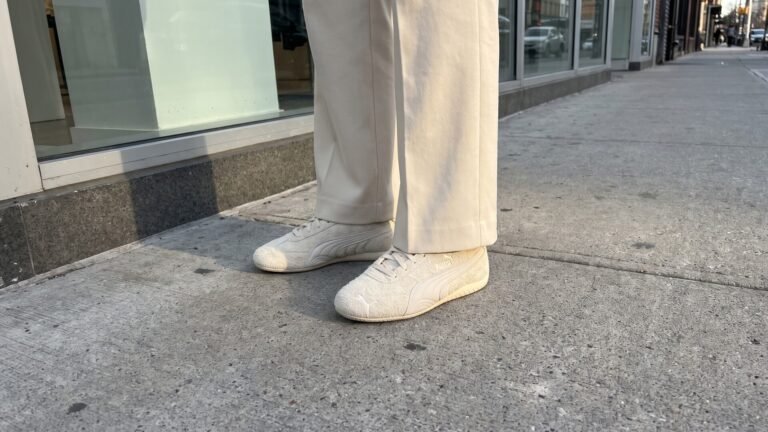
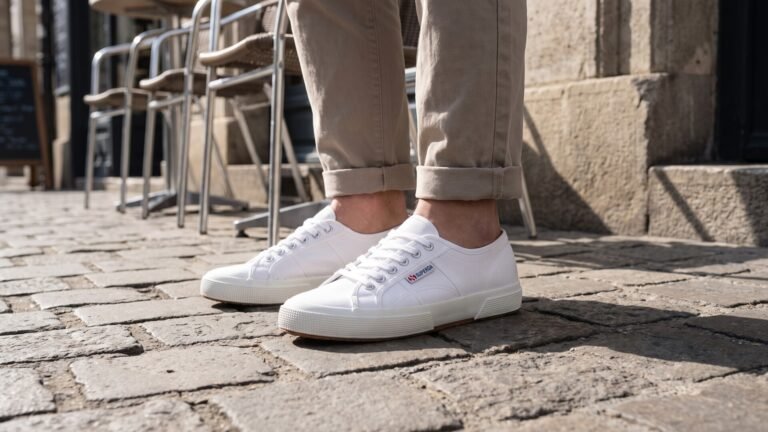
Veja has become the default choice for people who want a sneaker that looks considered rather than athletic. The Campo is a minimalist leather sneaker with the brand’s signature “V” branding, and it works with a surprisingly wide range of outfits – dresses, trousers, denim, smart-casual combinations that would make most running shoes look out of place.
The styling is genuinely the best on this list. The Campo looks clean, intentional, and expensive without being flashy. For a European city break where you will spend time at museums, nice restaurants, and galleries, this is the sneaker that will not embarrass you.
The tradeoff is everything else. Vejas are not cushioned shoes. The underfoot feel is firm, and there is a real break-in period – the leather upper and sole need time to soften and mold to your foot. They are also heavier than most of the options on this list, and they are not built for consecutive 20,000-step days. If your trip is mostly walking, your feet will let you know by day two.
The other consideration is maintenance. White leather Vejas look incredible when clean and look rough when dirty. City travel will dirty them. If you are not prepared to clean them regularly, consider a darker colorway.
The verdict: The right choice for style-first trips with moderate walking – short city breaks, museum visits, dinners, and travel wardrobes where appearance matters as much as cushioning. This is not the default choice for an intense sightseeing itinerary. Buy it for the style, not the all-day walking value. [Affiliate: Check the price on Amazon]
Which Travel Sneaker Fits Your Trip?
| Travel scenario | Best choice | Why |
|---|---|---|
| One pair for a long city trip | New Balance 990v6 | Balanced comfort, stability, and styling |
| 20,000-step sightseeing days | Hoka Transport | Supportive and purpose-built for walking |
| Warm-weather carry-on travel | Allbirds Tree Runner Go | Light, breathable, and easy to pack |
| Airport, cafes, and casual dinners | On Cloud 5 | Clean look with athletic comfort |
| Budget-conscious trip | Nike Pegasus 41 | Strong performance for the money |
| Travel plus gym or light running | Adidas Ultraboost Light | More versatile for active use |
| Style-led European city break | Veja Campo | Best wardrobe compatibility |
| Wide feet | New Balance 990v6 | Better width-selection potential; verify the exact version |
| Wet or mixed-weather travel | Hoka Transport | More practical outsole and upper than knit-first options |
Avoid these mistakes:
- Do not choose a shoe solely because it is the lightest in your suitcase. Weight matters for packing, but a shoe that lacks structure will leave you exhausted on long walking days. The ounces you save are not worth the misery.
- Do not bring brand-new sneakers on a trip. Wear them for several ordinary walks and at least one longer outing before departure. The airport is the worst possible place to discover a shoe rubs your heel raw.
- Do not assume a soft foam feel equals stable support. Plush cushioning can feel great for the first hour and leave your feet working overtime by hour six. Stability and support are different from softness.
- Do not use a fashion sneaker as your only pair if the itinerary requires long daily walks. Style matters, but not more than your feet. If you want a Veja, bring it for evenings and pack something more supportive for walking days.
Fit, Comfort, and Packing Advice
Fit and Width
Your feet swell during flights and long walking days. That is a physiological fact, not an excuse. The shoes you buy in the morning for a perfect fit will feel tighter by evening, and they will feel tighter still after a four-hour flight.
The solution is not to buy a half-size up and hope for the best. It is to find a shoe with enough forefoot room to accommodate swelling without leaving your heel loose. Heel slip is the enemy – if your foot slides around inside the shoe, you will get blisters no matter how good the cushioning is.
Width options matter more than most people realize. The New Balance 990v6 is available in multiple widths in many versions, which makes it the safest recommendation for wide feet. Many sleek travel sneakers – the On Cloud 5, the Veja Campo, several others – run narrower than their casual appearance suggests. If you have wide feet, check the width availability before you order, and verify the return policy so you are not stuck with a shoe that pinches.
When you try on sneakers for travel, wear the socks you plan to actually travel in. Thick hiking socks change the fit completely. Check heel slip by walking, check toe clearance (you want a thumb’s width between your longest toe and the end of the shoe), and pay attention to arch pressure and forefoot compression. If it feels tight in the store, it will feel worse at hour eight of a walking day.
Socks, Insoles, and Break-In
Moisture-managing socks are the single best upgrade you can make to a travel sneaker. A good pair of merino or synthetic travel socks wicks sweat, reduces friction, and keeps your feet comfortable in a way that no shoe alone can match. This is a more useful investment than immediately replacing the shoe’s insole.
That said, if you already know you need supportive insoles – because you have flat feet, high arches, or a history of plantar fasciitis – bring them. But be aware that thicker insoles change the fit of the shoe. They take up internal volume and can reduce usable toe room. If you plan to use custom insoles, buy the sneaker with that in mind and check the fit with the insole installed.
The break-in rule is simple: wear the shoes on several ordinary walks and one longer outing before travel. Do not wait until the airport. If a shoe is going to rub, pinch, or cause discomfort, you want to know that at home, not in a foreign city with no return policy.
Packing and Airport Use
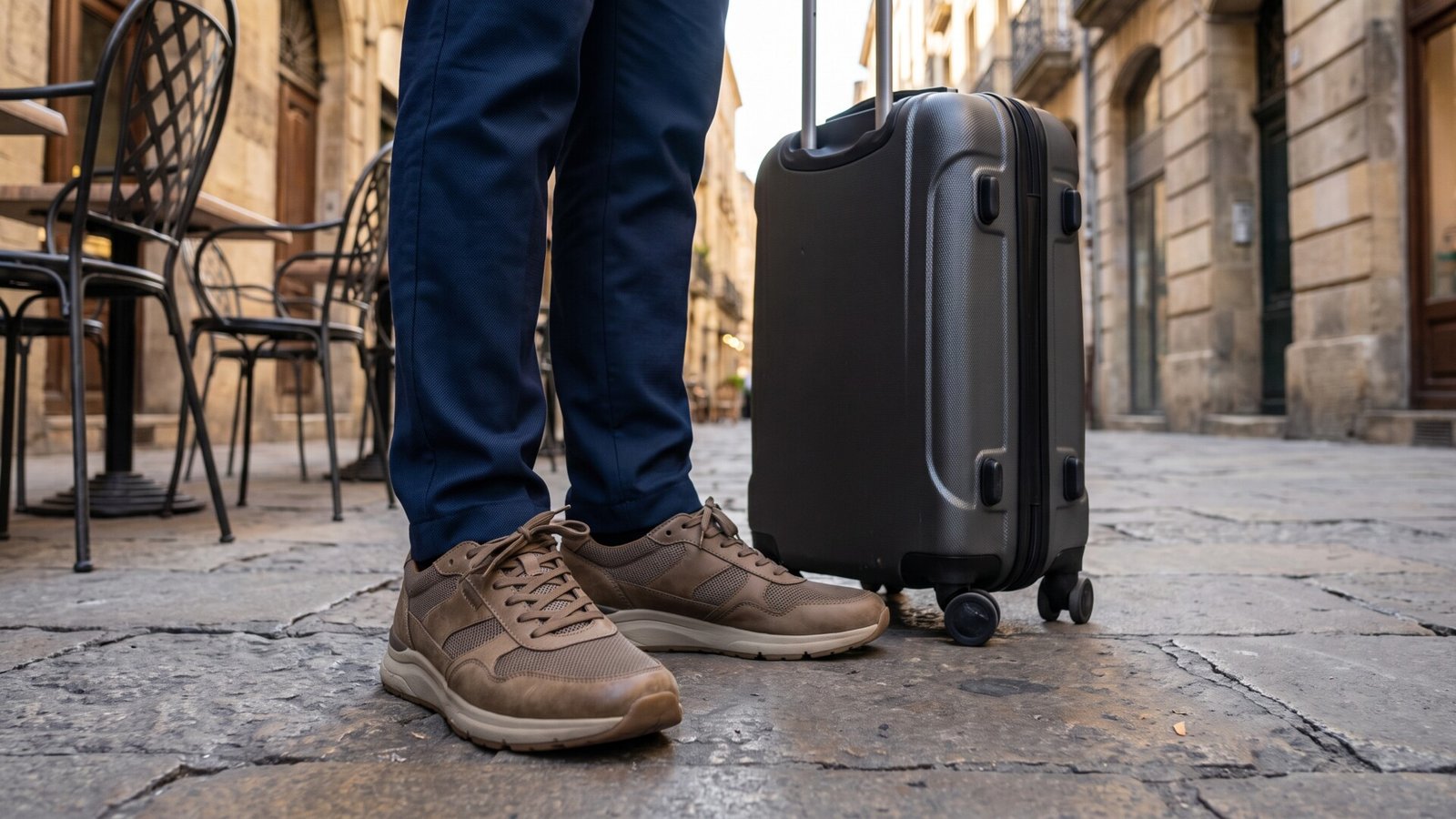
The best travel sneaker is usually the pair you wear in transit, not the pair in your suitcase. Wearing your most substantial shoe through the airport saves luggage space and means your feet have the support they need for the walking you will do immediately after landing.
If you are packing a second pair, think about the upper material. Flexible knit uppers like the Allbirds Tree Runner Go pack down small and are easy to compress. Structured mesh, leather, and suede hold their shape better but take up more space. Leather and suede also need more protection in luggage – they can scuff against other items.
A lightweight shoe bag is worth the tiny amount of space it takes. It keeps dirty shoes away from clean clothes and makes it easy to pull your sneakers out at airport security without digging through your bag. If you are bringing light-colored sneakers, pack cleaning wipes. White shoes show travel dirt quickly, and a quick wipe at the end of the day keeps them presentable.
What Most Travelers Get Wrong About Travel Sneakers
“Lightweight is always better.” This is the most common mistake we see. A very light shoe often lacks the structure needed for long urban walking. The midsole compresses, the upper offers minimal support, and your feet work harder to stabilize themselves. The fatigue from an unsupportive shoe outweighs any packing advantage. Weight matters, but it is not the only metric that matters.
“The softest shoe is the most comfortable.” Excessively soft cushioning feels great in the store and can feel unstable on uneven pavement. When your foot sinks into a plush midsole, it has to work harder to maintain balance. Over hours of walking, that extra work translates to fatigue. The best travel sneakers have cushioning that absorbs impact while remaining stable – soft enough to protect, firm enough to support.
“A travel sneaker must look like a travel sneaker.” There is a whole category of shoes marketed specifically for travel, and most of them are mediocre at everything. The most useful pair might be a proven running or walking shoe that happens to work with your wardrobe. The New Balance 990v6 is not marketed as a travel shoe. The Nike Pegasus 41 is not marketed as a travel shoe. Both are excellent for travel because they are excellent at walking comfort.
“One pair should handle every activity.” One versatile pair is efficient, and for many trips it is the right call. But if your itinerary includes wet weather, formal dinners, or demanding hikes, one pair will not cut it. Packing a second shoe – even a simple pair of sandals or dress shoes – gives you options and lets each pair dry out and recover between wears.
Which Option Still Makes Sense in Three Years?
Trends in sneakers move fast. Travel needs do not.
The New Balance 990v6 and Nike Pegasus 41 are both traditional, running-inspired silhouettes that have been in production for years in various forms. They are not trend-dependent. The 990 has been a staple since the 1980s, and the Pegasus has been Nike’s reliable trainer for decades. These are shapes that remain easy to wear as fashion shifts, because they were never chasing fashion in the first place.
Trend-dependent silhouettes – chunky dad shoes, aggressively styled runners, fashion-forward collaborations – have a shorter useful life. They look dated faster, and they are harder to wear as your wardrobe evolves. If you want a travel sneaker that will still look right in three years, choose a familiar shape over a trendy one.
What fails first on a travel sneaker? Outsole wear is the most common issue – the tread on the bottom wears down with pavement miles, reducing grip. Midsole compression is next; after several hundred miles, the foam loses its bounce and the shoe feels flat. Uppers stretch and lose their shape, particularly on knit and mesh constructions. Light-colored materials get dirty and are difficult to restore. Heel counters weaken over time, reducing the security that prevents blisters.
Cost per wear is the honest way to think about value. A $200 sneaker worn on every trip for three years, plus for commuting and everyday wear, drops to pennies per wear. A $100 sneaker that hurts your feet and sits in the closet costs you $100 for nothing. The most expensive sneaker on this list can be the best value if you actually wear it.
Resale is not a factor for travel sneakers. Most used sneakers have limited resale value, and travel sneakers specifically are purchased for personal use, not as investments. Buy the pair that serves your trips. Do not expect to recover much money later.
For long-term purchases, the strongest options are the New Balance 990v6 for durable everyday wear, the Nike Pegasus 41 for replaceable performance value, and the Hoka Transport for travelers whose priority is walking comfort. All three are built to last, and all three will still be sensible choices in three years.
Buying Advice for Weather, Foot Shape, and Style
Hot climates. Favor breathable mesh or knit options like the Allbirds Tree Runner Go. Your feet will stay cooler, and the shoe will dry faster if it gets wet. Understand the tradeoff: breathability reduces structure and rain protection. A shoe that breathes well is not going to keep your feet dry in a downpour.
Rain-prone destinations. Favor more protective uppers and practical outsoles like the Hoka Transport. Do not assume any sneaker is waterproof unless the manufacturer specifically says so. Most knit and mesh sneakers will soak through in heavy rain. If rain is likely, choose a shoe with a more substantial upper and better outsole grip.
Wide feet. Start with the New Balance 990v6 and its width options. Carefully check the forefoot on the On Cloud 5, Veja Campo, and other narrow-profile models. If a shoe is tight in the store, it will be worse after hours of walking. Width is not something you can fix with a break-in period.
High-volume walking. Choose stability and outsole durability over minimal weight or fashion appeal. Your feet will thank you at the end of a 20,000-step day.
Smart-casual wardrobes. The Veja Campo or the cleaner colorways of the On Cloud 5 will integrate more easily with dressier outfits. But neither should be selected for style alone if your itinerary is extremely demanding. Style does not help when your feet hurt.
Color selection. Neutral gray, black, navy, white, or muted earth tones give you the most outfit flexibility. White sneakers look great and show travel dirt quickly. If you are heading somewhere with rough weather or heavy transit use, consider a darker colorway or a mixed-material option that hides dirt better.
Final Recommendations
The New Balance 990v6 is the best overall travel sneaker. It offers the strongest blend of walking comfort, stability, width flexibility, durability, and everyday styling of anything on this list. It is not the cheapest and it is not the lightest, but it is the pair we would trust with a trip where the sneaker has to do everything.
Choose the Hoka Transport instead if your trip is built around long walking days and you accept a more technical look. Your feet will be fresher at the end of the day than they would be in almost anything else.
Choose the Allbirds Tree Runner Go if you are a lightweight packer heading somewhere warm, provided your itinerary does not demand maximum support.
Choose the Nike Pegasus 41 if you want the best value and do not mind a clear running-shoe appearance.
And understand that the Veja Campo is the right alternative only for style-first trips with moderate walking. It is not the default choice for an intense sightseeing itinerary.
Here is the purchase rule that settles it: buy the pair that matches the hardest day of your trip, then wear it in before departure. If your hardest day is a 20,000-step museum marathon, do not bring a fashion sneaker. If your hardest day is a nice dinner after moderate walking, do not bring a max-cushion running shoe.
Match the shoe to the worst day you will face, not the best one. Break it in. And then stop second-guessing yourself – you have done the research, you know what your trip demands, and you have picked a pair that can handle it. That is all anyone can ask from a travel sneaker.