Quotes from Virgil Abloh on Innovation
Virgil Abloh was more than a designer; he was a cultural translator, bridging streetwear, luxury fashion, architecture, and art. His approach to innovation went beyond aesthetics—it was a mindset that encouraged questioning, iteration, and purpose-driven creativity. Through his words, interviews, and public appearances, Abloh shared insights that remain invaluable to designers, creatives, and sneaker enthusiasts alike.
This article distills Virgil Abloh’s top lessons on innovation, using his own quotes as the backbone. The goal is practical inspiration: understanding his philosophy, applying it in design, and seeing innovation as a way of thinking—not just a flashy result.
For a full deep dive into Virgil Abloh check out out feature article we have on him.
1. “Everything in life is design.”
Abloh often framed creativity as a holistic approach.
“Everything in life is design. Everything! There’s nothing you do that isn’t design.”
For him, innovation wasn’t limited to a product—it was a mindset applied to:
- Process
- Culture
- Collaboration
This approach is why Off-White’s sneakers and streetwear felt coherent across product lines. He viewed each design as part of a larger ecosystem.
2. Embrace “Inspiration as Iteration”
Abloh frequently stressed that copying or referencing isn’t copying—it’s a conversation.
“I’m not interested in reinventing the wheel. I’m interested in rethinking it.”
This philosophy drove Off-White’s signature design language, from industrial zip ties to quotation-marked text. Innovation comes not from creating something entirely new, but from recontextualizing the familiar.
3. Collaboration is a Path to Innovation
Abloh worked across fashion, music, sneakers, and art. His collaborations were never superficial.
“Collaboration is the fastest path to innovation, because you’re constantly challenged to think differently.”
Whether teaming with Nike, IKEA, or artists, Abloh used collaboration to:
- Break disciplinary boundaries
- Challenge existing norms
- Introduce fresh perspectives
The takeaway: innovation thrives when diverse minds converge.
4. Transparency Drives Creativity
In many interviews, Abloh emphasized process over secrecy.
“I want people to see the scaffolding. The work, the mistakes, the iterations. That transparency is where new ideas come from.”
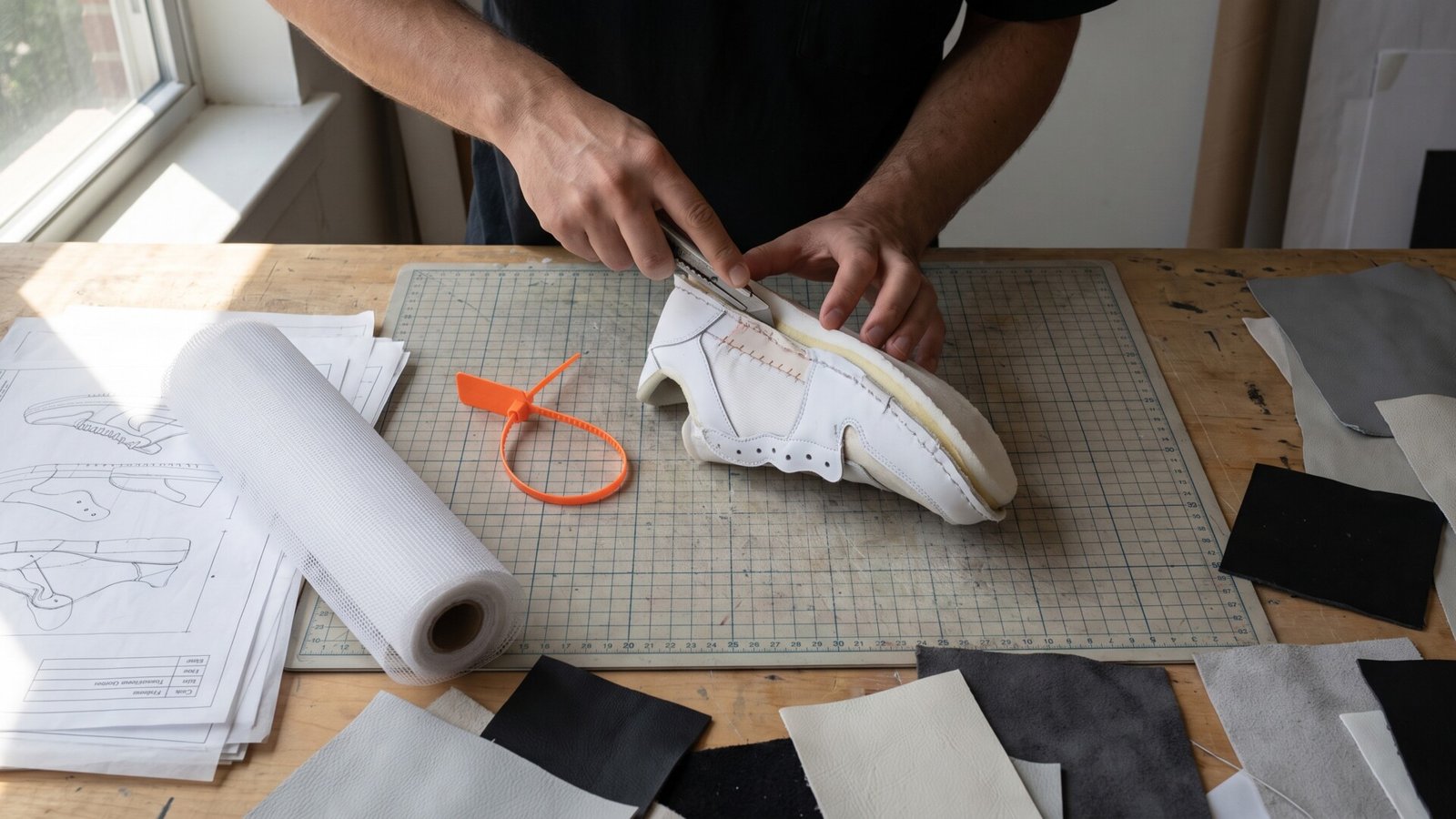
This is evident in his Nike “The Ten” project, where he left construction marks visible and labeling intentional. Showing process doesn’t weaken innovation; it encourages others to build on it.
5. Constraints Breed Creativity
Abloh saw limitations not as obstacles but as design catalysts.
“Innovation comes from constraints. You can’t do everything, so you focus on what matters most.”
Whether working with materials, budgets, or collaborations, Abloh used boundaries to spark ingenuity. Constraints helped him define a unique signature without overwhelming the product.
6. Challenge Conventions, Question Authority
“If something has always been done a certain way, it’s worth asking why. That’s the beginning of innovation.”
Abloh constantly questioned industry norms—from the structure of high fashion shows to sneaker design conventions. Many of his ideas started by asking simple, disruptive questions.
7. Make Ideas Accessible
Abloh wanted people to understand and interact with design.
“People should be able to read what you’re doing, understand it, and then make it theirs in some way.”
Innovation isn’t just novelty—it’s clarity and engagement. His use of quotation marks, labeling, and industrial motifs created a visual language anyone could interpret and remix.
8. Play, Experiment, Iterate
“You never know if something works until you try it. Mistakes are as valuable as successes.”
Abloh treated experimentation as essential. He prototyped, iterated, and embraced failure as a stepping stone. This trial-and-error mindset is why his work remained relevant across industries.
9. Think Beyond Categories
Abloh refused to silo himself or his work.
“I don’t do sneakers, I don’t do fashion, I don’t do furniture. I do design. I just move across categories.”
Innovation, for him, wasn’t about limiting oneself to a medium. By blending architecture, product design, and fashion, Abloh redefined what sneakers and streetwear could communicate.
10. Ideas are a Conversation, Not a Monologue
“The work is just a starting point. The audience finishes the conversation.”
Abloh’s designs weren’t complete until interpreted by the consumer. Innovation involves co-creation, allowing people to attach meaning and extend ideas beyond the designer’s original vision.
Applying Abloh’s Lessons Today
- Look for inspiration everywhere. Don’t ignore cross-disciplinary ideas.
- Recontextualize, don’t just copy. Innovation thrives on reinterpretation.
- Show your work. Transparency can spark new collaboration and ideas.
- Embrace limitations. Constraints focus creativity.
- Iterate constantly. Mistakes are part of the process.
These principles can guide designers, entrepreneurs, and creatives seeking innovation in footwear, fashion, or any creative field.