Top Asics Sneakers for Running in 2026
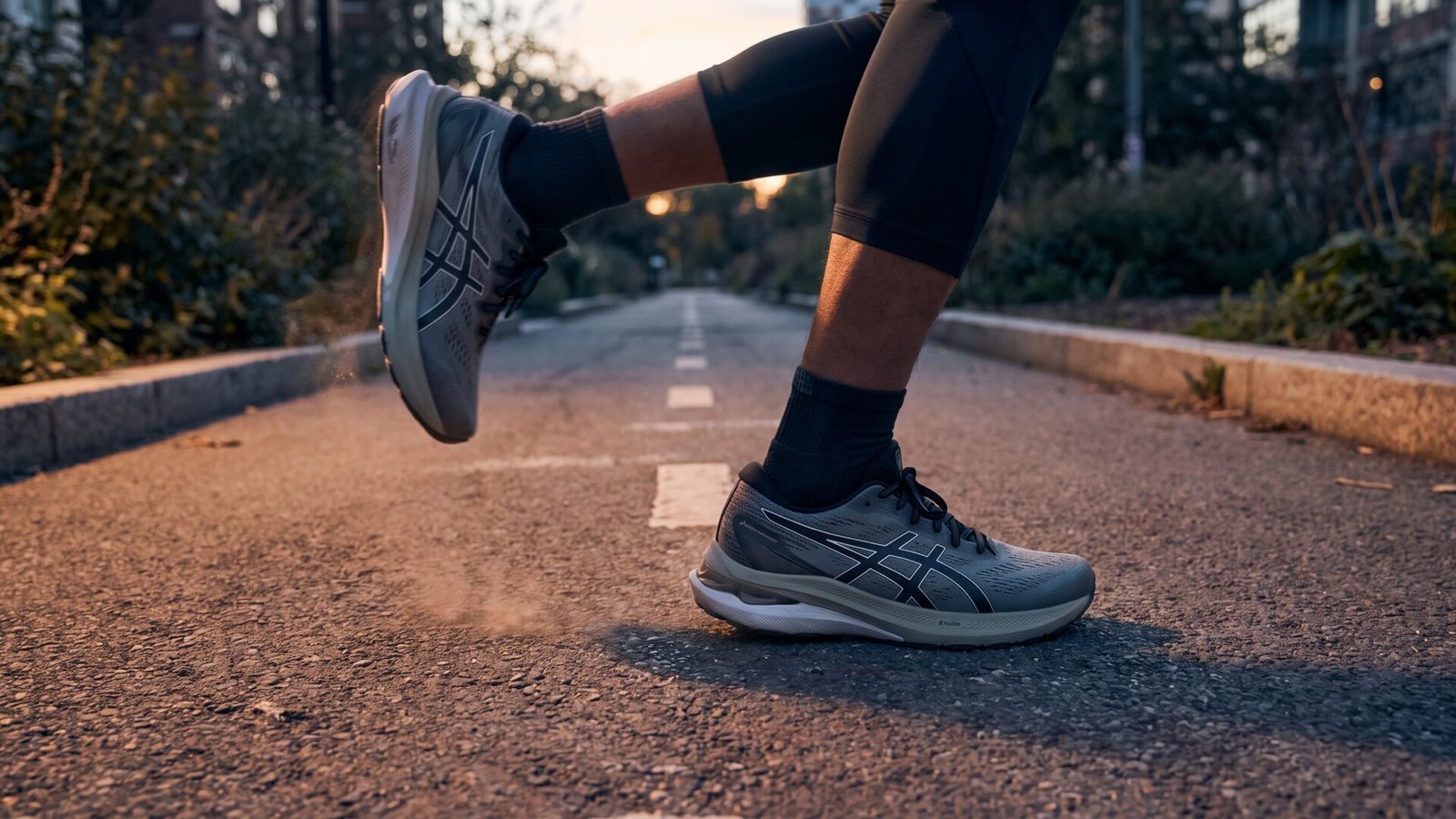
Asics has long been a benchmark for comfort and durability in running shoes, and its 2026 lineup has changed a lot: the Gel-Kayano is on version 33, the Gel-Nimbus and Gel-Cumulus on 28, the GT-2000 on 15 and the Novablast on 6. If you are shopping for the best Asics running shoes in 2026, this page walks through the current lineup, what each shoe is for, and whether to buy the new version or last year’s.
Prices are US list or typical retail ranges checked against Asics and large running retailers in November 2026. Sales, colorways and last-season versions move them around, so treat them as a guide, not a promise. Where we could not verify a spec, we left it out instead of guessing.
Quick Answer: Which Asics Running Shoe Should You Buy?
- Softest, most cushioned daily shoe: Gel-Nimbus 28, about $170.
- Stability for overpronators: Gel-Kayano 33, about $170, or the cheaper GT-2000 15, about $150.
- Do-it-all neutral trainer: Gel-Cumulus 28, about $145.
- Fun, bouncy daily trainer: Novablast 6, about $155.
- Budget-friendly daily trainer: Dynablast 6, about $120.
- Long-run and super trainers: Superblast 3 (about $210), Megablast (about $225) or the plated Sonicblast 2 (about $190).
- Race day: Metaspeed Sky Tokyo or Metaspeed Edge Tokyo, about $270, or the more affordable Magic Speed 5 at about $180.
- Triathlon: Noosa Tri 16, about $135.
- Trail: Trabuco 14, about $145.
Starting with the softest pick? Find the Gel-Nimbus 28 – Men’s →Nimbus 28 – Women’s →
Asics Running Shoes at a Glance (2026 Versions)
Asics sorts its road shoes into neutral and stability, and the model you pick should start with that choice. Here is the current lineup covered in this guide:
| Model | Type | Typical price (USD) | Key tech | Best for |
|---|---|---|---|---|
| Gel-Nimbus 28 | Neutral, max cushion | $170 | FF Blast Plus foam, PureGEL in the heel | Long easy miles, recovery runs |
| Gel-Kayano 33 | Stability | $170 | FF Blast Max over FF Blast Plus, PureGEL heel, FluidSupport | Overpronators wanting plush support |
| Gel-Cumulus 28 | Neutral | $145 | FF Blast Max, PureGEL | All-round daily mileage |
| GT-2000 15 | Stability | $150 | 3D Guidance System, FF Blast Max | Mild to moderate overpronation |
| Novablast 6 | Neutral | $155 | FF Blast Max, FF Turbo2 pod, AsicsGRIP | Bouncy daily runs and some speed |
| Dynablast 6 | Neutral | $120 | FF Blast Plus, central midsole pod | Value daily trainer |
| Superblast 3 | Neutral, max cushion | $210 | FF Leap over FF Blast Plus | Long runs, premium daily trainer |
| Megablast | Neutral, max cushion | $225 | Full-length FF Turbo Squared, no plate | Uptempo and long runs |
| Sonicblast 2 | Neutral, plated super trainer | $190 | FF Turbo Squared over FF Blast Max, forked plate | One shoe for daily miles and tempo |
| Magic Speed 5 | Neutral, speed | $180 | FF Leap, carbon plate | Fast training, 5K to 10K racing |
| Metaspeed Sky / Edge Tokyo | Neutral, race | $270 | FF Leap and FF Turbo Plus, carbon plate | Racing |
| Noosa Tri 16 | Neutral | $135 | FF Blast Plus, 5 mm drop | Triathletes and quick-lacing needs |
| Trabuco 14 | Neutral, trail | $145 | FF Blast Max, rock plate | Light to moderate trails |
Prices and foam names come from Asics listings and large US running retailers, November 2026. Weights are for a men’s size 9 unless stated.
Buy the New Version or Last Year’s?
Most reviews rate each shoe on its own. A more useful question is whether this year’s update changes the ride or only trims it, because last year’s pair is often $20 to $40 cheaper in clearance.
- Trims only: the Nimbus 28 keeps the Nimbus 27’s 43.5 mm/35.5 mm stack and mainly sheds weight (about 9.9 oz versus about 10.8 oz for men’s), so a discounted Nimbus 27 is a safe buy.
- Changes the ride: the Kayano 33 swaps 4D Guidance for FluidSupport and pairs two foams, and reviewers describe a softer, less corrective ride than the 32. A runner who liked the 32’s firmer guidance should buy the 32 while it sits near $130.
- Changes the ride: the Novablast 6 adds a forefoot pod and its first dual-density midsole, so the Novablast 5 (near $130 at some retailers) is a different shoe, not just an older one.
- Changes the ride, and not for everyone: the Superblast 3’s softer FF Leap top layer resists an overpronated gait less than earlier versions, and one lab review advises overpronators to stay with the Superblast 2.
A quick glossary
- Stack height is how much material sits between your foot and the ground. More stack usually means a softer, more protected ride.
- Drop is the height difference between heel and forefoot, in millimeters. A lower drop shifts load a little toward the forefoot and calves.
- Overpronation means the foot rolls inward more than average on landing. Stability shoes add structure to guide that motion; neutral shoes do not.
- FF Blast, FF Leap, FF Turbo are Asics’ FlyteFoam midsole compounds. Blast Max is the softer, bouncier everyday foam, Blast Plus is a bit firmer, and Leap and Turbo are the high-rebound race and tempo foams.
1. Asics Gel-Kayano 33
The Gel-Kayano has been Asics’ flagship stability shoe for decades, and the 33rd edition changes the support system. Asics replaced the older 4D Guidance System with FluidSupport, which uses a broad platform and a firmer foam layer to steady the foot instead of a hard plastic post. The midsole is a soft FF Blast Max top layer over FF Blast Plus, with a PureGEL insert under the heel.
- Weight: about 10.5 oz (298 g) for men’s and about 9.1 oz (258 g) for women’s, per published brand specs.
- Drop: 8 mm per Asics (lab measurement was 8.5 mm).
- Price: about $170; the previous Kayano 32 is often discounted to around $130.
- Widths: one of the few Asics models offered in multiple widths, though availability varies by market.
Watch out for: reviewers describe the 33 as softer and less corrective than the 32, and several call it heavy for a daily trainer. The support is more of a guided platform than a stiff wall, so very severe overpronators should talk to a running store or podiatrist.
See the Gel-Kayano 33 – Men’s →Kayano 33 – Women’s →
Best for: overpronators, long-distance runners, heavier runners and walkers who want cushioning and structure in the same shoe. If you came here looking for the retro fashion shoe, that is a different animal: our Nike Vomero 5 vs ASICS Kayano 14 comparison covers the Gel-Kayano 14 reissue, which should not be confused with this running shoe.
2. Asics Gel-Nimbus 28
The Gel-Nimbus is the plush one. The 28th version keeps FF Blast Plus foam and a PureGEL insert in the rearfoot. It has the same stack as the 27, but a recarved midsole and a more streamlined upper cut the weight.
- Weight: about 9.9 oz (280 g) for men’s size 9 and about 8.5 oz (241 g) for women’s size 8, according to Doctors of Running.
- Stack height: about 43.5 mm at the heel and 35.5 mm at the forefoot for men’s, with an 8 mm drop. Women’s is roughly 1 mm lower.
- Price: about $170 list.
What changed from the Nimbus 27: reviewers describe the 28 as firmer and more controlled than most max-cushion shoes. The thinner tongue can cause lace bite for some, and there is a bit less outsole rubber, so keep an eye on wear if you log heavy mileage.
Best for: neutral runners, recovery days, long easy miles, and anyone who stands or walks all day and wants the softest Asics. It also lines up with the picks in our most comfortable sneakers for standing all day guide.
3. Asics Gel-Cumulus 28
The Gel-Cumulus is the quiet workhorse of the range: not the plushest, not the most exciting, but a shoe that works for a lot of feet. Version 28 uses FF Blast Max foam with a PureGEL insert on a neutral platform, and retailers list it at about 9.1 oz (259 g) with an 8 mm drop. Reviewers describe the ride as firmer and more traditional than the Nimbus.
- Price: about $145.
- Why pick it over the Nimbus: it is lighter in feel and about $25 cheaper, with slightly less cushion.
- Why pick it over the Novablast: a calmer, more predictable ride with less bounce.
Best for: neutral runners training three to four days a week, beginners who want one reliable shoe, and walkers who prefer a cushioned but not mushy ride.
See the Gel-Cumulus 28 – Women’s →
4. Asics GT-2000 15
The GT-2000 is the stability shoe one step below the Kayano. Version 15 uses the 3D Guidance System (a wide base and flared platform), FF Blast Max foam and a PureGEL heel, with an 8 mm drop.
- Price: about $150 on Asics.com.
- Weight: about 8.8 oz (252 g) for men’s, per Asics specs.
- Fit with the lineup: a lighter, cheaper alternative to the Kayano 33 for mild to moderate overpronation. The GT-1000 15 offers lighter guidance at a lower price.
Best for: everyday runners and walkers who want some guidance without the weight or price of the Kayano. For heel-pain shopping specifically, see our best Asics sneakers for plantar fasciitis, which compares these models against each other in detail.
5. Asics Novablast 6
The Novablast has become the model many runners point to when asked for one fun Asics. Version 6 is a redesign: FF Blast Max with an FF Turbo2 pod in the forefoot (the line’s first dual-density midsole), a new AsicsGRIP outsole, an engineered woven upper and no heel tab. It is a neutral shoe, so it will not do the job of a Kayano.
- Price: about $155 (the Novablast 5 is near $130 at some retailers).
- Specs: about 8.8 oz (249 g) for men’s, a 41.5 mm/33.5 mm stack and an 8 mm drop.
- Ride: bouncy and light enough for intervals, soft enough for easy days. One lab reviewer found it runs slightly short.
Best for: runners who own one pair for everything, plus anyone who likes a springy feel. The same bounce also makes it a good casual crossover.
6. Asics Dynablast 6
The Dynablast is the value pick in the Blast family. Version 6 uses FF Blast Plus foam with a central midsole pod and sits at an MSRP of about $120, which is why it keeps showing up in gift guides and first-pair recommendations. It weighs about 9.7 oz (275 g) for men’s, with a 41 mm heel stack and an 8 mm drop.
Expect a steady, stable and firm-leaning ride rather than the Novablast’s bounce: lab reviewers rate its energy return as muted. Best for: neutral runners on shorter to medium runs, newer runners, and anyone who wants a stable value trainer. Heavier runners or those doing very high mileage should look at the Cumulus or Nimbus for more cushioning.
7. Asics Superblast 3, Megablast and Sonicblast 2
The Superblast 3 (about $210) is a neutral max-cushion trainer with FF Leap, the foam from Asics’ racing shoes, over a firmer FF Blast Plus base. It weighs about 8.4 oz with a 46.5 mm heel stack and an 8 mm drop. Its softer top layer resists an overpronated gait less than earlier versions, so overpronators and heavier runners may do better on the Superblast 2.
The Megablast (about $225) is unplated, with a full-length slab of FF Turbo Squared. It weighs about 8.1 oz at a 45 mm heel stack, and reviewers say it feels best at uptempo paces and less lively when running slowly.
The Sonicblast 2 (about $190) is the plated option: FF Turbo Squared over FF Blast Max with a forked Pebax plate, about 8.5 oz (242 g) for men’s and a 46 mm heel stack. Asics positions it for uptempo and interval running, between the Novablast 6 and the Superblast 3.
All three are neutral and high-priced, so they suit runners who put in serious weekly mileage and want a bouncy, protective ride. Most casual runners will be just as happy with a Cumulus or Novablast.
8. Asics Magic Speed 5, Metaspeed Sky Tokyo and Metaspeed Edge Tokyo
The speed shoes are where Asics uses its carbon plates. The Magic Speed 5 (about $180) is the entry point: about 50 g lighter than the Magic Speed 4 at roughly 6.9 oz (196 g), with FF Leap foam, a carbon plate and a 7 mm drop. The lower stack adds ground feel, but one lab review found it restrained at slower paces and not protective enough for high-mileage training, so it is a workout and 5K to 10K shoe more than an everyday one.
The Metaspeed Sky Tokyo and Metaspeed Edge Tokyo (each about $270) are the race flagships, built on FF Leap and FF Turbo Plus foam with a full carbon plate. They differ in how foam and plate are arranged. The Sky has a flatter plate set higher in the midsole under an FF Turbo Plus top layer and suits stride-style runners. The Edge has a curved plate set lower under FF Leap and suits cadence-style runners. They are race-day shoes, not for every easy run, and their durability will be shorter than a daily trainer’s.
Best for: competitive runners and anyone chasing a personal best in a 10K to marathon. If you are not racing, save the money.
9. Asics Noosa Tri 16
Triathletes get their own shoe: the Noosa Tri 16 (about $135) is a neutral shoe with FF Blast Plus foam, AsicsGRIP rubber and a 5 mm drop, weighing about 7.6 oz (215 g) for men’s. Its upper and lacing are built for fast transitions. Some buyers report it runs short, so consider sizing up half a size. Outside triathlon, there is little reason to choose it over a Cumulus or Novablast.
10. Asics Trabuco 14 (Trail)
For trails, the Trabuco 14 (about $145) is Asics’ protective daily trail trainer: FF Blast Max foam, a rock plate, an AsicsGRIP outsole, an 8 mm drop and about 8.8 oz (249 g) for men’s per Asics Europe. It suits light to moderate trails. If you mostly run on pavement, pick a road shoe above.
How to Choose the Right Asics Running Shoe
Start with foot motion: neutral or stability
If your foot rolls inward noticeably when you land, a stability shoe (Kayano 33 or GT-2000 15) adds guidance. If it does not, a neutral shoe (Nimbus 28, Cumulus 28, Novablast 6, Dynablast 6) gives you more freedom. A running store gait check can help, but comfort matters more than a label.
Check fit and sizing
Asics sizing varies by model and by width. Reviews put the Kayano 33 at true to size, the Novablast 6 slightly short and the Noosa Tri 16 short. Several models come in wide options; if standard widths feel tight, see our best sneakers for wide feet. Try shoes on in the afternoon, when feet swell a little, and leave about a thumb’s width in front of your longest toe.
Know when to replace them
Many running brands suggest replacing daily trainers after several hundred miles. The midsole usually flattens before the upper looks worn, so aches in your feet or shins are a better signal than the visible wear.
Which Asics for Which Runner? Four Quick Scenarios
The new runner starting with three runs a week. Go for the Gel-Cumulus 28 or the cheaper Dynablast 6. Both are neutral and forgiving, and neither needs a gait analysis to get right. Spend the saved money on good socks and a second pair so you can rotate.
The heavier runner or someone who logs lots of easy miles. The Gel-Nimbus 28 and Gel-Kayano 33 have the most cushioning in the road range. Pick the Nimbus if your foot is neutral and the Kayano if it rolls inward.
The runner who wants one shoe for everything. The Novablast 6 is the closest Asics gets to a single-shoe answer: soft enough for easy days and lively enough for strides and tempo work. If you later want a race shoe, a Magic Speed 5 sits nicely beside it.
The walker or commuter. You do not need a racing shoe. The Nimbus 28, Cumulus 28 and GT-2000 15 are the most comfortable for long days on your feet.
Common Mistakes When Buying Asics Running Shoes
- Buying an outdated version by accident. Many listings still show the Kayano 31, Nimbus 25 or Cumulus 26. They can be good deals, but the current versions are Kayano 33, Nimbus 28 and Cumulus 28, and the ride can differ.
- Choosing stability you do not need. If you are neutral, a stability shoe may feel restrictive. Stability is about how your foot behaves, not a sign of a better shoe.
- Racing shoes for every run. Carbon-plated Metaspeed shoes are made for race days; using them daily wears them out fast.
- Ignoring width. A shoe that pinches at the forefoot will not get comfortable with mileage. Check available widths before you decide.
- Treating shoes as medical treatment. No shoe treats foot pain. If you have lingering pain, see a podiatrist or physical therapist.
Asics Running Shoes vs the Competition
Asics is not the only way to go. If you are comparing, look at ASICS vs HOKA Clifton 9 for a cushioned daily shoe. If you want retro style rather than a running shoe, New Balance 2002R vs ASICS Gel-1130 and ASICS Gel-1130 vs Nike Vomero 5 cover that side, and the Gel-Quantum and Gel-Lyte III are weighed in our GEL-Lyte III vs GEL-Quantum lifestyle showdown. For running-flavored shoes you can wear all day, the best chunky dad shoes for 2026 is another good read, and Luxury Sneakers vs Performance Sneakers explains where Asics sits next to designer pairs. Our Top 10 Women’s Sneakers of 2026 also includes the Gel-Nimbus 28.
On a budget, the best sneakers under $150 for everyday wear and how to find comfortable sneakers under $150 pair well with the Dynablast, Cumulus and GT-2000 prices here. Our Sneakers Buying Guides hub collects the rest, and the history of ASICS sneakers explains where the brand came from.
Frequently Asked Questions On ASICS Running Shoes
Do Asics running shoes run true to size?
It varies by model. Reviews put the Kayano 33 at true to size, while the Novablast 6 runs slightly short and some buyers say the Noosa Tri 16 runs short. Try a pair on in the afternoon with a thumb’s width ahead of your longest toe, and check the Asics size guide for the specific model.
Which Asics running shoes come in wide sizes?
The Kayano 33 is one of the few Asics models offered in multiple widths, though availability varies by market, and the Novablast 6 is sold in 2E men’s widths at some US retailers. Check the width options on the Asics or retailer page before buying, because a pinching forefoot rarely improves with mileage.
Is the Gel-Nimbus 28 worth it over the Nimbus 27?
The 28 keeps the same 43.5 mm/35.5 mm stack but is lighter, at about 9.9 oz versus about 10.8 oz for men’s. If a discounted Nimbus 27 is within reach it is a safe buy, and the full $170 for the 28 mainly pays for the lighter feel.
Can I wear Asics running shoes casually?
Yes. The Novablast 6, Cumulus 28 and Nimbus 28 are comfortable for all-day wear, and many people walk or stand in them. If you want the retro look rather than a running shoe, the Gel-Kayano 14 and Gel-1130 are the lifestyle models.
Are Asics Metaspeed shoes worth it?
Only if you race. The carbon-plated Metaspeed Sky Tokyo and Edge Tokyo cost about $270 and are built for race day, not everyday training. The Magic Speed 5, at about $180, is the cheaper way to get a plated shoe for workouts and shorter races.
The Bottom Line
For most people, the choice comes down to three shoes: the Gel-Cumulus 28 if you want one dependable neutral trainer, the Gel-Kayano 33 if you need stability, and the Gel-Nimbus 28 if you want maximum cushion. Add a Novablast 6 or Dynablast 6 for lively days, and keep the Metaspeed line for race day. Before you pay full price for a new version, check whether last year’s pair, discounted, gives you the same ride. Try a couple on, run or walk in them around the store, and trust how your feet feel.