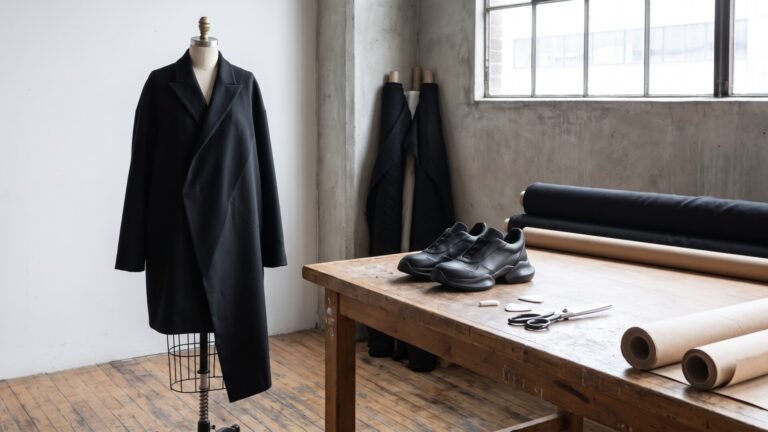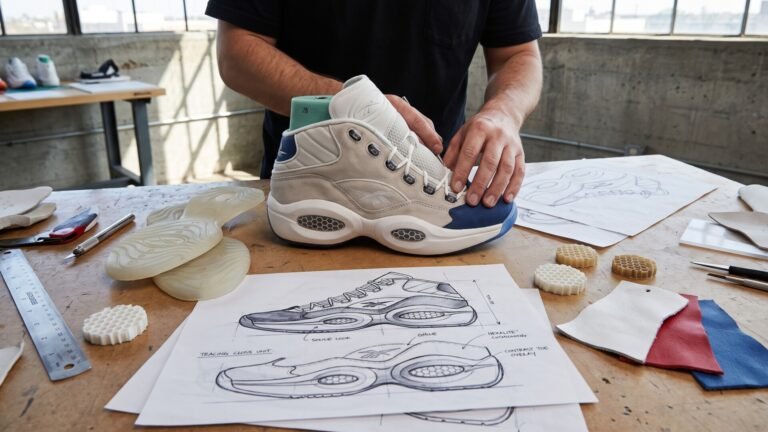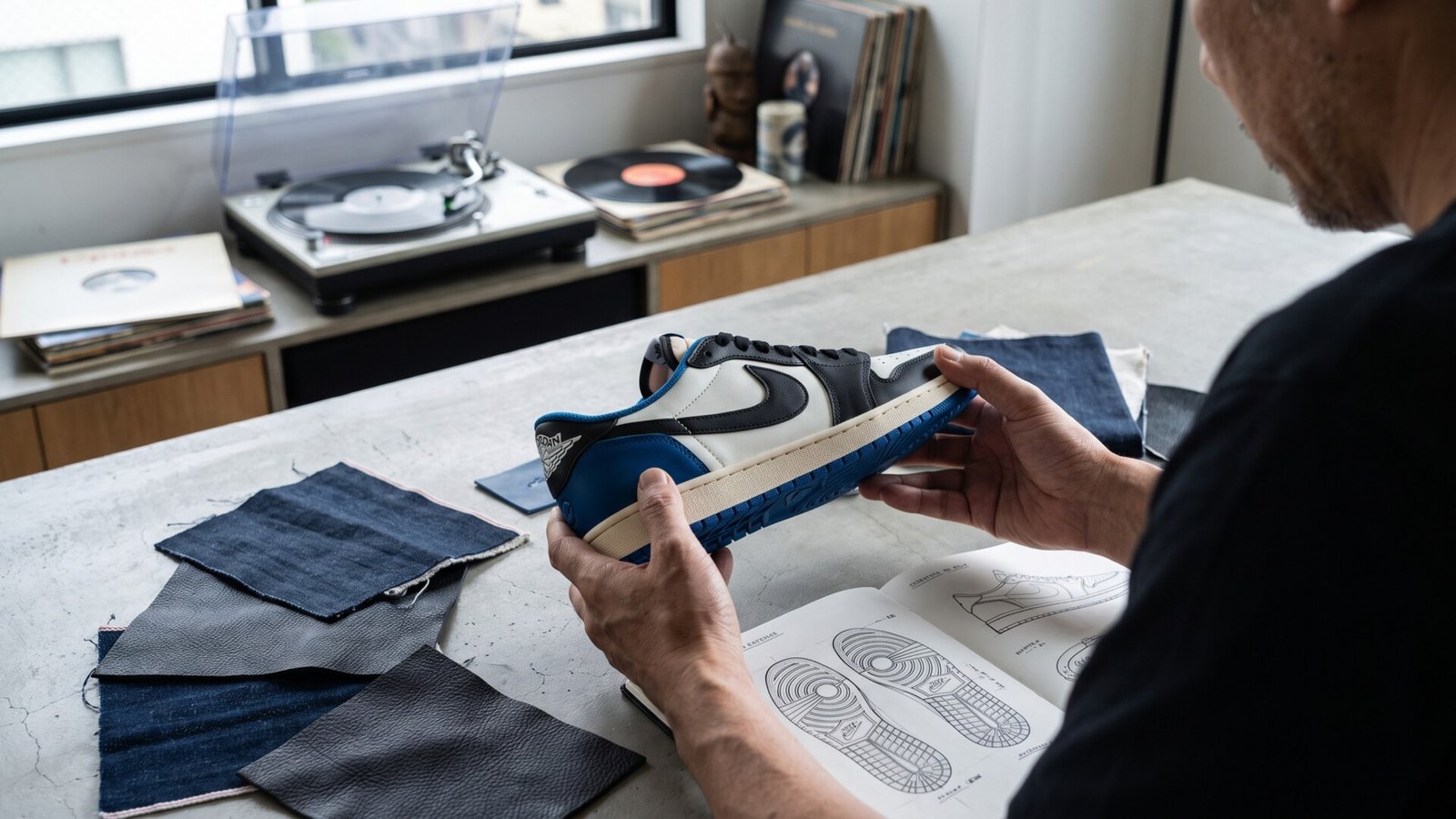
Hiroshi Fujiwara (Fragment Design) — Streetwear Influence
The Godfather of Japanese Streetwear
If you’re serious about streetwear, Hiroshi Fujiwara is a name you can’t ignore. Often called the godfather of Japanese streetwear (Highsnobiety calls him the “godfather of Tokyo’s Ura-Harajuku fashion scene”), Fujiwara has been influencing sneakers, fashion, and hype culture since the late ’80s.
Founder of Fragment Design, he’s known for minimalist yet highly coveted collaborations with brands like Nike, Jordan Brand, Converse, Levi’s and Moncler. His influence goes beyond clothing — he’s helped shape global streetwear aesthetics, sneaker culture, and designer collabs.
In this article, we’re diving into Hiroshi Fujiwara’s biography, design philosophy, and the sneakers and streetwear pieces that made him a legend.
Hiroshi Fujiwara is often called the godfather of streetwear and sneaker collaborations. See how his influence aligns with other legendary designers in our Iconic Sneaker Designers hub.
Hiroshi Fujiwara at a Glance
| Year | Milestone |
|---|---|
| 1964 | Born in Ise, Mie, Japan; moved to Tokyo at 18 |
| Late 1980s to early 1990s | Launches his first brand, Good Enough, after early hip hop DJ work |
| 2002 / early 2000s | HTM project with Nike’s Mark Parker and Tinker Hatfield (sources vary slightly on the date) |
| 2003 | Founds Fragment Design |
| 2010 | First Fragment x Nike collaboration (Tennis Classic), followed by the Dunk High “City Pack” |
| 2014 | Fragment x Air Jordan 1 Retro High OG, the first with Jordan Brand |
| 2020 | Fragment x Air Jordan 3 Retro SP |
Early Life and Roots in Tokyo
Hiroshi Fujiwara was born in 1964 in Ise, Mie, Japan, and moved to Tokyo at eighteen. He was immersed in American culture, hip-hop, skateboarding, and punk music — all influences that would later define his style.
After hearing hip hop on a trip to New York in the early 1980s, he became one of Japan’s first hip hop DJs, according to Wikipedia. This combination of music, design, and urban lifestyle became the foundation for his future projects.
Music Meets Fashion
Before Fragment Design, Fujiwara built his reputation as a DJ and musician and with his first brand, Good Enough, which drew on his New York trips and referenced hip hop, punk, and skateboarding.
Music wasn’t just a career; it shaped his aesthetic sensibility. A fair way to describe his approach is that he treats streetwear a bit like a DJ treats a track: mixing elements, creating new patterns, and blending influences. That is our reading rather than a quote from him.
The Birth of Fragment Design
In 2003, Hiroshi Fujiwara founded Fragment Design, a label and creative platform focused on limited-edition collaborations and minimalist designs. Highsnobiety notes it followed a period in which Fujiwara worked with a circle that included people behind A Bathing Ape and other Tokyo labels.
Fragment Design emphasizes:
- Simplicity with impact: Minimal branding, clean lines, high-quality materials.
- Collaboration culture: Partnering with brands to create unique, highly sought-after pieces.
- Cultural storytelling: Each design reflects a blend of Japanese precision and global streetwear influences.
For another take on Japanese-rooted streetwear, see our A Bathing Ape sneakers guide.
HTM: Working with Nike’s Insiders
Fujiwara’s relationship with Nike goes back to HTM, a project he formed with Nike’s Mark Parker and Tinker Hatfield (the letters stand for the three of them). Sources date it around 2000 to 2002. HTM is separate from Fragment Design, but it is where much of the Nike partnership started.
Iconic Collaborations: Fujiwara x Nike
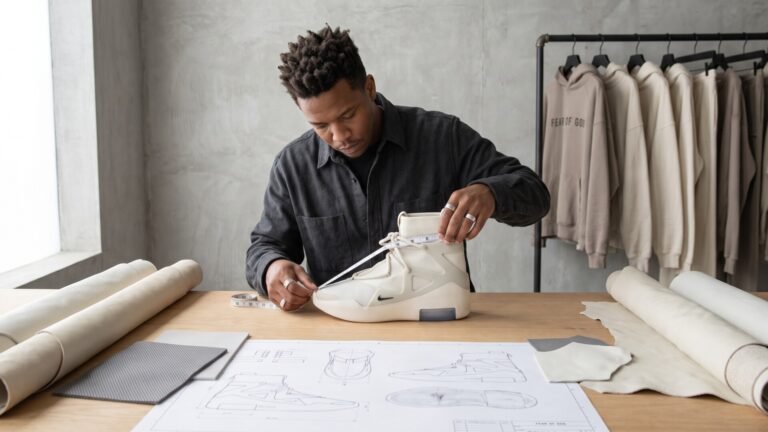
One of Fujiwara’s most significant contributions to streetwear culture is his work with Nike. The first Fragment x Nike collaboration was the 2010 Tennis Classic, and Complex’s timeline shows how many projects followed. Highlights include:
- Tennis Classic (2010): The first Fragment x Nike pair; later versions arrived in 2014 and 2016.
- Dunk High “City Pack” (Dec 2010): London, NYC and Beijing colorways that created plenty of hype.
- Air Force 1 “Fragment” pack (Aug 2013): A restrained take on a classic.
- SB models (2013): Stefan Janoski and Koston 1 versions.
- Blazer Low (Apr 2014), Roshe LD-1000 (Oct 2014) and Sock Dart (Dec 2014): A busy 2014 for the label.
Want the standard Air Force 1? See the Air Force 1 ’07 – Men’s →Air Force 1 ’07 – Women’s →
Fujiwara’s Nike collaborations are characterized by understated yet highly coveted designs — proof that simplicity can command global attention in streetwear. For the Nike story more broadly, see our Nike sneakers guide.
Fragment x Jordan Brand
Fujiwara’s influence also extends to Air Jordan collaborations, where he applied Fragment Design’s minimalist aesthetic to classic silhouettes:
- Air Jordan 1 High OG “Fragment” (2014): Combined the “Black Toe” and “Royal” colorways with subtle Fragment branding. Highsnobiety describes it as the first time Fragment partnered with Jordan Brand.
- Air Jordan 3 Retro SP (2020): A black and white “Orca” look with Fragment logos above the midsole and a translucent Jordan logo on the heel, released in September 2020.
- Travis Scott x Fragment x Air Jordan 1: A three-way project released in high and low versions (we have not confirmed exact dates here).
Want the everyday Jordan 1 Low? Find the Air Jordan 1 Low – Men’s →AJ1 Low – Women’s →
These collaborations cemented Fujiwara’s reputation as a designer who respected history while adding a fresh, collectible twist. Resale prices for Fragment Jordans have been very high and change constantly, so check current marketplace listings rather than relying on older figures. If you are curious about Jordan history, see our Air Jordan sneakers guide and Jordan Retro vs OG.
The Fragment Approach to Sneaker Design
Fujiwara’s sneaker philosophy, as seen across the collabs above, is simple but powerful:
- Less is more: Minimal branding, thoughtful colorways, and restrained details.
- Respect the original: Existing silhouettes are tweaked rather than reinvented.
- Subtle but statement-making: Even understated designs carry status, hype, and cultural weight.
This approach contrasts with loud, over-branded sneakers, making Fragment collaborations sought after by collectors worldwide.
Influence on Streetwear Culture
Fragment Design didn’t just make sneakers; it shaped modern streetwear culture. Key contributions include:
- The art of the collab: Fujiwara helped make limited-edition collaborations a central aspect of hype culture.
- Global reach: Japanese streetwear aesthetics influenced designers and consumers worldwide.
- Music, fashion, and sneakers: Fujiwara bridged cultural domains, showing how streetwear is more than clothes — it’s lifestyle.
Later collaboration-driven designers such as Virgil Abloh, Jerry Lorenzo and Ronnie Fieg work in a similar space, and you can see the lineage in Abloh’s Nike x Off-White collaboration.
Fragment x Converse and Moncler
Fujiwara’s collaborators include Converse and Moncler, according to Highsnobiety, which describes a Chuck 70 Low collaboration involving Converse and Moncler. We have not confirmed other specific Fragment x Converse models or dates, so we are not listing more here. For Converse background, see our Converse sneakers guide and our roundup of limited edition Converse collaborations.
Beyond Sneakers: Clothing and Accessories
Fragment Design isn’t just sneakers. Fujiwara’s collaborators also include Levi’s, Stussy, Supreme, NEIGHBORHOOD and Moncler (Highsnobiety), and he has worked on projects ranging from a Martin guitar designed with Eric Clapton in 2003 to FRGMTmini, a children’s and family apparel brand launched in September 2025 (Wikipedia).
His work demonstrates that every product can become a statement piece when guided by thoughtful design.
Global Recognition and Influence
Hiroshi Fujiwara is recognized worldwide for:
- Defining Japanese streetwear aesthetics
- Pioneering high-end collaborations with mainstream brands
- Influencing sneakerheads, designers, and collectors globally
Tips for Collectors and Fans
If you’re looking to get into Fragment Design or Hiroshi Fujiwara collabs:
- Start with the Nike and Jordan collaborations: These carry the most cultural weight.
- Know what you are buying: High-value Fragment pairs attract fakes, so buy from reputable sellers and check authentication options.
- Keep condition and packaging: Subtle designs lean on clean presentation.
- Follow retailer and app releases: Boutiques and Nike’s SNKRS app are common places for limited drops.
- Study the design philosophy: Knowing Fujiwara’s restrained aesthetic helps you recognize genuine releases.
Conclusion: The Hiroshi Fujiwara Effect
Hiroshi Fujiwara’s impact is undeniable. From Fragment Design to Nike and Jordan collaborations, he created sneakers and streetwear pieces that aren’t just products, but cultural milestones.
He showed the world that minimalism, collaboration, and thoughtful design can redefine what hype means. Collectors, fashion fans, and sneakerheads all owe a part of modern streetwear culture to Fujiwara.
Whether it’s a Fragment x Nike Air Jordan, a Converse Chuck Taylor, or a limited capsule collection, Hiroshi Fujiwara’s work remains influential and globally respected.
Frequently Asked Questions About Hiroshi Fujiwara And Fragment Design
Who is Hiroshi Fujiwara?
Hiroshi Fujiwara is a Japanese DJ, designer and the founder of Fragment Design, often called the godfather of Japanese streetwear.
When was Fragment Design founded?
Fragment Design was founded in 2003. The first Fragment x Nike collaboration was the 2010 Tennis Classic.
What was the first Fragment x Jordan collaboration?
The Fragment x Air Jordan 1 Retro High OG in 2014, which Highsnobiety describes as the first time Fragment partnered with Jordan Brand. The Air Jordan 3 followed in September 2020.
What is HTM?
HTM is a project Fujiwara formed with Nike’s Mark Parker and Tinker Hatfield; the letters stand for their initials.