Best ASICS sneakers for plantar fasciitis
If you are dealing with plantar fasciitis, the nagging heel pain that loves to come back when you least want it, shoes can make everyday life more comfortable, even though they do not treat the condition. ASICS is one of the brands people with heel pain look at first because of its GEL cushioning, foam midsoles and stability options. This guide covers which ASICS sneakers are worth trying if you have plantar fasciitis, what each one does differently, current USD prices and what to check before you buy.
A quick note first: I am a sneaker site, not a doctor. No shoe cures or prevents plantar fasciitis. If your heel pain lasts, gets worse or wakes you up, see a podiatrist or physical therapist, and ask them about shoes and inserts for your foot. What follows is about shoe features, not medical treatment. Prices and specs below were checked against ASICS.com and large running retailers in October 2026, and they change with sales.
Quick Answer: Which ASICS to Try First
Plantar fasciitis is personal, so there is no single winner, but this is how most people narrow it down:
- Maximum cushioning: GEL-Nimbus 28, around $170.
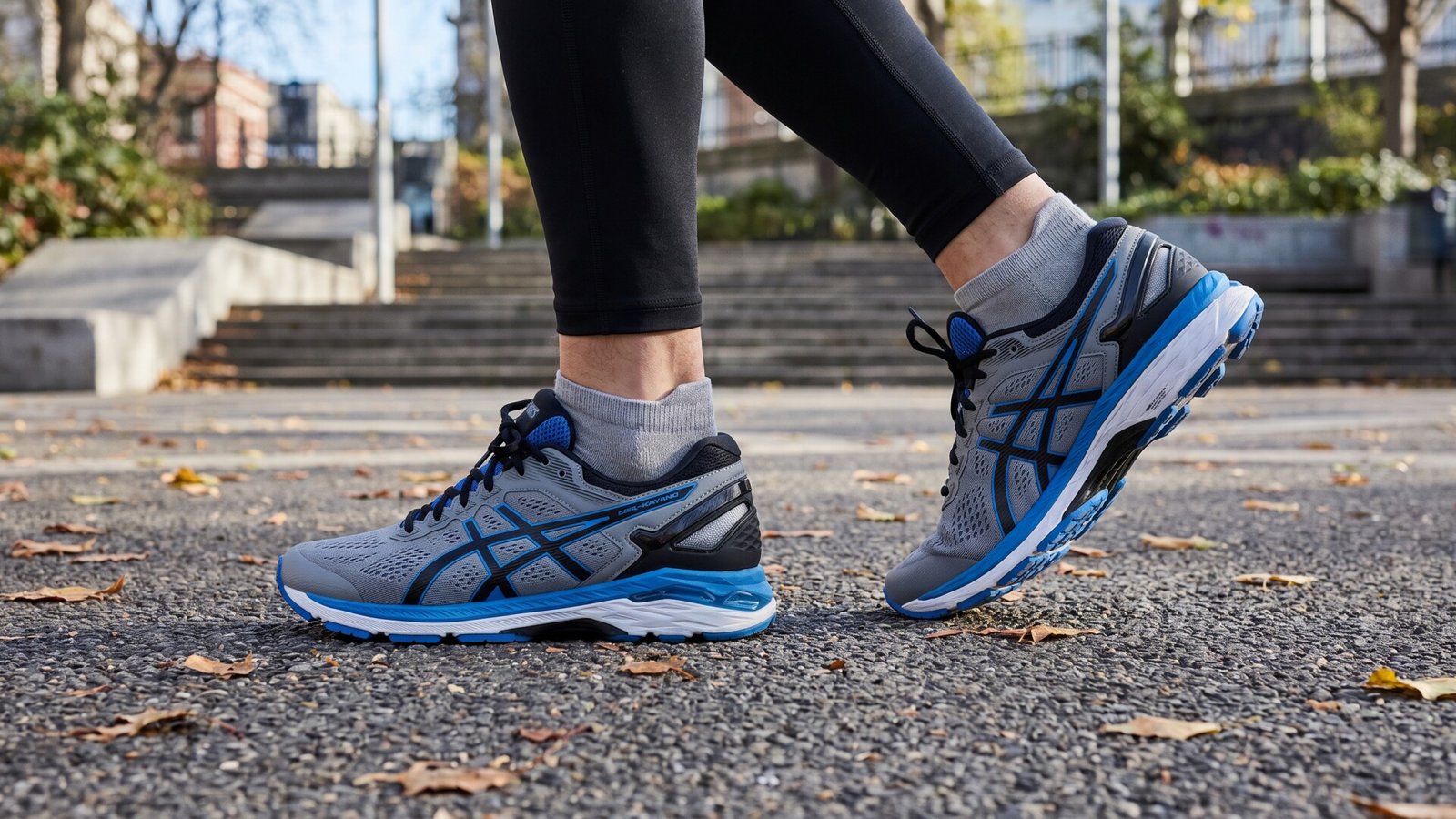
- Cushioning plus stability: GEL-Kayano 33, around $170.
- Balanced neutral daily shoe: GEL-Cumulus 28, around $145.
- Stability at a lower price: GT-2000 15, around $150, or GT-1000 15, around $100.
- Cheapest walking option: GEL-Contend 10, usually around $70 to $80.
Understanding Plantar Fasciitis & What to Look for in a Shoe
What Is Plantar Fasciitis?
Plantar fasciitis is irritation of the plantar fascia, a thick band of tissue that runs from your heel bone to your toes. It usually hurts most with the first steps in the morning or after long periods of standing or sitting. A podiatrist can confirm what is going on and rule out other causes of heel pain.
Shoe Features People with Heel Pain Look For
Podiatrists quoted in a recent NBC Select roundup pointed to the same checklist. Here is how I would apply it when shopping:
- A cushioned midsole to soften each step, especially at the heel.
- Arch support or structure. A quick check is to try bending the shoe: if it folds easily in the middle, it offers little arch support.
- A firm heel counter and deep heel cup that hold the heel in place. Squeeze the back of the shoe; it should not collapse completely.
- Structure with some flexibility. It should bend at the ball of the foot, not twist easily in the middle.
- A removable insole so you can swap in an orthotic if your podiatrist recommends one.
ASICS is solid in this category, and the NBC Select article specifically mentions the GEL-Kayano 32 (recommended by a podiatrist for runners with plantar fasciitis and listed as APMA-accepted). That model has since been replaced, which brings us to versions.
ASICS Models for Plantar Fasciitis at a Glance (2026 Versions)
ASICS updates its running shoes every year or two, so the versions in the earlier edition of this guide (Nimbus 26, Kayano 32 and 30, Cumulus 27, GT-2000 12, GT-1000 13) are now out of date. Here are the current ones. Specs are for the women’s versions unless noted.
| Model | Price (USD) | Weight | Stack height (heel / forefoot) | Drop | Type |
|---|---|---|---|---|---|
| GEL-Nimbus 28 | About $170 | 8.2 oz | 42 / 34 mm | 8 mm | Max cushion |
| GEL-Kayano 33 | About $170 | 9.1 oz | 38 / 30 mm | 8 mm | Stability |
| GEL-Cumulus 28 | About $145 | 7.8 oz | 42 / 34 mm | 8 mm | Neutral |
| GT-2000 15 | About $150 | 7.8 oz | 37 / 29 mm | 8 mm | Stability |
| GT-1000 15 | About $100 | 9.5 oz (men’s) | 36 / 28 mm | 8 mm | Light stability |
| GEL-Contend 10 | About $70-$80 | About 0.7 lb per pair (men’s) | Not listed | Not listed | Budget everyday |
Two terms worth knowing. Stack height is how much material sits between your foot and the ground; more usually means a softer ride. Drop is the height difference between heel and forefoot. All of these are 8 mm, so drop will not separate them.
Top ASICS Models for Heel Pain, One by One
ASICS GEL-Nimbus 28: Plush and Protective
Why people with heel pain look at it:
- It is ASICS’s max-cushion shoe, with 42 mm of stack at the heel and FF BLAST PLUS foam. PureGEL sits under the heel to absorb impact.
- At about 8.2 oz in women’s sizes, it is lighter than it looks.
- It is a neutral shoe, so there is no built-in stability frame.
Things to watch out for: The tall stack can feel less stable if you want a firm, planted feel. The price is on the high side for a daily shoe.
Best for: Long walks, recovery days and people standing all day who want the softest ASICS.
ASICS GEL-Kayano 33: Stability Plus Cushioning
Why people look at it:
- The Kayano line is built for stability, which is useful if your foot rolls inward when you walk (overpronation).
- The Kayano 33 pairs a soft FF BLAST MAX top layer with a firmer FF BLAST PLUS stability frame and a medial heel wedge. Reviewers rate the stability as moderate: noticeable heel support, limited midfoot support.
- Women’s stack height is 38 mm at the heel, 30 mm at the forefoot, and about 9.1 oz.
Caveats: If you loved the Kayano 32, note that the 33 changed. Reviewers describe it as firmer and less bouncy, and its Fluid Support system replaces the 4D Guidance of version 32. Try it on rather than assuming the same ride. The 32 is the one named by the podiatrist in the NBC Select article, so do not assume the 33 carries over its APMA acceptance without checking.
Best for: People who want a structured shoe with cushioning for long days on their feet.
ASICS GEL-Cumulus 28: A Balanced Neutral Option
Why it is on the list:
- It shares the Nimbus’s 42/34 mm stack, but weighs less (about 7.8 oz in women’s) and costs about $25 less.
- The midsole is FF BLAST MAX with PureGEL, described as responsive and soft.
- It is a neutral shoe, so it has less built-in guidance than the Kayano or GT models.
Best for: Neutral walkers and runners who want a cushioned daily shoe without paying Nimbus money. Searching “are ASICS Cumulus good for plantar fasciitis”? The honest answer is that it depends on your foot. Cushioning helps some people and not others, so try a pair with return options.
ASICS GT-2000 15: Supportive Stability
Why it is a strong pick:
- The GT-2000 15 uses the 3D Guidance System (a wide base and flared platform) with PureGEL in the heel and reformulated FF BLAST MAX foam. (The earlier guide named a “DuoMax” frame, which is not what the current model uses.)
- Weight dropped to about 7.8 oz in women’s sizes and about 8.8 oz in men’s.
- Reviewers describe it as a moderate-cushion stability shoe for mild to moderate overpronators and neutral runners who want some extra support.
Considerations: It may not feel supportive enough for severe overpronation, and it is less plush than the Nimbus. At about $150 it sits between the Cumulus and Kayano.
Best for: Everyday walkers and runners who want guided support and moderate cushioning.
ASICS GT-1000 15: Affordable Support
Why people look at it:
- Around $100, it is the cheapest stability shoe here. The 3D Guidance System gives gentle guidance, with PureGEL in the heel.
- 36 mm heel and 28 mm forefoot stack. The older GT-1000 14 had the same stack and is often discounted, around $90 in some sizes.
Downsides: Less cushion than the Nimbus or Kayano, and the guidance is subtle rather than strong. Searching “is the GT-1000 good for plantar fasciitis”? It is a lighter-support option that suits mild stability needs; more severe cases are a question for your podiatrist.
Best for: Budget-conscious buyers who want some structure for walking or work.
ASICS GEL-Contend 10: Entry-Level Cushioning
Why it is on the list:
- Very accessible price, around $70 to $80 depending on sales, with rearfoot GEL for shock absorption and an AMPLIFOAM PLUS midsole.
- One retailer listing shows an OrthoLite sockliner. Check whether the insole on your pair is removable if you use an orthotic.
Cons: Cushioning is basic and there is no stability structure. Our ASICS Gel-Contend 10 review calls it strong when discounted, weak at full retail, and not a high-mileage or orthopedic-support shoe. The Contend 9 you may see in older searches has been replaced by the 10.
Best for: Casual walkers, commuters and anyone who wants a light-duty shoe for days that do not need maximum protection.
What About Older ASICS Models?
Earlier versions of this guide also featured the Gel-Cumulus 16 and Kayano 30. They are old models, so I have dropped them as main recommendations because I cannot verify their current price or availability. If you find an older pair discounted, make sure it is still in good condition: foam breaks down over time, whatever the model.
Be careful with retro “lifestyle” ASICS too. The retro GEL-Kayano 14 is a fashion reissue of an older design, not the same as the current Kayano 33 running shoe, so do not carry specs over. Our Kayano 14 vs GEL-NYC comparison covers the style side.
What ASICS Features Matter for Heel Comfort
- GEL (PureGEL) cushioning: a silicone-based insert that absorbs impact in the heel.
- FF BLAST foams: the midsole foams in the current range. MAX is softer, PLUS is firmer.
- Stability systems: 3D Guidance (GT-2000 and GT-1000) and Fluid Support (Kayano 33) add structure for overpronation.
- Heel cup and counter: keep the heel from sliding.
- Removable insoles: allow custom orthotics if you already use them.
Tips for Choosing ASICS Shoes When Your Heel Hurts
- Try shoes later in the day. Your feet swell, so afternoon sizing gives a more honest fit.
- Bring your inserts. If you use orthotics, take them to the store and check they fit in the shoe.
- Break them in slowly. Wear new shoes for short periods first, especially if the cushioning is different from what you are used to.
- Check width. Many ASICS models come in wide widths. See our best sneakers for wide feet if standard widths feel tight.
- Replace shoes regularly. Foam wears down, and many running brands suggest replacing daily trainers after several hundred miles.
- Don’t rely on shoes alone. A podiatrist or physical therapist can advise on stretching, strengthening and orthotics.
- Rotate pairs. Alternating two pairs gives the foam time to recover.
Not Sure ASICS Is Right? Other Options to Compare
ASICS is one option among many. For other cushioned shoes, check our Hoka Clifton 9 review, the Hoka Arahi for a stability alternative, or best On shoes for walking. On a budget, budget sneakers for walking all day and budget sneakers for standing all day cover cheaper picks. The full list of comfort options is in our Sneakers Buying Guides hub, and if you want to know the brand better, read the history of ASICS sneakers.
Which ASICS Is Best for You? (Quick Matcher)
- Want the most cushion: GEL-Nimbus 28.
- Overpronate and want structure with cushion: GEL-Kayano 33.
- Neutral, balanced and a bit cheaper: GEL-Cumulus 28.
- Moderate support, mid-priced: GT-2000 15.
- Light support on a budget: GT-1000 15.
- Just need a cheap walking shoe: GEL-Contend 10.
ASICS And Plantar Fasciitis: Frequently Asked Questions
What are the best ASICS shoes for plantar fasciitis?
People with heel pain most often look at the **GEL-Nimbus 28** for cushioning, the **GEL-Kayano 33** for stability, the **GEL-Cumulus 28** for a neutral ride and the **GT-2000 15** for mid-priced support. No shoe treats the condition, so ask a podiatrist about what suits your foot.
Are ASICS Gel-Cumulus good for plantar fasciitis?
The Cumulus 28 has a cushioned FF BLAST MAX midsole with PureGEL in the heel, which many people find comfortable. It is neutral, so it has less built-in support than a GT or Kayano model. Try it with a return policy.
Is the ASICS GT-1000 good for plantar fasciitis?
The GT-1000 15 offers gentle stability with PureGEL in the heel for around $100. It has less cushion than the Nimbus or Kayano, so it suits milder needs. Ask a podiatrist if you are unsure.
Is the ASICS Gel-Contend 10 good for plantar fasciitis?
It has rearfoot GEL and an AMPLIFOAM PLUS midsole at a low price, but cushioning is basic and it has no stability structure. It suits light walking, not severe heel pain.
What's the difference between Nimbus and Kayano?
The Nimbus is a neutral max-cushion shoe. The Kayano is a stability shoe with a firmer frame that helps guide the foot. Pick the Nimbus for softness and the Kayano for structure.
Which ASICS is best for flat feet?
Stability models like the Kayano 33 and GT-2000 15 add guidance for feet that roll inward. A podiatrist or running store can assess your foot.
Can I use my own insoles in ASICS shoes?
Many ASICS models have removable insoles. Check the specific model and bring your orthotics when you try them on.
How long do ASICS running shoes last?
It varies with weight, gait and surface. Many brands suggest replacing daily trainers after several hundred miles, and the midsole usually flattens before the upper looks worn.
Closing Thoughts
Heel pain is frustrating, and the right shoes can make daily life more comfortable. ASICS has a lineup that covers soft cushioning, guided stability and budget picks, but the best shoe is the one that fits your foot and that you will actually wear. Use this guide to shortlist two or three, try them on with your inserts, wear them for a few hours indoors and see how your feet feel the next morning. If the pain keeps coming back, talk to a podiatrist.