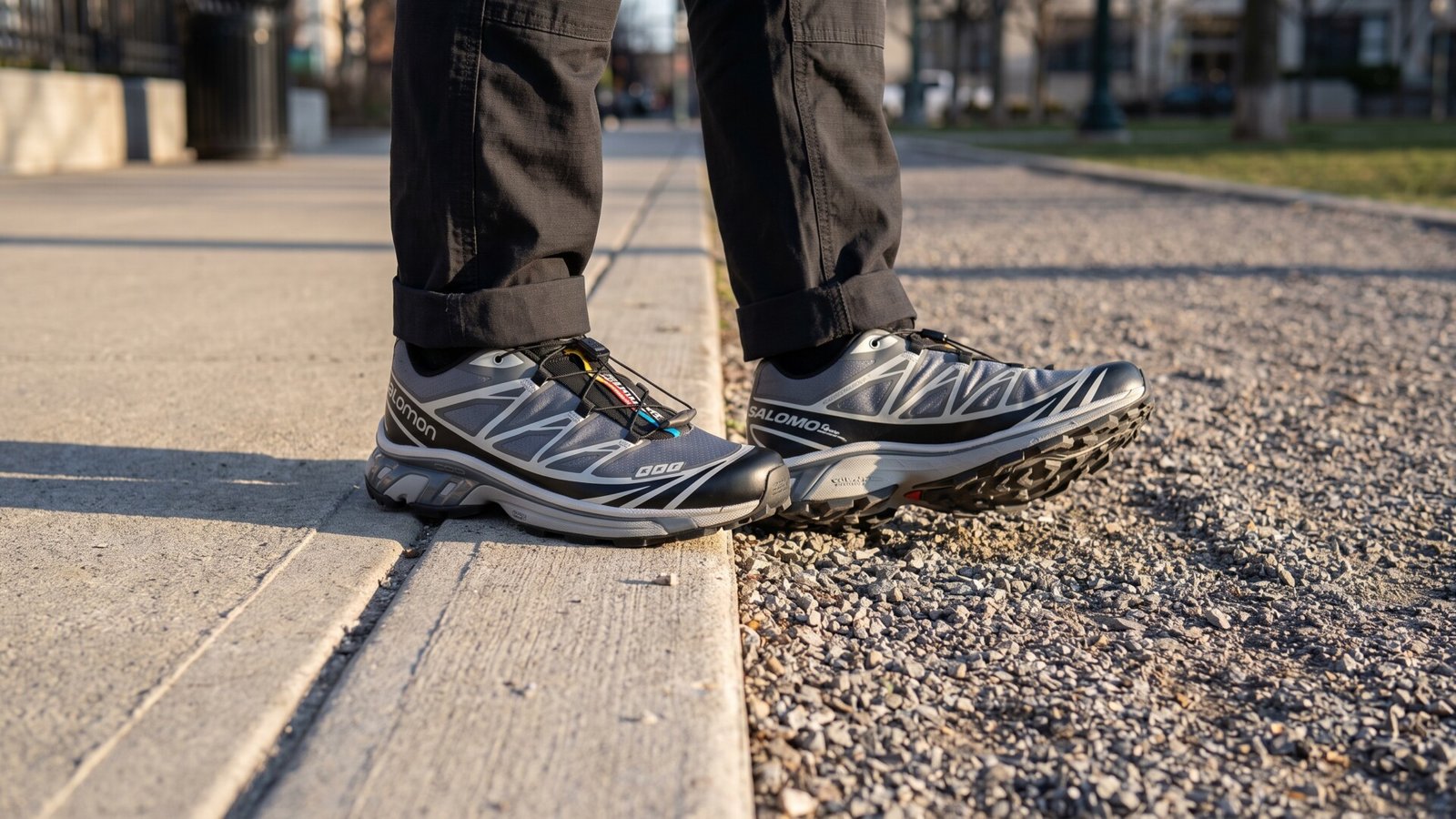
Salomon Sneakers
Most people think they know what a Salomon sneaker is. It’s the shoe you see on every fashion week attendee and every guy waiting for a table at a trendy brunch spot. So, you figure it’s a fashion shoe. Or, you see the aggressive tread and the Quicklace system and assume it’s a hardcore trail runner that has no business on a sidewalk.
Here’s the correction: they’re both right, and that’s exactly why buying a pair is so confusing.
Salomon exists in a weird, incredibly successful middle ground. It makes footwear with genuine, purpose-built outdoor performance, but it’s sold and worn as a streetwear staple. The problem is that the models that look similar in pictures—the XT-6, the ACS Pro, the Speedcross—feel completely different on the ground. They have different cushioning, different fits, and wildly different intended uses. Buying the one that looks coolest without understanding that difference is how you end up with a $200 shoe that feels terrible for the walking you actually do.
So, is Salomon worth the hype and the price? For a lot of you, yes. But the right model for your feet and your life is not the one with the most likes on Instagram. It’s the one that matches how you’ll actually use it.
Salomon at a Glance
Before we get into the weeds, here is the lineup. This is the short version of the models you’ll actually see on shelves and on feet, what they’re for, and what they cost.
| Model | Approximate price | Best for | Main strength | Main drawback |
|---|---|---|---|---|
| Salomon XT-6 | Around $200 | Fashion, travel, light trails | Iconic design and balanced protection | Firm feel and premium price |
| Salomon ACS Pro | Around $200 | Everyday streetwear and long urban days | Stable, structured ride | Bulky and less versatile for formal outfits |
| Salomon XT-4 OG | Around $220 | Style-led buyers and mixed terrain | Distinctive design with serious trail influence | Can feel stiff for casual wear |
| Salomon Speedcross 6 | Around $140 | Muddy trails and wet ground | Aggressive traction | Overbuilt for pavement |
| Salomon Sense Ride 5 | Around $145 | Road-to-trail use and walking | More approachable everyday comfort | Less fashion-forward |
| Salomon XA Pro 3D V9 | Around $140 | Hiking, travel, and rough paths | Protection and stability | Heavy-looking and firm |
The quick verdicts:
- Editor’s choice for most buyers: Salomon XT-6
- Best for urban comfort and technical style: Salomon ACS Pro
- Best for actual trail performance: Salomon Speedcross 6
- Best value for mixed walking and trail use: Salomon Sense Ride 5
- Best for hiking and hard-wearing travel: Salomon XA Pro 3D V9
One honest note before you get excited: these prices are fluid. A hyped colorway of the XT-6 can sit at $250 while a less popular one drops to $170. The market is weird that way. Check the current price on the specific color you want before you commit.
Why Salomon Sneakers Are Popular Now
Salomon didn’t just wake up one day and decide to become a fashion brand. For decades, it was a serious player in trail running and alpine sports—the kind of gear you bought for mountain marathons, not city commutes. Then something shifted. The fashion world, tired of retro basketball shoes and clean minimalism, started looking at the outdoors for inspiration.
That’s where the “gorpcore” movement came in. Suddenly, technical shell jackets, cargo pants, and hiking boots looked intentional and cool. Salomon was sitting right in the middle of that moment.
But the popularity isn’t just about a trend cycle. It’s about the details.
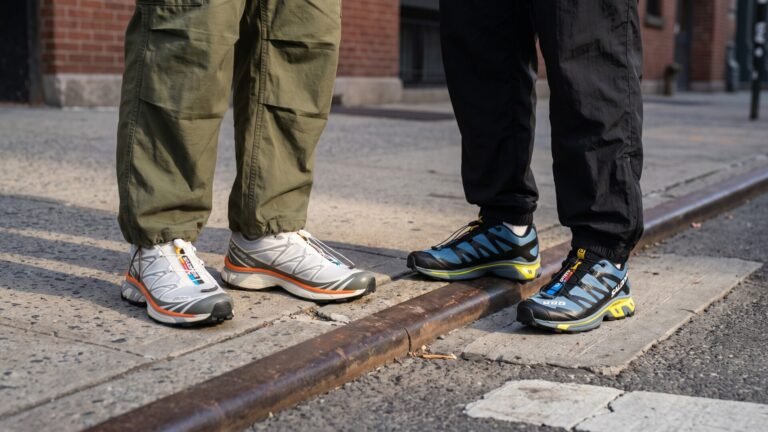
Look at a Salomon on someone’s feet. You see the Quicklace system—that little cinch cord instead of traditional laces. You see the sculpted, aggressive midsoles and the deep trail lugs. You see the protective overlays and the color palettes pulled straight from a mountain trail at dawn. These are not design flourishes; they are functional parts of a performance shoe. But visually, they signal something different from a pair of Nike Dunks or Adidas Sambas. They say “I’m ready for something more demanding than the sidewalk,” even when you’re just walking to get coffee.
That’s the buyer psychology at play. There’s a segment of buyers who want the genuine article. They want the real outdoor credibility, not a fashion shoe that looks like it went hiking. On the flip side, a lot of people are buying the visual language. They want the look of the gear without ever intending to hit a trail. And you know what? That’s fine. Paying for a well-built, protective shoe because you like how it looks with your cargos is a valid reason to buy it.
The bigger risk is trend fatigue. The whole “technical look” has cultural momentum, but it won’t last forever at this intensity. Models like the XT-6 and ACS Pro have a much better chance of becoming timeless staples because they are genuinely good products, not just novelty items. Loud, garish colorways will date fast. A black or grey XT-6? That has staying power.
Salomon’s Most Important Sneaker Models
Here’s where we separate the trail from the street. Each of these shoes has a job. Don’t send a mud-terrain tire to a road race.
Salomon XT-6
This is the one. The model that broke through to the mainstream and made Salomon a household name in streetwear circles. The XT-6 started life as a trail running shoe, and it still carries that DNA. It’s the safest starting point for most people because it’s the most versatile.
You can wear it for commuting, travel days, everyday streetwear, light trails, and it handles wet, rainy city streets better than almost any sneaker out there. The grip is excellent, the protective chassis around the foot is reassuring, and the silhouette is instantly recognizable. It’s a genuinely great travel shoe because it works for a hike and then looks right with a pair of technical pants at dinner.
The weaknesses? The ride is firm. If you’re used to the squish of a modern running shoe or a lifestyle sneaker with a ton of foam, the XT-6 will feel stiff and grounded. It’s a stable, protective feel, not a plush one. Also, the fit can feel snug, especially across the forefoot. And the price is premium, no way around it.
Salomon ACS Pro
If the XT-6 is the all-rounder, the ACS Pro is the statement piece. It’s chunkier, more angular, and more visibly technical. The silhouette is louder, with its aggressive paneling and ventilation holes. This is the shoe you buy when you want your footwear to be the center of attention.
It’s built for the city, not the trail. The platform is stable and supportive, making it great for long days on your feet, urban exploring, or travel where you’ll be walking for hours. It feels substantial, like a piece of equipment.
The trade-off is that it’s bulky. It has a heavier visual presence than the XT-6, which makes it harder to pair with minimal or simple outfits. If you’re wearing slim jeans and a plain tee, the ACS Pro will look like it’s trying too hard. It wants technical pants, cargos, and a more considered outfit.
Salomon XT-4 OG
The XT-4 is the older, arguably more hardcore sibling to the XT-6. It has a very similar vibe but leans more into its trail heritage. The design is slightly more chaotic and distinctive, which is why fashion-first buyers love it. It looks like a serious piece of outdoor equipment.
The build is durable and feels like it can take a beating. It’s great for style-led outfits, travel, and light outdoor use. But like the XT-6, it has a firm underfoot feel. The fit can also be a bit less forgiving than the XT-6 for some people. It’s a great choice if you want to stand out from the sea of XT-6s, but it’s less obvious as an everyday default. It’s more of a considered purchase.
Salomon Speedcross 6
Let’s be very clear about this one: the Speedcross is a purpose-built trail shoe. It has some of the most aggressive traction you will find on a sneaker. The lugs are huge, deep, and designed to dig into mud, loose soil, and wet, slippery trails.
If you run trails or hike on soft, uneven ground, this is your shoe. The grip is confidence-inspiring, and the lockdown is secure. On the trail, it’s a beast.
In the city, it’s a liability. The aggressive outsole feels clunky and awkward on pavement. The lugs will wear down faster on hard, abrasive surfaces than they would on dirt. It is the wrong shoe for commuting and walking. Unless the aggressive look is the entire point of your outfit, don’t buy the Speedcross for fashion. You will be disappointed.
Salomon Sense Ride 5
This is the one that often gets overlooked because it doesn’t have the hype of the XT-6. But for a lot of people, it’s the better shoe. The Sense Ride is Salomon’s road-to-trail model, and it’s far more approachable than the others.
The cushioning is softer and more adaptable, making it a legitimate option for walking, light trail running, and mixed surfaces. It’s the kind of shoe you can wear all day without your feet feeling beat up. It also has a lower visual intensity. It looks like a solid, technical sneaker, but it’s not screaming for attention.
If you want function first and fashion second, this is your Salomon. It’s also a much better value than the premium crossover models. It’s the practical choice.
Salomon XA Pro 3D V9
This is a hiking shoe, plain and simple. It’s built for rough paths, rocky terrain, and long days carrying a pack. The stability is excellent, and the protective construction will keep your feet safe on uneven ground.
It’s a dependable choice for travel where you expect to do some serious walking or light hiking. But it’s firm, heavy-looking, and has very limited styling versatility. You won’t want to wear these to a nice dinner after a day on the trail. It’s a tool, not a lifestyle piece.
Design, Comfort, and Fit: What Buyers Need to Know
Specs are fine, but you need to know what these shoes are actually like to live with.
Style and versatility
Salomons are not for every outfit. They shine with technical fabrics, loose trousers, cargos, and outdoor-inspired clothing. They also work surprisingly well with denim, giving a rugged edge to a casual look. Shorts are fine in the summer, but the chunkier models can look heavy.
For most contemporary streetwear, the XT-6 and ACS Pro are your best bets. The trail-specific models like the Speedcross can look overbuilt and awkward with simple casual outfits.
Color is critical. Black, grey, cream, and muted earth tones are the smart buys. They go with more of your wardrobe and they won’t look dated in a year. Loud, color-blocked trail colorways are fun for a specific outfit, but they are a commitment.
The visual complexity of a Salomon is a double-edged sword. It can add interest to a simple outfit, making a plain black tee and cargos look intentional. But if your outfit is already busy with patterns or technical details, a Salomon can push it over the top into costume territory.
Cushioning and daily comfort
Here’s the biggest shock for new buyers: Salomons are firm. The brand prioritizes stability, ground feel, and protection over plush, soft cushioning. This is a deliberate choice for trail running, where you want to feel the terrain.
On the street, this translates to a ride that feels secure and grounded, but not soft. It’s the difference between standing on a firm, supportive mat and a cloud. If you want maximum softness for walking, the Sense Ride 5 is your best bet. It’s the most forgiving model in the lineup. If you want a shoe for standing all day, the stable platform of the XT-6 or ACS Pro might actually serve you better than a super-soft shoe that can make your feet tired from working to stay stable.
Fit and sizing
This is where you need to be careful. Salomon fit is not consistent across the range. You cannot assume your size in the XT-6 will be the same in the Speedcross.
A common complaint is that many popular models feel snug through the forefoot. The toe box is often tapered and athletic, which is great for lockdown on the trail but not for wide feet.
If you’re between sizes, many people recommend going up a half size. But understand that extra length doesn’t fix a shoe that is fundamentally too narrow. If you have wide feet, you need to look for models with more forgiving uppers or try them on first. Do not buy a final-sale pair of a shoe you haven’t tried on. The return policy is your only safety net.
Which Salomon Sneaker Fits Your Use Case?
Stop looking at the shoes and start looking at your life. What are you actually doing when you’re wearing them?
| Your priority | Best starting point | Why |
|---|---|---|
| One pair for streetwear and travel | XT-6 | The most balanced mix of style, grip, and protection |
| Technical fashion with a bigger silhouette | ACS Pro | More structured and visually substantial |
| Trail running on muddy ground | Speedcross 6 | The most specialized traction |
| Walking and mixed surfaces | Sense Ride 5 | More approachable cushioning and versatility |
| Hiking and rough travel | XA Pro 3D V9 | More protection and stability |
| Distinctive fashion-first styling | XT-4 OG | Strong visual identity and trail heritage |
Let’s make it even simpler.
- Buy the XT-6 if the shoe will be worn mostly in the city but must handle rain, travel, and uneven surfaces.
- Avoid the XT-6 if you want soft, sneaker-like cushioning or need a naturally roomy toe box.
- Buy the ACS Pro if stability and technical styling matter more than low weight.
- Avoid the ACS Pro if you want a discreet, minimal sneaker.
- Buy the Speedcross 6 if you regularly encounter mud, loose soil, or wet trails.
- Avoid the Speedcross 6 if the main use is pavement, because the lugs will feel unnecessary and wear faster on hard surfaces.
- Buy the Sense Ride 5 if comfort across roads, paths, and light trails matters more than fashion recognition.
- Buy the XA Pro 3D V9 if travel and outdoor durability justify a more rugged silhouette.
Durability, Value, and Long-Term Ownership
A $200 sneaker is an investment. Let’s talk about what you get for it.
Salomons are generally built to last. The materials—mesh, synthetic overlays, and rubber—are chosen for outdoor abuse. The protective toe caps and rubber outsoles handle scrapes well. But they are not indestructible.
What tends to wear first? The outsole lugs, especially if you’re walking on pavement all day. The aggressive tread that’s great for dirt is abrasive on concrete and will wear down faster. Mesh can also stain, especially light colors. And the Quicklace system, while convenient, is a component that can fail. A broken cinch is annoying, but replacement parts are available.
Here’s the cost-per-wear math that matters. A $200 XT-6 worn twice a week for two years is roughly $1.92 per wear. That’s a very reasonable cost for a shoe that anchors your wardrobe. A $145 Sense Ride 5 worn three times a week for a year is roughly $0.93 per wear. The cheaper shoe is a better value on paper, but only if it actually suits your style and use case. A shoe you don’t wear because it doesn’t fit your look is worth $0 per wear.
Resale is a factor, too. The XT-6 has the strongest case for lasting relevance because it sits in that sweet spot between authentic outdoor function and established streetwear identity. Popular colorways in good condition can hold value or even appreciate. But Salomon resale is dependent on condition, size, and current fashion demand. A neutral colorway is the safer bet for both repeated wear and potential resale. A hyper-specific trend colorway is a gamble.
What Most Buyers Get Wrong About Salomon Sneakers
Let’s clear up some expensive mistakes.
Mistake: Assuming every Salomon sneaker is comfortable in the same way. “Comfort” is a spectrum. The XT-6 offers firm support and stability. The Speedcross offers trail grip and lockdown. The Sense Ride offers soft cushioning. They are all “comfortable” in their own way, but they feel completely different. Know what kind of comfort you’re after.
Mistake: Choosing the most aggressive outsole for ordinary city use. This is the Speedcross trap. Buying a mud-specialist for a pavement commute is a waste of money and performance. The lugs will feel awkward and wear down faster. Buy the tool for the job.
Mistake: Treating technical details as automatic value. You are paying for grip, protection, and construction. If you never hit a trail, a lot of that tech is irrelevant. You’re paying for the look and the build quality, which is fine, but don’t fool yourself into thinking you need the performance.
Mistake: Buying a narrow-feeling model because it is fashionable. This is the most expensive mistake of all. A shoe that pinches your toes or squeezes your arches is a shoe you will stop wearing. That’s a $200 paperweight. Fit problems are more costly than a slightly higher purchase price.
The clear rule: Choose the least technical Salomon model that genuinely covers your regular use. Extra performance is only valuable when it’s used.
Buying Advice: How to Choose and Where Salomon Fits the Market
How does Salomon stack up against the other big names? It helps to know where it sits.
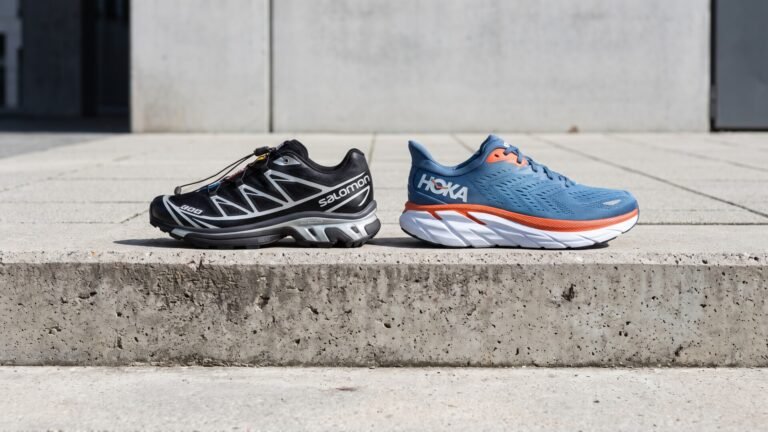
- Against Hoka: Salomon offers a more secure, technical, and trail-oriented feel. Hoka is usually the easier choice for highly cushioned walking and a softer ride. If you want a cloud, go Hoka. If you want a tool, go Salomon.
- Against On: Both have that “technical” look, but Salomon generally has stronger trail credibility and a more rugged aesthetic. On feels cleaner, more refined, and more lifestyle-oriented. Salomon is for the outdoors; On is for the city that wants to look like it could handle the outdoors.
- Against New Balance: New Balance offers a broader range of fits and more conventional everyday styling. Salomon provides more outdoor character and grip. If you need a wide fit or a shoe that goes with a suit, New Balance is the safer play. If you want grip and a statement, Salomon wins.
- Against ASICS: ASICS often appeals to buyers seeking running comfort and a less rugged look. Salomon is more visually distinctive and trail-focused. The ASICS Gel-Kayano and the Salomon XT-6 are both great, but they serve different aesthetics.
Before you click “buy,” run through this checklist:
- Confirm the terrain. Are you buying for the street, the trail, or a mix? This decides everything.
- Check width and return terms. Know the return policy before you commit. Do not buy final sale unless you’ve tried the exact model on.
- Compare colorway prices. Don’t pay a $50 premium for a hyped colorway when a similar neutral one is on sale.
- Consider socks and insoles. A good pair of technical socks can fix a minor fit issue. But don’t use accessories to compensate for a fundamentally wrong shoe shape.
- Buy neutral colors for maximum cost per wear. Unless you’re buying a fashion statement piece, black, grey, or earth tones will serve you better.
Who Salomon Sneakers Are For
Let’s be direct about who should and shouldn’t be buying these.
Salomon is a strong fit for:
- Buyers who commute or travel across mixed surfaces.
- People who like technical, outdoor-inspired streetwear.
- Wearers who value grip, structure, and protection over soft cushioning.
- Trail runners and hikers who need purpose-built performance.
- Buyers who want a sneaker with more cultural distinction than a basic white or retro running shoe.
Salomon may not be the best fit for:
- People who need a wide, naturally roomy toe box.
- Buyers who want a soft, lightweight walking sneaker.
- Anyone seeking a minimalist shoe that disappears into an outfit.
- Shoppers who will wear a trail-specific model only on smooth pavement.
- Buyers unwilling to clean technical mesh or accept a more structured fit.
Final Verdict: Which Salomon Sneaker Should You Buy?
If you can only buy one pair and you want the best shot at loving them, the answer is the Salomon XT-6.
It offers the strongest balance of recognizable design, city versatility, travel usefulness, grip, and long-term cultural relevance. It’s the shoe that made the brand famous for a reason. It’s not the softest or the roomiest option, so if you have wide feet or a strong preference for plush cushioning, look first at the Sense Ride 5 or another more forgiving running-oriented model.
For those who want a more substantial, technical streetwear silhouette, the ACS Pro is your pick. And the Speedcross 6 is only for the trail runners who will actually use its aggressive traction.
Don’t buy the hype. Buy the shoe that matches the terrain you walk on and the clothes you wear. Match the level of technical performance to your lifestyle, and you’ll be happy with your Salomons for years. Buy the hype, and you’ll just have another expensive pair of shoes in the back of your closet.
Frequently Asked Questions About Salomon Sneakers
Are Salomon sneakers good for everyday wear?
Yes, but only certain models. The XT-6, ACS Pro, and Sense Ride 5 are all excellent for daily use, depending on whether you prioritize style, support, or cushioning. Trail-specific options like the Speedcross 6 are excessive for city-only wear because the aggressive outsole is designed for soft ground, not pavement.
Do Salomon sneakers run small?
Sizing varies by model, but some popular styles can feel snug through the forefoot. It’s not that they run uniformly small, but that the athletic, tapered fit is different from a lifestyle sneaker. Always check the model-specific fit information and buy from a retailer with a good return policy so you can swap sizes if needed.
Are Salomon sneakers good for wide feet?
Fit is model-dependent, and several popular silhouettes may not feel naturally wide. The toe box is often tapered. If you have wide feet, try them on before committing, and avoid a tight fit that cannot be solved by simply sizing up, as extra length can cause heel slip.
Which Salomon sneaker is best for walking?
The Sense Ride 5 is the best choice for pure walking comfort because it has softer, more adaptable cushioning. The XT-6 offers a stable, supportive platform that’s great for all-day city walking, while the ACS Pro provides more structure. The right one depends on whether you want softness, stability, or fashion versatility.
Are Salomon XT-6 sneakers worth the money?
For most buyers, yes. The price is justified by the shoe’s versatility, durability, and strong cost-per-wear, especially if you wear them regularly. They also have solid resale interest. The value is weaker if you only need a soft city sneaker, in which case you’re paying for protection and grip you won’t use.
Can you wear Salomon Speedcross sneakers on pavement?
You can, but you shouldn’t. They are designed for soft and uneven terrain. On pavement, the aggressive outsole will feel clunky and unnecessary, and the lugs will wear down much faster on hard, abrasive surfaces than they would on dirt.
Do Salomon sneakers stay fashionable?
The brand has an established position in technical streetwear, so the core models are likely to remain relevant. Neutral colorways have the strongest longevity. The risk is with highly specific trend colorways, which can date quickly once the fashion cycle moves on.