Nike Dunk Low vs Budget Alternatives: What to Buy Instead
The Nike Dunk Low Problem in 2026
It’s 2026, and the Nike Dunk Low remains an unstoppable force in sneaker culture. Walk down any city street, scroll through any fashion feed, or step onto any college campus, and you will see them. The silhouette that began as a basketball shoe in 1985 has transformed into arguably the most ubiquitous lifestyle sneaker of the past half-decade. Search volumes for “Nike Dunk Low” still dwarf those of nearly every other retro basketball shoe, and new colorway drops continue to generate digital queues and instant sellouts.
But here is the problem that every sneaker buyer faces in 2026: the Dunk Low market is broken for the average consumer.
Retail pricing sits at $110-$130 for standard releases, yet good luck finding popular colorways at that price. Resale markets have cooled slightly from the pandemic-era frenzy, but desirable pairs still command $180 to $300 or more. The Georgetown, Panda (yes, still), and university colorway series remain perpetually inflated. Limited availability means that unless you are monitoring release calendars, entering raffles, or willing to pay resale, you are likely settling for whatever colors remain on shelves—often the least appealing options.
Then there is the quality conversation. Sneaker forums and YouTube reviewers have spent years dissecting the declining leather quality on general release Dunks. The stiff synthetic materials, uncomfortable flat soles, and inconsistent manufacturing have led many to question whether the Dunk Low actually delivers $110 worth of shoe—let alone resale prices.
The opportunity has never been better to look elsewhere. A wave of excellent alternatives from Nike’s own lineup, Adidas, New Balance, Puma, and Reebok deliver similar visual appeal, superior comfort, and better value at lower price points. Some cost half as much as Dunks on resale. Others offer premium materials for the same retail price. Many provide all-day wearability that the Dunk simply cannot match.
This guide does three things. First, it breaks down exactly why the Dunk Low became so popular in the first place. Second, it compares the Dunk head-to-head against the six best alternatives on the market today. Third, it helps you decide which shoe actually belongs in your closet based on your priorities—hype, comfort, budget, or quality. If you have been priced out of the Dunk market or simply want smarter options, keep reading.
What Makes the Dunk Low So Popular?
Understanding why the Dunk Low captured the sneaker world requires looking beyond the shoe itself. The silhouette succeeded because it sits at a perfect intersection of simplicity, versatility, cultural weight, and strategic scarcity.
The silhouette itself is nearly perfect for casual wear. The Dunk Low features a clean, low-profile shape with balanced proportions. The toe box is rounded but not bulbous. The Swoosh sits at an aggressive but natural angle. The perforated toe section adds visual texture without clutter. Compared to bulky basketball shoes from the same era, the Dunk aged gracefully into lifestyle wear because it never looked excessively athletic. You can wear Dunks with jeans, shorts, cargo pants, joggers, skirts, or suits—and people do all of the above.
Styling versatility drives mainstream adoption. A white and black Dunk goes with virtually everything in a wardrobe. Colorful Dunks become statement pieces without overwhelming an outfit. The shoe works for coffee runs, casual offices, dates, concerts, and travel. Few sneakers bridge the gap between streetwear and normcore as seamlessly.
Cultural momentum built over decades. The Dunk started as a college basketball shoe, then found new life in the skateboarding world during the early 2000s. The “SB Dunk” sub-line created legendary collaborations with skate shops, artists, and brands. By 2020, TikTok and Instagram had transformed the Dunk into a Gen Z status symbol. Unlike trends that burn out in months, the Dunk has cycled through multiple cultural moments across forty years. That longevity creates perceived permanence—buying Dunks feels like buying into something established rather than something fleeting.
Colorway variety keeps collectors engaged. Nike has released thousands of Dunk Low colorways. Simple two-tone “university” pairs. Complex collaborations with Off-White, Travis Scott, and Fragment. Seasonal themes, holiday releases, and regional exclusives. This endless variety means there is a Dunk for everyone—but also means the specific Dunk you want is probably hard to find.
Comparable models from competing brands share DNA with the Dunk but offer distinct personalities. The Adidas Forum Low, released in 1984, features a similar retro basketball origin with a chunkier, more 1980s aesthetic. Puma’s CA Pro draws from tennis heritage rather than basketball but produces a clean leather low-top. New Balance’s 550, revived from a 1989 basketball design, has become the preferred choice for those who want retro style with premium materials. Reebok’s Club C 85, originally a tennis shoe, delivers minimal leather construction at accessible prices. Nike even cannibalizes its own sales with the Court Vision Low, a budget-friendly shoe that borrows heavily from Dunk design language.
The Dunk Low is not unique in its form or function. But it holds a unique position as the default option—the shoe everyone compares everything else against. That status is precisely why looking at alternatives makes so much sense.
Why Look for Alternatives?
Before diving into specific recommendations, let us address the elephant in the room. Why would anyone choose an alternative when the Dunk Low exists? The answer comes down to four major pain points that affect real buyers every day.
Price inflation remains the number one barrier. A $110 retail price is already significant for a casual sneaker. But popular colorways rarely stay at retail. The classic Panda Dunk (black/white) still trades at $150-$200 on resale platforms. University colorways like Kentucky, Syracuse, and Michigan hover around $180-$250. Limited collaborations routinely exceed $300. When you factor in shipping, authentication fees, and taxes, a pair of Dunks can easily cost $250 out of pocket. That is premium sneaker money for a shoe with basic materials and minimal technology.
The leather quality versus price debate has intensified. Watch any sneaker reviewer compare a 2020 Dunk to a 2007 Dunk, and you will see the same complaints. Modern general release Dunks use thin, plasticky synthetic leather that creases awkwardly, feels stiff out of the box, and lacks the plushness of older pairs. Some colorways use better materials—particularly SB Dunks or premium tier releases—but standard Dunks often feel cheap relative to their price. Meanwhile, alternatives at similar or lower price points frequently use nicer leather, suede, or nubuck.
Comfort limitations become obvious with extended wear. The Dunk Low uses a basic foam midsole with no advanced cushioning technology. The insole is thin. The outsole is flat. For short walks and casual wear, this is fine. But wear Dunks for a full day of city walking, a concert, or a theme park visit, and your feet will feel it. The lack of arch support and impact protection means fatigue sets in faster than with properly cushioned alternatives. Many buyers discover this only after purchase, leading to buyer’s remorse.
Oversaturation has diminished exclusivity appeal. At a certain point, popularity becomes a drawback. When every other person on the street wears Dunks, the shoe stops feeling special. The “Panda Dunk” specifically became a meme for its ubiquity. For buyers who want to express individual style, wearing the same shoe as everyone else defeats the purpose. Alternatives offer differentiation while maintaining similar aesthetic territory.
These factors create a clear value proposition for alternatives. You can spend less money, get better materials, enjoy more comfort, and wear something slightly different from the crowd. The only thing you sacrifice is the Nike Swoosh and the cultural cachet that comes with it. For many buyers in 2026, that trade-off makes perfect sense.
Quick Picks
If you only have thirty seconds, here is the short version of everything that follows.
Best overall alternative: Adidas Forum Low. This is the closest competitor to the Dunk in terms of cultural relevance, style versatility, and availability. Slightly chunkier silhouette. Significantly better cushioning. Similar price point with better materials. Available in countless colorways at retail or below. Most buyers should start here.
Best budget option: Nike Court Vision Low. Nike’s own budget Dunk clone costs $70-$90, uses a very similar silhouette, and delivers acceptable comfort for casual wear. The materials are cheaper than Dunks, but the price reflects that. Perfect for beaters, kids, or anyone who simply wants the look without the cost.
Best premium feel under budget: New Balance 550. The 550 costs $110-$150 retail—similar to Dunks—but delivers substantially better materials, superior comfort, and a distinct retro basketball aesthetic that has become highly sought-after in its own right. This is the upgrade pick for buyers with Dunk money who want better value.
Best comfort upgrade: Puma CA Pro. Puma’s soft foam midsole technology makes the CA Pro significantly more comfortable than Dunks for all-day wear. Clean, simple leather upper. Priced at $80-$110. Hugely overlooked by the sneaker mainstream.
Best minimalist alternative: Reebok Club C 85. The Club C delivers a lower, sleeker profile than the Dunk with premium leather and exceptional comfort. Priced at $70-$100. Perfect for buyers who want a clean, versatile white sneaker without the basketball shoe bulk.
Comparison Table
| Sneaker | Price Range | Style Similarity | Comfort (1-5) | Materials Quality | Best For |
|---|---|---|---|---|---|
| Nike Dunk Low | $110-$250+ | ⭐⭐⭐⭐⭐ | ⭐⭐⭐ | ⭐⭐⭐ | Hype/style purity |
| Adidas Forum Low | $90-$120 | ⭐⭐⭐⭐ | ⭐⭐⭐⭐ | ⭐⭐⭐⭐ | Best overall alternative |
| Nike Court Vision Low | $70-$90 | ⭐⭐⭐⭐ | ⭐⭐⭐ | ⭐⭐⭐ | Budget-conscious buyers |
| New Balance 550 | $110-$150 | ⭐⭐⭐⭐⭐ | ⭐⭐⭐⭐ | ⭐⭐⭐⭐ | Premium feel seekers |
| Puma CA Pro | $80-$110 | ⭐⭐⭐⭐ | ⭐⭐⭐⭐⭐ | ⭐⭐⭐⭐ | Comfort priority |
| Reebok Club C 85 | $70-$100 | ⭐⭐⭐ | ⭐⭐⭐⭐ | ⭐⭐⭐⭐ | Minimalist style lovers |
The Best Dunk Low Alternatives
1. Adidas Forum Low: The Closest Competitor Overall
The Adidas Forum Low deserves the top spot on this list for one simple reason: it matches the Dunk in nearly every category while exceeding it in comfort and value.
Originally released in 1984 as a basketball shoe, the Forum features a more pronounced 1980s aesthetic than the Dunk. The silhouette is slightly chunkier, with more padding around the ankle collar and a thicker tongue. The signature strap across the laces—removable on most modern versions—adds visual interest that Dunks lack. But the fundamental shape is similar enough that Forums read as “Dunk-adjacent” rather than completely different.
Where the Forum wins is underfoot. Adidas uses a cupsole construction with significantly more foam density than Nike uses on Dunks. The result is a shoe that feels substantial without being heavy. Impact absorption is better. Long-term wear fatigue is lower. For anyone who plans to actually walk in their sneakers, this difference becomes apparent within hours.
Materials quality on standard Forum releases consistently exceeds standard Dunk releases. Adidas uses thicker leather panels with better grain structure. The stitching is cleaner. The perforations on the toe box are more precisely aligned. This is not Forum vs premium Dunk—that comparison would be closer. But Forum vs general release Dunk? The Forum wins on materials almost every time.
Colorway availability is excellent. Adidas releases Forum Lows in white/white, white/black, white/navy, white/red, and countless collaborations. You can find core colorways at any Adidas retailer for $90-$110, often on sale for less. Limited Forums exist, but they rarely command the resale premiums of Dunks. If you want a specific color, you can probably find it at retail.
The only downside is the strap. Some wearers love the visual detail. Others find it fussy or prefer the cleaner look of the Dunk. Fortunately, most modern Forum releases feature a detachable strap secured by velcro. Wear it for a more aggressive 80s look. Remove it for a cleaner silhouette that closely resembles a Dunk. This flexibility makes the Forum adaptable to different style preferences.
Who should buy the Forum Low? Anyone who wants Dunk-like style with better comfort, better materials, and lower price. The Forum is the most direct competitor on this list and the smartest choice for most buyers.
2. Nike Court Vision Low: The Cheapest Dunk-Style Sneaker
Nike knows exactly what it is doing with the Court Vision Low. This is the budget Dunk for buyers who want the Swoosh and the silhouette but cannot or will not pay Dunk prices.
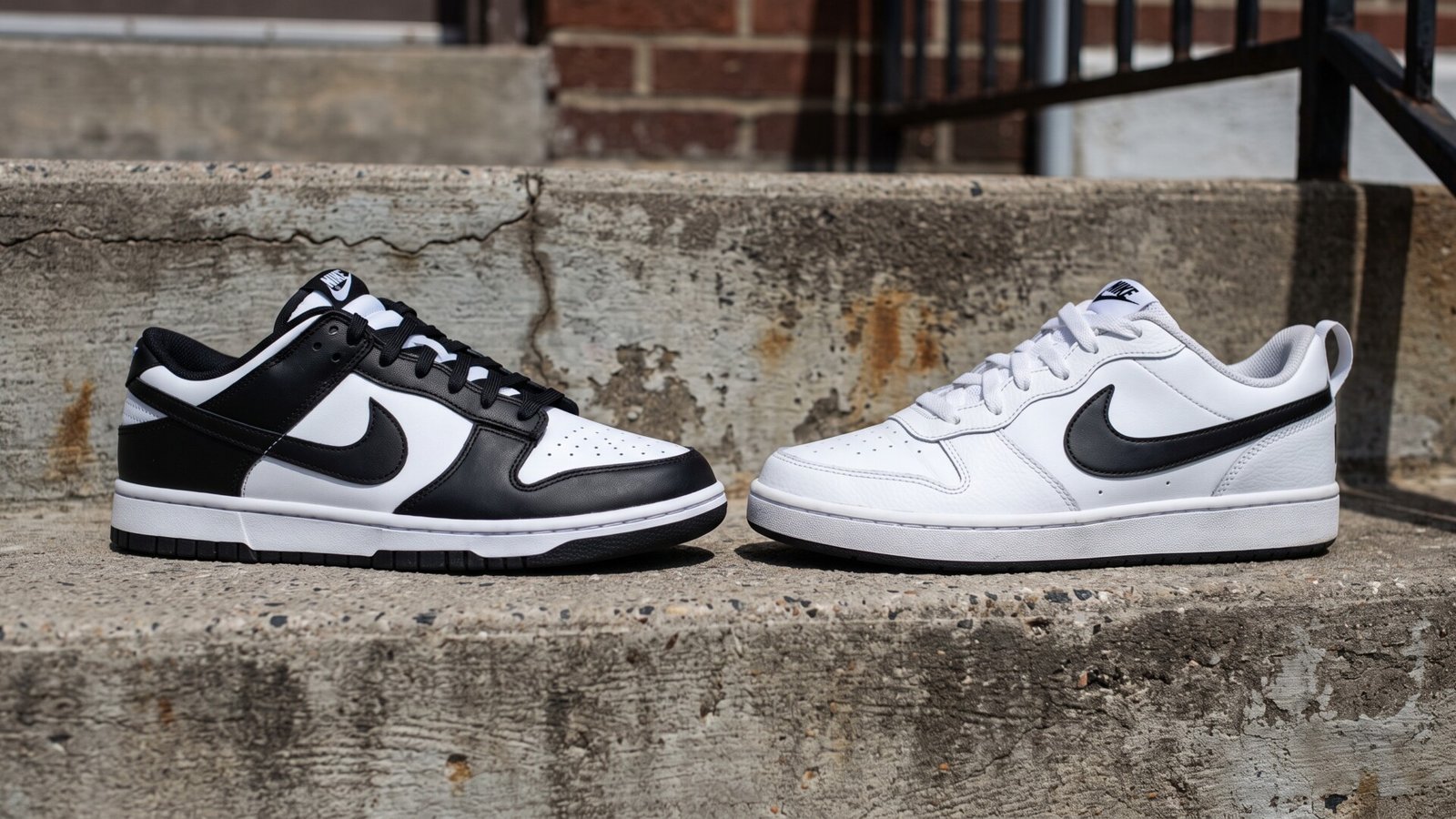
The visual similarities are striking. The Court Vision features a low-top leather construction with a perforated toe box, a large Swoosh on the side panel, and a cupsole silhouette that mirrors the Dunk’s proportions. From ten feet away, most people cannot tell the difference. Up close, the differences become apparent, but they are not dealbreakers for budget-focused buyers.
The materials are where Nike cut costs. The leather on Court Visions is thinner and more synthetic than even standard Dunks. The perforations are sometimes misaligned. The stitching can be inconsistent. These are not premium sneakers, and they do not pretend to be. However, for $70-$90 retail—often discounted to $50-$60 on sale—the quality is entirely acceptable for casual use.
Comfort is comparable to Dunks, which is to say basic. The foam midsole is flat and minimally cushioned. The insole is thin. These are fine for errands and short walks but not for all-day wear. Buyers expecting modern comfort technology will be disappointed. Buyers expecting a basic, affordable sneaker will be satisfied.
The value proposition here is straightforward. A pair of Court Visions costs roughly half what a popular Dunk colorway costs on resale. You get 80% of the visual appeal for 50% of the price. Use them as beaters. Buy them for teenagers who will outgrow them in six months. Keep a pair in your car as backup shoes. The Court Vision excels in scenarios where spending $150 on Dunks would feel wasteful.
Who should buy the Court Vision Low? Budget-conscious buyers, parents buying for growing kids, anyone who wants a disposable sneaker for messy activities, or anyone who simply does not care about material quality and only wants the look.
3. New Balance 550: Premium Feel Under Budget
The New Balance 550 revival has been one of the biggest success stories in sneakers over the past several years. Originally a 1989 basketball shoe, the 550 disappeared for decades before New Balance smartly brought it back as a lifestyle sneaker. The result is a shoe that competes directly with the Dunk for retro basketball supremacy.
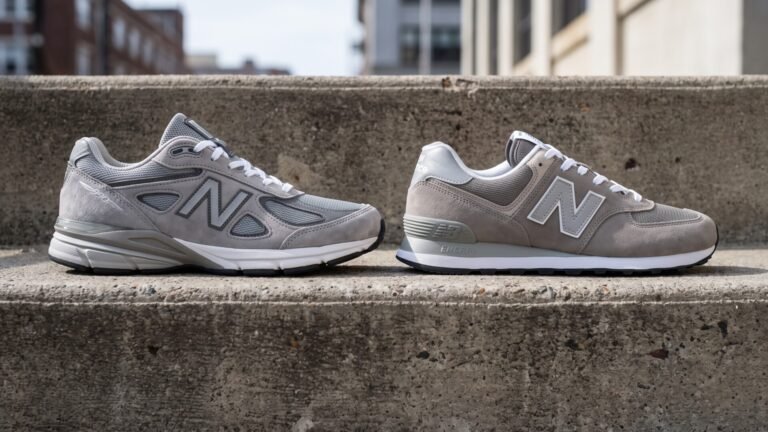
Visually, the 550 is chunkier and more substantial than the Dunk. The toe box is rounder. The perforations form a distinctive “N” pattern. The New Balance “N” logo on the side panel is large and unmistakable. The overall silhouette reads as more 1980s than the Dunk’s slightly refined shape. Some buyers prefer this bolder aesthetic. Others find it less versatile than the Dunk. Style preference is genuinely subjective here.
Where the 550 unquestionably wins is materials and construction. New Balance uses higher-grade leather on standard 550 releases than Nike uses on standard Dunks. The panels are thicker. The texture is more natural. The suede accents on many colorways feel soft and premium. The stitching is precise. The overall fit and finish suggest a shoe that costs more than it actually does.
Comfort is also superior. The 550 features a more substantial foam midsole with better arch support than the Dunk’s flat base. The padded collar and tongue add comfort without bulk. The outsole pattern provides better traction. For all-day wear, the 550 is noticeably better than the Dunk.
The price is the sticking point. At $110-$150 retail, the 550 costs the same as or slightly more than a Dunk at retail. Popular 550 colorways also experience some resale inflation, though generally less severe than Dunks. The value proposition is different: you pay Dunk money for a shoe that feels more premium, not less. The 550 is not a budget alternative—it is a quality upgrade for buyers willing to spend Dunk prices on a better product.
Who should buy the New Balance 550? Buyers with $110-$150 to spend who prioritize materials quality and comfort over the Nike brand name. The 550 is for sneaker fans who appreciate construction and are willing to pay for it.
4. Puma CA Pro: The Comfort-First Choice
Puma has quietly produced excellent casual sneakers for decades without capturing the cultural attention of Nike or Adidas. The CA Pro deserves more recognition than it receives. This is arguably the most comfortable shoe on this entire list.
The CA Pro draws from Puma’s tennis heritage rather than basketball. The silhouette is slightly sleeker than the Dunk, with a lower profile and cleaner lines. The toe box is less bulbous. The Puma formstrip on the side panel curves more gently than the Nike Swoosh. The overall effect is a shoe that reads as sporty but refined—less overtly athletic than the Dunk.
Comfort is where the CA Pro dominates. Puma uses a soft foam midsole compound that absorbs impact far better than the Dunk’s rigid base. The insole has better contouring and arch support. The padding around the collar is plush without being excessive. Wear these for a full day of walking, and your feet will thank you. This is the rare casual sneaker that legitimately competes with modern running shoes for comfort.
Materials quality is solid. Standard CA Pro releases use leather that falls somewhere between Dunk and Forum quality—better than budget options, not quite premium tier. The synthetic overlays are minimal. The construction is clean. For $80-$110, you get a well-made shoe that will last through regular rotation.
The catch is style recognition. Puma lacks the cultural cachet of Nike or New Balance in the current sneaker market. Wearing CA Pros will not earn nods from sneaker enthusiasts. The colorway selection, while adequate, lacks the depth of Dunk or Forum options. If you care about being part of the conversation, the CA Pro may feel like a compromise. If you just want a comfortable, good-looking shoe at a fair price, it is an excellent choice.
Who should buy the Puma CA Pro? Comfort-first buyers who plan to actually walk in their sneakers. Anyone who has experienced foot fatigue from Dunks and wants something better. Buyers who do not care about sneaker culture status symbols.
5. Reebok Club C 85: The Minimalist’s Dream
The Reebok Club C 85 occupies a different aesthetic territory than the Dunk. Where the Dunk is a basketball shoe adapted for lifestyle wear, the Club C is a tennis shoe through and through. The result is a lower, sleeker, more refined silhouette that appeals to buyers who find the Dunk too bulky.
The Club C’s design language is minimalist excellence. Clean leather panels. A simple Reebok logo on the side and tongue. A subtle perforation pattern on the toe box. No straps, no extra panels, no aggressive branding. The shoe disappears visually in the best possible way, letting outfits rather than sneakers take center stage.
Materials quality is outstanding for the price. Reebok uses soft, pliable leather on the Club C that breaks in beautifully. The padding around the collar and tongue is generous. The internal lining is smooth and comfortable. At $70-$100, the Club C delivers materials that rival shoes costing twice as much. This is one of the best values in casual footwear.
Comfort is excellent for a low-profile sneaker. The EVA midsole provides adequate cushioning without adding bulk. The shape follows the natural contour of the foot better than the Dunk’s flat platform. The outsole is flexible. For daily casual wear, the Club C is genuinely comfortable.
The trade-off is visual similarity to the Dunk. The Club C does not look like a Dunk. The silhouette is different—lower, narrower, more refined. Buyers who want the specific basketball shoe aesthetic will be disappointed. Buyers who want a clean white leather sneaker that works with everything will be delighted. This is an alternative in terms of function and quality, not direct style replication.
Who should buy the Reebok Club C 85? Minimalist style lovers, buyers who prefer tennis shoe aesthetics to basketball shoe aesthetics, anyone who wants a premium-feeling leather sneaker under $100, and people who find Dunks too chunky.
6. Honorable Mentions
Three additional shoes deserve recognition even if they did not make the main list.
Adidas Rivalry Low: Think of this as the Forum’s bigger, bolder cousin. The Rivalry Low features an even chunkier silhouette with more pronounced panels and a thicker sole. Style similarity to Dunks is moderate, but the Rivalry has its own dedicated following among retro basketball fans. Priced similarly to the Forum.
Nike Blazer Low: The Blazer predates the Dunk by over a decade and offers a very different shape—longer, sleeker, with a distinctive toe cap. The Blazer Low is less comfortable than Dunks due to minimal cushioning, but the vintage aesthetic appeals to many buyers. Available frequently on sale for $60-$80.
Vans Lowland CC: Vans entered the retro basketball space with the Lowland, a shoe that borrows heavily from Dunk and Air Jordan 1 design language. The ComfyCush version adds Vans’ improved cushioning technology. Not as widely available as other options, but worth seeking out for Vans fans.
Dunk Low vs Alternatives: Key Differences
Understanding the specific differences between Dunks and alternatives helps buyers make informed decisions. Let us break down the four most important categories.
Style Differences
The Dunk Low is the reference point. Its proportions—toe box height, side panel curve, collar shape—have become the standard for retro basketball lifestyle shoes. Alternatives each deviate slightly. The Forum is chunkier. The Court Vision is nearly identical but cheaper-looking up close. The 550 is rounder and more substantial. The CA Pro is sleeker and lower. The Club C is entirely different. None perfectly replicate the Dunk’s specific visual balance. Buyers who want an exact Dunk look should buy Dunks. Buyers comfortable with similar-but-different will find excellent options.
Comfort Comparison
The Dunk Low is not comfortable by modern standards. The flat foam midsole, thin insole, and rigid construction lead to foot fatigue during extended wear. Most alternatives improve on this significantly. The Forum and 550 offer substantially better cushioning. The CA Pro is in a different comfort tier entirely. The Club C matches Dunk comfort while adding better shape. Only the Court Vision matches Dunk’s basic, unimpressive comfort level. If comfort matters to you, alternatives win decisively.
Quality and Materials
Standard Dunk quality has declined over time. Thin synthetic leather, inconsistent stitching, and variable manufacturing plague general releases. Premium Dunks and SB Dunks use better materials but cost more. Among alternatives, quality varies. The Court Vision uses cheaper materials than Dunks. The Forum uses better materials than standard Dunks. The 550 uses substantially better materials. The CA Pro and Club C both exceed Dunk quality at lower prices. For value-focused buyers, alternatives offer superior material quality per dollar spent.
Price Reality
Retail to retail, Dunks cost $110-$130. Alternatives range from $70 (Court Vision) to $150 (550 retail, though often found lower). The price difference at retail is modest. But retail Dunks are hard to find in desirable colorways. Resale Dunks cost $150-$300. Alternatives rarely experience significant resale inflation. The effective price difference between a desirable Dunk and a desirable alternative is often $50-$150. For budget-conscious buyers, alternatives provide massive savings.
Which One Should You Buy?
The decision comes down to your specific priorities as a buyer. Here is straightforward guidance.
Choose the Nike Dunk Low if:
- You want a specific colorway only available from Nike
- You care about sneaker culture status and brand recognition
- You are willing to pay resale prices for hype pairs
- You prefer the exact Dunk silhouette over similar options
- You are collecting Dunks specifically as part of a larger collection
Choose the Adidas Forum Low if:
- You want the best all-around alternative
- You value comfort over brand purity
- You like the chunkier 80s aesthetic
- You want multiple colorway options at retail prices
Choose the Nike Court Vision Low if:
- Your budget is under $100
- You want the closest possible visual match to Dunks
- You need a beater pair you do not mind destroying
- You are buying for a child or teenager
Choose the New Balance 550 if:
- You have $110-$150 to spend
- You prioritize materials quality and construction
- You want premium feel without premium price
- You like the chunkier retro basketball look
Choose the Puma CA Pro if:
- Comfort is your number one priority
- You plan to walk extensively in your sneakers
- You do not care about brand hype
- You want a sleeker, less bulky silhouette
Choose the Reebok Club C 85 if:
- You prefer minimalist, tennis-inspired design
- You want premium leather under $100
- You find Dunks too chunky or athletic-looking
- You need a versatile white sneaker for daily wear
Final Verdict
The Nike Dunk Low remains an iconic sneaker for good reason. The silhouette is timeless. The cultural history is genuine. The styling versatility is unmatched. For collectors and brand loyalists, Dunks are worth pursuing at retail or even at reasonable resale prices.
But for the average buyer in 2026—someone who wants a good-looking, comfortable sneaker without overpaying—the Dunk is rarely the smartest choice. The comfort is mediocre. The materials are declining. The availability is frustrating. The alternatives have caught up and, in many cases, surpassed the Dunk in the categories that actually matter for daily wear.
The Adidas Forum Low is the best overall alternative. It matches the Dunk’s versatility, exceeds its comfort, uses better materials, and costs less at retail. Most buyers should start here and will likely stop here.
The Nike Court Vision Low is the best budget pick. At half the price of resale Dunks, these deliver acceptable style for casual use. Perfect for beaters, kids, or anyone on a tight budget.
The New Balance 550 is the best upgrade pick. For the same money as retail Dunks, you get substantially better materials, superior comfort, and a distinct aesthetic that has become highly respected in its own right.
The sneaker market has never offered more good options at accessible prices. The Dunk Low is one of those options, but it is no longer the only one—or even the best one for most people. Buy what fits your feet, your style, and your budget. You will end up happier than if you chased hype.
FAQ
What is the best alternative to Nike Dunk Low?
The Adidas Forum Low is widely considered the best overall alternative. It offers similar retro basketball styling, better comfort, higher quality materials, and lower prices than popular Dunk colorways.
Are Nike Dunk Lows worth it?
It depends. At retail price ($110-$130) for a colorway you genuinely want, yes. At resale prices ($150-$300) or for basic colorways with poor materials, no. Most buyers are better served by alternatives that offer better value.
Why are Dunk Lows so expensive?
Limited production runs, high demand from sneaker culture, strategic scarcity from Nike, and resale market speculation all contribute to inflated Dunk prices. Popular colorways sell out instantly, driving secondary market prices well above retail.
What sneakers look like Dunks but are cheaper?
The Nike Court Vision Low is the closest visual match at a lower price ($70-$90). The Adidas Forum Low ($90-$120) offers similar style with better quality. Both are significantly cheaper than popular Dunk colorways on resale.
Are Dunk Lows comfortable?
Dunk Lows are acceptable for casual, short-term wear but are not comfortable by modern standards. The flat foam midsole, thin insole, and rigid construction cause foot fatigue during extended walking. Most alternatives offer superior comfort.
Are there better quality alternatives to Dunks?
Yes. The New Balance 550 uses substantially better leather and construction than standard Dunks at a similar price point. The Adidas Forum Low and Reebok Club C 85 also exceed Dunk quality at lower or comparable prices.