New Balance 990 vs 574 Comparison
A deep, practical look at comfort, quality, style, and long-term wear
Few sneaker brands balance heritage and everyday usability like New Balance. And within their lineup, two models come up again and again when people are choosing a pair they can actually live in: the New Balance 990 and the New Balance 574. On the surface, they share a similar retro-running DNA. In practice, they’re built for very different types of wearers, budgets, and expectations.
This guide breaks things down clearly. We’ll look at materials, construction, comfort, sizing, durability, styling, and value, based on the specs New Balance publishes and the way each shoe is built, not marketing hype. If you’re trying to decide between the 990 and the 574, this should give you a confident answer by the end.
This head-to-head is part of our complete Sneakers Comparisons series, where we break down the most iconic models side by side.
The Short Answer
If you searched “574 vs 990” or “990v6 or 574” and just want the verdict: buy the 990v6 if you want the more substantial, better-cushioned, more premium-built shoe and you’re happy to spend roughly double. Buy the 574 if you want a lighter, simpler, budget-friendly classic for casual wear. The 990 is the “buy once, wear a lot” option; the 574 is the “easy, affordable everyday sneaker” option. Details and caveats below.
See the 990v6 →574 – Men’s →574 – Women’s →
Side-by-Side Spec and Price Snapshot
| New Balance 990v6 | New Balance 574 Core | |
|---|---|---|
| Starting price (newbalance.com, Oct 2026) | From $199.99 | From $99.99 |
| Upper | Mesh base with pigskin suede and synthetic overlays | Suede and mesh |
| Midsole tech | FuelCell foam plus ENCAP | ENCAP (EVA foam core with a polyurethane rim) |
| Where it’s made | Made in USA line (New Balance cites 70% or more domestic value) | Not a Made in USA line |
| Overall feel | Structured, cushioned, heavier | Light, simple, casual |
| Sizing note | See sizing section; check the sizing guide | New Balance notes it runs small; many buyers go up half a size |
Prices are New Balance’s listed starting prices at the time of writing and change with colorways, sales and retailers. Always check the current listing.
Quick Overview: What These Sneakers Represent
Before getting into details, it helps to understand what each model is meant to be.
The New Balance 990 is the brand’s flagship lifestyle-running hybrid. It’s positioned as a premium sneaker, originally designed as a high-performance runner and now worn mostly as an everyday shoe. The current 990v6 sits in New Balance’s Made in USA range (a label that, per New Balance, means 70% or more domestic value rather than every component being American), uses higher-grade materials, and is built for long hours on foot.
The New Balance 574, on the other hand, is the accessible classic. It’s one of New Balance’s most recognizable silhouettes and serves as an entry point into the brand. It’s casual, versatile, and designed to be worn comfortably without feeling overengineered. We cover it in more depth in our New Balance 574 review.
Both are icons, but they serve different purposes.
Which “990” Are We Talking About?
Searches for “574 vs 995” or “990v6 or 574” point to a real source of confusion: the 990 has been updated many times, and the version matters for price, fit and materials. This article uses the 990v6 as the reference because it’s the version most people are shopping for right now. Older versions (v3, v4, v5) and any newer release can differ in details, so don’t assume specs carry over between versions. If you’re weighing the 990v6 against its predecessor, our 990v6 vs 990v4 comparison covers that in detail.
Design & Aesthetic Differences
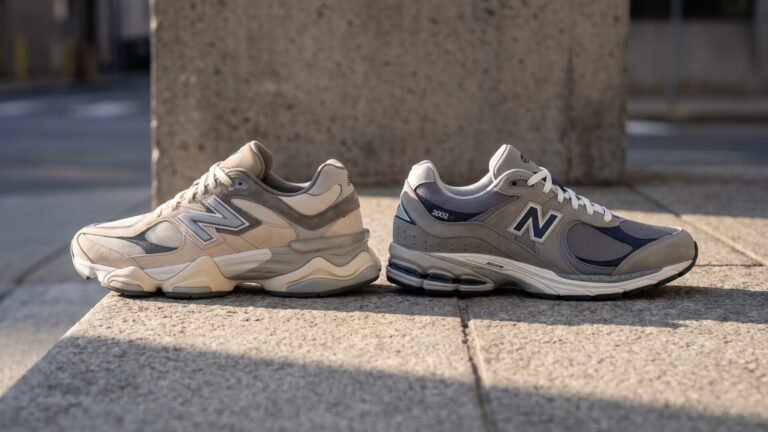
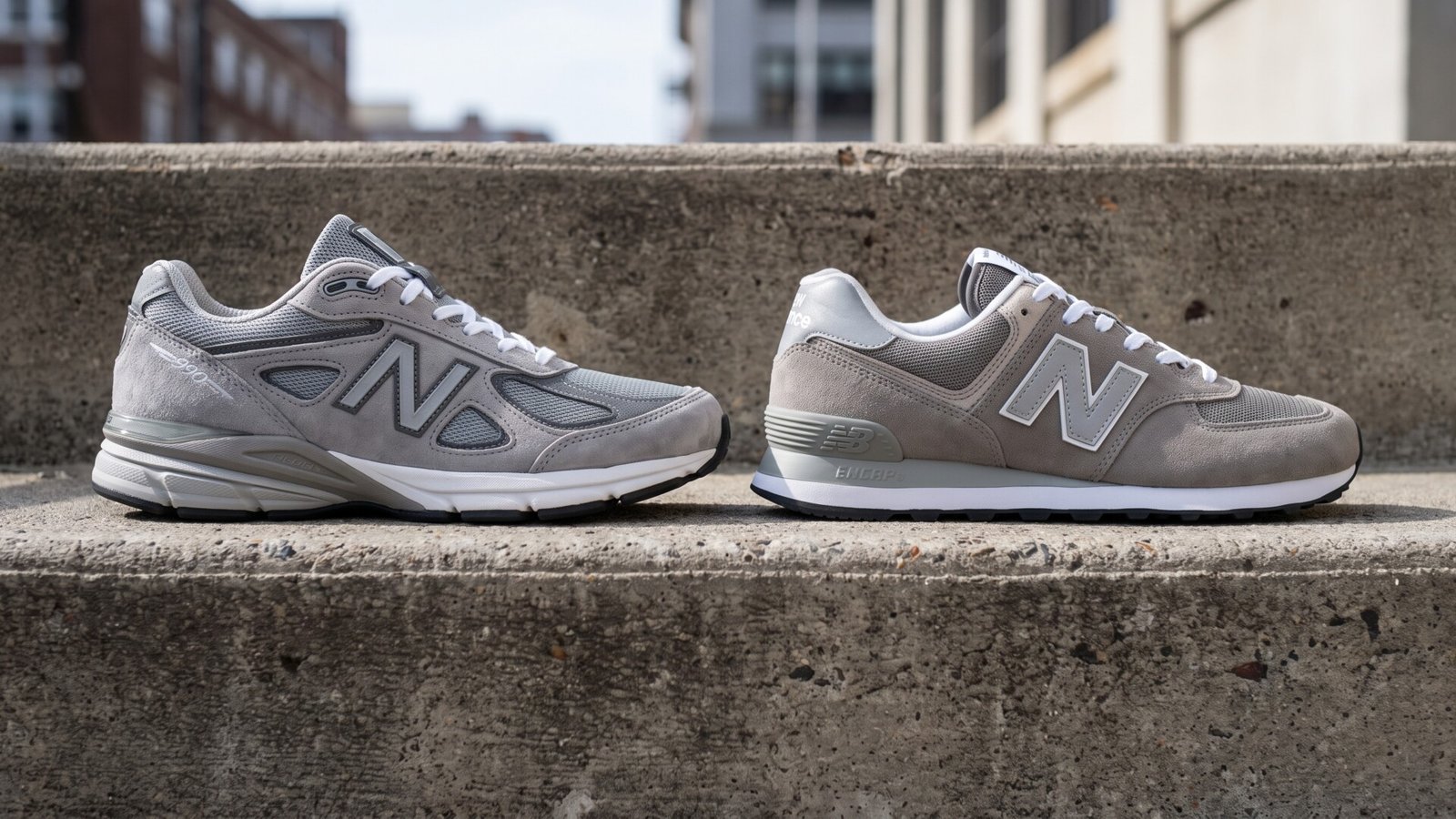
At first glance, the 990 and 574 look closely related. But once you put them side by side, the design intent becomes obvious.
New Balance 990 Design Language
The 990 has a more complex, layered construction. You’ll notice:
- Multiple suede and mesh panels
- A thicker midsole with visible tech cues
- A slightly more technical, performance-oriented shape
The silhouette feels intentional and structured. It doesn’t try to be sleek. Instead, it embraces that “dad sneaker” look, but in a refined, confident way. The proportions are balanced, not exaggerated, which is why the 990 works with modern outfits despite its bulk.
Different versions (v3, v4, v5, v6) tweak the design slightly, but the overall visual identity stays consistent: understated, premium, and functional.
New Balance 574 Design Language
The 574 is simpler and more relaxed. The paneling is cleaner, the midsole slimmer, and the overall shape more casual. It feels less technical and more lifestyle-focused.
This simplicity is part of why the 574 works so well:
- It doesn’t dominate an outfit
- It pairs easily with jeans, chinos, or shorts
- It feels familiar, almost timeless
If the 990 looks like a performance runner that evolved into a lifestyle icon, the 574 looks like a lifestyle sneaker that borrowed running cues.
Materials & Build Quality
This is where the difference is easiest to see on paper.
990 Materials
New Balance describes the 990v6 upper as a mesh base with pigskin suede and synthetic overlays. Pigskin suede is a suede that benefits from a protector spray, and it’s worth treating it before the first wet day. Panels are layered over breathable mesh, and stitching is reinforced in high-stress areas.
On the Made in USA point: New Balance’s own wording is that these shoes are made in the USA with 70% or more domestic value, using global materials. That’s a real distinction from its imported lines, but it isn’t the same as every part being American. Typically, shoppers describe the 990 as:
- Noticeably heavier and more structured in the hand
- Built with a denser, more substantial sole unit
- Better finished than cheaper models in the lineup
This is a sneaker designed to be worn regularly without feeling flimsy.
574 Materials
The 574 Core uses a suede and mesh upper as well, but the materials are lighter-duty than the 990’s, and quality can vary by colorway and production run. That’s not necessarily a negative: it keeps the shoe lightweight and affordable, but it does affect longevity.
With regular wear, buyers commonly report:
- Faster creasing
- Suede flattening or losing texture
- Less structural support in the heel and midfoot than a 990
The 574 isn’t fragile, but it’s clearly built to a different price and performance point.
Comfort & Cushioning
Comfort is often the deciding factor, and this is where the two models separate most.
990 Comfort for All-Day Wear
The 990v6 pairs FuelCell foam with ENCAP midsole technology. ENCAP combines a softer EVA foam core with a firmer polyurethane rim. In practice that setup is designed to give:
- Cushioning that stays reasonably firm underfoot rather than sinking
- Stability during long walks
- A supportive heel and a structured midfoot
Many buyers find it comfortable for long days on hard surfaces like city pavement. Comfort is personal, though, and a firmer, more structured ride isn’t what everyone wants.
People often shop the 990 for situations like:
- Standing for much of the day
- Long city walks
- Travel days with a lot of walking
If you have foot, knee or back pain, talk to a podiatrist or doctor; no sneaker is a treatment, and the right shoe for you depends on your feet.
574 Comfort for Casual Use
The 574 also uses ENCAP, but in a lighter, simpler package. For short walks, commuting, or casual wear, it feels perfectly fine for most people.
Compared with the 990, expect during extended wear:
- Cushioning that feels thinner
- Less noticeable support
- Feet that may tire sooner on very long days
The 574 is ideal for everyday errands, light walking, and relaxed use. It’s not designed to be a workhorse comfort sneaker.
Fit & Sizing Comparison
Fit is another area where intent matters, and sizing is the number one reason people return New Balance sneakers, so it’s worth slowing down here.
990 Fit
The 990 has a structured feel, with a supportive midfoot and a stable heel. Many people find it close to their usual size, but sizing varies by person and by version, so confirm against our 990v6 and 2002R sizing guide and New Balance’s own size chart.
Key fit traits:
- New Balance sells many of its models in multiple widths, so wider feet have options; check which widths are stocked for your colorway rather than assuming
- Stable heel lockdown
- Structured arch area
Because of its structure, the 990 feels secure without feeling restrictive. If you’re between sizes or use orthotics, try them on with your insoles and consider the width options.
574 Fit
New Balance’s own guidance is that the 574 Core runs small, and many buyers go up half a size. The toe box is on the snug side, and the midfoot doesn’t offer the same containment as the 990.
The 574 works fine for:
- Normal-width feet (wider widths exist for some colorways, so check)
- Casual wear
- Shorter days on your feet
If you’re between sizes, the 574 is the one where sizing up is most commonly suggested. Try both on in the afternoon, when feet are at their largest, and wear the socks you actually use.
Durability & Long-Term Wear
We haven’t put either pair through a lab test, so treat this section as what the construction and widely shared owner feedback suggest, not a guarantee.
990 Longevity
The 990 is built as New Balance’s premium everyday shoe. With regular wear, it tends to:
- Hold its shape well thanks to a structured upper
- Keep its cushioning feel for a long time
- Show wear gradually, especially on the suede
Suede does stain and scuff, so a protector spray and a suede brush go a long way.
574 Longevity
The 574 holds up reasonably well for its price, but it’s a lighter build. Over time, owners commonly note:
- The midsole compressing
- The outsole wearing faster with daily use
- The upper losing some structure
It’s good value for the money, but at roughly half the price of the 990, it makes sense as a shoe you rotate rather than one you wear every single day.
Style & Outfit Versatility
990 Styling
The 990 works best with:
- Relaxed or straight-leg jeans
- Tailored joggers
- Casual trousers
- Minimal streetwear fits
It leans into that “intentional dad sneaker” aesthetic. It looks best when styled confidently, not hidden. The classic grey colorway is the easiest entry point because it goes with denim, chinos and sweatpants without clashing.
574 Styling
The 574 is more flexible in casual outfits:
- Slim or straight jeans
- Shorts
- Everyday casual fits
It blends in easily, which is part of its appeal. It doesn’t demand attention. Its slimmer profile also sits better under a slim or tapered hem than the chunkier 990.
Price & Value Perspective
On New Balance’s site the 574 Core starts around $100 and the 990v6 around $200, with sales, colorways and retailers moving those numbers. So you’re paying roughly double for the 990. What does the extra money get you?
The 990 costs more, and you’re paying for:
- Premium materials (pigskin suede over mesh)
- A more cushioned, structured midsole
- Made in USA assembly (70% or more domestic value, per New Balance)
- A shoe that’s generally expected to age well
The 574 costs less, and offers:
- Solid everyday comfort for casual use
- Classic design
- Easy styling
- Good value for casual wear
Neither is overpriced; they’re just built for different expectations.
What About the Middle Ground? The 2002R
If $200 feels like a stretch and the 574 feels too basic, the New Balance 2002R is the shoe many shoppers cross-shop. It starts at about $145 on newbalance.com and uses ABZORB SBS cushioning, ACTEVA LITE foam and N-ergy in the heel. It has a more modern, running-derived look than either the 574 or 990. We break it down against the 550 in our New Balance 550 vs 2002R comparison.
Who Should Choose the New Balance 990?
Choose the 990 if:
- You walk or stand a lot
- Comfort is a top priority
- You want a sneaker you can wear heavily for years
- You appreciate premium construction
- You like a more substantial silhouette
It’s a sneaker you buy once and rely on.
Who Should Choose the New Balance 574?
Choose the 574 if:
- You want a classic, easy sneaker
- You don’t need all-day cushioning
- You prefer lighter shoes
- You’re building a casual rotation
- You want strong value without overthinking it
It’s simple, familiar, and dependable.
Buying Tips Before You Order
- Check the version. Make sure the listing says 990v6 (or whichever version you intend). Older versions are often discounted and are different shoes.
- Check the width. If you’re between widths, the width letter on the listing matters as much as the length.
- Protect the suede. Both models use suede; a protector spray and a suede brush keep them looking good longer.
- Use the return window. Order your normal size and, for the 574, consider trying a half size up too, then return what doesn’t fit.
- Compare retailers. Prices and available sizes differ between New Balance’s own store and third-party shops, and discounts come and go.
Final Thoughts
The New Balance 990 vs 574 comparison isn’t about which shoe is better; it’s about which one fits your life.
The 990 is a premium, comfort-first sneaker built for regular wear. It’s structured, supportive, and designed to handle long days. The 574 is relaxed, accessible, and versatile: a sneaker that works effortlessly in casual settings.
Both represent New Balance at its best, just at different levels of intention.
If you want something you can forget about while wearing all day, the 990 is worth it. If you want something classic, comfortable, and easy to style, the 574 still delivers.
And many people end up owning both, for good reason.
New Balance 990 Vs 574: FAQs
Is the New Balance 990 better than the 574?
Neither is better across the board. The 990v6 is the more premium, more cushioned and more structured shoe, and it costs roughly twice as much. The 574 is lighter, simpler and cheaper, which suits casual wear and building a rotation.
How much do the New Balance 990v6 and 574 cost?
On newbalance.com the 574 Core starts at about $100 and the 990v6 at about $200 (list prices at the time of writing). Colorways, sales and retailers change those numbers, so check the current listing.
Does the New Balance 574 run small?
New Balance notes that the 574 Core runs small, and many buyers go up half a size. Try a pair on in store if you can, or order from a retailer with easy returns.
Is the New Balance 990v6 true to size?
Many people find the 990v6 close to their usual size, but fit varies from person to person. See our 990v6 sizing guide and New Balance’s size chart, and check the width options for your colorway.
Is the New Balance 990 really made in the USA?
The Made in USA 990 line is assembled in the USA. New Balance states that these shoes have 70% or more domestic value and use global materials, so not every component is American. Other New Balance models, including the 574, are not part of that line.
Which is more comfortable, the 990 or the 574?
Most buyers find the 990 better cushioned and more supportive for long days on hard surfaces, while the 574 is comfortable for shorter, casual use. Comfort is personal; if you have foot, knee or back pain, ask a podiatrist or doctor for advice.
What’s the difference between the 574 and 990v6 materials?
The 990v6 uses a mesh base with pigskin suede and synthetic overlays, with FuelCell foam and ENCAP in the midsole. The 574 Core uses a suede and mesh upper with ENCAP in a lighter, simpler construction.
Is there a 995, and how does it compare with the 574?
Searches for a “574 vs 995” usually mean a different model in New Balance’s 99x family. Specs differ by model and version, so check the exact product page. For most readers the 990v6 is the reference premium option compared in this guide.
Should I buy the 990v6 or wait for a newer 990?
New Balance updates the 990 every few years. If you want the current model, buy the version on sale now; if you’re happy with a previous version, it’s often discounted. Check the listing for the exact version number.
Still deciding? Explore more model breakdowns in our full Sneakers Comparisons collection, including New Balance 550 vs Adidas Forum Low and sneakers under $150 vs under $300.
If you’re mad about New Balance, make sure to also check our New Balance 550 vs 2002R Comparison page.