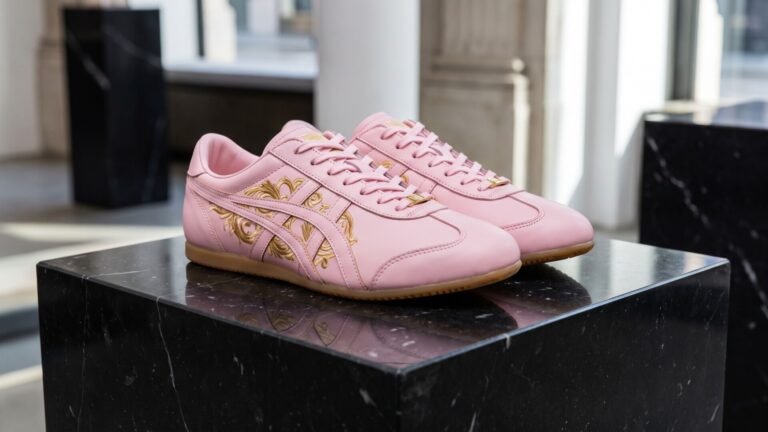
Onitsuka Tiger Mexico 66 Review
Six months in, the story is almost always the same. The toe box has creased into a soft horizontal fold. The white upper has gone the color of weak tea unless you actually cleaned it. And the sole edge, the bit that meets the pavement, has worn down enough that the shoe sits a little flatter than the day it came out of the box.
That is not a knock on the Onitsuka Tiger Mexico 66. It is what a slim, low-profile leather sneaker does when you wear it like a normal shoe. The people who are happiest with it at the six-month mark are the ones who understood what they were buying on day one. The people who are annoyed are the ones who expected a daily driver and got a style shoe.
So here is the honest version. The Mexico 66 is a great-looking, genuinely wearable retro sneaker for the right foot and the right amount of walking. It is not a comfort sneaker, and it is not a Samba clone. Let us get into it.
Onitsuka Tiger Mexico 66: Quick Verdict
Best for: Slim to average-width feet, casual rotation, commuting, short errands, and anyone who wants a low-profile retro sneaker that does not look like everyone else’s.
Not ideal for: Wide feet, all-day standing, hard floors, high-mileage travel days, or anyone who needs real arch and heel support.
Main strength: A distinctive vintage racing silhouette that reads more refined and less bulky than most lifestyle sneakers on the shelf right now.
Main weakness: The slim, low-to-the-ground build stops being comfortable once the day gets long.
Overall verdict: Worth buying for the right wearer, but it is a style-first everyday sneaker, not a universal comfort shoe.
| Category | Assessment | Buyer takeaway |
|---|---|---|
| Style | Excellent | Slim, recognizable, easy to dress up or down |
| Casual comfort | Good | Fine for shorter daily wear when sized right |
| Walking comfort | Fair to good | OK for moderate walking, weak for all-day mileage |
| Fit | Narrow to average | Wide-footed buyers should look elsewhere |
| Durability | Good with normal care | Upper holds up, thin sole is not built for abuse |
| Value | Good at typical retail | Strong style value, weaker support per dollar |
Design, History, and Cultural Positioning
The Mexico 66 sits in [Internal: See our Onitsuka Tiger brand hub] archive-inspired running footwear. That is the whole point of it. This is not a modern performance shoe with a retro paint job. It is a vintage athletic shape that got pulled out of the archive and turned into a lifestyle sneaker, and it has stayed relevant because the proportions are genuinely good.
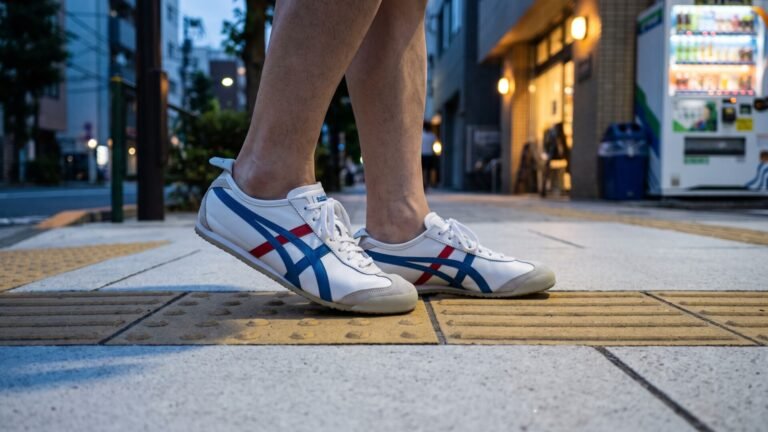
The visual identity is specific. Side stripes that run the length of the upper. A slim toe. A low foxing tape that keeps the shoe close to the ground. Racing-shoe proportions that make it look faster and leaner than almost anything else in the category. If you have ever wondered why the Mexico 66 looks more “considered” than a chunky runner, this is why. Every line is doing something.
It moved from niche retro territory into mainstream fashion when low-profile sneakers came back hard. The Samba got there first and got huge. The Mexico 66 followed, but with a different flavor. It reads more like Japanese archive sportswear than European terrace culture, and that distinction matters to buyers who want something that is not the most obvious choice on the shelf.
Compare it to the field. The Adidas Samba is more structured, more culturally loaded, and more familiar to everyone. The Adidas Gazelle is softer and slightly more casual. The Puma Palermo is the closest in silhouette but leans harder into terrace styling. The Nike Killshot 2 is a court shoe with a different upper and a slightly wider feel. The Mexico 66 occupies the same slim retro space but wins on distinctiveness. It looks like it came from somewhere specific.
Design and Everyday Style
The reason people keep coming back to this shoe is not the spec sheet. It is what it does to an outfit.
What makes the silhouette work
The narrow profile, low stack, rounded toe, and restrained branding all pull in the same direction. The shoe disappears into the outfit instead of dominating it. That is a compliment. It works with straight-leg jeans, relaxed trousers, cropped pants, shorts, and simple streetwear because it does not fight any of them.
It is also unusually good at balancing wider or looser clothing. A chunky running-inspired sneaker can make a wide-leg trouser look heavy. The Mexico 66 does the opposite. It gives the bottom of the outfit a clean line.
The tradeoff is that it can look small under very baggy pants. If your whole wardrobe is oversized, try a pair on with your actual outfit before you commit.
Colorways and versatility
The commercially useful combinations are the ones you already know. White with black stripes. White with navy stripes. Cream or off-white bases. Darker leather or suede versions where the retailer has them.
Those are the ones you can wear repeatedly without thinking. More distinctive colorways, the brights and the seasonal drops, are fun but harder to build around. They date faster too.
Choose the colorway based on what you actually wear, not on what looks best in a product photo. A white-and-navy pair is a near-neutral. A red-and-cream pair is a statement shoe that you will wear less often than you think.
Trend longevity
Low-profile sneakers have staying power because they solve a real problem. They work with the way people actually dress now, which is looser and more relaxed than it was five years ago. That is not a viral moment. That is a shift.
The risk is narrower. A highly fashion-forward colorway will date faster than the classic white-and-contrast-stripe versions. And if the market swings back toward heavily cushioned sneakers, the Mexico 66’s slim shape may feel less appealing to the average buyer.
Run the two-year test. A classic colorway will still be useful in two years. A loud one probably will not.
Comfort and Real-World Wear
This is where the Mexico 66 splits its audience, and where most reviews get vague. Let us be specific.
Cushioning and underfoot feel
The Mexico 66 is close to the ground. It is flexible. It is light. It is not plush, and it is not deeply cushioned.
That can feel great for short errands and casual wear. You get road feel, a natural flex, and none of the mushy softness that makes some lifestyle runners feel disconnected. For a quick walk to the shop, it is genuinely pleasant.
It is less forgiving on hard floors or long walks. The thin sole transmits more of the ground back into your foot. If you are used to a modern foam midsole, the difference is obvious within the first hour.
Compare it to a softer, more supportive lifestyle runner like the [Internal: See our New Balance 530 review] or the [Internal: See our ASICS GEL-1130 review]. Those shoes have actual cushioning and a more forgiving ride. The Mexico 66 does not, and it is not trying to.
Walking and standing
For moderate city walking, commuting, shopping, and casual travel, the Mexico 66 is fine. It is light enough that you do not notice it, and flexible enough that it moves with your foot.
The point where it becomes a drawback is predictable. Long sightseeing days. Concrete floors. Jobs that require hours of standing. That is when the low-profile construction stops being charming and starts being a problem. Your feet will tell you.
Do not treat this as a work shoe or a medical comfort shoe. If you need extra support, an insole is an option, but only if the shoe has enough interior volume. The Mexico 66 is slim inside, and adding a thick insole can create a fit problem rather than solving one. Try it before you commit.
Break-in and ownership experience
Where you notice pressure first depends on your foot shape and the material. Some buyers feel it in the toe box. Some feel it along the sidewalls, where the stripes sit. Some feel it at the heel.
Flexible uppers do loosen up with wear. A fundamentally narrow last does not. If the shoe feels tight across the forefoot on day one, it will still feel tight on day thirty. That is not break-in. That is fit.
Sock thickness matters more than people expect. A thin sock can change the whole feel of the shoe. Heel security is generally good, but the low structure can make the shoe feel less stable for some wearers, especially on uneven ground. If you are used to a higher, more supportive collar, the Mexico 66 will feel different.
Fit and Sizing Guide
Start with your usual sneaker size. That is the most likely correct answer for most buyers.
From there, it depends on your foot. The Mexico 66 suits narrow to average-width feet better than wide feet. That is the single most important thing to know before you buy.
Sizing up is the trap. It creates extra length without solving pressure across the forefoot. You end up with a shoe that is too long and still too tight, plus heel slip. If width is the problem, a different shoe is the answer, not a bigger size.
Here is a simple framework:
- Narrow feet: usual size is the most likely starting point.
- Average feet: usual size, but pay attention to toe room and heel hold.
- Wide feet or bunions: approach cautiously. A wider alternative is smarter than sizing up.
- Thicker socks or orthotics: check the interior volume before buying.
When you try them on, check three things. Your toes should not touch the front. The stripes and sidewalls should not create painful pressure. The heel should stay secure without you cranking the laces.
Confirm the retailer’s return policy before you buy. Sizing can vary by colorway, upper material, and production run. A pair that fits in one version may feel different in another. If you want the full breakdown, [Internal: See our Onitsuka Tiger Mexico 66 sizing and fit guide].
Check current Mexico 66 sizing and availability
Build Quality, Durability, and Maintenance
Durability depends entirely on how you use the shoe. Worn as part of a rotation for casual wear, it holds up well. Worn as your only pair for everything, it will not.
Material quality and finish vary by version. Leather, synthetic, and suede sections all appear across the range, and the feel of the upper changes with them. Some versions feel more substantial than others. That is worth checking in person if you can.
What tends to age first:
- Creasing and scuffing on the toe
- Dirt on light uppers
- Wear along the sole edge
- Possible separation if the shoe is repeatedly flexed hard or exposed to harsh conditions
The upper is generally the strong part. The sole is the weak part. It is thin, and it is not built for abuse.
This is why rotation matters. Alternating the Mexico 66 with a more supportive sneaker reduces daily wear and keeps it in better condition for longer. It also extends the life of the shoe, which improves the value calculation you will see in the next section.
Basic care goes a long way:
- Brush off dry dirt before you clean anything.
- Use a suitable cleaner for leather or synthetic uppers.
- Treat suede sections with a suede brush and the right product.
- Do not soak the shoe or use high heat to dry it.
- Use shoe trees or paper stuffing to preserve the slim shape if creasing bothers you.
One honest note. Light colorways demand more maintenance. If you want a low-effort sneaker that hides wear and dirt, a white Mexico 66 is not that shoe. A darker leather or suede version will treat you better. Keep a sneaker cleaning kit and a suede brush around if you go light.
What Most Buyers Get Wrong About the Mexico 66
Most of the frustration with this shoe comes from four misunderstandings. None of them are the shoe’s fault.
Mistake one: treating it as a performance running shoe. The visual heritage does not mean it provides modern running-shoe support. It is a lifestyle sneaker with a racing silhouette. Nothing more.
Mistake two: assuming slim means uncomfortable. The low profile can feel genuinely comfortable for the right foot and the right use case. The problem is almost always a mismatch between expectations and walking demands, not the shoe itself.
Mistake three: solving width problems by sizing up. Extra length rarely fixes forefoot pressure. It usually creates heel slip on top of the original problem.
Mistake four: comparing only retail prices. A cheaper purchase that becomes uncomfortable after an hour can have worse value than a more supportive sneaker you wear several times a week. Price is not value. Cost per wear is value.
There is a psychology piece here too. The Mexico 66 looks so clean and so versatile that shoppers mentally assign it more use cases than its construction realistically supports. It looks like it can do everything. It cannot. It can do casual really well, and that is it.
Value, Cost per Wear, and Alternatives
Is it worth the money? That depends on what you are asking it to do.
At typical retail, somewhere around $120 to $150 depending on the version and retailer, the value is strong if you want a distinctive retro sneaker and you will wear it regularly. It is weaker if you expect one shoe to cover commuting, travel, work, and long walks. No slim leather sneaker is going to do that well.
Here is a simple cost-per-wear framework:
- At $120 to $150, wearing it twice a week for a year makes the cost easy to justify.
- Buying it for occasional outfits only makes a sale price more important.
- Adding a second, more supportive sneaker can improve the overall value by extending the Mexico 66’s useful life.
Now the alternatives, and what each one is actually better at.
| Model | Approx. price | Best for | Tradeoff vs Mexico 66 |
|---|---|---|---|
| Adidas Samba OG | $100-$120 | Firmer, more structured terrace look | More familiar, less distinctive |
| Puma Palermo | $80-$100 | Similar slim retro shape, different design | Less archive credibility |
| New Balance 530 | $90-$110 | More cushioning, sportier shape | Bulkier, less refined styling |
| ASICS GEL-1130 | $100-$120 | All-day walking comfort | Heavier, more technical look |
| Nike Killshot 2 | $90-$110 | Simple court-inspired styling | Different upper, wider feel |
The Mexico 66 wins on distinctiveness and visual lightness. It does not win on maximum comfort per dollar. If comfort is your priority, the New Balance 530 or ASICS GEL-1130 is the smarter buy. If you want a more structured terrace sneaker, the Samba OG or Puma Palermo is the move. For the full head-to-head, [Internal: See our Adidas Samba vs Onitsuka Tiger Mexico 66 comparison].
Who Should Buy the Onitsuka Tiger Mexico 66?
- Buyers with narrow to average-width feet who like a close-fitting sneaker.
- Shoppers who want a low-profile alternative to the Samba or Gazelle.
- People who mostly wear sneakers for casual outfits, short commutes, errands, and moderate walking.
- Buyers who value subtle cultural relevance and archive-inspired design more than performance cushioning.
- Anyone willing to rotate footwear and maintain light-colored uppers.
Who Should Skip It?
- People with wide feet, high-volume feet, or recurring forefoot pressure.
- Workers who stand on hard floors for most of the day.
- Travelers who want one sneaker for long sightseeing days without packing a second pair.
- Buyers seeking gym, running, hiking, or serious athletic use.
- Anyone who dislikes frequent cleaning or wants a sneaker that hides wear and dirt.
- Shoppers who prefer a plush, modern foam ride over a flexible, low-to-the-ground feel.
Final Verdict: Is the Onitsuka Tiger Mexico 66 Worth It?
Yes, for the right wearer. But it is a style-first everyday sneaker, not a universal comfort sneaker, and the difference matters.
Its strongest case is the one it has always had. A slim profile. A recognizable design. Styling versatility that works with almost anything. And a less obvious alternative to the retro sneakers everyone else is already wearing. If you want to look considered without looking like a billboard, this is a good shoe.
Its decisive limitation is fit and support. Buyers who need width, cushioning, or all-day standing comfort should choose a different model. No amount of break-in fixes a narrow last.
Check the price on a versatile colorway
The Split Decision
Two readers, two different answers. If you have narrow to average feet, you mostly wear sneakers for casual outfits and short commutes, and you want a low-profile retro sneaker that does not look like everyone else’s, buy the Mexico 66. Pick a classic colorway, confirm your size, and check the return policy before you commit. It will do exactly what you want it to do.
If you have wide feet, stand all day, or want one sneaker to carry you through long travel days, skip it. Get the New Balance 530 or the ASICS GEL-1130 instead and put the difference toward comfort you will actually feel. The Mexico 66 is a great shoe. It is just not your shoe.
Frequently Asked Questions About Onitsuka Tiger Mexico 66
Are Onitsuka Tiger Mexico 66 sneakers comfortable?
They are comfortable for many casual uses because they are light and flexible. They are not especially cushioned. Comfort depends on your foot shape, your sock choice, and how long you are on your feet. For short daily wear, most buyers are happy. For long days, many are not.
Do Onitsuka Tiger Mexico 66 run small?
The safest starting point is your regular sneaker size. The close-fitting feel can make them seem small, but that is usually the shape rather than the length. Check the specific retailer’s size chart and return policy before you buy, because fit can vary by colorway and material.
Are Onitsuka Tiger Mexico 66 good for wide feet?
Generally, no. They suit narrow to average-width feet better. If you have wide feet, do not assume sizing up will solve width pressure. It usually creates a longer shoe without fixing the forefoot, plus heel slip on top.
Can you wear Onitsuka Tiger Mexico 66 all day?
They can work for a casual day with moderate walking. They are not the strongest choice for prolonged standing, hard floors, or high-mileage travel. If your day involves hours on your feet, a more cushioned shoe will treat you better.
Are Onitsuka Tiger Mexico 66 durable?
Durability is appropriate for regular casual wear, especially with rotation and basic care. Light uppers and slim soles show wear more readily than rugged or heavily cushioned sneakers. The upper generally holds up. The sole edge is what ages first.
How do Onitsuka Tiger Mexico 66 compare with Adidas Samba?
Both are slim retro sneakers, but they have different identities. The Mexico 66 has a more streamlined archive-running look. The Samba has a more structured terrace and indoor-soccer feel. Choose based on foot shape, styling preference, and how much structure you want underfoot.
Are Onitsuka Tiger Mexico 66 good for travel?
They are useful for outfits and moderate walking. Travelers planning long sightseeing days may prefer a more cushioned option, or they may want to pack a second pair. For a full breakdown of what actually works on a trip, [Internal: See our best sneakers for walking and travel guide].