Common Projects Achilles Low Review: Is the Iconic Minimalist Sneaker Worth It?
The search query is “is the Common Projects Achilles Low worth it.” The actual question is narrower and harder: will you still be glad you spent that money in two years, or will you be looking at a creased white shoe wondering why you did not buy three pairs of something else for the same cash.
Here is the short version. The Achilles Low is not the most comfortable sneaker at its price, and it is not the most durable, and it is definitely not the best value on paper. It is one of the cleanest silhouettes ever put on a white leather sneaker, and that shape is the entire product. If you wear white sneakers four days a week and you want the specific look, it earns its keep. If you want cushioning, support, or maximum shoe per dollar, this is not your pair, and no amount of brand history changes that.
Common Projects Achilles Low at a Glance
| Category | Verdict | Buyer takeaway |
|---|---|---|
| Design | Excellent | One of the cleanest minimalist sneaker shapes ever made |
| Comfort | Good, not exceptional | Fine for daily casual wear, not a performance walking shoe |
| Fit | Generally true to size | Check the retailer’s size chart, allow for leather break-in |
| Durability | Good with maintenance | Leather and sole hold up, white uppers show wear fast |
| Versatility | Excellent | Denim, chinos, trousers, relaxed tailoring all work |
| Value | Mixed | Strong cost per wear for frequent users, weak for occasional wear |
| Overall | Recommended with conditions | Best bought on sale or when the silhouette is the priority |
Verdict in three words: cop for style. Not for comfort, not for value, not for the gym. For the shape.
Quick buyer read:
- Best for: Buyers who want one polished white sneaker they will wear constantly across casual and smart-casual outfits.
- Avoid if: You need arch support, you are on your feet on concrete all day, or you want the lowest possible price for a white leather sneaker.
- Best buying strategy: Compare current colorways across retailers, watch for seasonal discounts, and budget for cleaner and shoe trees from day one. [Affiliate: Check current Achilles Low listings]
What the Achilles Low Is Actually Selling
Strip the branding off most luxury sneakers and you get a generic shoe. Strip it off the Achilles Low and you still know what you are looking at, which tells you something about how well the proportions were solved.
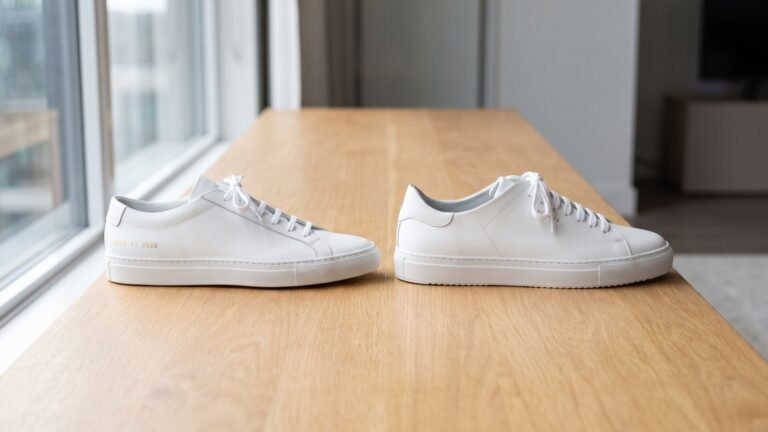
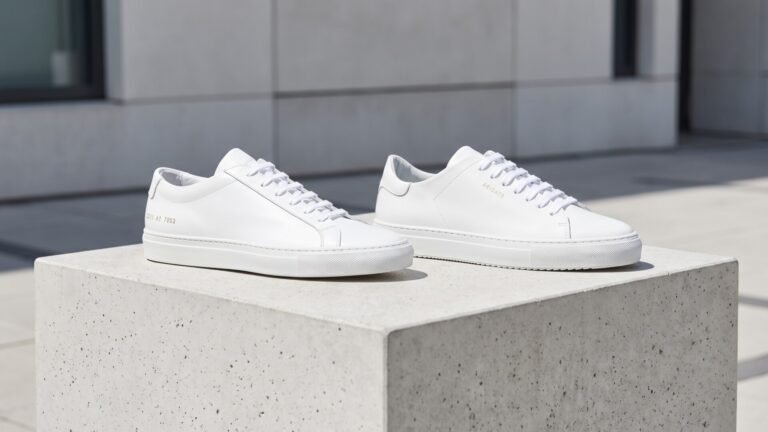
The original idea was radical in its plainness. No swoosh, no three stripes, no visible logo on the upper. Just smooth leather, a rounded toe, a low-profile sole, and a small gold-stamped serial number on the heel. That heel stamp is the whole branding strategy. It is subtle enough that nobody clocks it from across the room, but anyone who knows sneakers knows exactly what it is. That is the point.
Buyer psychology matters here more than spec sheets. The Achilles Low signals taste and restraint. It says you know the category well enough to skip the loud stuff. For a certain buyer, that is worth more than any visible logo, because the shoe does the talking quietly and does not make them look like a billboard. [Internal: See our Common Projects brand page]
Market position is worth understanding too. The Achilles Low sits above mainstream leather sneakers and alongside other luxury minimalist options like the Maison Margiela Replica, the Axel Arigato Clean 90, and the Oliver Cabell Low 1. What separates it is not features. It is that it became the reference point for the whole category. When other brands design a plain white leather sneaker, they are usually designing around this shoe, whether they admit it or not.
Design, Materials, and Everyday Aesthetics
The silhouette and proportions
The low-profile shape is the reason people pay. Rounded toe, uncluttered upper, restrained sole. Compared to bulkier lifestyle sneakers, it reads refined rather than athletic, and that changes what you can wear it with.
Clean white leather pairs naturally with dark denim and chinos. The low profile also slides under tailored trousers without the jarring contrast you get from a chunky sole. And because the branding is minimal, you can repeat the shoe across a small wardrobe without anyone noticing you wear the same pair constantly.
The limitation is real, though. If you want visible technical details, bold branding, or a statement sneaker, this shape will look plain to you. That is not a flaw in the shoe. It is a mismatch with what you actually want.
Leather, lining, and finishing
Smooth leather is what creates the polished look, and it is also what shows every crease, scuff, and bit of dirt. That is the tradeoff nobody puts on the product page.
Leather quality is not something you judge by the label. You judge it by grain, flexibility, finishing, stitching, and how the shoe holds its shape after a few months. A premium price does not make a white upper maintenance-free. The clean look is part of the appeal and part of the burden.
Here is what most buyers miss: the Achilles Low is a finished-leather shoe, not a rugged one. You are not buying something that looks better beat up. You are buying something that looks best when you keep it clean, which means the ownership experience includes work.
How it compares visually with alternatives
- Adidas Stan Smith: more recognizable branding, more casual and familiar feel, less refined proportions.
- Axel Arigato Clean 90: more contemporary branding and often a chunkier visual presence.
- Maison Margiela Replica: layered, retro, and visually distinctive. A different shoe entirely.
- Common Projects Tournament or BBall models: less pure than the Achilles Low because of added paneling and sport references.
On trend position, the Achilles Low is less dependent on any single chunky-sneaker moment, which is a point in its favor. The catch is that the minimalist luxury look is now widely copied. You can get the visual category almost anywhere. What you cannot get everywhere is the exact shape. See our best white sneakers guide.
Comfort, Fit, and Sizing
Walking and standing comfort
The Achilles Low is comfortable for normal daily wear once broken in. It is not a dedicated walking shoe, and treating it like one is where people get disappointed.
What works in its favor:
- A relatively simple upper can feel less restrictive than heavily structured sneakers.
- The low-profile sole handles casual errands and commuting fine.
- The leather adapts to your foot over the first stretch of wears.
What works against it:
- Less impact protection than anything built around modern running foam.
- Limited support if you need real arch structure or a broad, cushioned platform.
- Hard pavement and all-day standing expose the limits of a minimalist construction fast.
The hour-eight test is where this shoe tells the truth. For a commute and a day at a desk, you are fine. For eight hours on a concrete floor, your feet will know exactly what you are wearing, and they will not be impressed.
Fit and width guidance
Start with your usual European designer sneaker size, then verify against the specific retailer’s size chart. Sizing can vary by production run, retailer, and foot shape, so do not assume your number translates perfectly.
Who fits well:
- Medium-width feet.
- Feet that prefer a secure, low-volume upper.
- Buyers who will tolerate a short leather break-in.
Where it goes wrong:
- Wide feet may feel pressure at the forefoot.
- High-volume feet may find the upper restrictive.
- A heel that still slips after break-in usually means the shoe is too long, not that you need to size up.
Check the return policy before you commit, and try them indoors before you take them outside. Once white leather hits pavement, your options shrink. [Affiliate: Check sizing and returns at a reputable retailer]
Comfort upgrades and limitations
Thin or worn insoles may be replaceable, but an aftermarket insole changes the fit and eats internal volume in a low-profile shoe. If the fit is already close, adding cushioning can make things worse.
Pair them with quality everyday socks rather than thick athletic socks, especially if the fit is snug. [Affiliate: Shop everyday socks]
Be clear on what accessories can and cannot do. A better insole and better socks improve comfort and hygiene. They will not turn the Achilles Low into a running shoe or a work shoe, and no accessory fixes a shoe that is the wrong shape for your foot.
Durability and Long-Term Ownership
What ages well:
- A simple upper has fewer panels and overlays to fail.
- The rubber sole handles regular city wear.
- Neutral styling stays usable even as trends move on.
What shows wear first:
- Creasing across the vamp.
- Dirt and discoloration on the white leather.
- Scuffing around the toe and heel.
- Heel lining wear from loose, repeated entry.
- Sole flattening if you wear them hard on pavement.
Maintenance is not optional if you want them to stay presentable:
- Use a soft brush or cloth for surface dirt.
- Treat marks promptly with a cleaner made for finished leather.
- Skip aggressive scrubbing, which changes the finish.
- Use shoe trees or another shape-preserving method in storage.
- Rotate with another pair to cut moisture buildup and extend wear.
Here is the realistic ownership framework. With rotation and maintenance, an Achilles Low can stay presentable for years. A pristine white appearance is not a realistic long-term expectation for a frequently worn pair. Expect the leather to crease, expect the white to dull slightly, and decide now whether you are okay with that. [Affiliate: Shop leather cleaner and shoe trees]
What Most Buyers Get Wrong About the Achilles Low
The biggest mistake is assuming the price buys comfort. It does not. The premium shows up in silhouette, finishing, restraint, and brand positioning. Athletic cushioning was never the goal.
The second mistake is treating this as an objective quality question. It is not. The real decision is whether you will wear a minimalist white sneaker often enough to justify the price.
Run the numbers on your own habits:
- At one or two wears a month, the price is hard to defend.
- At several wears a week, the versatility starts making cost per wear reasonable.
The third mistake is ignoring the copycat problem. Plenty of brands now make a visually similar white leather sneaker. The Achilles Low is not the only route to the look. Pay the premium only if you value its specific proportions, finish, brand history, or the satisfaction of owning the original. If you just want a clean white leather sneaker, you have cheaper options that get you most of the way there.
Styling and Real-World Use
Strongest use cases:
- Everyday city wear.
- Smart-casual offices with relaxed dress codes.
- Travel where one polished casual shoe needs to cover multiple outfits.
- Dinner outfits built around trousers, denim, or understated tailoring.
Less suitable:
- Gym training.
- Long hikes or rough outdoor use.
- Jobs with heavy standing on hard floors.
- Wet conditions, where white leather maintenance gets annoying fast.
Outfit guidance that actually works:
- Dark denim and a plain overshirt for a simple casual uniform.
- Chinos and an Oxford shirt for a cleaner smart-casual look.
- Relaxed trousers with a knit or unstructured jacket for modern tailoring.
- Avoid overly skinny trousers, which make the low profile look visually narrow.
Versatility is the real value factor here. The shoe is worth most when it replaces several casual footwear roles rather than sitting in the closet for special occasions. If it becomes your default white sneaker, the math changes in your favor.
Is the Achilles Low Worth the Price?
Compare the premium against less expensive choices:
- Adidas Stan Smith: better entry price and easier availability, but more visible branding and a less exclusive position.
- Oliver Cabell Low 1: similar minimalist concept for less, though you should compare current materials, construction, warranty, and return terms rather than assuming equal quality.
- Axel Arigato Clean 90: stronger contemporary fashion identity, usually more visible branding, different silhouette.
- Maison Margiela Replica: more distinctive and a stronger fashion statement, less minimal and less universally easy to pair.
- Beckett Simonon Reid or similar: lower upfront cost with a different production and ordering model, but without the Achilles Low’s established luxury positioning.
Now run cost per wear. Divide the purchase price by realistic wears over two to three years. Add cleaning products, possible replacement insoles, and any professional repair. Compare that number to a cheaper sneaker you might replace sooner or wear less often. For a frequent wearer, the Achilles Low can come out surprisingly close to the budget option. For an occasional wearer, it never does.
When the premium makes sense:
- You prefer this exact shape and wear white sneakers often.
- The shoe fills a genuine gap in your wardrobe.
- You value understated luxury and expect to keep the pair in rotation.
When it does not:
- You mainly want cushioning or workday comfort.
- You will avoid wearing white leather because of the maintenance.
- A near-identical silhouette from a cheaper brand would satisfy you just as well.
Common Projects Achilles Low vs. Its Best Alternatives
| Sneaker | Best for | Main advantage | Main compromise | Value verdict |
|---|---|---|---|---|
| Common Projects Achilles Low | Minimalist luxury | Refined shape and discreet branding | High price for a simple design | Worth it for frequent wear |
| Adidas Stan Smith | Budget-conscious casual | Accessible price, familiar styling | More branding, less exclusive | Strong practical value |
| Axel Arigato Clean 90 | Contemporary streetwear | More visible fashion identity | Less purely minimalist | Good if you want branding |
| Maison Margiela Replica | Fashion-led styling | Distinctive retro construction | Less versatile than a plain white sneaker | Best for statement dressing |
| Oliver Cabell Low 1 | Lower-cost minimalist look | Similar concept for less | Check current fit and construction | Good alternative when discounted |
No alternative fully replaces the Achilles Low for every buyer. The question is whether you want the original luxury-minimalist positioning or just the visual category. If shape, discretion, and wardrobe integration matter most, the Achilles Low is the pick. If price, visible design details, or a more athletic feel matter more, take the alternative.
Who Should Buy the Common Projects Achilles Low?
Buy it if:
- You are building a small, versatile wardrobe around neutral clothing.
- You want a sneaker that crosses into smart-casual outfits.
- You wear white sneakers often and will accept regular cleaning.
- You specifically prefer these proportions and the understated branding.
Buy only when:
- You have confirmed the fit and returns are practical.
- The pair is going into regular rotation, not occasional use.
- You have budgeted for care and are not expecting performance-sneaker comfort.
Skip it in favor of the Adidas Stan Smith, Oliver Cabell Low 1, or another lower-priced leather sneaker when the visual effect matters more than the brand and the exact shape. [Internal: See our luxury minimalist sneaker alternatives article]
Final Verdict: A Style Investment, Not a Comfort Bargain
The Common Projects Achilles Low is worth buying for the right wardrobe. It is not worth buying simply because it is expensive. That distinction is the whole review.
Why it wins as a minimalist luxury sneaker:
- The silhouette is unusually easy to style.
- The branding stays restrained.
- It stays relevant after louder sneaker trends fade.
- Frequent wear makes the cost per wear defensible.
The main limitation is simple. You are paying a luxury premium for refinement and positioning, not for the best cushioning or the strongest raw value on the market.
Specific recommendations:
- Buy the Achilles Low if the exact shape, discreet identity, and smart-casual versatility are the priority.
- Buy the Adidas Stan Smith or Oliver Cabell Low 1 if you want a similar white sneaker look at a lower entry price.
- Choose the Maison Margiela Replica or Axel Arigato Clean 90 if you want a more recognizable fashion statement.
Frequently Asked Questions About Common Projects Achilles Low
Are Common Projects Achilles Low sneakers worth the money?
It depends on which value you mean. As a style purchase for someone who wears white sneakers several times a week, yes, the shape and discretion justify the price over a few years. As a performance or comfort purchase, no. You are not paying for cushioning or technical features, and buyers who expect that will be disappointed.
Do Common Projects Achilles Low sneakers run true to size?
Many buyers start with their usual designer sneaker size, but fit varies with foot width, leather break-in, and how each retailer sizes its stock. Check the individual product measurements and the return policy before ordering, and try them indoors first if you can.
Are Common Projects Achilles Low sneakers comfortable for walking?
For normal casual walking, yes, once broken in. For dedicated walking or all-day standing, no. They lack the cushioning and support of a comfort-focused sneaker, and hard pavement exposes that quickly.
How do you clean Common Projects Achilles Low sneakers?
Use gentle cleaning products made for finished leather, treat marks promptly, and let them dry carefully away from direct heat. Avoid harsh scrubbing and excessive water, both of which can change the finish on the leather.
Can you wear Common Projects Achilles Low sneakers with a suit?
With relaxed or contemporary tailoring, yes, and it looks sharp. With a formal business suit in a formal setting, no. The cleaner the suit and the more formal the room, the more likely a leather dress shoe is the right call.
What are the best Common Projects Achilles Low alternatives?
The Adidas Stan Smith, Oliver Cabell Low 1, Axel Arigato Clean 90, and Maison Margiela Replica are the usual names. The right one depends on your price ceiling, how much branding you want, and how much comfort you need. See our Common Projects vs. Axel Arigato comparison.
Do Common Projects Achilles Low sneakers hold their value?
They are not a resale investment. Their value is in wearability and styling. Resale depends on condition, colorway, size, and current demand, and a worn white pair will not command much.
Should you buy the Achilles Low on sale?
If you already know the fit works, a seasonal discount is the smartest way in. The shoe does not change with the season, so waiting for a markdown costs you nothing but time. Avoid buying a sale pair in a size you have not confirmed, because returns on discounted stock are often stricter. The one thing to remember: the Achilles Low is a shape purchase, not a comfort purchase. If you want that exact silhouette and you will wear it several times a week, buy it, ideally on sale, and take care of it. If you want cushioning, support, or the most shoe for your money, buy a Stan Smith or an Oliver Cabell and put the difference toward something you will actually feel.