Common Projects Achilles Low vs. Axel Arigato Clean 90: A Detailed Comparison
The whole decision comes down to one line: the Common Projects Achilles Low is the better sneaker for the guy who wants one white shoe that does everything, and the Axel Arigato Clean 90 is the better sneaker for the guy who wants people to know what he’s wearing.
That’s it. That’s the whole thing. Everything else – the leather, the sole, the sizing, the price gap, the resale – is detail hanging off that one distinction. Both are clean low-tops. Both sit in the same designer-casual space. Both cost real money. But they’re answering different questions. One is asking "how quietly can I look expensive?" The other is asking "how do I look like I know what’s current without wearing a hoodie that says the brand on the chest?" Get that straight and the rest of this gets a lot easier.
At a Glance: Which Sneaker Should You Buy?
| Category | Winner | Why it matters |
|---|---|---|
| Minimalist design | Common Projects Achilles Low | Cleaner branding, more restrained luxury look |
| Fashion character | Axel Arigato Clean 90 | More recognizable branding, sportier designer feel |
| Formal versatility | Common Projects Achilles Low | Easier with tailored trousers and elevated casual |
| Everyday value | Axel Arigato Clean 90 | Lower typical price, more visual detail for the money |
| Comfort for walking | Slight edge to Axel Arigato Clean 90 | More forgiving out of the box, softer everyday feel |
| Long-term discretion | Common Projects Achilles Low | Doesn’t lean on logos or current trend cycles |
| Best overall choice | Common Projects Achilles Low | Stronger long-term minimalist wardrobe staple |
| Best alternative | Axel Arigato Clean 90 | Better for branding, personality, and price |
Three quick calls before we get into the weeds.
- Choose the Common Projects Achilles Low if: you want one polished white sneaker that works with denim, chinos, wool trousers, and understated tailoring. It’s the shoe that disappears into a good outfit instead of hijacking it.
- Choose the Axel Arigato Clean 90 if: you prefer visible design cues, a sportier silhouette, and more brand recognition. It’s the one that reads as fashion rather than furniture.
- Editor’s choice: Common Projects Achilles Low – provided you actually value subtlety enough to pay for it.
[Affiliate: Check the current Common Projects Achilles Low price]
Common Projects Achilles Low vs. Axel Arigato Clean 90: Comparison Table
| Factor | Common Projects Achilles Low | Axel Arigato Clean 90 | Better choice |
|---|---|---|---|
| Typical price | Often around $400-$500 depending on version and retailer | Often around $300-$400, lower on sale | Clean 90 for upfront value |
| Visual identity | Very minimal, low branding, refined | Minimal base with noticeable logo and details | Depends on taste |
| Comfort | Firm, structured luxury feel; break-in matters | More casual and forgiving day one | Clean 90 for casual wearers |
| Fit | Structured, close-fitting; check current size chart | Varies by version; check retailer notes | Tie |
| Walking | Fine for normal daily walking, not a walking shoe | Fine for casual walking, not a walking shoe | Slight Clean 90 edge |
| Durability | Strong with care; smooth white leather shows everything | Good with care; scuffs and sole wear stay visible | Tie |
| Styling | Most versatile for quiet luxury and tailored casual | Better for streetwear and logo-aware fits | Achilles for versatility |
| Resale | Stronger with minimalist buyers; condition is everything | Depends on model, colorway, demand | Achilles edge |
| Cost per wear | Works when worn often across dress codes | Works when bought on sale or used casually | Depends on use |
| Best for | Understated luxury, long-term wardrobe utility | Sportier designer styling, accessible entry | Buyer-specific |
Prices move. They shift by season, colorway, retailer, and whatever sale is running that week. Treat every number here as a range, not a promise. If you’re ready to compare current listings side by side, [Affiliate: check the Axel Arigato Clean 90 price here] before you commit.
How the Two Sneakers Became Direct Competitors
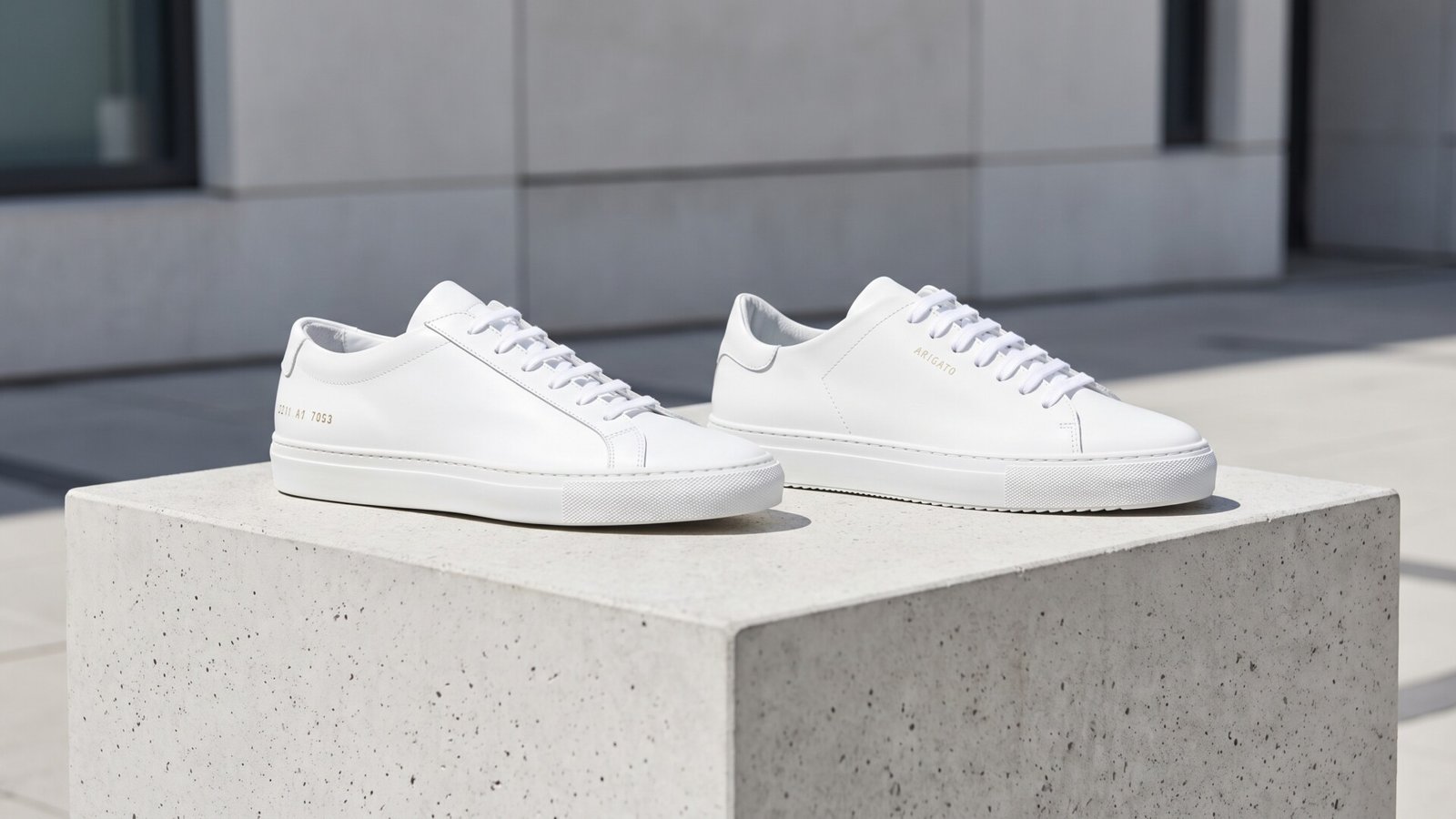
The Achilles Low is the archetype. Common Projects took a plain low-top shape, stripped the branding down to a gold-stamped serial number on the heel, and charged luxury money for it. That was the whole pitch, and it worked so well that half the designer sneaker market has been chasing the same formula for years.
Axel Arigato came at it from a different angle. The Clean 90 is a cleaner, more accessible take on the same idea, but it doesn’t hide the branding. You get a recognizable logo and a slightly sportier silhouette. It’s a designer sneaker that’s comfortable being seen as one.
Neither of these is a running shoe. Neither is a training shoe. If you’re looking for cushioning technology or performance foam, you’re in the wrong aisle entirely. These compete on wardrobe role, brand perception, leather quality, casual comfort, and how long the design stays relevant. That’s the whole battlefield.
The cultural difference matters too. The Achilles Low signals that you know your basics and you don’t need to announce it. The Clean 90 signals that you’re plugged into fashion and you’re fine with that being visible. Both are legitimate. They just say different things about you, and you should be honest with yourself about which one you’re actually buying.
Design and Aesthetic Comparison
Minimalism Versus Recognizable Branding
The Achilles Low is about as quiet as a sneaker gets. No visible logo on the side. No contrast panels. No design flourishes. The shape does the work. From ten feet away, it’s just a clean white leather low-top. That’s the point.
The Clean 90 keeps a minimal base but adds more visual cues. The logo is there. The proportions are slightly sportier. It reads as a designer sneaker in a way the Achilles doesn’t, and for a lot of buyers that’s a feature, not a bug.
Here’s the tradeoff nobody frames properly. Low branding makes the Achilles more versatile, but it can also make it feel visually plain to someone who wants a sneaker with a point of view. If you’re spending $400-plus, you might want to see where the money went. The Achilles doesn’t give you that satisfaction. The Clean 90 does.
Which One Works With More Clothes?
The Achilles Low is the easier match for dark denim, straight-leg trousers, chinos, knitwear, unstructured tailoring, and smart-casual office clothing. It’s the sneaker you wear when the outfit is already doing the talking and you don’t want the shoes to interrupt.
The Clean 90 is the natural match for relaxed denim, cargos, wide trousers, hoodies, overshirts, and contemporary streetwear. It fits a louder, more current wardrobe better than the Achilles does.
Both work with casual outfits. The difference is risk. The Achilles Low has a smaller chance of looking dated when styling trends shift, because there’s nothing on it to date. The Clean 90’s logo and shape tie it more closely to the moment it was bought.
Trend Longevity and Fashion Relevance
Here’s the contrarian take: more recognizable doesn’t mean more versatile. It usually means the opposite.
The Achilles Low’s visual identity depends on almost nothing. No oversized branding. No aggressive proportions. No seasonal color story driving the design. That makes it lower risk over a five-year horizon. It’ll still look like a clean white sneaker in 2030 because that’s all it’s ever tried to be.
The Clean 90 can stay relevant for years too, but its logo placement and specific colorway affect how current it feels. Buy it in a loud colorway and it’ll age faster than the same shoe in white. That’s true of almost any branded sneaker.
If you want a designer sneaker without turning your outfit into a brand advertisement, the move is simple: pick the most neutral colorway available, keep the rest of the outfit logo-free, and let the shoe be the only branded thing you’re wearing. One branded piece reads as a choice. Three reads as a uniform.
Comfort, Fit, and Sizing
Cushioning and Everyday Wear
Neither of these is a substitute for a purpose-built walking shoe. Say it out loud before you spend the money. If you’re standing all day, logging high-mileage travel days, or dealing with foot support needs, both of these are the wrong tool.
That said, they don’t feel the same. The Achilles Low has a firm, structured luxury feel. It’s not plush. It’s not soft. It’s built to hold its shape, and that means break-in matters. The Clean 90 tends to feel more casual and forgiving out of the box. For a lot of people, that’s the difference between wearing them weekly and wearing them occasionally.
Sock choice changes the fit more than people expect. Thick socks can turn a snug shoe into a tight one. Thin socks can turn a good fit into a loose one. Pick your socks before you decide on sizing, not after.
An insole is only worth considering if the shoe has enough internal volume for it. Adding one to a shoe that’s already snug doesn’t fix the fit, it just creates a new problem. If the shoe doesn’t fit well without an insole, an insole won’t save it.
Common Projects Achilles Low Fit
The Achilles Low is structured and close-fitting. Length and width both matter, and you can’t fudge either one. The shape is part of what makes it look good, and that same shape is what makes it unforgiving on the wrong foot.
Check the exact retailer’s size chart before you buy. Common Projects sizing and current production versions can vary, and the shoe you’re looking at today isn’t necessarily identical to one from three years ago. This is one of those brands where the specific listing matters.
Be cautious if you have wide feet, prominent toe joints, or a preference for a roomy toe box. The Achilles Low doesn’t accommodate any of that gracefully. And here’s the rule that matters most: don’t size down just to get a sleeker look. If your toes are compressed or your heel is slipping, the size is wrong no matter how good the profile looks in the mirror.
Axel Arigato Clean 90 Fit
Clean 90 fit can vary by version and construction, so current product measurements and retailer-specific notes should take priority over anything you read in a general guide, including this one.
The Clean 90 tends to appeal to buyers who want a more casual, less formal-feeling sneaker, and the fit generally supports that. But don’t assume it’s universally wide-foot friendly. It isn’t. Wide-footed buyers should still check the specific version and read the retailer’s fit notes carefully.
If you’re between sizes, or comparing colorways that might be built differently, buy from a retailer with a clear exchange policy. The extra shipping cost of one return is cheaper than being stuck with a pair you don’t wear.
Materials, Durability, and the Hidden Cost of White Leather
Smooth white leather looks premium when it’s clean. That’s the entire appeal. It also shows creasing, denim transfer, scuffs, and sole dirt faster than almost any other finish. You’re not buying a shoe that stays pristine. You’re buying a shoe that looks incredible for the first month and then asks you to keep up with it.
Construction quality on both is generally solid. What you’re checking for is stitching consistency, panel alignment, outsole bonding, and heel wear. Those are the things that separate a pair that lasts from one that doesn’t, and they matter more than the brand name on the box.
What tends to wear first on either shoe: outsole edges, heel lining, the creasing zones across the toe box, and the white leather surface itself. The silhouette holds up. The surface is what ages.
Here’s the part that gets skipped. Maintenance matters more than small differences in brand prestige. A neglected Achilles Low looks worse than a well-maintained Clean 90 every single time. The shoe doesn’t stay nice because it cost more. It stays nice because someone wiped it down.
Keep it simple:
- Wipe after wear, especially in the first few months.
- Use a leather cleaner suited to smooth finished leather. Don’t soak the shoe.
- Rotate pairs so each one gets recovery time.
- Store with shoe trees or a shape-preserving insert.
- Accept that white leather sneakers are a bad choice if you’re not willing to do any of this.
If you can’t tolerate visible creasing, don’t buy white leather. That’s not a brand problem, it’s a material problem.
[Affiliate: Pick up a white leather sneaker cleaning kit]
Real-World Ownership: Work, Travel, and Daily Styling
For Commuting and Travel
The Achilles Low looks more polished on a commute. The Clean 90 looks more casual and forgiving. Both handle city walking and casual travel fine. Neither is built for long-distance walking days.
The practical issues are the same for both: dirt visibility, packing weight, rain exposure, and whether you can rotate footwear during the trip. White leather and rain don’t get along. White leather and airport floors don’t get along either. If you’re traveling with one pair and it’s white, you’re signing up for maintenance on the road.
For high-mileage trips, bring a dedicated walking sneaker. Don’t force either of these into a performance role it was never designed for. That’s how you end up with sore feet and a scuffed pair of $400 shoes.
For Smart-Casual Workplaces
The Achilles Low is the pick for offices where clean sneakers are accepted but the outfit still needs to look considered. It holds up next to tailored trousers and knitwear in a way the Clean 90 doesn’t quite match.
The Clean 90 is better for creative workplaces, relaxed dress codes, and outfits built around contemporary streetwear. It fits the room, but it fits a different room.
Color changes the formality more than people realize. All-white versions are easiest to dress up. Contrast panels and darker details push the shoe casual. If you need one pair to cover both a client meeting and a weekend, go all-white.
For Everyday Wardrobe Rotation
The Achilles Low’s value depends on how often you actually wear it. If it’s in rotation weekly across several outfit categories, the higher price starts to make sense. If it sits in the closet, it doesn’t.
The Clean 90 becomes a stronger purchase when it fills a specific style gap rather than duplicating a white sneaker you already own. Adding a second white low-top to a closet that already has one is a hobby, not a wardrobe decision.
Here’s a buyer test that actually works: if the sneaker works with at least three regular outfit formulas and you can wear it weekly, the higher price becomes easier to justify. If it works with one outfit and you’d wear it monthly, it doesn’t.
What Most Buyers Get Wrong About the Decision
The biggest mistake is assuming the more expensive sneaker has a large comfort or durability advantage. It doesn’t. Much of the price difference between the Achilles Low and the Clean 90 is tied to design language, brand position, materials, and finishing, not a dramatic performance upgrade. You’re paying for how it looks and what it signals, not for a better shoe in any measurable sense.
The second mistake is treating "minimalist" as interchangeable. It isn’t. Branding, last shape, sole profile, heel construction, and leather finish all change how the shoe works with clothing. Two white low-tops can look almost identical in a product photo and behave completely differently in an outfit.
The third mistake is assuming white is the safest color. It’s the most compatible color, which isn’t the same thing. White carries the highest maintenance burden and shows wear immediately. Safe for styling, risky for ownership.
The fourth mistake is buying based only on online photos. Proportions, toe shape, heel height, and logo visibility can feel very different in person. If you can try either one on before buying, do it.
The decision rule, stripped down: choose the Achilles for quiet versatility, the Clean 90 for visible design character, and neither if you need all-day support or a forgiving wide fit.
Value for Money and Which One Still Makes Sense in Three Years?
Upfront price is the easy part. The real question is cost per wear, and that depends entirely on how you use them.
- Occasional wear: the cheaper purchase is usually easier to justify. If you’re wearing them a few times a month, the Clean 90’s lower entry price wins on pure math.
- Weekly wear across work and casual outfits: the Achilles Low’s versatility can offset some of its higher price. A shoe that works with everything gets worn more, and cost per wear drops fast.
- Trend-led rotation: the Clean 90 may offer better value if you buy it on sale and use it as a style-focused sneaker rather than a daily driver.
Hidden costs add up on both. Cleaning products, replacement insoles, shipping and return fees, and the cost of replacing a white sneaker you bought for a narrow use case. That last one is the expensive mistake. Buying a white designer sneaker for one outfit is how people end up with $400 shoes they never wear.
Resale is worth thinking about before you buy, not after. Condition, original box, size demand, neutral color, and proof of purchase all matter more than small differences in retail price. The Achilles Low has a stronger reputation among minimalist sneaker buyers, but only if the pair is clean. The Clean 90’s resale depends more on the specific model and colorway.
Three years out: the Achilles Low has the stronger chance of still being a quiet wardrobe staple. The Clean 90 can stay worthwhile if you still like its branding and sportier shape, but that’s a bigger if.
The value judgment is clear. The Achilles is the better long-term wardrobe investment for frequent wear. The Clean 90 is the better value entry point for buyers who find it at a meaningful discount.
Who Should Buy Each Sneaker?
Buy the Common Projects Achilles Low if:
- You want the least branded and most polished option.
- You regularly wear tailored trousers, dark denim, chinos, or understated smart-casual clothing.
- You prefer a sneaker that supports the outfit rather than becoming its focal point.
- You expect to wear the pair at least weekly and can maintain white leather.
- You’re willing to pay more for refined styling and stronger long-term versatility.
Buy the Axel Arigato Clean 90 if:
- You want a designer sneaker with more obvious visual identity.
- Your wardrobe leans toward relaxed denim, cargos, wide trousers, hoodies, and streetwear.
- You prefer a more contemporary or sportier appearance.
- You can buy it at a sale price that creates a meaningful gap from the Achilles Low.
- You want a premium sneaker but don’t need the most discreet luxury look.
Avoid both if:
- You need a genuinely supportive shoe for standing all day or high-mileage walking.
- Your feet are significantly wide and neither model fits comfortably without pressure.
- You dislike cleaning white leather or can’t tolerate visible creasing.
- You’re buying only for the logo and don’t have enough outfits that suit the sneaker’s shape.
Final Verdict: Common Projects Achilles Low Wins Overall
The Common Projects Achilles Low takes it. It’s more discreet, more versatile across dress codes, and less dependent on short-term branding trends. As a long-term minimalist staple, nothing in this comparison beats it.
But the price is only justified if you’ll use the flexibility. Someone who wears it twice a month is unlikely to recover the premium through cost per wear. The Achilles rewards the person who actually builds outfits around it.
The Axel Arigato Clean 90 gets the recommendation for buyers who want more visible design, a sportier streetwear fit, or a lower purchase price, especially during a sale. If the gap between the two is $150 or more, the Clean 90 becomes a much easier call.
Buy the Achilles Low for the best long-term minimalist staple. Buy the Clean 90 for the better personality-per-dollar purchase. And if you’re still weighing the broader category, [Internal: our best minimalist white sneakers guide] breaks down where both of these sit against the rest of the field.
Frequently Asked Questions About Common Projects Achilles Low And Axel Arigato Clean 90
Is the Common Projects Achilles Low better than the Axel Arigato Clean 90?
It depends on what you’re buying for. The Achilles Low is better for understated versatility and tailored casual outfits. The Clean 90 is better for visible branding, streetwear styling, and a potentially lower entry price. Neither is universally better.
Which sneaker is more comfortable for walking?
Both are casual designer sneakers, not performance walking shoes. The Clean 90 tends to feel more forgiving out of the box, while the Achilles Low has a firmer, more structured feel that requires break-in. For long-distance walking, buy a dedicated walking sneaker instead.
Do Common Projects Achilles Low sneakers run true to size?
Fit can depend on foot shape, production version, and retailer sizing. Check the current size chart for the exact listing. Prioritize toe room over a narrow visual fit, and don’t size down just to get a sleeker profile.
Do Axel Arigato Clean 90 sneakers run true to size?
Fit can vary by version, so check the specific Clean 90 listing and the retailer’s fit notes. If you’re between sizes or have wider feet, buy from a retailer with a clear exchange policy.
Which sneaker is easier to style?
The Achilles Low has the broader range, especially with smart-casual and tailored clothing. The Clean 90 has the advantage in relaxed streetwear outfits where a bit of visible branding fits the look.
Are either of these sneakers worth the price?
It comes down to usage frequency, wardrobe versatility, maintenance, and whether you find them on sale. The Achilles makes more sense as a frequently worn staple. The Clean 90 becomes more compelling when discounted or chosen for a specific style role.
Which one will look better after several years?
Condition and maintenance matter more than brand. The Achilles has stronger trend longevity because it depends on nothing trendy. Both will show creasing, scuffs, and sole wear if neglected. A maintained pair of either beats a neglected pair of the other.
Should I buy the Achilles Low or the Clean 90 for a wide foot?
Neither is a safe bet for a significantly wide foot. The Achilles Low is structured and close-fitting, and the Clean 90 isn’t universally wide-foot friendly either. Try both on if you can, and check the retailer’s fit notes carefully before buying.
Is the Axel Arigato Clean 90 a good Achilles Low alternative?
Yes, especially if you want more visible branding, a sportier shape, and a lower price. It’s the most direct alternative in this category for buyers who find the Achilles too plain or too expensive. For more options, [Internal: see our Common Projects brand hub] and [Internal: our Axel Arigato brand hub] cover each line in more depth. If you’re the person who wants one white sneaker that works with everything and you’ll wear it weekly, buy the Common Projects Achilles Low and stop researching. If you want a designer sneaker with more personality, a sportier shape, and a price that doesn’t sting as much, buy the Axel Arigato Clean 90, ideally on sale. Two different buyers, two different shoes, no wrong answer between them.