Top 10 Adidas Sneakers of All Time
What’s good, Street Sneakers Vault fam! Let’s settle a debate that’s been raging in group chats and sneaker forums since the dawn of time: What is the greatest Adidas sneaker of all time? Real talk, this isn’t just about picking the most hyped pair. It’s about legacy. It’s about the shoes that changed the game, defined generations, and still hold up on the streets today.
Adidas isn’t just a brand; it’s a pillar of culture. From the soccer pitches of Europe to the hip-hop blocks of New York, the three stripes have been a constant. They’ve given us performance tech that changed running (hello, Boost) and lifestyle silhouettes that became grails. We’re talking about shoes that have survived decades of trend cycles and still come out on top. If you want the bigger brand story first, our Adidas sneakers guide covers the company from Adi Dassler’s workshop to today.
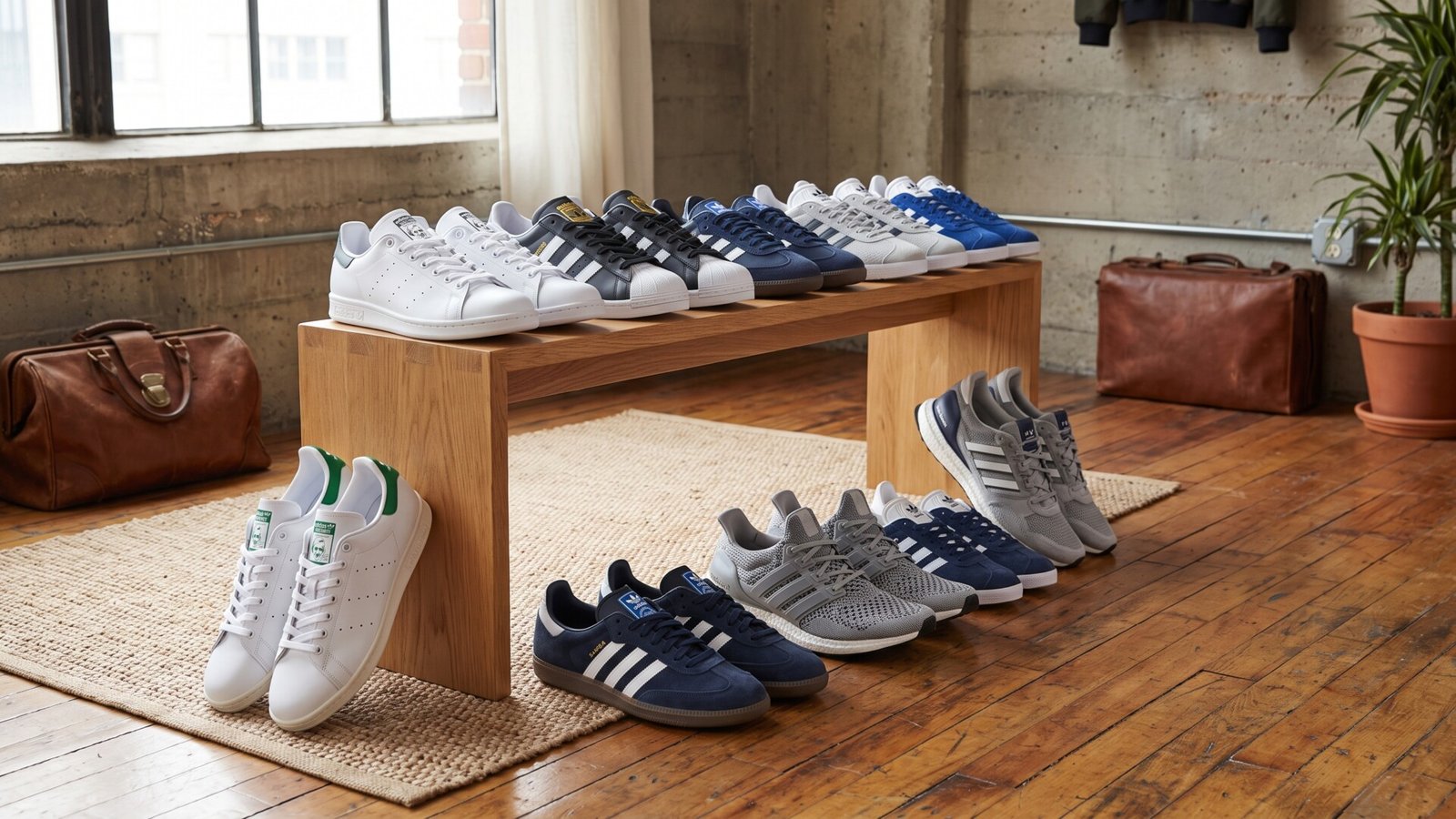
So, we went deep. We looked at the cultural impact, the performance specs, the design language, and the sheer longevity of the most iconic models. Below you’ll find the full top 10, a quick-pick table with today’s US retail price ranges, honorable mentions that just missed the cut, and practical advice on sizing, comfort and styling so you can pick the right pair, not just the loudest one.
Quick Picks: The Top 10 Adidas Sneakers at a Glance
Short on time? Here’s the cheat sheet. Prices are typical full-price US retail ranges for the current in-line versions at the time of writing (November 2026); collabs, premium materials and resale pairs cost more, and sales cost less.
| Model | Debut | Original purpose | Version to look for today | Typical US retail | Best for |
|---|---|---|---|---|---|
| Samba | 1950 | Football training on hard, icy ground | Samba OG | $100–$110 | Everyday terrace style |
| Superstar | 1969 | Basketball | Superstar / Superstar II | $100–$110 | Hip-hop heritage, durable leather |
| Stan Smith | 1965 (as the Robert Haillet) | Tennis | Stan Smith | Around $100 | Clean minimal looks, smart-casual |
| Gazelle | 1966 | Training | Gazelle, Gazelle Indoor | Varies by version* | Softer suede, retro casual |
| NMD R1 | 2015 | Lifestyle | NMD R1 (limited stock) | Around $150 | Cushioned casual wear |
| Yeezy Boost 350 | 2015 | Lifestyle collab | Resale only (no longer made by Adidas) | Resale market only | Collectors |
| Ultraboost | 2015 | Running | Ultraboost 5 / 5X | $180–$220 | Max comfort, walking, easy runs |
| ZX Flux | 2014 | Lifestyle runner | Hard to find new | Varies* | Budget-friendly retro runner vibe |
| Forum | 1984 | Basketball | Forum Low / Forum Low CL / Forum 84 | $100–$120 | 80s hoops style, statement fits |
| Campus | 1980 (as Campus) | Basketball | Campus 00s | Around $110 | Chunky suede skate look |
Start with the classics: Shop the Samba OG →Gazelle Men’s →Gazelle Women’s →
The Top Adidas Sneakers
Overview of Selection Criteria
Before we dive into the list, let’s break down how we ranked these heavyweights. It’s not just about hype. We looked at four key factors to separate the legends from the one-hit wonders:
- Cultural Impact: Did this shoe change the game? Did it cross over from its original purpose (like sports) into fashion, music, or art? The shoes that defined eras get major points here.
- Performance Features: Was it a beast in its original arena? Did it bring new tech to the table that pushed the industry forward? We’re talking about comfort, support, and innovation.
- Design and Style: Does it look good? Is it versatile? Can you rock it with jeans, joggers, or tailored trousers? A design that keeps working decade after decade is what separates a classic from a trend.
- Longevity and Historical Significance: Is it still relevant today? Does it have a story that adds to its value? A shoe that’s been in the game for 50 years and still sells out is a true legend.
Iconic Models
Alright, let’s get into the main event. Here are the ten Adidas sneakers that have earned their spot in the hall of fame.
1. Adidas Samba
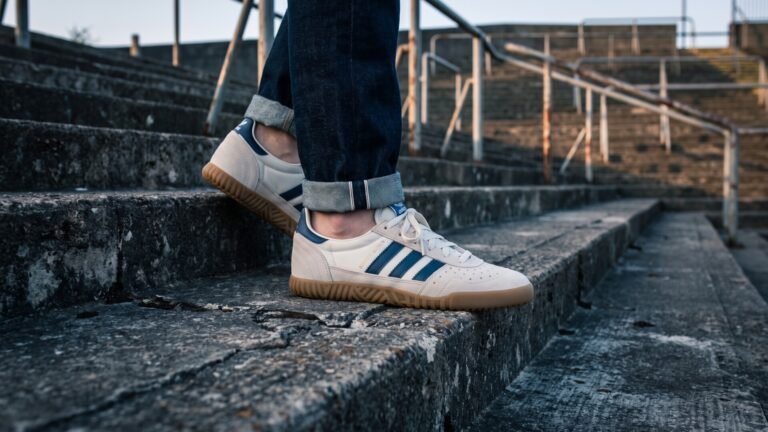
The Samba is the undisputed OG of the Adidas lineup. Born around 1950 as a training shoe for footballers on icy, hard ground, it was built for grip and control. But it didn’t stay on the pitch for long. The Samba became part of the unofficial uniform of the British football casual subculture in the 80s, and it’s been a streetwear staple ever since.
What makes the Samba so special? It’s the simplicity. That clean, low-profile silhouette with the gum sole and the suede T-toe overlay is pure class. It’s a shoe that whispers, not shouts. In recent years, it’s exploded again, popping up on fashion week runways and city streets everywhere. The version most people want today is the Samba OG, which Adidas itself lists as true to size. Torn between the Samba and its terrace siblings? Our Gazelle vs Samba comparison and the Samba vs Gazelle vs Spezial guide break down every difference, and if the price is the sticking point, check our Samba vs cheaper alternatives roundup.
Pros
- Low-key design that pairs easily with jeans, wide trousers and shorts.
- Lightweight and flexible for all-day wear.
- A rich history that adds cultural weight.
Cons
- The sole is pretty thin, so don’t expect cloud-like cushioning.
- Can feel a bit narrow for wide-footed fam.
Quick Verdict: The Samba is the ultimate “if you could only own one” sneaker. It’s a piece of history you can wear every day.
2. Adidas Superstar
If the Samba is the quiet classic, the Superstar is the loud, proud icon. It dropped in 1969 as a low-top version of the Adidas Pro Model basketball shoe, and it was the first low-top basketball shoe with an all-leather upper. That rubber shell toe, built to protect players’ feet on court, became its calling card. But it wasn’t until the 1980s that the Superstar truly ascended to god-tier status. Run-D.M.C. adopted the shoe, and their 1986 track “My Adidas” turned it into a global symbol of hip-hop culture. It wasn’t just a shoe; it was a statement of identity.
The Superstar is chunky, bold, and unapologetically retro. It’s a shoe with a personality that demands attention. While it might not be the most subtle kick on the block, its cultural significance is undeniable. It’s a bridge between the basketball court, the streets, and the stage. Keeping a white pair looking fresh takes a little work; our guide to cleaning white Adidas sneakers walks you through it.
Pros
- Shell toe design that’s instantly recognizable.
- Huge cultural significance in music and streetwear.
- Durable leather upper that ages well.
Cons
- Can feel a bit heavy and clunky compared to modern sneakers.
- Less breathable than other options.
Quick Verdict: The Superstar is a must-have for any serious sneakerhead. It’s not just a shoe; it’s a piece of music history.
3. Adidas Stan Smith
Talk about a glow-up. The Stan Smith started life in 1965 as a leather tennis shoe named after French pro Robert Haillet. When Haillet retired in 1971, Adidas brought in American star Stan Smith, who won the US Open that year and Wimbledon in 1972. For several years the shoe carried both men’s names, and it wasn’t until 1978 that “Haillet” was dropped for good. It went on to become one of the best-selling tennis shoes ever and then made the jump to fashion staple.
The Stan Smith’s genius is in its minimalism. It’s a clean, all-white leather low-top with no stitched stripes at all: instead, three rows of perforations sit where the three stripes would normally go, plus a pop of color on the heel tab and Stan’s portrait on the tongue. It’s the definition of “less is more.” You can throw these on with tailored trousers, shorts, or anything in between. Want to see how it stacks up against other clean whites? Read our Air Force 1 vs Stan Smith and Common Projects Achilles Low vs Stan Smith comparisons.
Pros
- Unmatched simplicity and versatility.
- Lightweight and comfortable for daily wear.
- A clean aesthetic that never goes out of style.
Cons
- The all-white upper can get dirty quickly.
- Not much arch support for long periods of standing.
Quick Verdict: If you’re looking for a clean, versatile shoe that you can dress up or down, the Stan Smith is the one. It’s a foolproof choice.
Find the Stan Smith – Men’s →Women’s →
4. Adidas Gazelle
The Gazelle is the Samba’s cooler, more laid-back cousin. First released in 1966 as a training shoe, it gained massive popularity in the UK during the Britpop era of the 90s, when bands of that scene made it part of the look.
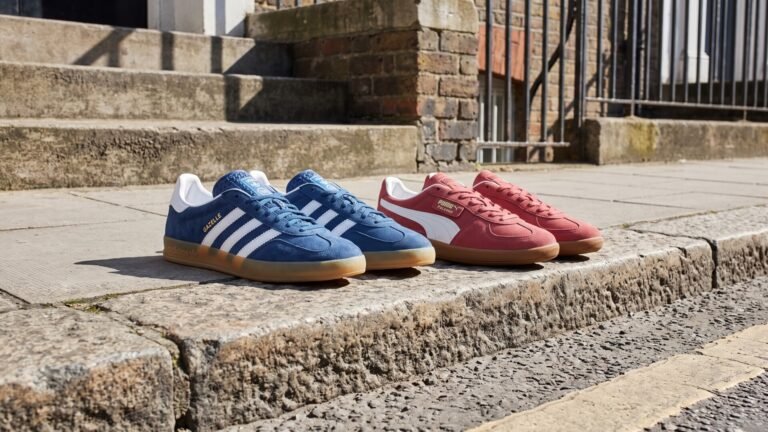
The Gazelle features a suede upper, a slightly more padded collar, and a flat rubber sole (gum on many colorways, especially the Gazelle Indoor). It has a softer, more rounded silhouette than the Samba, giving it a more relaxed, vintage vibe. It’s a shoe that feels both nostalgic and current at the same time. It’s all about that effortless, lived-in look. The Gazelle sits at the center of several of our terrace head-to-heads: Spezial vs Gazelle, Indoor Super vs Gazelle and Puma Palermo vs Gazelle.
Pros
- Suede construction looks and feels great.
- Retro styling that’s perfect for a casual outfit.
- Comfortable, flexible fit.
Cons
- Suede requires more care to keep clean.
- Not the best for intense physical activity.
Quick Verdict: The Gazelle is for the fam who wants a little more character and a softer look than the Samba. It’s a classic that’s perfect for everyday wear.
5. Adidas NMD (NMD R1)
Let’s fast-forward to the modern era. The NMD dropped in December 2015 and completely shook up the sneaker world. Designed under Nic Galway, it mashed up cues from three archive runners, the Micropacer, Rising Star and Boston Super, with a full-length Boost midsole and a stretchy Primeknit upper. It wasn’t the very first lifestyle shoe to use Boost (the Yeezy Boost 350 beat it by about six months), but it was the one that took Boost comfort to the mass market.
The NMD was a big deal. It ushered in a wave of sleek, tech-infused streetwear in 2016 and 2017, and those signature EVA plugs on the midsole plus the bold color-blocking made it an instant hit. It was the shoe to be seen in, and it proved that Adidas could compete with the best in the hype game. These days the hype has cooled and new colorways are much scarcer, so check stock before you set your heart on a specific pair.
Pros
- Boost cushioning for all-day comfort.
- Modern, futuristic design that stands out.
- Lightweight and breathable.
Cons
- The hype has died down, so it’s less “exclusive” now, and in-line stock is thinner than it used to be.
- The knit upper can stretch out over time.
Quick Verdict: The NMD is a modern classic that brought Boost to the streets. It’s a comfy, stylish choice that still holds its own.
6. Adidas Yeezy Boost 350
Love it or hate it, you can’t ignore the Yeezy. Adidas and Kanye West (now known as Ye) launched their partnership in February 2015 with the high-top Yeezy Boost 750. The low-top Yeezy Boost 350 followed on June 27, 2015 in the “Turtle Dove” colorway at $200, and it’s the shoe that turned the collab into a cultural phenomenon and supercharged the sneaker resale market. The 350 V2 arrived in 2016 and became the most-produced version.
The 350 features a Primeknit upper, a sock-like fit and a full-length Boost sole (the V2 added the side stripe). It was unlike anything else on the market. The muted, earth-tone colorways created a new aesthetic that countless brands have tried to copy. It was less about performance and more about status and hype.
Important update: Adidas ended the partnership in October 2022 after Ye’s antisemitic comments, stopped producing Yeezy-branded products, and said in March 2025 that it had sold its last remaining Yeezy pairs at the end of 2024. That means there are no new Adidas Yeezy releases; any pair you buy now comes from the resale market, so authentication matters. Our sneaker authentication guide is worth a read before you spend.
Pros
- Very comfortable, sock-like fit.
- Unique, influential design.
- Some colorways still hold resale value.
Cons
- No longer produced by Adidas, so resale is the only route and fakes are common.
- The knit upper requires careful cleaning.
- Some colorways can look dirty very quickly.
Quick Verdict: The Yeezy 350 is a defining sneaker of the 2010s. Its place in sneaker history is secure, even if its story ended badly.
7. Adidas Ultraboost
While the NMD brought Boost to the streets, the Ultraboost made it famous. Released in 2015 as a performance running shoe, the Ultraboost was a massive leap forward in comfort. The full-length Boost midsole delivered a bouncy, springy feel that runners hadn’t had from a mainstream trainer before.
But the Ultraboost didn’t just stay in the gym. Its sleek design and comfort made it a lifestyle staple. You see them on commuters, on weekend warriors, and on people who just want a seriously comfortable shoe. The current generation is the Ultraboost 5 (with the Ultraboost 5X alongside it), which uses Light Boost foam, a Primeknit upper and a Continental rubber outsole. Don’t assume older reviews of the Ultraboost 21 or 22 apply to the 5: the foam and fit have changed over the years. Comparing it with Nike’s daily trainer? Our Ultraboost vs Nike Pegasus breakdown covers comfort and daily-wear differences.
Pros
- The most cushioned shoe on this list by a wide margin.
- Great for easy runs, gym days, or just walking.
- Durable Continental rubber outsole.
Cons
- The price point is on the higher side ($180–$220 at full retail).
- The knit upper can stretch and lose shape over time.
Quick Verdict: If you value comfort above all else, the Ultraboost is your grail. It’s the best-performing shoe on this list.
Check out the Ultraboost 5X – Men’s →Women’s →
8. Adidas ZX Flux
The ZX Flux is a bit of a deep cut for the true heads. Released in 2014, it was a modern reimagining of the classic ZX running series from the 80s. It took cues from the ZX 8000, including the heel cage, and stripped everything else down, creating a clean, minimalist sneaker with a focus on materials and prints.
The ZX Flux was a canvas for creativity. Adidas released countless versions with different prints, textures, and patterns, from woven fabrics to reflective materials. It was a sneaker that let you express your personality. It was also affordable, making it an accessible entry point into the Adidas world. Today it’s much harder to find new; if you like the idea of an affordable retro-runner, our hidden gem sneakers under $150 list includes the Adidas Nite Jogger and other alternatives.
Pros
- Distinctive, playful design.
- Historically one of the cheaper Adidas lifestyle runners.
- Comfortable and lightweight.
Cons
- Not as culturally significant as other models.
- The upper can be less durable than leather options, and new pairs are scarce.
Quick Verdict: The ZX Flux is a sleeper hit. It’s a stylish, affordable option for those who want something a little different.
9. Adidas Forum
The Forum is a throwback to the golden era of basketball. Designed by Jacques Chassaing and released in 1984, it replaced the Top Ten as Adidas’ flagship basketball shoe and hit a then-eye-watering $100 price tag. It featured a Velcro ankle strap, an X-shaped crisscross strap over the forefoot and a sturdy, supportive build made for the court. Michael Jordan even wore a pair at the 1984 US Olympic trials, before his own signature line existed.
After years in the archives, the Forum made a massive comeback in 2021, helped by Bad Bunny’s Forum Buckle Low collab and the wider retro-basketball trend in streetwear. Today most people wear the strapless Forum Low, which keeps the 80s look without the ankle strap. Weighing it up against the other big retro hoops shoes? See Forum vs Nike Dunk and New Balance 550 vs Forum Low.
Pros
- Bold, unique design with the signature ankle strap (on the high and mid versions).
- Strong cultural roots in basketball and hip-hop.
- Durable leather construction.
Cons
- Can be heavy and bulky.
- The ankle strap can be a bit of a hassle to put on.
Quick Verdict: The Forum is a statement piece. It’s for the fam who wants to rock a piece of basketball history with a modern streetwear twist.
Browse the Forum Low – Men’s →Women’s →
10. Adidas Campus
The Campus is the quiet workhorse of the Adidas lineup. It started out in the early 1970s as a basketball shoe called the Tournament and took the Campus name in 1980. It quickly found a home with skaters and the New York hip-hop scene; the Beastie Boys wore them for years, and a pair famously appears on the cover of their 1992 album Check Your Head. Its simple suede upper and durable construction made it a favorite of anyone who needed a shoe that could take a beating.
The Campus is all about understated style. It’s similar to the Gazelle, but with a slightly more padded build, and the popular Campus 00s version adds a chunkier sole and thicker tongue for a skate-shoe look. It’s reliable, durable, and has a look that has kept it relevant for decades. It’s the definition of a “beater” that you can still flex in. For more on the brand’s skate history, check out Skateboarding with Adidas.
Pros
- Durable suede upper built to last.
- Simple, versatile design.
- Comfortable for all-day wear.
Cons
- Not a lot of cushioning for high-impact activities.
- Similar to other Adidas models, so it can feel redundant.
Quick Verdict: The Campus is a reliable, stylish choice for everyday wear. It’s the shoe you grab when you want to look good without trying too hard.
Honorable Mentions: Adidas Sneakers That Just Missed the Cut
A top 10 always leaves someone out. These models have serious history or serious momentum right now, and each one deserves a look if the list above didn’t quite hit.
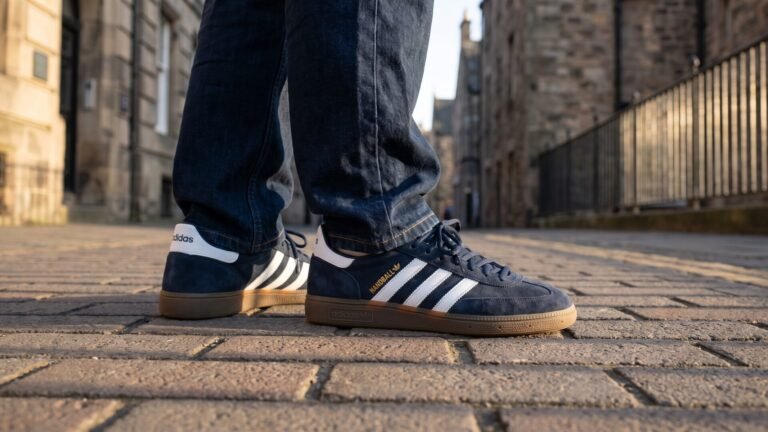
- Handball Spezial: The fashion insider’s terrace shoe, with a slim suede upper and gum sole. Read our Handball Spezial review.
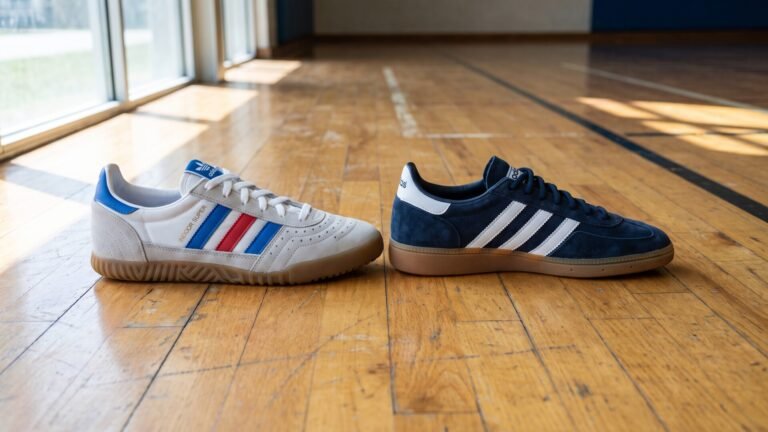
- Indoor Super: A lesser-known terrace classic for people who want the look without seeing it on every street corner. Here’s our Indoor Super review.
- SL 72: A 1972 running shoe brought back as a slim, low-profile alternative to the Samba. See our SL 72 RS review.
- Taekwondo: The ultra-slim, ballet-flat-adjacent shoe riding the “ballet-core” wave. We pit it against Puma in Puma Speedcat vs Adidas Taekwondo.
- Adizero Evo SL: A modern performance runner that crossed over into lifestyle wear. Our take: Is the Adizero Evo SL the best lifestyle runner ever made?
See all colorways – Spezial Men’s →Spezial Women’s →
Buyer Archetypes for Top Adidas Sneakers
So, which of these legends is right for you? It depends on what you’re looking for. Let’s break it down by buyer type.
- Best for Sneaker Enthusiasts: If you’re a collector or a history buff, you need the Superstar and the Samba. These are the cornerstones of Adidas heritage. You’re not just buying a shoe; you’re buying a story. Our Adidas sneakers that shaped street culture piece goes deeper on the history.
- Best for Athletes and Active Individuals: The Ultraboost is the clear winner here. It’s a performance machine that offers top-tier comfort and support. The NMD is also a great option for a more casual athletic look, though it isn’t built for serious running.
- Best for Fashion-Focused Buyers: The Gazelle and Forum are great choices for a curated, retro-inspired wardrobe, and the honorable-mention Spezial and Taekwondo are where fashion crowds are looking now. The Yeezy 350 is still a flex, but only via resale. Into designer collabs? See our Adidas x Gucci review and limited-edition Adidas collaborations.
- Best for Casual Wearers: For the fam who just wants a comfortable, versatile shoe for daily life, the Stan Smith and Campus are your best bets. They’re easy to style, comfortable, and won’t break the bank.
How to Style the Classics
Knowing the history is fun, but the real question is what to wear them with. Here’s the practical version.
- Samba, Gazelle, Spezial (slim terrace shoes): These low-profile shoes look best with straight or wide-leg jeans that just graze the top of the shoe, cropped trousers, or shorts with low socks. Black/white/gum is the easiest starting colorway; brown, green or burgundy suede adds a bit of 70s flavor in autumn.
- Stan Smith: The smart-casual pick of the list. It works with chinos, tailored trousers with a slight crop, and even a relaxed unstructured suit. Keep it clean; a scuffed white Stan reads lazy, not laid-back.
- Superstar, Forum, Campus 00s (chunkier shapes): These need a bit more volume above them. Baggy jeans, cargos, carpenter pants and tracksuits balance the heavier toe. Skinny jeans tend to make them look clown-shoe big.
- Ultraboost, NMD: Built for athleisure: joggers, tapered tech trousers, shorts and running gear. They look out of place with tailoring, so keep them for weekends, travel and the gym.
Market Context
Current Trends in Adidas Sneakers
The sneaker game is always moving, and Adidas is right in the middle of it. Here’s what’s happening right now.
- Rise of Sustainability: Adidas has pushed recycled materials across many lines, including versions of the Stan Smith and Superstar, and the Ultraboost 5 uses recycled content too. Check the product page for the specific pair you’re buying, because materials vary by colorway.
- The Growing Popularity of Retro Models: The “terrace” trend, driven by the Samba and Gazelle, kept going strong, and slimmer shoes like the SL 72 and Taekwondo have picked up momentum. The Forum is also riding the wave of 80s nostalgia. Want the wider trend picture? Our guide to Adidas hype sneakers covers it.
- How Collaborations Influence Market Trends: Collaborations are still king. Whether it’s with high-fashion houses like Gucci or artists like Bad Bunny, a good collab can send a silhouette’s popularity (and resale price) through the roof. These drops create a sense of urgency and exclusivity that keeps the market buzzing.
Long-Term Ownership Perspective
Buying a sneaker is an investment, both in your style and your wallet. Let’s talk about the long game.
- Cost Per Wear Analysis: A $100 shoe you wear 100 times costs you $1 per wear. A $200 shoe you wear 50 times costs you $4 per wear. The Samba, Stan Smith, and Campus sit around the $100–$110 mark and are incredibly versatile, making them excellent value. The Yeezy is a different story; you’re paying resale prices for the history, not the cost-per-wear.
- Durability and Maintenance Considerations: Leather shoes like the Superstar and Forum are durable but can crease. Suede shoes like the Gazelle and Campus need protection from water and stains. Knit shoes like the Ultraboost and Yeezy are comfortable but can stretch and get dirty. Think about your lifestyle and how much effort you’re willing to put into upkeep.
- Resale Value and Trend Longevity: Resale prices move fast and depend on the colorway, size and platform, so treat any sneaker as something to wear, not a guaranteed investment. The Samba and Superstar have stayed in production for decades, which makes them safe style bets even if they rarely sell above retail. The NMD and ZX Flux are more trend-dependent. If you’re curious about flipping, read our Sneaker Collecting 101 first.
Hidden Buying Factors
Here are some things you might not have considered before you buy.
- Fit and Sizing Discrepancies: Adidas fit varies by model, so treat any sizing tip as a tendency, not a rule. Adidas lists the Samba OG, Campus 00s and Forum Low as true to size, but the Samba and Gazelle are slim through the forefoot, so wide-footed buyers often prefer a half size up. Many owners of the Yeezy 350 V2 go up half a size because the knit and heel run snug. Always check the brand’s size guide, read recent reviews for your exact version, and buy somewhere with easy returns. Narrow feet? Our best narrow-foot sneakers guide has tips.
- Comfort Levels After Extended Wear: That bouncy Boost feeling is real, but it can feel a bit unstable for some. The flat, thin soles of the Samba and Campus are great for a casual day but can be brutal if you’re standing on concrete for 8 hours. If you have foot pain, talk to a podiatrist before picking a shoe for long days on your feet.
- Styling Versatility for Different Occasions: The Stan Smith is a chameleon. The Samba is a streetwear staple. The Ultraboost is for athleisure. The Forum is a statement. Think about your wardrobe. A neutral-colored Samba or Stan Smith will go with most outfits, while a loud Yeezy colorway will be the centerpiece of your outfit.
Conclusion
So there you have it, fam. The definitive list of the Top Adidas Sneakers of All Time. From the low-key Samba to the hype-era Yeezy, Adidas has a shoe for every personality, every style, and every era. If you want one pair to start with, get the Samba OG for everyday style or the Ultraboost 5 if comfort comes first.
The key takeaway? Don’t just chase the hype. Think about your personal style, your needs, and your budget. Whether you’re looking for a daily beater, a performance machine, or a grail to add to your collection, there’s an Adidas on this list that’s perfect for you. For more model deep-dives across every brand, browse our sneaker models hub.
Street Sneakers Vault – Keeping you fresh since day one.
Frequently Asked Questions About Top Adidas Sneakers
What are the best Adidas sneakers for wide feet?
Adidas isn’t always the most wide-foot-friendly brand. The Samba and Gazelle are slim through the forefoot. Better bets are the Ultraboost, whose knit upper has some stretch, or the roomier Campus 00s. Some Adidas running models come in wide versions, so check the product page, and consider going up half a size in slimmer models.
How do I choose the right size for Adidas sneakers?
It depends on the model. Adidas lists the Samba OG, Campus 00s and Forum Low as true to size, and the Stan Smith and Superstar generally fit true to size too. Many Yeezy 350 V2 owners go up half a size. If you have wide feet, a half size up in the Samba or Gazelle can help. Always check the size guide and buy where returns are easy.
Which Adidas sneaker is best for running?
From this list, the Ultraboost 5 is the only true running shoe, and it suits easy runs and daily miles. The lifestyle models (Samba, Superstar, Forum and the rest) are not built for running. For faster training, look at the Adizero line instead.
Can you still buy Adidas Yeezy sneakers?
Not new from Adidas. Adidas ended the partnership with Ye in October 2022 and said it sold its last remaining Yeezy pairs at the end of 2024. Any pair you buy now comes from the resale market, so use a platform with authentication.
What is the difference between the Samba and the Gazelle?
The Samba is a slim, low-profile shoe with a leather upper, a suede T-toe overlay and a gum sole. The Gazelle usually has an all-suede upper, a softer, rounder shape and a slightly more padded collar. Pick the Samba for a sleeker look and the Gazelle for a relaxed, vintage feel.
How can I clean my Adidas sneakers effectively?
For leather shoes like the Superstar or Stan Smith, use a gentle cleaner and a soft brush. For suede shoes like the Gazelle or Campus, use a suede brush and eraser and avoid soaking them. For knit shoes like the Ultraboost, hand-wash the upper with mild soap and cool water rather than relying on the washing machine, and always air dry away from direct heat. Stuff them with paper to help them keep their shape.