What to Wear for a Family Day at the Park: A Practical Guide for Parents and Kids
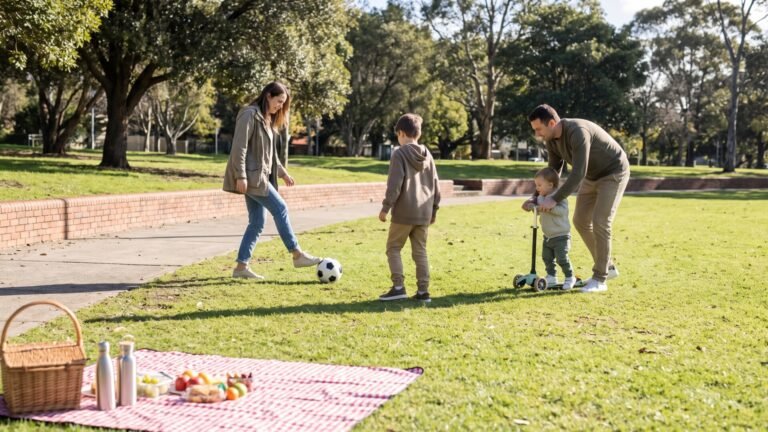
Let’s set the scene. You’ve packed the snacks, filled the water bottles, and wrangled everyone into the car. You arrive at the park, and within minutes, you’re walking to find a spot, running after a child who spotted the swings, sitting on damp grass, playing games, and getting snacks out of the bag. By the time you head home, you’ve walked more than you expected, stood around for hours, and your clothes are covered in grass stains, sand, and possibly something sticky.
The perfect park outfit isn’t necessarily fashionable or athletic. It needs to survive whatever the day throws at you. This guide covers the four principles that matter most: comfort, mobility, weather protection, and easy maintenance. From sneakers to clothing to packing essentials, here’s what to wear for a family day at the park.
Start With the Sneakers: Your Most Important Park-Day Decision
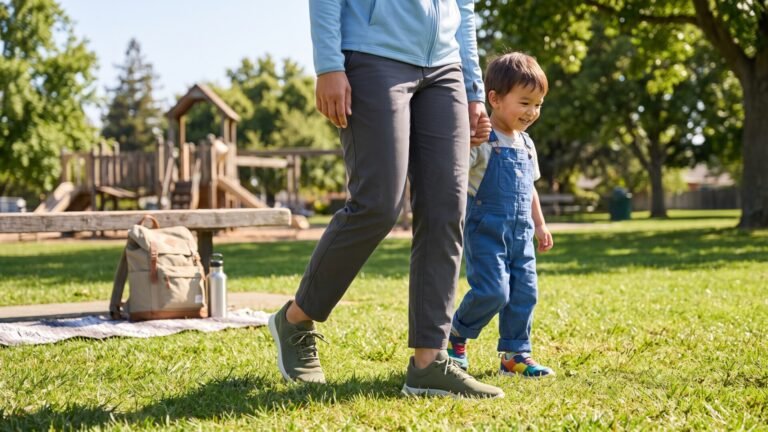
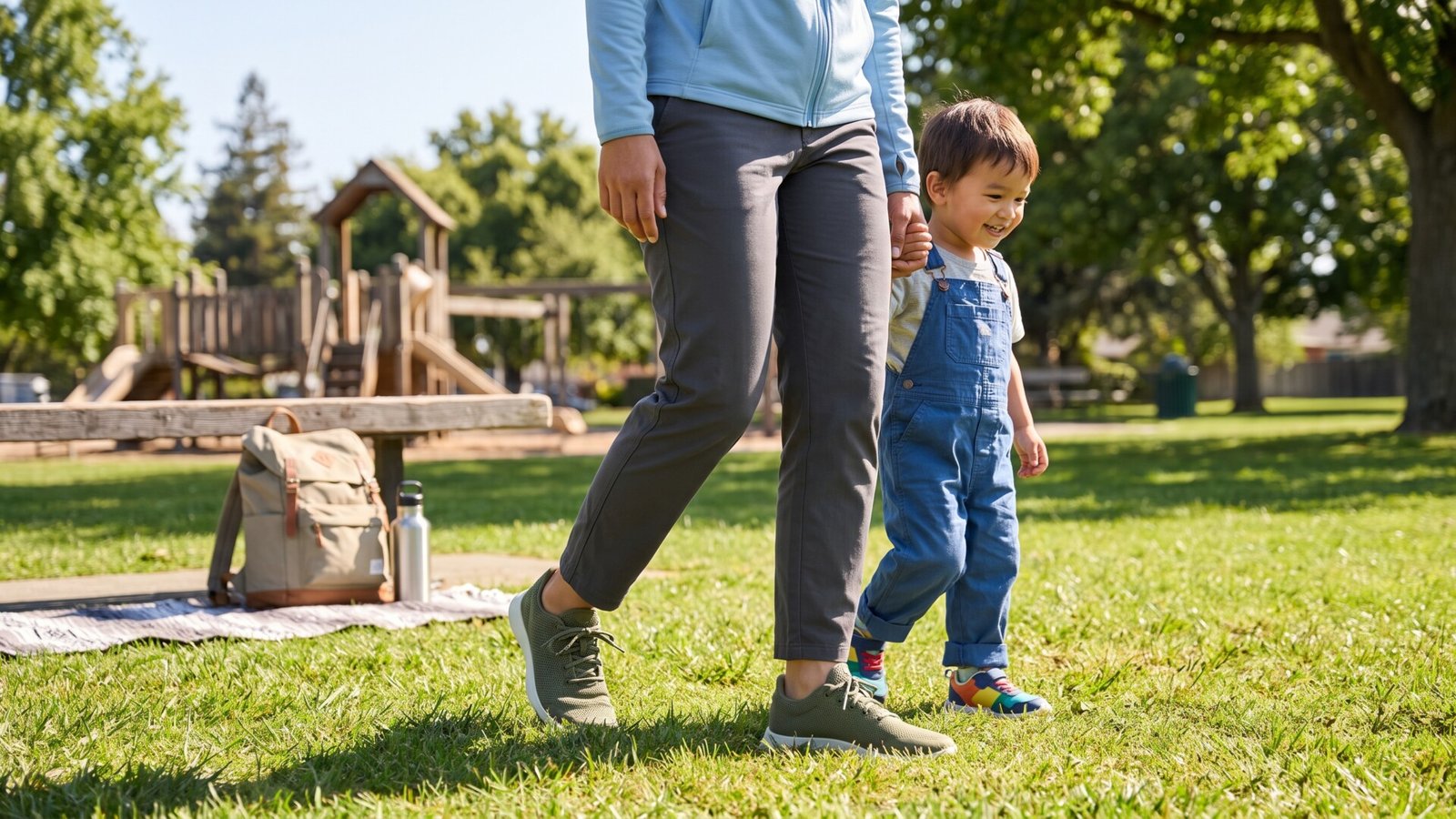
A park day involves several hours of walking, standing, running, uneven surfaces, grass, pavement, and playground surfaces. Your sneakers are the foundation of your entire outfit. Choose poorly, and you’ll be counting down the minutes until you can sit down. Choose well, and you won’t think about your feet at all.
What Makes a Good Park Sneaker?
Cushioning is essential for long days on your feet. Look for responsive foam midsoles that absorb impact without feeling mushy. Your knees and lower back will thank you.
Stability matters when you’re chasing children and changing direction quickly. A stable platform prevents ankle rolls and gives you confidence on uneven ground.
Grip is critical for grass, pavement, and playground surfaces. You don’t want to slip on wet grass or lose traction on wood chips.
Breathability keeps your feet cool, especially during summer outings. Mesh uppers allow airflow and reduce the chance of blisters.
Durability matters because park environments are hard on shoes. Grass stains, sand, mud, and constant wear take their toll.
Best Sneaker Types for a Park Day
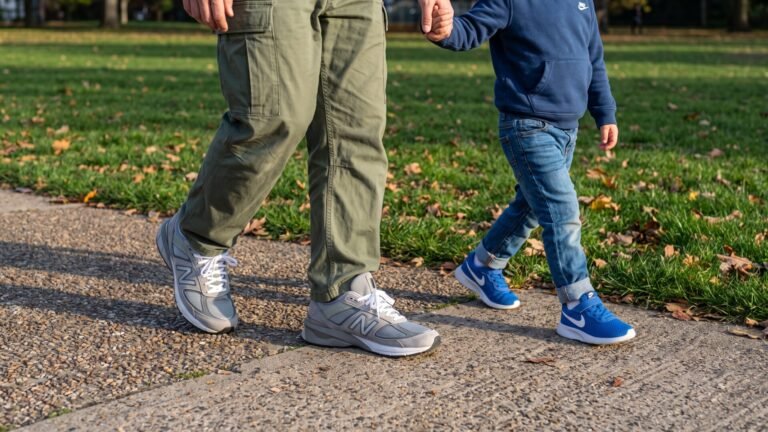
Retro Running Sneakers like the New Balance 530, 574, and 2002R, as well as the ASICS Gel-1130, are ideal for walking and casual family outings. They offer good cushioning, stable platforms, and versatile styling that works for the playground and then dinner.
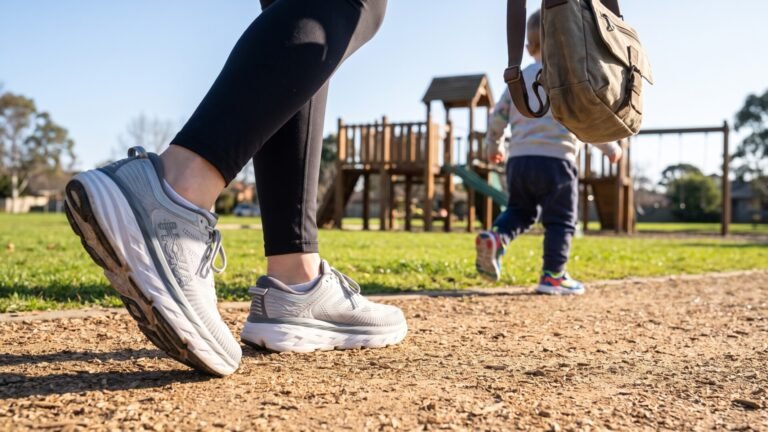
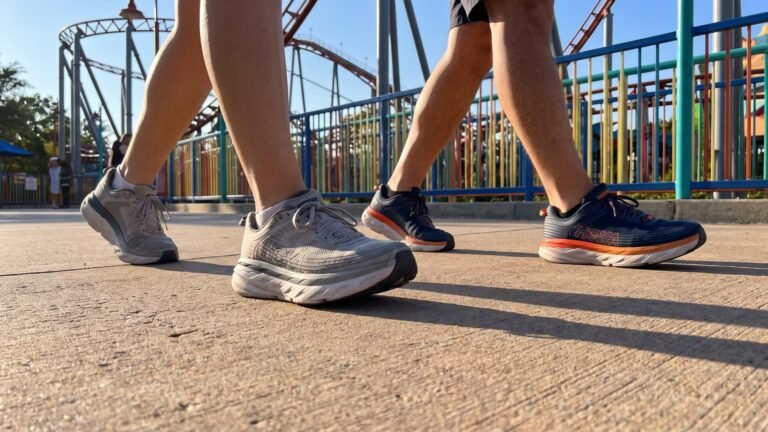
Performance Running Shoes are best when the day involves substantial walking or running. If you’re logging miles pushing a stroller or chasing active kids, the extra cushioning and support make a difference.
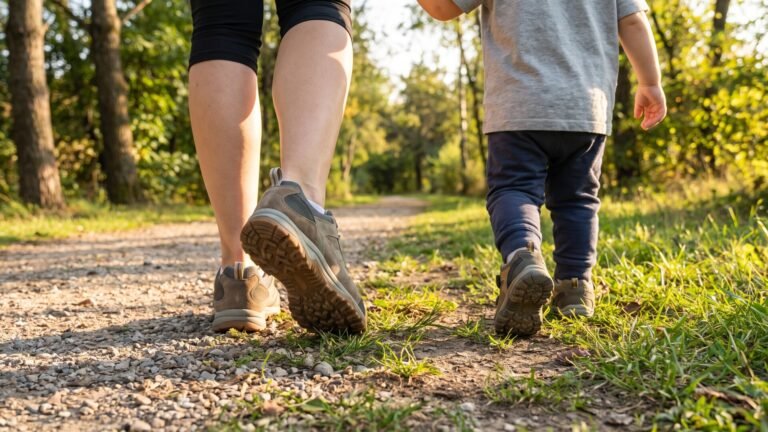
Trail-Inspired Sneakers like the Salomon XT-6 are perfect for nature parks, hiking paths, uneven terrain, and muddy conditions. The aggressive outsoles provide excellent traction on loose surfaces.
Lifestyle Sneakers work well when the day is mostly casual and you’re not expecting much walking. They offer decent comfort but may lack the support for extended wear.
Information Gain: Don’t Choose Your Park Sneakers Based Only on Cushioning
Grip, stability, and weight can matter just as much as softness when you’re constantly moving around with children. A sneaker with excellent cushioning but poor traction becomes a liability on wet grass. A heavy sneaker will drag on your legs after hours of walking. The best park sneaker balances all these factors, not just one.
What Clothing Should You Wear to the Park?
Choose Clothes You Can Actually Move In
Prioritize stretch, breathable fabrics, lightweight construction, comfortable waistbands, and freedom of movement. You’ll be walking, bending, sitting on grass, and possibly climbing onto playground equipment. Restrictive clothing will make all of this uncomfortable.
For parents: Simple, breathable T-shirts are easy to layer. Shorts are ideal for warm weather. Lightweight pants are useful for cooler days, hiking paths, protection from insects, and sitting on grass. Athletic and stretch pants are good for highly active parents.
What to avoid: Restrictive jeans, delicate fabrics, uncomfortable shoes, clothes requiring constant adjustment, and anything you’re afraid to get dirty.
What Should Kids Wear to the Park?
Shift naturally from the parent’s outfit to the child’s. Kids need freedom to run, climb, crawl, sit, and jump. Comfortable clothes beat “nice” clothes every time.
Good choices: Breathable T-shirts, shorts, leggings, joggers, and lightweight layers that can be added or removed as the weather changes.
The dirt factor: Assume children will sit on the ground, crawl through sand, spill something, and get grass stains. Park clothes should be clothes you’re comfortable getting dirty. There’s no point dressing a toddler in white trousers for a playground visit.
Footwear for kids: Look for a secure fit, flexible soles, good traction, easy fastening, and breathable construction. Children run, climb, and jump, and their shoes need to keep up.
Dress for the Weather, Not the Calendar
This is one of the strongest practical sections. The calendar says spring, but the weather says summer. Or it’s autumn, but the sun is beating down. Dress for what the weather is actually doing, not what the season suggests.
Hot summer park days: Wear breathable clothing, shorts, lightweight sneakers, a hat, and sunglasses. Bring extra water, sunscreen, and a spare shirt.
Cool spring and autumn days: Use layers. A T-shirt, a lightweight sweatshirt, and a jacket allow you to adjust as children warm up. Layers can be removed when kids get hot from running around.
Cold weather: Thermal layers, warm socks, an insulated jacket, gloves, and weather-resistant footwear keep everyone comfortable during winter park visits.
Rainy days: Prioritize waterproof outer layers, quick-drying clothes, and shoes with good traction. A sudden shower shouldn’t end the outing.
Information Gain: The Best Family Park Outfit Is Modular
Instead of dressing for one temperature, build an outfit that can adapt throughout a several-hour outing. A base layer, a mid-layer, and a shell allow you to adjust as the day warms up or cools down. Children can remove layers as they get hot from playing and add them back when they stop.
The Water Bottle Is Not Optional
Hydration matters during family outings. Children can become absorbed in play and forget to drink. Parents can also underestimate how much walking they’re doing and how much fluid they’re losing.
What to look for: Reusable, leak-resistant, easy to carry, and appropriately sized water bottles. Insulated bottles keep water cool on hot days.
How much water should you bring? Plan based on the temperature, the duration of the outing, the activity level, and the number of people. Bring more water than you think you’ll need, especially when there are no fountains, you’re far from shops, the weather is hot, or you’re staying for several hours.
Information Gain: Bring more water than you think you’ll need. A hot day at the park can easily lead to dehydration, especially for children who are running around. Extra water also comes in handy for washing hands, rinsing off sticky faces, and cleaning minor scrapes.
What Else Should You Pack for a Family Park Day?
Create a practical checklist of essentials and useful extras.
Essentials: Water bottles, snacks, sunscreen, tissues and wipes, hand sanitizer, a small first-aid kit, phone, keys, and wallet.
Useful extras: A blanket or picnic mat, a change of clothes for younger children, a hat, sunglasses, and a small backpack.
The parent emergency kit: Wipes, plastic bags for dirty clothes, spare socks, stain remover wipes, tissues, and bandages. The original perspective here is that parents should pack for the likely mess, not just the planned activity. A toddler in a sandbox will get dirty. A child drinking juice will spill it. Plan accordingly.
What to Do at the Park: Build the Day Around Active Play
Now transition naturally into the activities that make a park outing memorable. A family park outing isn’t just about getting dressed—it’s about giving children things to do.
Playground time: Climbing, slides, swings, balance equipment. For families looking to create a backyard play area, playground equipment can turn unused outdoor space into a much more engaging environment.
Lawn games: For larger open spaces, frisbee, ball games, ring toss, bowling-style games, and throwing games are excellent options. Lawn games keep older children engaged and encourage family participation.
Outdoor toy time: For younger children, ride-on toys, outdoor vehicles, balls, and activity toys provide hours of entertainment. Exploring best outdoor toys can turn a simple park visit into an adventure.
Sandbox and Water Play: The Activities That Change What You Wear
Sandbox Play
If children are likely to spend an hour in the sand, don’t wear delicate clothes, expect dirty shoes, bring wipes, and consider a change of clothes for younger children. Sand gets everywhere, and the gritty feeling becomes uncomfortable after a while. [Sandbox toys] make the experience more engaging for children who love digging and building.
Water Play
Water changes the equation completely. Discuss quick-drying clothing, spare clothes, sandals or water-friendly footwear, towels, and extra socks. A splash pad, sprinkler, or shallow stream turns a park visit into a water adventure. [Water toys] can make water play even more enjoyable.
Information Gain: Plan the outfit around the messiest activity. If you know the day includes playground, then sandbox, then water play, dress for the water and sand, rather than the playground. This means quick-drying fabrics, easy-to-clean sneakers, and layers that can be removed.
What to Wear for Different Types of Park Days
Quick 1-hour playground trip: Casual sneakers, a T-shirt, shorts or jeans, and water. Minimal preparation.
Half-day park adventure: Comfortable walking sneakers, breathable clothing, layers, a backpack, snacks, and water.
Full-day family outing: Premium walking sneakers, layered clothing, weather protection, a substantial water supply, snacks, spare clothes, and activities.
Nature park or hiking day: Trail-oriented sneakers, moisture-managing clothing, weather protection, and a backpack. The extra traction and durability make a significant difference on uneven terrain.
Common Park-Day Clothing Mistakes
Wearing new sneakers: Don’t test an unbroken-in pair on a six-hour family outing. You’ll regret it by hour two.
Dressing children too warmly: Kids often become hot quickly once they start playing. Layer so they can adjust.
Forgetting spare clothes: Especially with toddlers, water play, and sandbox activities. A spare set of clothes can save the day.
Wearing delicate clothes: Grass and playground equipment are not friendly to expensive fabrics. Save the nice clothes for another occasion.
Bringing too much: The goal is a functional backpack, not a portable house. Pack what you need, not what you might need.
The Ultimate Family Park-Day Checklist
What you’re wearing: Comfortable sneakers, breathable clothes, weather-appropriate layers, and a hat or sunglasses.
What you’re carrying: Water, snacks, sunscreen, wipes, phone, and a small first-aid kit.
For younger kids: Spare clothes, extra socks, diapers if applicable, and a comfort item.
For activities: Outdoor toys, lawn games, sandbox toys, and water toys.
Frequently Asked Questions For A Family Day At The Park
What should parents wear to the park?
Comfortable sneakers with good cushioning and grip, breathable clothing that allows movement, and weather-appropriate layers. Avoid restrictive clothes or anything you’re afraid to get dirty.
What are the best sneakers for a day at the park?
Retro running sneakers like the New Balance 2002R or 574 offer a good balance of comfort and style. Performance running shoes are better for days with lots of walking, and trail sneakers are ideal for nature parks and uneven terrain.
Should I wear running shoes or lifestyle sneakers?
Running shoes offer better cushioning and support for extended walking. Lifestyle sneakers are more versatile but may lack the support for a full day of activity.
What should kids wear to the playground?
Breathable, comfortable clothes that allow freedom of movement. Leggings, joggers, shorts, and T-shirts are all good choices. Avoid restrictive or delicate fabrics.
What should I bring to the park with toddlers?
Water, snacks, sunscreen, wipes, a change of clothes, and a small first-aid kit. A comfort item and a blanket are also useful.
How much water should I bring for a family park day?
Bring more than you think you’ll need. Consider the temperature, duration, and activity level. Extra water is always useful for washing hands and cooling down.
What should kids wear for water play?
Quick-drying clothing, spare clothes, water-friendly sandals or shoes, and towels. A change of clothes is essential.
What should I pack for a full day at the park?
Water, snacks, sunscreen, wipes, a first-aid kit, layers, spare clothes, and activities like outdoor toys and lawn games.
Conclusion: Dress for Movement, Pack for Mess, and Leave Room for Fun
A successful family park day doesn’t require complicated preparation. You need comfortable sneakers, clothes that allow movement, weather-appropriate layers, plenty of water, a few practical essentials, and activities that keep children engaged. Plan around what your children are actually going to do, not what you imagine they’ll do. If the afternoon involves playground equipment, sandbox toys, lawn games, and water play, your clothing and packing list should reflect that.
The best park-day outfit is one you can forget you’re wearing. Comfortable sneakers keep you moving, flexible clothing lets you chase, climb, and play, and a well-packed bag handles the inevitable spills, dirt, and weather changes. Once those basics are covered, the rest of the day can focus on what matters: giving kids plenty of opportunities for active play and exploration.
Street Sneakers Vault – Keeping you fresh since day one.
You might also like: Best Sneakers for Parents Chasing Active Kids | Best New Balance Shoes for Walking | New Balance 2002R Review | New Balance 574 Review