Walking With Kids: How to Stay Comfortable All Day
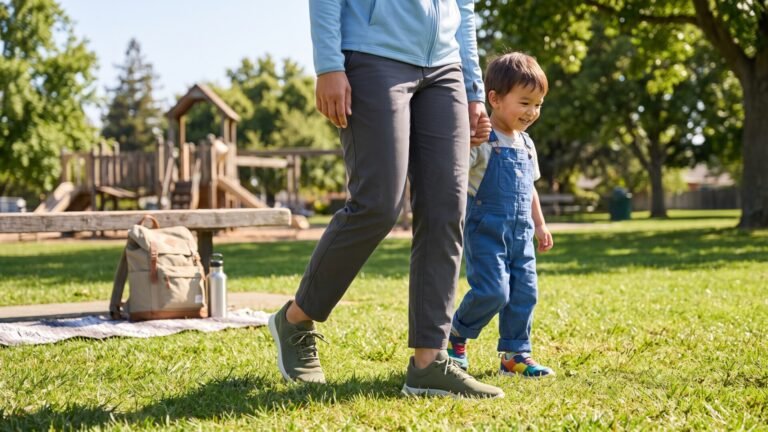
You plan a short family walk. The walk takes twice as long. Someone wants to stop. Someone gets tired. Someone wants to explore something. You end up carrying a child. The “20-minute walk” becomes a two-hour outing. Walking with children isn’t about covering distance efficiently. It’s about making the journey enjoyable enough that everyone wants to keep going.
This guide covers the factors that matter most: comfortable sneakers, appropriate clothing, water, snacks, pacing, breaks, activities, weather, and preparation. Walking with kids is different from ordinary walking because the pace, distance, terrain, and amount of stopping are constantly changing. The best setup needs to keep both parent and child comfortable over an unpredictable day.
Why Walking With Kids Is Harder on Parents’ Feet
A family walk often involves walking, stopping, standing, squatting, bending, carrying children, pushing strollers, changing direction, and walking on different surfaces. The stop-and-go problem explains why a parent can feel exhausted even when the actual distance isn’t enormous. A three-mile family walk with constant stops, uneven surfaces, and carrying a tired child can be harder than a longer uninterrupted walk.
Distance isn’t the only measure of walking difficulty. Parents need sneakers that can handle walking, standing, sudden stops, and uneven terrain all in one outing.
Choosing the Right Sneakers for Walking With Kids
Your sneakers are the most important part of your walking system. Here’s what to look for.
Cushioning: Enough to absorb repeated impact without feeling unstable. Soft cushioning feels great initially but can lead to instability and foot fatigue over extended periods. Look for responsive and supportive cushioning.
Stability: Especially important when chasing children, carrying a toddler, stepping off curbs, or navigating playgrounds. A stable platform prevents ankle rolls and gives you confidence on uneven ground.
Weight: Heavy shoes become increasingly noticeable over a full day. Every extra ounce adds up when you’re walking for hours.
Fit: Toe room, heel security, width, and avoiding excessive tightness all matter. The best sneaker can still cause problems if the fit is wrong. Pay attention to secure heel lock, comfortable midfoot, and enough toe room to prevent rubbing.
Breathability: Especially important during summer. Mesh and ventilated uppers allow airflow, keeping feet cooler during warm weather.
Grip: Useful for grass, dirt, wet pavement, and park paths. You don’t want to slip when chasing a toddler on wet grass.
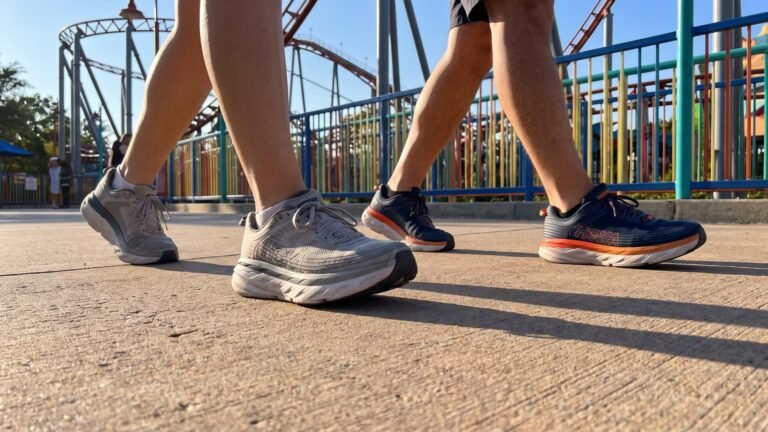
Lifestyle Sneakers vs Running Shoes: Lifestyle and retro running sneakers like the New Balance 530, 574, 2002R, and ASICS Gel-1130 offer a good combination of comfort, versatility, and everyday style. Performance running shoes are better if walking is particularly extensive or you’re also running. Trail sneakers are better for nature walks, uneven terrain, hiking, and outdoor adventures.
Recommended Sneakers
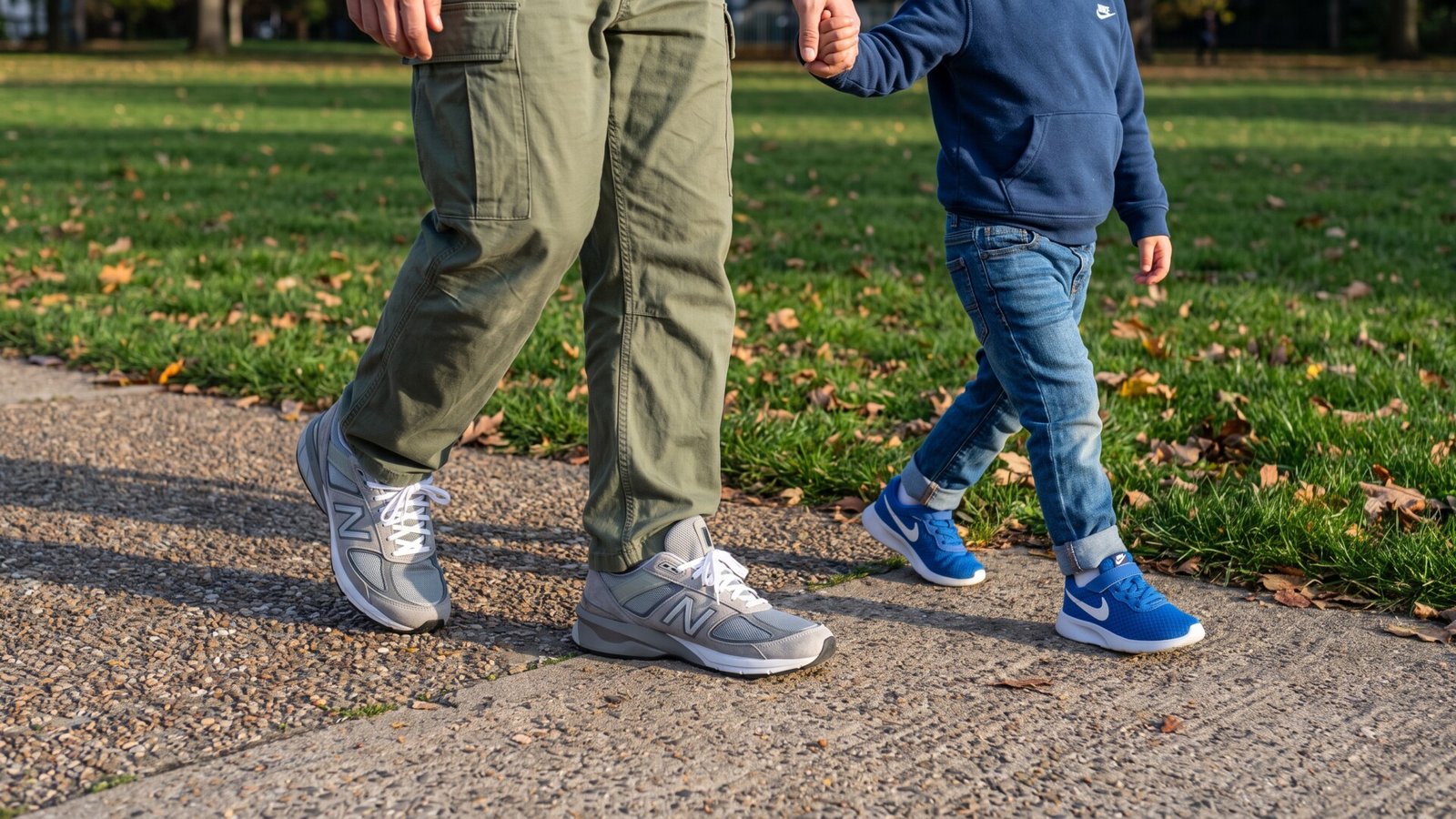
New Balance 2002R — Best Overall: The 2002R is a very reliable and versatile walking shoe. Testers highlight its stable yet cushioned ride for daily wear. The premium suede and mesh upper offers durability and breathability, making it ideal for long family walks. It handles the constant starts and stops of family walking without causing foot fatigue. Best for parents wanting one versatile sneaker for walking, errands, and family outings.
New Balance 990v6 — Best Premium Walking Option: The 990v6 is designed for all-day comfort with mind-blowing arch support and stability. It’s unexpectedly lighter than average, with real suede and quality materials. The FuelCell foam provides extra thick cushioning for all-day wear. Customers find these shoes provide great support, alleviating 90% of foot pain, and are perfect for long hours of standing. Best for maximum all-day comfort and people who benefit from different width options.
New Balance 530 — Best Budget Option: The 530 is a lightweight, affordable option that doesn’t sacrifice comfort. One reviewer walked over 70,000 steps in these ultra-supportive, lightweight kicks, and their feet were happy the whole time. They are comfy as soon as you put them on and remain comfortable after hours of walking and standing. Best for affordable everyday walking.
ASICS Gel-1130 — Best Lightweight Option: The Gel-1130 is described as the most comfortable ASICS shoe for everyday use, with breathability, lightweight feel, and super soft cushioning underfoot. One reviewer noted that walking 20,000 steps felt “light work” in these shoes. Best for parents who dislike heavy sneakers.
New Balance 574 — Best Classic Option: The 574 has been a staple for decades, offering dependable comfort and durability. It’s wide-foot friendly and available in multiple widths, making it accessible for a range of foot shapes. The ENCAP cushioning provides stable support. Best for parents wanting a proven, versatile everyday sneaker.
Don’t Wear Your New Sneakers on the Big Family Walk
A sneaker that feels comfortable for 15 minutes may behave differently after several hours. Before a long family walk, wear them for short errands, 30-minute walks, and progressively longer outings. Pay attention to hot spots, especially the heel, little toe, forefoot, and ankle. Comfort should be tested in hours, not minutes.
Dress for the Walking Conditions
Warm weather: Breathable shirt, lightweight shorts, breathable socks, hat.
Cooler weather: Use layers—base layer, sweatshirt or fleece, lightweight outer layer.
Rain: Weather-resistant outer layer, quick-drying clothing, appropriate footwear.
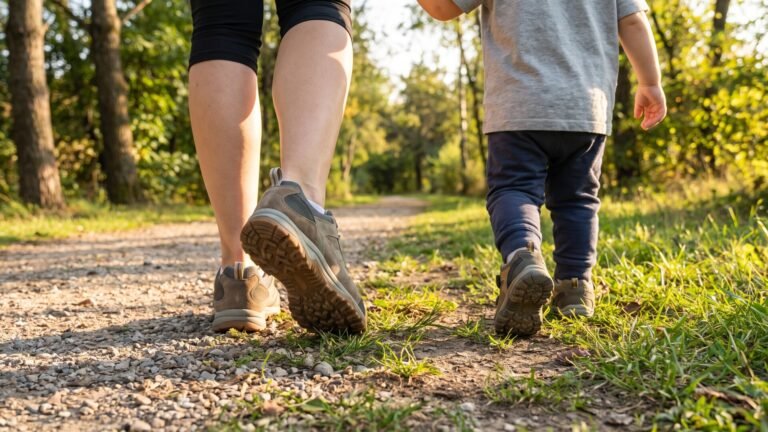
Nature walks: Consider longer pants, more protective footwear, weather conditions, and terrain. Dress for the destination and terrain, not just the weather outside your front door.
Hydration: The Easy Thing Families Forget
Walking becomes harder when everyone is hot and thirsty. Children can become distracted by playgrounds, animals, games, and exploring and forget to drink. Make water easy to access with reusable bottles, child-sized bottles, backpacks, and knowledge of refill points. Plan around the route—know where water is available, where you can stop, and how long you’ll be away.
The Secret to Comfortable Family Walking: Pace Yourself
Stop trying to walk at adult speed. Children naturally stop, investigate, run ahead, fall behind, and change direction. Instead of treating this as inefficiency, design the walk around it. Use a flexible pace: walk, explore, walk, play, rest, walk. The best family walk isn’t the one that covers the most miles. It is the one where everyone finishes wanting to do it again.
Plan “Activity Stops” Into the Route
Instead of simply walking from A to B, identify places where kids can do something. For children, the destination isn’t necessarily the reward. The interesting things along the route are.
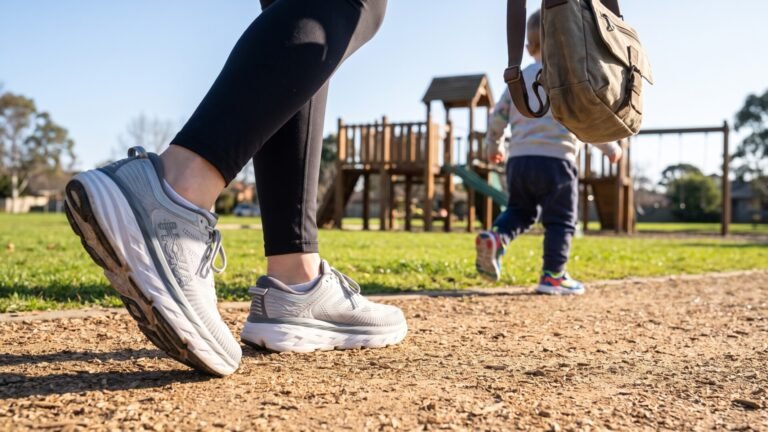
Playground stop: Allow time for climbing, swinging, sliding, and exploring. Playground equipment can turn a simple walk into an adventure.
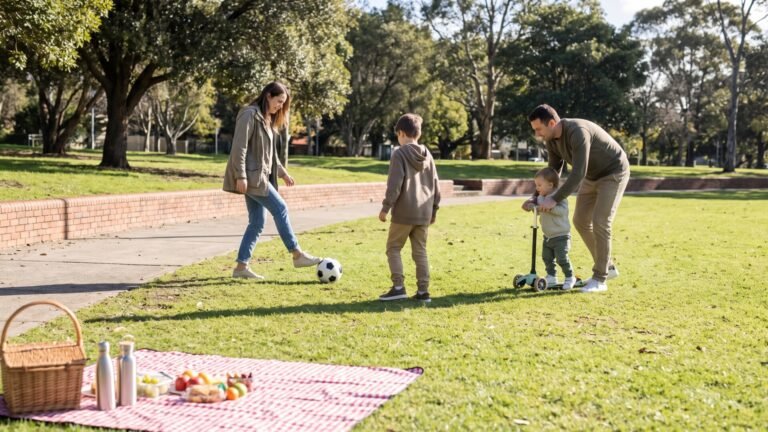
Park stop: Bring or use a ball, frisbee, or outdoor games. Outdoor toys transform open spaces into play areas.
Open lawn: Try frisbee, catch, ring toss, or simple races. Lawn games provide structured family fun that everyone can participate in.
Nature stop: Let children look for insects, collect fallen leaves, identify plants, or observe birds.
What to Bring on a Long Family Walk
Essentials: Water, snacks, sunscreen, phone, keys, wipes, small first-aid kit.
For younger children: Spare clothes, diapers if applicable, comfort item, stroller if necessary.
For entertainment: Keep it minimal. A small outdoor toy, ball, simple game, or nature activity. Every item you add to a family walking bag eventually becomes something someone has to carry.
Snacks and Energy: Plan for the Unexpected
Children don’t always get hungry according to your schedule. Discuss practical options: fruit, simple snacks, portable foods, easy-to-open packaging. Don’t wait until everyone is exhausted. The “early break” strategy—taking a short break before children become overtired, parents become frustrated, or everyone becomes excessively hungry—can prevent a much longer meltdown. A 10-minute break can prevent a much longer meltdown.
Walking With Toddlers vs Older Kids
Toddlers: Expect short walking distances, frequent stops, carrying, and stroller use. Strategy: Keep routes short and interesting.
Preschoolers: Can walk farther but still need frequent activity, encouragement, and interesting destinations.
School-age children: Can handle longer walks. Introduce challenges, games, scavenger hunts, and nature exploration. Active play ideas can keep older children engaged during longer walks.
How to Make Walking More Fun for Kids
Scavenger hunts: Look for birds, flowers, interesting rocks, specific colors, or shapes.
Walking games: “I Spy,” animal spotting, counting games, alphabet games.
Movement challenges: Hop between landmarks, balance along safe edges, race to a tree, imitate animals.
Bring a simple outdoor toy: A ball or frisbee can transform the destination. Outdoor toys provide simple ways to make walking more interactive.
Choosing the Right Route
Short loop vs point-to-point: A loop has advantages—easier to shorten, no need to arrange transportation, familiar ending point. Point-to-point can be more interesting but harder if children get tired.
Look for: Sidewalks, shade, parks, benches, bathrooms, water fountains, playgrounds, and safe crossings. A slightly longer route with better stopping points can be easier for a family than a shorter route with nowhere to stop.
Common Mistakes Parents Make When Walking With Kids
Starting too far from home: Especially with younger children. A child may happily walk two miles away and suddenly refuse to walk back.
Wearing the wrong sneakers: Especially brand-new or worn-out shoes.
Carrying too much: Parents become the pack mule.
Not planning breaks: Fatigue accumulates.
Making the walk about distance: Children care more about what happens along the route.
Forgetting the weather: A comfortable morning can become a hot afternoon.
The Ideal Family Walking Setup
Parent: Comfortable walking sneakers, breathable clothing, water, small backpack.
Child: Comfortable shoes, weather-appropriate clothing, water, optional small activity.
Route: Manageable distance, interesting stops, shade, playground or park, bathroom access.
Activity: Outdoor toy, game, scavenger hunt, playground.
Best Family Walks by Scenario
| Scenario | Best Approach |
|---|---|
| 30-minute neighborhood walk | Minimal gear + comfortable sneakers |
| Park walk | Sneakers + water + outdoor toy |
| Half-day outing | Walking sneakers + backpack + snacks |
| Nature walk | Trail-oriented footwear + water |
| Toddler walk | Short route + stroller backup |
| School-age kids | Longer route + games |
| Hot summer walk | Breathable clothing + shade + water |
| Rainy walk | Weather protection + appropriate footwear |
Frequently Asked Questions About Walking With Kids
What are the best sneakers for walking with kids?
The New Balance 2002R offers a great balance of cushioning, stability, and versatility. The 990v6 provides premium comfort for long days.
How far can children walk?
It depends on age, terrain, pace, and individual ability. Toddlers may only manage short distances, while school-age children can walk several miles with appropriate breaks and activities.
Are running shoes good for walking with kids?
Yes, especially if they offer good cushioning and support. Many running shoes are ideal for family walks and long outings.
Are New Balance sneakers good for family walks?
Yes. The New Balance 2002R, 990v6, 530, and 574 are all excellent choices for family walks, offering a range of cushioning, support, and price points.
How can I make walking fun for children?
Scavenger hunts, games, movement challenges, and simple outdoor toys can transform a walk into an adventure.
What should I bring on a long family walk?
Water, snacks, sunscreen, wipes, spare clothes for younger children, and a small first-aid kit. Keep it minimal to avoid overpacking.
What should toddlers wear for walking?
Comfortable shoes with secure fit, weather-appropriate clothing, and a hat for sun protection. A stroller backup is useful for when little legs get tired.
How do you keep kids from getting tired on walks?
Plan breaks, keep the pace flexible, choose interesting routes, and include activity stops like playgrounds or parks.
What are good activities for kids during a walk?
Scavenger hunts, “I Spy,” animal spotting, movement challenges, and simple outdoor toys like balls or frisbees.
How can parents avoid foot pain during long family outings?
Choose sneakers with good cushioning and support, break them in before long walks, wear appropriate socks, and take breaks when needed.
Conclusion: The Goal Isn’t to Walk Farther—It’s to Enjoy the Walk
Walking with kids works best when you stop treating it like an adult fitness walk. The winning formula is comfortable sneakers, realistic pacing, interesting stops, water, snacks, and opportunities to play. A good family walk might cover fewer miles than you expected, take twice as long, and include several unexpected stops—and that’s perfectly fine.
Choose sneakers that can handle hours of walking and standing, but don’t stop at footwear. Plan routes around playgrounds, parks, and interesting destinations, give children reasons to explore, and build breaks into the journey. The best family walks aren’t measured by distance; they’re measured by whether everyone gets home happy and wants to do it again.
Street Sneakers Vault – Keeping you fresh since day one.
You might also like: Best Sneakers for Parents Chasing Active Kids | Best New Balance Shoes for Walking | New Balance 2002R Review | New Balance 574 Review | What to Wear for a Family Day at the Park