Air Jordan 4 “Bred” 2026 Reissue: Will Resale Prices Skyrocket?
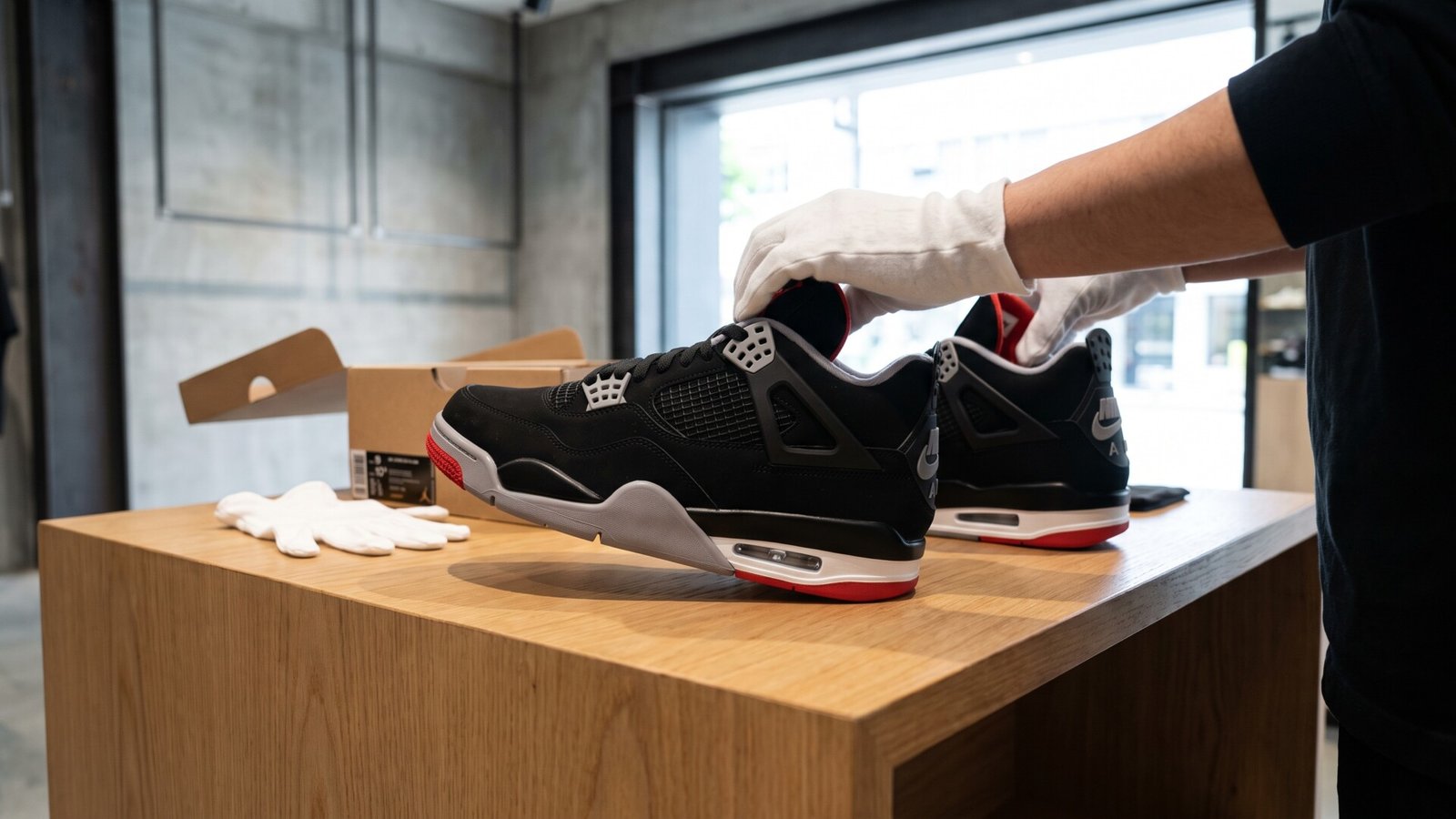
Let’s talk about the sneaker that needs zero introduction. The Air Jordan 4 “Bred.” Black nubuck, cement grey, fire red. It’s the colorway Michael Jordan wore in 1989, and it has been a grail for every generation since. The 2026 reissue (style code IX8180-001) is reportedly set for November 27, 2026, Black Friday, so the hype machine is already in overdrive. The question everyone’s asking in group chats and Discord servers: is this the pair that makes resale prices skyrocket, or one that sits?
The short answer: nobody can promise a spike, and anyone quoting an exact future resale price is guessing. What we can say is that the “Bred” 4 has a strong track record, the 2026 pair is reportedly built closer to the 1989 original than recent retros, and the real money question is whether Nike keeps supply tight. If you want to wear them, the retail price is the smart way in. If you’re buying to flip, read the risks section first.
Real talk, the sneaker game has changed. We’ve seen the highs of the pandemic boom and the lows of the market correction. But the Jordan 4 “Bred” isn’t just any shoe. It’s a cornerstone. So let’s break down everything you need to know about the 2026 drop, from the design details to the resale outlook, and help you decide whether to chase a pair at retail or wait it out. If you’re new to the brand’s wider story, our Air Jordan sneakers guide covers the legacy, and the Sneaker Brands hub shows where Jordan sits next to the other labels we cover.
Air Jordan 4 “Bred” 2026 at a Glance
Details below come from early release reports (Hypebeast, Sneaker News, Sneaker Freaker, Men’s Journal). Nike hadn’t published full official details when this page was last updated, so treat dates and prices as reported rather than confirmed.
| Detail | Air Jordan 4 “Bred” (2026) |
|---|---|
| Style code | IX8180-001 |
| Reported release date | November 27, 2026 (Black Friday); one outlet lists November 28 |
| Reported adult retail price | About $215–$230 (outlets differ; check SNKRS on release day) |
| Colors | Black, Cement Grey, Fire Red, Summit White |
| Upper | Black nubuck |
| Heel branding | “Nike Air” on the heel tab |
| Sizing | Reported as full family sizes (adult, grade school, preschool, toddler) |
| Where to buy | Nike SNKRS and select Jordan retailers |
History of the Air Jordan 4 “Bred”
Before we get into the future, we gotta respect the past. The Air Jordan 4 first hit the court in 1989, and the “Bred” colorway (black, cement grey, and fire red) was there from day one. This wasn’t just a shoe Michael Jordan wore; it was the shoe associated with one of the most iconic moments in basketball history: “The Shot” over Craig Ehlo in the 1989 playoffs against the Cleveland Cavaliers. That moment alone cemented the “Bred” 4 as a piece of sports lore.
Design-wise, the 4 is a masterpiece from Tinker Hatfield. The mesh paneling, the plastic wing eyelets, the visible Air unit in the sole: it was futuristic for its time and still holds up today. The “Bred” colorway specifically uses a black nubuck upper with grey accents and fire red on the midsole Air unit, the tongue Jumpman and the lace-wing details. It’s aggressive, it’s clean, and it’s easy to wear.
Over the years, the “Bred” 4 has come back several times, and the heel branding is the detail collectors argue about most. The original 1989 pair and the 1999 retro carried “Nike Air” on the heel. The 2008 release (part of the Countdown Pack series) and the 2012 release swapped that for a Jumpman, which is why purists went looking for the 2019 retro, which brought “Nike Air” back. The 2026 pair is reported to keep “Nike Air,” which is exactly what the OG crowd wants.
| Release | Heel branding | Why it matters |
|---|---|---|
| 1989 (original) | Nike Air | The pair from the original run, tied to Jordan’s 1989 playoff run |
| 1999 retro | Nike Air | 10th anniversary-era return, still a favorite with older collectors |
| 2008 (Countdown Pack series) | Jumpman | First time the Jumpman replaced “Nike Air” on this colorway’s heel |
| 2012 retro | Jumpman | Divisive for the heel branding, but a big seller at the time |
| 2019 retro | Nike Air | Brought OG heel branding back; widely treated as the modern reference pair |
| 2026 reissue | Nike Air (reported) | Reportedly closer to the 1989 shape and details |
The 2026 Reissue: What’s Different?
Now, let’s get into the nitty-gritty. What’s actually changing with the 2026 “Bred” 4? Here’s what’s been reported so far, and what is still just chatter. Nike is leaning on OG details to make this a true collector’s pair.
Materials and color. Reports point to a black nubuck upper with cement grey accents, fire red highlights and white edging in the OG style. Whether the leather and nubuck will feel noticeably better than 2019 is something nobody can judge until pairs are in hand, so take any “buttery soft” claims as hype for now.
Shape. Recent Jordan retros have been criticized for a bulky or tall toe box. The 2026 “Bred” is reported to bring a slimmer toe box and cleaner panel cuts closer to the 1989 original. That’s a big deal for collectors who care about the silhouette, though early photos and in-hand reviews are the real test.
Packaging. Early reports mention the traditional Jordan face box rather than a one-off presentation. Talk of special booklets or sleeves is rumor, so don’t pay extra for it until Nike shows the box.
Tech. Don’t expect changes. The visible Air unit is still in the heel, and the cushioning is the same polyurethane midsole setup the 4 has always used. That’s fine; we’re not buying this pair for tech innovations. We’re buying it for the culture.
| 2019 “Bred” | 2026 “Bred” | |
|---|---|---|
| Style code | 308497-060 | IX8180-001 |
| Heel | Nike Air | Nike Air (reported) |
| Retail (adult) | About $190 at launch | About $215–$230 (reported) |
| Toe box | Standard retro shape | Reportedly slimmer, closer to 1989 |
Market Context and Current Trends
Let’s zoom out and look at the bigger picture. The sneaker resale market in 2026 is a different beast than it was even a few years ago. The crazy hype of 2020 and 2021 is over. Prices have normalized, and buyers are more selective. The days of buying every single drop and hoping for a flip are gone. Now it’s about quality over quantity.
That said, the Air Jordan brand is still a heavyweight in resale. The 4 specifically has had a resurgence thanks to a mix of nostalgia and colorways like the “Military Black” and the “Thunder.” But the “Bred” is different. It’s not just a colorway; it’s a statement. If you’re deciding between this and another retro, our breakdown of Jordan Retro vs OG explains what you’re actually paying for with each.
An OG colorway on a classic Jordan silhouette tends to age better than trend-driven collabs. Early resale listings on platforms like [Affiliate: StockX] and [Affiliate: GOAT] often show asking prices above retail before a release, but asking prices are not sales. Check completed sales, not listings, before you judge the market.
Ownership Insights
Alright, enough about the market. Let’s talk about actually wearing these things. I’ve had the chance to rock the 2019 “Bred” 4 extensively, and I can give you the real talk.
Comfort-wise, the Air Jordan 4 is decent but not groundbreaking. The Air unit in the heel provides decent impact protection, but the forefoot is a bit firm. If you’re planning to stand all day or walk miles, you might feel it in your feet. It’s not a comfort beast like a New Balance 990, but it’s not uncomfortable either. It’s a lifestyle shoe, not a performance runner. If all-day comfort is the priority, compare it with our New Balance 990v6 vs 993 comfort breakdown.
Durability is where the 4 shines. Nubuck is a tough, sanded leather that handles scuffs better than smooth leather, though it stains and darkens with water and oils, so a nubuck protector spray and a soft brush are worth having. The plastic wing eyelets are sturdy, and the rubber outsole has solid traction. Those are the reasons you still see beat-up pairs from the 90s floating around.
Sizing and Fit
Jordan 4s are commonly described as fitting true to size for most people, with a roomier forefoot than a Jordan 1 or 3 and a snug heel lock. Feet vary, so treat that as a starting point rather than a rule. If you have wide feet, the nubuck and the padded tongue will break in over time, but the first few wears can feel snug across the midfoot. Half-size-up is a common choice for wide feet; if you’re between sizes, try them on in a store before release if you can. Jordan Brand’s own size guide on Nike.com is the safest reference. If a shoe causes pain, check with a podiatrist rather than trying to fix it with sizing alone.
How to Style the “Bred” 4
Styling-wise, the “Bred” 4 is about as versatile as it gets. Black goes with everything, and the red accents add a pop of color without being loud. The silhouette is chunky enough to make a statement but clean enough to be understated.
- Denim: Straight or relaxed jeans with a slight break sit best. Skinny jeans make the shoe look oversized.
- Joggers and shorts: Black or grey joggers keep the look clean. In summer, knee-length shorts with white crew socks pick up the white edging.
- Pick one red: The shoe already has fire red details, so keep the rest of the outfit mostly black, grey, white or denim instead of adding more red.
- Smart-casual limit: They can work with dark chinos or an unstructured blazer, but a formal suit pushes it. Keep trousers slightly wide so the shoe has room.
Resale Price Predictions
Now, the moment you’ve all been waiting for. Will the 2026 “Bred” 4 resale prices skyrocket? Let’s look at what we can and can’t say.
Historically, the “Bred” 4 has performed well on the resale market, and older pairs like the 1999 and 2008 releases are collector’s items that can fetch well above retail depending on condition and size. Recent pairs sell for a premium that moves with supply and demand, and no one can fix that number in advance.
For the 2026 reissue, several factors point toward strong demand:
- OG Details: The reported “Nike Air” heel and slimmer shape will attract collectors who skipped other retros.
- Cultural Timing: Nostalgia is high, and the 90s are having a big moment in fashion.
- Holiday Timing: A Black Friday-week release means lots of media coverage and a crowded SNKRS draw.
That said, there are risks. Early reports suggest full family sizing and a wide retail rollout, which usually means more pairs in circulation than a tightly limited drop. If supply is generous, resale prices can stay close to retail. The wider economy matters too, since discretionary items like sneakers soften first in a downturn.
We’re not publishing a resale price forecast because there’s no sales data yet. After release, check recent completed sales on [Affiliate: StockX] or [Affiliate: GOAT] by size, since the extreme ends of the size run often carry a different premium than the middle.
Why You Should Consider Buying
Long-Term Value: This is a sneaker with staying power. Unlike hype-heavy collaborations that fade, the “Bred” 4 is a classic. Past performance doesn’t guarantee future prices, but a clean pair has held interest for decades.
Cost-Per-Wear: If you actually wear these, the math is friendly. At roughly $215–$230 retail, wearing them twice a week for a year (about 104 wears) works out to about $2 per wear. Compare that to a $500 designer sneaker you baby and wear once a month.
Resale Potential vs. Personal Use: You can have both if you’re lucky enough to land two pairs: one to wear, one to keep deadstock. If you can only get one, decide what matters more: a grail in your collection or a pair to beat up. Both are valid.
Buyer Archetypes
Best for Sneaker Collectors: If you’re building a collection, this is a cornerstone piece. The OG details make it especially appealing for those who care about authenticity.
Best for Casual Wearers: If you’re not a hardcore collector but want a durable sneaker that’s easy to style, this works too. The colorway is easy to wear and the build lasts years with basic care.
Best for Fashion-Forward Individuals: The chunky 90s aesthetic is huge right now, and the “Bred” 4 fits it. Baggy jeans or tailored trousers, either way, the shoe adds an edge.
How to Buy at Retail
Retail is where the best value sits. Nike SNKRS is the primary source, with select Jordan retailers expected to carry pairs too. A few practical tips: turn on SNKRS notifications and confirm your payment and shipping details before release day, check your exact size in the app, and follow the participating stores near you for in-person raffles or first-come releases. Watch for the release date to be confirmed on SNKRS, since the date and price reported so far haven’t been officially locked in at the time of writing. If you miss out, wait a few weeks before paying a premium; early-week resale pricing is often the highest.
The Risks of Buying
Real talk, it’s not all sunshine and roses. There are risks you need to be aware of.
Market Volatility and Hype Culture: The sneaker market can be unpredictable. If you’re buying on resale, you’re gambling that prices will go up or at least stay stable. There’s always a chance of a surprise restock or a rival release stealing the spotlight. Don’t put all your eggs in one basket.
Potential for Fakes: The more hyped the release, the more fakes flood the market. If you’re buying on the resale market, you need to know how to spot a fake. Look at the toe box shape, the nubuck texture, the heel branding and the stitching quality. Use platforms with authentication like [Affiliate: StockX] or [Affiliate: GOAT] to minimize risk.
Resale Pitfalls: Knowing when to sell is crucial. If you’re flipping, remember that platform fees and shipping cut into margins, and the first few weeks after release are usually the peak. If you’re holding for the long term, be patient.
Final Verdict
The Air Jordan 4 “Bred” 2026 reissue is shaping up to be one of the biggest releases of the year. OG heel branding, a reportedly truer shape and strong cultural timing all help demand. What nobody can promise is the resale number.
If you’re a collector, this is a pair to try for at retail. If you’re a casual wearer, the cost-per-wear makes it a smart buy. If you’re looking to flip, wait for real sales data and budget for fees. For more models in the same family, browse the Air Jordan sneakers hub, and for the longer-term money question read are Jordan 4s still a good investment.
For me, the move is clear: try to cop at retail, and if you miss out, don’t panic. The “Bred” 4 is a classic that will be around for years.