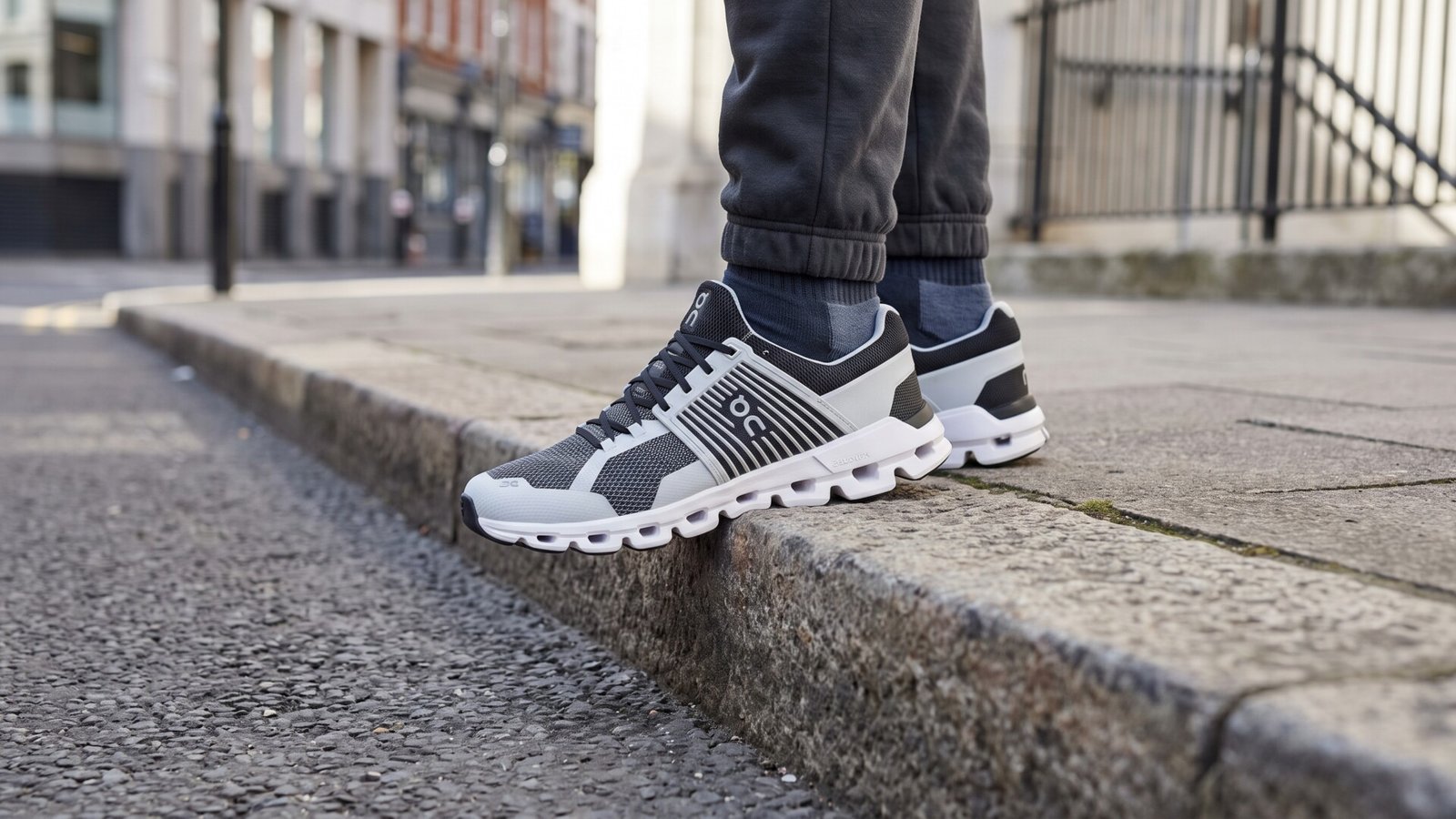
On Cloudswift Review
Six months later, that fresh pair you were excited about is either the first shoe you grab on the way out the door or the one you keep skipping for something softer. That is the real test for the On Cloudswift. The question is not whether it looks good in the box – it does – but whether you still want to put it on your feet after the novelty wears off.
Here is the verdict up front: the Cloudswift is a stylish, responsive everyday road shoe, but it is not the softest or most forgiving option in the On lineup. It sits in an awkward middle ground that confuses a lot of buyers. It looks like a casual sneaker, but it is built around running performance. That leaves people wondering whether it works better for training, walking, commuting, or just looking good with joggers.
The tradeoff is simple. You get a firm, stable, energetic ride that feels great when you are moving with purpose. What you give up is the plush, sink-in softness that other premium daily trainers offer. If you have average-width feet, like a grounded feel, and want one shoe that can handle a short run and a day in the city, keep reading. If you are hoping for cloud-like cushioning, this might not be your pair.
At a Glance: On Cloudswift Verdict
Let us lay it out plainly so you can decide whether this review is even worth your time.
| Category | Verdict |
|---|---|
| Best for | Road running, commuting, urban walking, and buyers who prefer a firm, responsive ride |
| Comfort | Supportive and energetic, but not plush |
| Fit | Usually close to true to size, with a relatively streamlined fit |
| Walking | Good for purposeful walking and city use; less ideal for slow all-day standing |
| Durability | Strong upper and outsole potential, with visible midsole wear worth monitoring |
| Style | One of the more versatile On running shoes for streetwear |
| Value | Reasonable at full price only if the Cloudswift’s specific ride suits you |
| Main drawback | Firm cushioning and limited room for wider feet |
| Overall verdict | A good buy for responsive daily training and urban wear, but not the best all-purpose On shoe |
Quick Recommendations
- Buy the Cloudswift if you want a firm, springy road shoe that can move between short runs, commuting, and casual outfits.
- Choose the On Cloudmonster instead if you want more cushioning and a more relaxed long-distance ride.
- Choose the On Cloudrunner instead if support, stable walking comfort, and all-day wear matter more than speed.
- Look elsewhere if you have wide feet, need maximum value, or prefer a soft and forgiving running shoe.
What the On Cloudswift Is Designed to Do
On does not make it easy to figure out where the Cloudswift fits. It is not a racing flat. It is not a maximal-cushion cruiser. And despite how it looks next to a pair of jeans, it is not really a lifestyle sneaker either. The Cloudswift is an urban road-running shoe, built for the kind of running and walking you actually do in a city: short to medium distances on pavement, quick transitions, stop-and-go movement, and the occasional sprint to catch a train.
The design brief is visible in the geometry. The sole has that distinctive On look – the hollow CloudTec pods, the visible speedboard, the rocker-like curve that wants to roll you forward. All of that is working toward one goal: a quick, forward-moving ride on firm surfaces. On calls it CloudTec cushioning, and it is meant to absorb impact vertically while the shape of the shoe helps transition you into the next step. The result is a shoe that feels like it wants to keep moving.
That is also why the Cloudswift attracts lifestyle buyers. The technical sole, the clean engineered mesh upper, and that instantly recognizable On profile give it more fashion relevance than most conventional daily trainers. You can wear it with running shorts, sure, but it also works with joggers, relaxed trousers, and the kind of streetwear fits that have made performance shoes a staple off the track.
But here is the thing most people miss: the Cloudswift’s strengths only show up on firm surfaces and purposeful movement. When you are walking slowly, standing around, or just shuffling through a museum, the firmer character of the ride becomes more obvious. This is a shoe that rewards motion. It is less generous when you are static.
Ride and Comfort in Real Use
Cushioning and Responsiveness
Let us clear up the biggest misconception about the Cloudswift right now. People see those hollow pods in the sole and assume the shoe is soft. It is not. The Cloudswift is designed to feel energetic, not sink-in soft. The cushioning system works by compressing under impact and then springing back, which gives you a firm, responsive platform rather than a plush landing pad.
That is a feature if you like a direct, stable feel underfoot. You always know where the ground is. There is none of that disconnected, floating sensation you get from heavily cushioned shoes. For runners who hate feeling like they are running on pillows, the Cloudswift is genuinely refreshing.
The drawback is obvious for anyone expecting a soft, protective sensation. If your idea of comfort is a shoe that hugs your foot in marshmallow-like foam, the Cloudswift will feel firm, especially in the first few wears. The foam does soften slightly with mileage, but it never becomes plush. It stays on the firmer side of the spectrum, which is exactly where On wants it.
Compared with the On Cloudmonster, the Cloudswift is noticeably more grounded. The Cloudmonster stacks more foam underfoot and has a softer, more rolling ride that suits longer distances. Compared with the On Cloudrunner, the Cloudswift feels quicker and more athletic, while the Cloudrunner prioritizes stability and a more guided, supportive feel. Three On shoes, three different personalities.
Running Comfort
For running, the Cloudswift is best suited to easy runs, short daily training sessions, city miles, and moderate-paced workouts. It is not a shoe for marathon training blocks or ultra-distance efforts. The firm ride that feels snappy over five kilometers starts to feel less forgiving at kilometer fifteen.
The shoe feels most natural at a steady or quicker pace. When you are moving at a decent clip, the rocker geometry and firm cushioning work together to create a smooth, efficient transition. Slow jogging, the kind where you are barely moving faster than a walk, exposes the firmness without giving you the speed to work with it. If your easy pace is genuinely slow, you may find the Cloudswift less comfortable than a softer trainer.
Break-in is worth discussing because a lot of buyers give up too early. Runners who are used to firmer shoes – think traditional stability trainers or minimalist models – will likely feel at home within a few runs. Runners coming from plush daily trainers may need several outings to decide whether the ride suits them. The upper stretches a little, the foam softens slightly, but the fundamental character of the shoe does not change. If it feels too firm on the first run, it will probably still feel too firm on the tenth. Do not buy the Cloudswift hoping it will transform into something softer.
Walking, Standing, and Commuting
Here is where the Cloudswift gets interesting. For commuting, errands, airport walking, and urban travel, it is genuinely good. The firm sole provides a stable platform, the rocker helps you keep a brisk pace, and the upper is comfortable enough for hours of wear. If your day involves moving through a city – walking to the train, covering a few kilometers between meetings, wandering through a new neighborhood – the Cloudswift handles it well.
The problem emerges when you stop moving. For jobs that involve prolonged standing on hard floors – retail shifts, trade shows, working in a kitchen – the firm midsole becomes less forgiving. The same responsiveness that feels great in motion translates to a harder surface under static pressure. Your feet will likely feel more fatigued after eight hours of standing than they would in a softer, more cushioned shoe.
That is the hidden comfort tradeoff. A shoe that feels responsive while moving may not feel equally comfortable when you are stationary for hours. If your day is mostly walking, the Cloudswift works. If your day is mostly standing, look at the Cloudrunner or a dedicated walking shoe with more underfoot softness.
Fit, Sizing, and Foot Shape
Sizing is where a lot of Cloudswift purchases go wrong, so let us be direct. Start with your usual running-shoe size. Most buyers find the Cloudswift runs close to true to size in length. But you should check the current retailer’s fit notes before ordering because On models and upper revisions can vary between releases.
The bigger issue is width. The Cloudswift has a streamlined forefoot that tapers noticeably. Average-width feet will likely find the fit secure without feeling cramped. The midfoot lockdown is good, the heel hold is secure, and the overall fit feels athletic rather than roomy.
If you have wide feet, proceed with caution. The streamlined forefoot can compress the little toe and create pressure points during longer wear. Runners who need substantial toe splay – the kind of person who likes a wide toe box for natural foot movement – will likely find the Cloudswift too restrictive.
Here is how to evaluate fit before you wear the shoes outside and lose the return window. First, check heel security. Your heel should sit snugly without slipping when you walk. Second, check toe clearance. You want about a thumb’s width between your longest toe and the end of the shoe. Third, check forefoot pressure. If the upper is compressing your little toe or creating hot spots, the shoe is too narrow for you. Do not convince yourself it will stretch out. The upper gives a little, but not enough to fix a genuinely poor width fit.
If the current Cloudswift release offers a wider version, consider it. If not, do not force an unsuitable size. Point yourself toward naturally roomier alternatives instead. A shoe that fits properly will always serve you better than one that looks right but squeezes your feet.
Build Quality, Durability, and Ownership
The Cloudswift is built to a high standard, which you expect at this price point. The engineered mesh or textile upper is durable and breathable, with enough structure to hold its shape over time. The molded midsole holds up well structurally. The rubber contact areas in the outsole provide decent traction and protect the foam in the highest-wear zones.
But there are wear points worth knowing about before you buy. The outsole contact zones will show wear first, particularly at the heel strike area and the forefoot if you are a forefoot striker. The forefoot area will crease with use – that is normal and cosmetic. The heel lining can wear if you regularly wear the shoes without socks. And the open sections of the CloudTec sole will collect dirt and small stones. That is the tradeoff of the distinctive look.
Cleaning is the real ownership consideration. The CloudTec geometry looks great, but it is harder to clean than a flat outsole. Dirt accumulates in the hollow sections, and getting it out requires more effort than wiping down a conventional sole. You will need a soft brush and some patience.
Maintenance is straightforward if you are consistent. Use a soft brush to remove loose dirt after wear. Clean with mild soap and water when needed. Air-dry naturally away from direct heat. Never put them in the dryer or near a radiator – high heat can affect the adhesives and materials. With regular rotation alongside another pair, the Cloudswift should serve you well for a couple of years of regular use. Daily high-mileage use will accelerate wear, and the midsole will lose some of its initial responsiveness sooner.
Resale is worth addressing honestly. Used performance running shoes have limited resale appeal compared with collectible lifestyle sneakers. The resale market for running shoes is thin, and you will not recoup much of your investment. Buy the Cloudswift because you will wear it, not because you hope to sell it later.
On Cloudswift Compared With the Alternatives
The Cloudswift does not exist in a vacuum. On has a full lineup, and there are strong options from other brands too. Here is how the main alternatives stack up.
| Shoe | Best for | Ride character | Fit and use-case note | Value verdict |
|---|---|---|---|---|
| On Cloudswift | Responsive urban running and commuting | Firm, quick, stable | Better for average-width feet and purposeful movement | Worth it when responsiveness matters |
| On Cloudmonster | Softer daily training and longer runs | More cushioned and rolling | Better for buyers prioritizing comfort over directness | Better premium choice for maximum cushioning |
| On Cloudrunner | Supportive daily wear and walking | Stable and guided | Stronger option for all-day practicality | Better for standing and support |
| On Cloud 5 | Casual wear and light walking | Simpler, lighter, less running-focused | More lifestyle-oriented fit and feel | Better if running is not the priority |
| Hoka Clifton | Cushioned daily running and walking | Soft, smooth, lightweight | Often a stronger value alternative during discounts | Better value for comfort-focused buyers |
The Most Important Difference: Cloudswift vs Cloudmonster
This is the comparison most buyers actually wrestle with. The Cloudswift and Cloudmonster sit at opposite ends of On’s cushioning spectrum. The Cloudswift is the more controlled and responsive choice. It gives you a firm, grounded platform that feels direct and athletic. The Cloudmonster is the softer, more cushioned option, with a larger sole and a rolling ride that suits longer easy runs and comfort-focused mileage.
Here is what the spec sheets do not tell you. The Cloudmonster is not automatically better. Its larger, softer feel is exactly what some runners dislike. If you hate the sensation of running on high-cushion clouds, if you want to feel connected to the ground, the Cloudmonster will feel vague and bulky. The Cloudswift’s firmness is a feature, not a flaw, for runners who want that direct connection.
Choose the Cloudswift if you want a quick, responsive shoe for shorter runs and urban use. Choose the Cloudmonster if you are logging longer distances, want more forgiveness on tired legs, or simply prefer a softer landing.
The Most Important Difference: Cloudswift vs Cloudrunner
The Cloudrunner is On’s support-oriented daily trainer. It prioritizes stable comfort and a guided ride, making it a strong choice for walking-heavy workdays, beginners who want a reassuring platform, and buyers whose main concern is comfort rather than pace.
The Cloudswift, by contrast, prioritizes a quicker, more athletic feel. It is less about support and more about responsiveness. If you want one shoe that feels dynamic – that makes you want to move – the Cloudswift delivers. If you want a shoe that disappears under you and lets you focus on your day, the Cloudrunner is the safer pick.
For all-day standing, the Cloudrunner wins. Its more supportive platform and slightly softer feel handle static pressure better. For commuting and short runs, the Cloudswift feels more alive. Match the shoe to your actual day, not to the one you wish you had.
What Most Buyers Get Wrong About the Cloudswift
Three misconceptions come up constantly, and they are worth clearing up before you spend your money.
The first is that the Cloudswift is automatically a comfortable walking shoe because it is an expensive running shoe. That assumption fails because running shoes are built for motion, not static comfort. The Cloudswift’s firm ride that feels great on a run can feel hard during a slow stroll or a long stand. Price does not guarantee walking comfort. Fit and ride character do.
The second misconception is that visible cushioning means a soft feel. Those hollow CloudTec pods look plush, but the foam behavior, the rocker geometry, and the outsole contact all determine how the shoe actually feels. The Cloudswift’s cushioning is designed for energy return, not sink-in softness. What looks soft underfoot is actually a firm, responsive platform.
The third is the style trap. The Cloudswift looks easy to wear casually, and it does work with streetwear. But its running-oriented shape feels more technical and less relaxed than a true lifestyle sneaker. If you want a shoe that looks good with everything and never feels like athletic gear, a dedicated casual shoe will serve you better. The Cloudswift is a performance shoe that happens to look good, not a casual shoe that can run.
There is also the price trap. Buying at full retail makes less sense if you only need a casual walking shoe. Less expensive models from other brands can offer similar day-to-day usefulness without the premium price tag. You are paying for the Cloudswift’s specific ride and design. If you are not using those, you are overpaying.
Is the On Cloudswift Worth It?
Value depends entirely on how you will use the shoe. At typical premium daily-trainer pricing, the Cloudswift is not cheap. But the price becomes more defensible when you break it down by cost per wear.
If you use the Cloudswift several times per week for commuting, running, and travel, the cost per wear drops quickly. A $170 shoe worn three times a week for two years costs less than a dollar per wear. That is reasonable for a shoe that performs well across multiple use cases. If you buy the Cloudswift for occasional outfits and let it sit in the closet, the cost per wear becomes hard to justify.
The hidden cost of choosing wrong is real. If you buy the Cloudswift and discover the firm ride does not suit you, you have spent $170 on a shoe you will not wear. Then you buy a second pair to solve the problem, and suddenly you have spent $340 to find the right shoe. That is why fit and ride preference matter more than looks.
Here is a simple decision framework.
- Buy at full price if you already know you prefer a firm On ride and will use the shoe several times per week.
- Buy on sale if you are curious about the silhouette but uncertain about firmness or fit.
- Skip it if you need maximum softness, wide-foot comfort, or a general-purpose standing shoe.
Trend longevity is worth a mention. The Cloudswift’s technical appearance fits the ongoing performance-running and urban sneaker trend. It will not look dated quickly. But its usefulness should come from comfort and mileage, not logo appeal. If you are buying it for the On name alone, you are spending too much for a badge.
Who Should Buy the On Cloudswift?
The Cloudswift is a specialized shoe, and that means it is not for everyone. Here is who should genuinely consider it.
Runners who prefer firm, responsive cushioning over a soft, sinking sensation will appreciate the Cloudswift’s direct feel. If you hate the disconnected sensation of maximal trainers, this shoe gives you the ground contact you want without sacrificing modern cushioning.
Commuters and travelers who spend the day moving through cities will find the Cloudswift works well. It handles pavement, keeps a brisk pace, and looks good enough for casual workplaces and social plans after work.
Buyers with average-width feet who value a secure, streamlined fit are the sweet spot for the Cloudswift. The shoe holds the foot well and does not feel sloppy.
On fans who want something more athletic than the Cloud 5 but less maximal than the Cloudmonster will find the Cloudswift fills that gap perfectly.
And style-conscious buyers who want a technical runner that works with joggers, relaxed trousers, denim, and modern streetwear will get real versatility from the Cloudswift. It is one of the few performance shoes that genuinely crosses over into casual wear without looking out of place.
Who Should Skip the On Cloudswift?
Equally important is knowing when to walk away. The Cloudswift is not the right shoe for several types of buyers.
Wide-footed buyers who regularly feel pressure at the forefoot should skip it. The streamlined fit will cause discomfort, and no amount of break-in will fix a width problem.
People who stand on hard floors for long shifts and want maximum underfoot softness should look elsewhere. The Cloudswift’s firm ride becomes less forgiving over hours of static standing.
Runners looking for a plush shoe for slow recovery miles or high-mileage comfort will be disappointed. The Cloudswift is built for shorter, more purposeful runs, not marathon training blocks.
Buyers seeking the lowest cost per mile or the strongest performance-to-price ratio should consider other options. The Cloudswift is a premium shoe, and its value depends on using its specific strengths.
And anyone buying only for the On logo or appearance without intending to use the shoe for regular walking or running should save their money. There are cheaper ways to signal sneaker taste than a $170 shoe that sits unworn.
Final Verdict: A Good Specialized Daily Shoe, Not the Best Universal On Model
The On Cloudswift is a good buy for a specific buyer: the runner or urban commuter who wants a firm, responsive, stylish shoe that moves between training and everyday wear. It delivers on that promise consistently. The ride is energetic, the build quality is strong, and the design works with modern streetwear in a way few running shoes manage.
Its main limitation is equally clear. The Cloudswift is too firm and too streamlined to be the safest recommendation for every buyer. If you need maximum softness, have wide feet, or spend your days standing rather than moving, this is not your shoe.
That is why the Cloudmonster wins for cushioning and longer easy runs, while the Cloudrunner wins for support-heavy walking and standing. On has built a lineup that covers different needs, and the Cloudswift serves a narrower slice of it.
The practical buying recommendation is simple. Buy the Cloudswift when its ride is the feature you want – when you know you prefer a firm, grounded feel and will use the shoe regularly. If fit and firmness are still uncertain, wait for a sale. The shoe will not change, but the price might make the risk easier to accept. And if you are honest with yourself about how you will use it, you will know whether the Cloudswift deserves a place in your rotation.
Frequently Asked Questions About On Cloudswift
Is the On Cloudswift good for everyday walking?
It works well for active city walking, commuting, and errands where you are moving with purpose. The firm, stable platform and rocker geometry make it efficient for covering ground. But if your day involves more standing than walking, or you prefer a softer feel underfoot, another model will serve you better.
Is the On Cloudswift true to size?
Most buyers should start with their usual running-shoe size. The Cloudswift runs close to true to size in length, but foot width and toe-box preference may matter more than length. Check the current version’s fit notes before ordering, and try them indoors first if you can.
Is the On Cloudswift good for wide feet?
Generally, no. The streamlined fit may not suit genuinely wide feet, and the tapered forefoot can create pressure points. Try them on indoors first and return them if the forefoot feels compressed. If you need more room, consider a naturally wider model instead of forcing a size up.
Is the On Cloudswift good for long-distance running?
It can suit some runners for longer distances, particularly those who prefer a firm, responsive ride. But its firmer character makes it less universally comfortable than a more cushioned daily trainer. For most runners logging significant weekly mileage, the On Cloudmonster is the better choice.
Is the On Cloudswift good for standing all day?
Not the first choice. The firm midsole that feels responsive in motion becomes less forgiving during prolonged standing, especially on hard floors. The On Cloudrunner or a softer walking-focused shoe will handle static pressure better.
How does the On Cloudswift compare with the On Cloudmonster?
The Cloudswift is firmer, more responsive, and more grounded. The Cloudmonster is softer, more cushioned, and generally better for comfort-focused mileage and longer easy runs. Choose based on whether you prefer direct ground contact or a plush landing.
Should I buy the On Cloudswift at full price?
Only if you specifically want its firm ride and expect to use the shoe several times per week. Otherwise, compare sale pricing and alternatives before purchasing. If you are uncertain about fit or firmness, waiting for a discount reduces the risk of an expensive mistake.