On Cloud 6 sizing guide
Somewhere between “order your usual size” and “go half a size up” is where most of us lose the plot. Here’s the short version: the On Cloud 6 fits true to size for average-width feet, but that comes with real conditions attached. The upper is structured, the toe box is not especially generous, and if you have a high instep or plan to be on your feet for hours, the size that works in the store might not work at hour six.
The hesitation makes sense. On’s sizing shifts between models, the Cloud 6 feels snugger across the midfoot than the Cloud 5, and the brand’s size chart does not tell you anything about foot shape. So the real decision is not about the number on the box. It is about your width, your instep, your socks, and how long you actually plan to wear them. Get that right and the size takes care of itself.
On Cloud 6 Sizing at a Glance
| Buyer situation | Recommended starting point | Main reason |
|---|---|---|
| Average-width feet, typical socks | Usual size | The Cloud 6 generally fits true to size |
| Between two sizes | Half size up | Creates more usable toe and sock room |
| Wide forefoot | Try the wide option if available, or compare with a roomier model | The standard upper may feel restrictive |
| Narrow feet | Usual size, secure lacing | The structured fit reduces excess movement |
| Long walks or standing all day | Usual size after checking toe clearance | Swelling makes a cramped fit uncomfortable |
| Buying as a gift | Confirm the recipient’s On size or use an easy-return retailer | Brand and model sizing are not interchangeable |
Quick verdict
- Best starting point: Your usual On or running-shoe size.
- Size up if: You are between sizes, have a high instep, wear thick socks, or prefer extra forefoot space.
- Do not size up automatically if: Your issue is heel slippage rather than short length.
- Best for wide feet: Check the available wide version first. If the standard Cloud 6 compresses the forefoot, consider a roomier On model rather than simply buying longer.
- Editor’s fit choice: The Cloud 6 in the usual size for average-width feet, tested with the socks you expect to wear.
Does the On Cloud 6 Run True to Size?
Treat “true to size” as a starting point, not a guarantee. In length, the Cloud 6 runs broadly true, especially if you already know your On sizing. If a Cloud 5 fits you well in a size 10, the Cloud 6 in a size 10 is the right first thing to try.
But length is only half the story. A shoe can be the correct length and still feel tight over the midfoot or across the ball of the foot. That is where the confusion starts. Some buyers report needing a half size up because the upper feels structured and unforgiving, or because their feet swell during longer wear. The issue is not that the shoe runs short. It is that the shoe runs snug in places that a size number does not capture.
The problem with sizing up to fix that snugness is that you add length you may not need. Extra length can reduce heel security, make the shoe feel less stable, and create a whole new fit issue. That is why the practical fit test matters more than any chart: your toes should not touch the front, your heel should stay planted, and the widest part of your foot should sit comfortably within the shoe.
What to compare against
Use your regular athletic-shoe size as the reference, not your dress-shoe size. Dress shoes run on a different last and will lead you astray. If you own other On shoes, their size is a useful starting point, but do not assume the Cloud 5 and Cloud 6 fit identically. Model construction changes the fit. Nike, Adidas, and New Balance sizes are only a rough reference. They are not a direct conversion.
On Cloud 6 Fit: Length, Width, and Volume
This is where the actual decision gets made.
Length and toe clearance
You want enough space in front of your longest toe that it does not touch the front of the shoe when you walk. That does not mean a thumb’s width of empty space, which is more than most people need. It means your toes can spread and move slightly without the foot sliding forward on descents or during faster walking.
The tricky part is that a shoe can feel fine indoors and too short after several hours. If you are between sizes, the smaller option may pass the initial test and fail the full-day test. When you try them on, walk around for more than a minute. Bend your toes. Go up and down stairs if you can.
Width and forefoot shape
Standard-width feet are the safest match for the regular Cloud 6. If you feel pressure at the little-toe side, across the ball of the foot, or near the first eyelets, that is a width or volume problem, not a length problem. Buying a longer shoe will not fix it. It will just give you extra length in front while the pressure across the forefoot stays.
Genuine width needs are different from looseness caused by a low-volume or narrow heel. If your heel is slipping but your forefoot feels fine, the issue is not width. It is the shape of the heel and how the lacing holds it.
Instep and midfoot volume
The Cloud 6 has a structured upper that can feel restrictive for high-instep feet. Loosening the lower eyelets while keeping the heel area secure can help, but lacing cannot create unlimited room. If the shoe is tight across the instep and you have already loosened the laces as far as they will reasonably go, the shoe does not fit. Size up only when the shoe is also short or cramped overall. If the length is fine and only the instep is the problem, a half size up adds length you do not need and may not relieve the pressure.
Should You Size Up or Down in the On Cloud 6?
Here is the decision framework, plain and simple.
Choose your usual size when
- Your foot is average width.
- You have comfortable toe clearance.
- You wear normal-weight socks.
- Your heel stays secure without overtightening the laces.
- You are replacing an On shoe that fits well in the same size.
Consider a half size up when
- You are between sizes.
- Your longest toe is close to the front.
- You have a high instep or fuller forefoot.
- You plan to use the Cloud 6 for long walks, travel, or extended standing.
- You wear thicker socks or orthotics that take up interior space.
Avoid sizing down unless
- The shoe is clearly too long and your heel slips even with correct lacing.
- You have a narrow foot and substantial unused space at the front.
- The smaller size still leaves adequate toe clearance and does not create forefoot pressure.
Sizing down is usually a poor fix for heel movement. If your heel slips because of foot shape or lacing, a shorter shoe will not solve it. It will just cramp your toes.
Is the On Cloud 6 Good for Wide Feet?
The honest answer is: it depends on how wide. For mild width needs, the Cloud 6 can work. The upper has some give, and if you do not feel pressure points, the regular width may be fine. For substantial width needs, the standard Cloud 6 is likely to compress the forefoot, and buying a longer size will not change that. Extra length adds toe room. It does not add width across the ball of the foot.
Check whether the wide version is available and whether the retailer lists the width clearly. If you can order both the standard and wide versions with free returns, that is the safest route. When the standard fit feels restrictive, compare the Cloud 6 with the On Cloud 5 Wide or other roomier On models.
Buy: mild width needs, flexible upper feel, no pressure points.
Skip or change models: numbness, rubbing at the little toe, persistent side pressure, or inability to lace without discomfort.
How the On Cloud 6 Should Feel for Different Uses
Sizing is not static. It depends on what you are doing.
Walking and travel
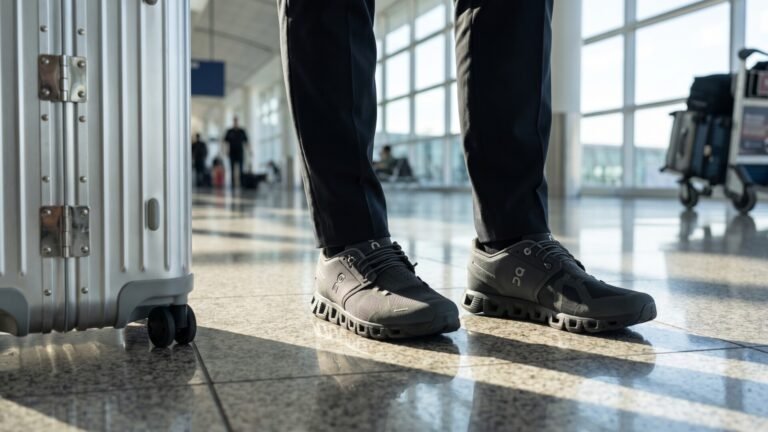
A slightly cramped fit becomes a real problem during airport walking, sightseeing, and long days. Your feet swell, and a shoe that felt fine at 9 a.m. can feel tight by 4 p.m. Prioritize toe clearance and swelling room over a snug initial feel. Socks and insoles change the fit too. If you plan to wear thicker socks, test the shoe with them on.
Standing at work
Pressure distribution, forefoot room, and heel security matter most here. A shoe that feels supportive for short errands can become uncomfortable after hours of standing if the upper compresses the instep. Try the shoes late in the day, when your feet are larger, before removing tags or wearing them outdoors.
Casual daily wear
The regular size will feel secure and streamlined for short wear. That close, structured fit is part of the Cloud 6’s appeal. But there is a tradeoff between a snug, polished feel and all-day comfort. If you want a shoe for quick errands and casual outfits, the usual size works. If you plan to wear them for eight hours, give yourself the extra room.
Light gym use
A longer size can feel less controlled during lateral movement. If you are doing any side-to-side work, choose the size that keeps the heel and midfoot secure rather than chasing maximum toe room. And be clear about what the Cloud 6 is: an everyday walking and lifestyle shoe, not a universal training replacement. For serious gym work, look at a purpose-built On running model.
How to Check the Fit at Home
Returns are easier than living with the wrong size. Do this before you commit.
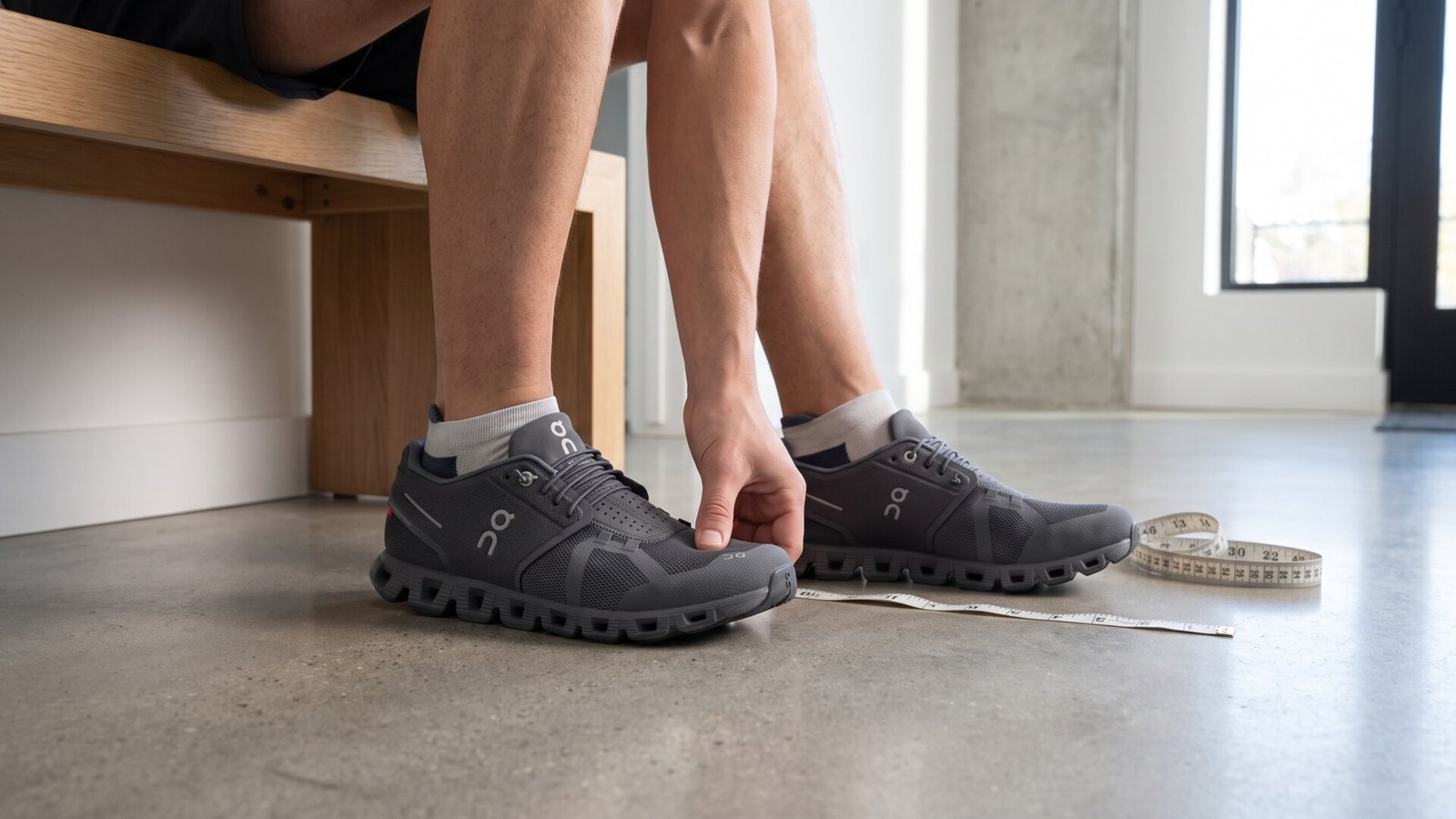
- Try both shoes on indoors with the socks and insoles you intend to use.
- Check length while standing, then walk, climb stairs, and bend your toes.
- Look for heel lift, lace pressure, toe contact, and sidewall compression.
- Use the lacing system before changing size. Secure the heel without crushing the forefoot, and do not compensate for a short shoe by loosening every lace.
- Keep the box, tags, and clean soles until the fit decision is final.
Signs the size is wrong
- Toes touch the front during walking.
- The little toe presses against the upper.
- The heel slips enough to cause rubbing.
- The foot slides forward on stairs or downhill.
- The upper creates persistent pressure or numbness.
- The shoe only feels comfortable with unusually thin socks.
What Most Buyers Get Wrong About On Cloud 6 Sizing
The biggest mistake is treating “true to size” as a complete answer. Length can be correct while width or volume is wrong. The shoe can measure right and still not fit your foot.
The second mistake is sizing up to solve every comfort problem. Extra length increases heel movement and reduces control. You trade one fit issue for another.
The third mistake is ignoring the time of day. A morning-only fitting can hide problems that appear during travel or long shifts. Your feet are smaller in the morning. Try shoes on later in the day.
The fourth mistake is assuming the Cloud 5 and Cloud 6 fit identically. The construction and internal volume are not the same. Your Cloud 5 size is a starting point, not a guarantee. Compare the actual fit and use the return policy rather than transferring the old size blindly.
Here is the contrarian takeaway: the best Cloud 6 size is not necessarily the roomiest size. It is the size that balances toe clearance with heel security for your main use. A shoe that is slightly snug across the forefoot but secure at the heel will serve you better than a shoe that is roomy everywhere and lets your foot slide.
Which On Cloud 6 Size Still Makes Sense in Two Years?
A borderline fit gets more expensive over time. The shoe gets used less, causes rubbing, or gets replaced early. That is the real cost of getting the size wrong.
Think in cost per wear. Paying regular retail for a shoe you wear frequently is good value, but only if the fit supports repeated use. A shoe that sits in the closet because it hurts after an hour is not a bargain at any price.
The hidden costs add up: return shipping, replacement insoles, thicker or thinner socks bought to compensate, and sometimes a second pair after a sizing mistake. Resale is a minor consideration, but a poor fit usually means you will not want to keep the shoe, while a well-fitting neutral color is easier to wear regularly and potentially easier to resell.
The long-term recommendation is simple: prioritize stable heel fit, adequate toe room, and a width that does not rely on break-in. If the shoe needs to stretch to fit, it does not fit.
Who Should Buy the On Cloud 6?
- Buyers with average-width feet who want a polished everyday sneaker for walking, commuting, and casual outfits.
- Existing On owners who know their usual size and want a similar fit with updated styling.
- Travelers and all-day casual wearers who can confirm toe clearance and heel security before use.
- Buyers who value a structured, secure feel more than a very roomy toe box.
Who Should Choose Another Size or Another Model?
- Buyers between sizes should start with the half size up only if the regular size feels short or cramped.
- Buyers with substantial width needs should investigate a clearly labeled wide option or compare with the On Cloud 5 Wide.
- Buyers with pronounced high-instep needs should try before committing. Loosening the laces may not create enough volume.
- Buyers wanting a dedicated running or gym shoe should compare a purpose-built On running model instead of forcing the Cloud 6 to serve every role.
Final Verdict
The usual size is the best starting point for most average-width feet. That is the answer for the majority of buyers.
The decisive exception: choose a half size up when you are between sizes, wearing thicker socks, or need more room for long days, provided heel security stays good. And if you have substantial width concerns, do not just go longer. Look for a wide version or a roomier model.
Here is the fit rule to carry with you: secure heel, no toe contact, no forefoot pressure, and enough room for the hours you intend to wear them. Get those four things right and the size on the box stops mattering.
Frequently Asked Questions About On Cloud 6 Sizing
Do On Cloud 6 shoes run true to size?
Generally yes for average-width feet, but foot shape and the shoe’s structured upper can make the usual size feel narrow or low-volume. Length is usually correct. Width and volume are where the fit gets complicated.
Should I size up in On Cloud 6?
Size up when you are between sizes, short on toe room, wearing thick socks, or planning long days. Do not size up as a default solution for every fit issue. Extra length can reduce heel security.
Are On Cloud 6 shoes good for wide feet?
Mild width needs may work. Substantial width needs should be directed toward a wide version or a roomier alternative rather than simply adding length. A longer shoe does not add forefoot width.
Do On Cloud 6 and Cloud 5 fit the same?
Not necessarily. Your established On size is a useful starting point, but the upper, shape, and internal volume differ between models. Try the Cloud 6 rather than assuming the Cloud 5 size transfers.
Should I size down in On Cloud 6?
Only when the shoe is clearly too long and the smaller size still provides comfortable toe clearance and width. Sizing down to fix heel slippage usually just creates a new problem at the toes.
How much room should be in front of my toes?
Enough for the toes to move without touching the front during walking, while the heel remains secure. You do not need a thumb’s width of space. You need enough to avoid contact.
Can I use custom insoles in On Cloud 6?
Replacement insoles can change the interior volume and fit. Check whether the insole is removable and confirm comfort without creating pressure at the instep. If you use orthotics, factor that into your size decision and consider the half size up.