Hoka Clifton 9 Review
You know what this shoe actually is? A light daily trainer that happens to look like a max-cushion monster. Most people buy the Hoka Clifton 9 expecting Bondi-level plushness, and then they’re confused when it feels firmer and snappier than they imagined. That’s not a flaw. That’s the whole point.
The Clifton 9 is the shoe you grab when you want real cushioning without feeling like you’re lifting your feet through mud. It’s for easy road miles, long city walks, airport sprints, and the kind of days where you’re on your feet from morning to night but still want to move with some zip. If you need the absolute softest ride Hoka makes, or you have feet that demand serious stability help, this isn’t the one. Let’s break down who should actually cop.
Hoka Clifton 9 at a Glance
Here’s the short version before we get into the weeds.
| Category | Assessment |
|---|---|
| Best for | Daily running, walking, commuting, and travel |
| Cushioning | Plush enough for regular use, but not the softest in the Hoka range |
| Fit | Usually true to size, with width options worth considering |
| Durability | Good for a lightweight daily trainer, with outsole wear depending on surface and gait |
| Value | Strong at sale prices; more questionable at full retail |
| Main drawback | Fit and stability may not work for every foot shape |
Retail on the Clifton 9 sits at $145. That’s standard for a daily trainer from a major brand, but here’s the thing – Hokas go on sale regularly. We’ve seen the Clifton 9 drop to around $110-120 during seasonal clearances and holiday events. At that price, the value equation shifts dramatically in its favor.
Our editorial scores, based on construction, cushioning, walking comfort, fit, durability, style, and value:
- Cushioning: 8/10 – Balanced and protective, not pillow-soft
- Walking comfort: 8.5/10 – The rocker makes city miles feel easy
- Running comfort: 8/10 – Great for easy and steady paces
- Fit: 7.5/10 – True to size for most, but width is a real consideration
- Durability: 7.5/10 – Solid for a lightweight trainer, not a tank
- Style: 7/10 – Chunky in a good way, but not a statement piece
- Value: 8/10 at sale, 6/10 at full retail
The editor’s verdict: this is the best Hoka for anyone who wants lightweight everyday cushioning, not the brand’s softest or most supportive option.
Design, Cushioning, and Ride
What Changed From the Clifton 8
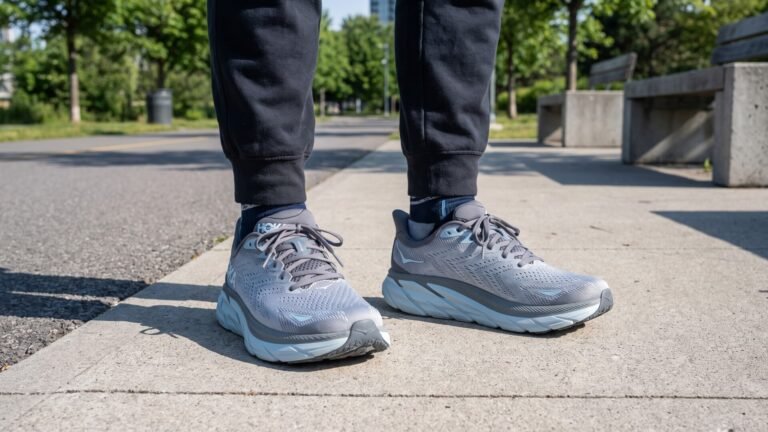
The Clifton 9 doesn’t reinvent the formula. It refines it. Compared to the Clifton 8, you get a touch more foam underfoot – about 3mm more in the heel and forefoot – without a meaningful weight penalty. The stack height now sits at 29mm in the heel and 24mm in the forefoot, which sounds like a lot until you hold the shoe and realize it still feels surprisingly light at around 8.7 ounces for a men’s size 9.
Hoka also reworked the upper. The engineered mesh is more breathable and has a slightly softer feel against the foot. The heel pull tab is easier to grab. The outsole got a bit more rubber coverage in high-wear areas, which addresses one of the bigger complaints about the Clifton 8.
But the identity is unchanged. This is still a road shoe built around a thick slab of compression-molded EVA foam and a pronounced rocker shape. It’s not trying to be a stability shoe, a trail shoe, or a speed demon. It’s trying to make steady forward motion feel smooth and protected.
The extra foam matters more than you’d think. On long walks and back-to-back daily use, that additional material spreads impact across a larger surface area. Your feet and joints take less repeated punishment. But – and this is the part people miss – more foam doesn’t automatically mean softer. The Clifton 9’s midsole is firmer than the Bondi’s. It’s more responsive, more energetic, less squishy.
That’s the core tradeoff. You get a high-stack look with a comparatively light, agile feel. It’s the shoe equivalent of a car that looks like a luxury sedan but handles like a sporty coupe.
How the Shoe Feels Underfoot
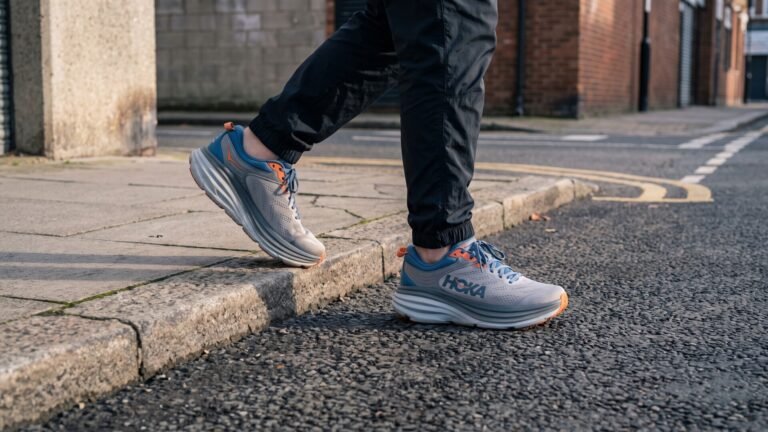
Step into the Clifton 9 and the first thing you notice is the rocker. Hoka’s meta-rocker geometry means the sole curves up at the toe and heel, so your foot rolls forward through your stride rather than flexing naturally at the ball of your foot. It takes a few minutes to get used to if you’ve been wearing flexible, low-profile shoes. Some people never fully adapt and find it unnatural. Most people, though, find it makes walking and steady running feel almost effortless after a short adjustment period.
The cushioning itself is balanced rather than extreme. It’s more protective than a minimal trainer like the Nike Free or New Balance Minimus, but it’s nowhere near the pillow-like softness of the Bondi 8. You feel the ground, just filtered through a layer of forgiving foam. There’s a firmness to the ride that gives you feedback and keeps the shoe from feeling dead or mushy.
Here’s where the platform shows its limits. The Clifton 9 is not built for sharp changes of direction, lifting, court sports, or uneven surfaces. The high stack and rocker geometry make lateral movements feel unstable. Try to cut quickly on a basketball court or do a heavy squat session in these and you’ll feel the shoe working against you. The outsole is also road-focused, with shallow lugs that don’t grip loose dirt or slick trails with any confidence.
Why the Lightweight Build Matters
At 8.7 ounces, the Clifton 9 is remarkably light for a shoe with this much foam. That weight difference matters more than most buyers realize. For commuters who walk a couple miles each way, travelers navigating airports, and runners logging daily miles, every ounce you lift with each step adds up over the course of a day.
The contrarian point here: a lighter shoe with slightly less foam can be the better long-term comfort choice. The Bondi 8 might feel softer in the store, but when you’re on hour six of a travel day, the extra weight of that shoe starts to fatigue your legs. The Clifton 9 gives you enough cushioning to protect your feet while keeping your stride light and efficient.
Comfort for Running, Walking, and Daily Wear
Let’s get specific about how this shoe actually performs across different use cases.
Easy runs and recovery runs: This is where the Clifton 9 shines. The rocker keeps your stride rolling forward smoothly, and the midsole absorbs impact without feeling dead. It’s not a shoe for speed work – it’s too heavy and not responsive enough for intervals or tempo efforts – but for steady miles at conversational pace, it’s genuinely comfortable. Runners report it feeling best between 8:30 and 10:30 minute miles.
City walking and commuting: The rocker geometry is honestly a gift for walkers. It propels you forward with less effort, and the cushioning protects your feet from hard sidewalks and concrete. People who walk several miles daily in these report minimal fatigue compared to flatter, firmer shoes.
Standing and hard floors: This is more of a mixed bag. For moderate standing – a few hours at a time, moving around periodically – the Clifton 9 does fine. The cushioning prevents foot fatigue better than a minimal shoe. But for eight-hour shifts standing mostly in one spot, the Bondi 8’s softer, more substantial midsole is the better choice. The Clifton’s firmer foam and rocker shape are designed for forward motion, not static weight-bearing.
Airport travel: Excellent. Light enough to pack or wear without feeling like bricks, cushioned enough for long terminal walks, and easy to slip on and off through security. This is genuinely one of the better travel shoes available.
Break-in expectations: The Clifton 9 requires minimal break-in. The foam is comfortable from the first wear, though the upper may feel slightly stiff around the heel collar for the first few miles. Pressure points most commonly show up in the toe box – especially for people with broader feet – and occasionally at the midfoot where the shoe’s structure is firmest. If you feel any hot spots in the first wear, pay attention. They don’t usually resolve on their own.
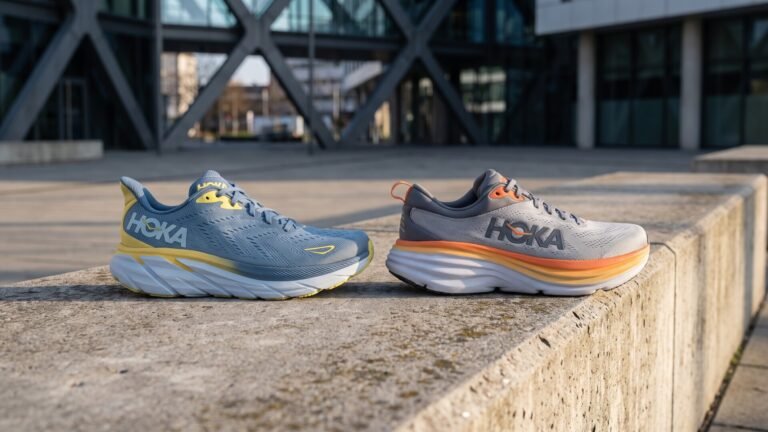
Compared to the Bondi 8, the Clifton 9 prioritizes mobility and lightness. The Bondi gives you a softer, more substantial ride that some people find more comfortable for standing and slow walking. If your primary activity is being upright and relatively stationary, the Bondi’s extra plushness wins. If you’re moving – running, walking, commuting – the Clifton’s lighter build and rocker geometry serve you better.
One honest caveat: comfort is deeply personal. Foot shape, sock thickness, stride mechanics, and even the surfaces you walk on all affect how a shoe feels. Use the retailer’s return policy when possible. Run or walk in them around the house, test them on different surfaces, and don’t feel bad about sending them back if they don’t work for your feet.
Fit, Sizing, and Width Guidance
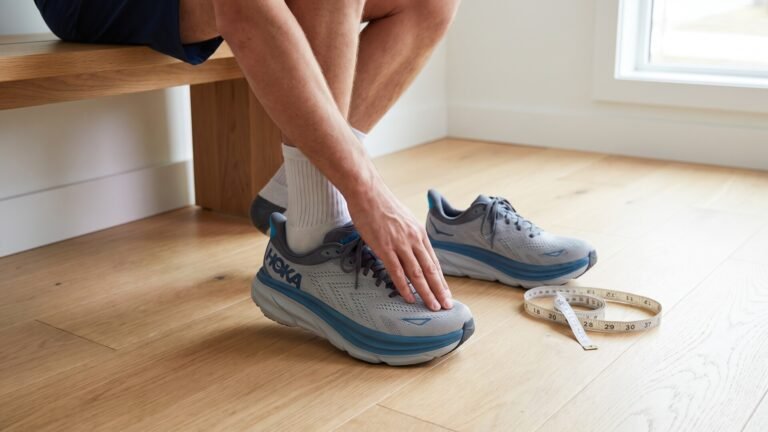
Start with your usual running shoe size. For most people, the Clifton 9 fits true to size. But check the specific retailer’s sizing policy before you order, because Hoka’s fit can vary slightly between models and versions, and your foot shape matters more than any size chart.
The real decision point is width. The Clifton 9 comes in standard D width for men and B for women, plus wide options in both. Here’s who should seriously consider the wide version:
- Broad forefoot: If your toes splay naturally or you’ve ever felt cramped in a standard-width running shoe, go wide.
- High-volume feet: If you need extra space through the midfoot and instep, the standard fit may feel restrictive.
- Swelling during long walks or runs: Feet expand with heat and prolonged activity. If you’ve experienced this, the wide version gives you room to accommodate it.
- Preference for thicker socks: If you wear cushioned or winter-weight socks, the extra width prevents pressure points.
But don’t treat this shoe as simply narrow or wide. Fit is more nuanced than that. You need to evaluate three separate zones:
Heel lockdown: The heel collar should grip your heel without slipping. If you feel your heel lifting when you walk, the shoe is too big or the shape doesn’t match your foot.
Midfoot security: The arch area should feel snug but not tight. This is where the shoe’s structure holds your foot in place, and it needs to be secure without digging in.
Toe-box space: You should be able to wiggle your toes freely. The widest part of your foot should align with the widest part of the shoe, not be squeezed by it.
Here’s a practical fit test. Put the shoes on with the socks you’ll actually wear. Leave about a thumb’s width of space between your longest toe and the front of the shoe. Walk around, checking for heel lift. Then find a slight decline – a ramp or a hill – and walk down it. If your foot slides forward and your toes hit the front, the shoe is too big. Accelerate briefly and stop quickly to test the same thing.
One warning: don’t size up just to create more width. A longer shoe gives you extra length, not extra width, and it creates new problems – heel slip, foot movement, blisters from friction. If the standard width feels tight across the forefoot, buy the wide version, not a half-size up.
Build Quality, Durability, and Ownership Costs
Let’s talk about what actually wears out on the Clifton 9, because that’s where the real ownership costs hide.
The upper is an engineered mesh that breathes well and feels soft against the foot. It’s reasonably durable for a lightweight road shoe, but it’s not armor. The most common failure point is where the mesh flexes at the forefoot – creasing and eventual breakdown happen there if the shoe is consistently too tight or too loose. The heel structure holds up well, and the pull tab is genuinely useful for getting the shoe on without crushing the heel counter.
The midsole is compression-molded EVA foam. It’s the same type of foam Hoka has used for years, and it does compress over time. Most runners report the Clifton 9 feeling noticeably less lively after 300-400 miles. The foam doesn’t fail catastrophically – it just gradually loses its bounce and becomes firmer and flatter. Walkers who put fewer miles on the shoe can expect a longer useful life, often 400-500 miles or more depending on body weight and gait.
The outsole is where durability varies most. Hoka added more rubber coverage in high-wear areas compared to the Clifton 8, which helps. But the exposed foam in the midfoot and forefoot will show abrasion if you drag your feet or run with a heavy heel strike. On abrasive surfaces – chip seal roads, rough concrete – the outsole wears faster. On smooth pavement and indoor surfaces, it holds up well.
Here’s the thing about lightweight road shoes: they trade some material bulk for lower weight. That’s the deal. You can’t have an 8.7-ounce shoe with the outsole of a hiking boot. Judge durability against the shoe’s intended use – daily road running and walking – not against heavy-duty walking shoes or trail models.
Ownership framework for getting the most life out of your Clifton 9s:
- Rotate with another pair. Giving the foam 24-48 hours to recover between uses extends the midsole’s life significantly.
- Avoid abrasive off-road surfaces. These are road shoes. Save them for pavement and clean paths.
- Loosen the laces before removing the shoe. This prevents crushing the heel structure and stretching the upper.
- Use a shoe tree or stuff them with newspaper after wet wear. Let them dry at room temperature – never on a radiator or in direct sunlight, which degrades the foam and adhesives.
Cost-per-wear scenarios:
Buy at full retail ($145) and run 300 miles in them before replacing. That’s roughly $0.48 per mile – not counting the cost of socks, insoles, or cleaning supplies. That’s standard for a daily trainer.
Buy on sale ($115) and use them for commuting, walking, and easy running over 18 months. If you average 20 miles per week of combined use, that’s roughly 1,500 miles of wear. At that point, you’re looking at under $0.08 per mile. That’s exceptional value.
The lesson: the Clifton 9’s value depends almost entirely on when you buy it and how much you use it. At full retail with light use, it’s an expensive casual shoe. On sale with daily use, it’s one of the best value purchases in running footwear.
What Most Buyers Get Wrong About the Clifton 9
Let’s clear up the misconceptions that lead people to buy the wrong shoe.
Myth one: The Clifton 9 is automatically the right Hoka for maximum cushioning. It’s not. The Bondi 8 is softer, more substantial, and better for people who want the most plush ride Hoka makes. The Clifton 9 is lighter and more agile, but it’s not the softest shoe in the lineup. Buyers who want maximum cushioning should be looking at the Bondi, not the Clifton.
Myth two: High stack height means high stability. It doesn’t. A thick layer of foam raises your foot higher off the ground, which can actually make the shoe feel less stable, especially for side-to-side movements. The Clifton 9 is a neutral shoe. It doesn’t offer guidance or support features. If you overpronate significantly or need strong lateral support, this isn’t the shoe for you – look at the Arahi 6 or a dedicated stability model.
Myth three: A running shoe works for every workout. The Clifton 9’s running identity doesn’t make it ideal for everything. It’s great for road miles and walking. It’s not good for weight training – the soft, rockered sole is unstable under heavy loads. It’s not good for lateral movements or court sports. It’s not a trail shoe. Buy it for what it does well, not for what you hope it might do.
Myth four: Full retail is a fair price. At $145, the Clifton 9 is decent value but not exceptional. The shoe goes on sale regularly, and the older Clifton 8 is often available at deep discounts during clearance events. If you don’t specifically need the Clifton 9’s updates, the 8 at $90-100 is a smarter buy. Hoka’s value proposition improves dramatically when you’re not paying full price.
The buyer psychology angle: The Clifton 9’s chunky profile signals comfort and performance. It looks like a serious running shoe, and that visual weight matters to buyers. But the real decision is whether you like the geometry and fit after several hours of wear. The shoe’s appearance tells you nothing about how the rocker feels on your specific feet or whether the toe box accommodates your foot shape. Try it on. Walk in it. Run in it. Then decide.
Hoka Clifton 9 Compared With Alternatives
| Shoe | Better choice for | Main advantage over Clifton 9 | Main compromise |
|---|---|---|---|
| Hoka Bondi 8 | Maximum cushioning, standing, slower walking | Softer, more substantial underfoot feel | Heavier and less agile |
| Hoka Clifton 8 | Lower price and familiar Clifton ride | Often cheaper during clearance sales | Older design, potentially less updated fit |
| Hoka Arahi 6 | Mild stability guidance | More structured support for some runners | Less neutral, less forgiving for some feet |
| ASICS Gel-Nimbus 26 | Plush daily running, premium comfort | Soft, polished ride with different fit profile | Heavier, less distinctly rocker-driven |
| New Balance Fresh Foam X 1080v13 | Soft daily running, wider fit availability | Broad sizing options, smooth everyday ride | Different geometry, less lightweight feel |
When to switch away from the Clifton 9:
- Choose the Bondi 8 if you stand for long shifts, walk slowly and want maximum softness, or prioritize plushness over weight and agility. The Bondi’s extra heft is a fair trade for its more forgiving ride.
- Choose the Clifton 8 if you find it at a substantial discount and already know you like the Clifton fit. The 8 is a proven shoe, and the 9’s updates – more foam, a slightly softer upper – don’t address a problem you actually have.
- Choose the Arahi 6 if you need mild stability guidance. The Arahi uses Hoka’s J-Frame technology to provide support without the rigid medial post of traditional stability shoes. It’s the Clifton’s cousin with more structure.
- Choose the ASICS Gel-Nimbus 26 if you want a plush daily trainer with a more conventional feel. The Nimbus is softer and more luxurious, but it’s heavier and doesn’t have the Clifton’s rocker-driven forward motion.
- Choose the New Balance Fresh Foam X 1080v13 if you need wide sizing options or prefer a smoother, more flexible ride. The 1080 is a strong all-rounder with excellent fit options, but it lacks the Clifton’s distinctive lightweight character.
Who Should Buy the Hoka Clifton 9?
Let’s make this simple.
Buy the Clifton 9 if you are:
- A runner wanting a neutral daily trainer for easy and moderate road miles. The Clifton 9 handles the bulk of your weekly training volume without beating up your legs.
- A walker, commuter, or traveler who wants real cushioning without the bulk of a max-cushion shoe. The lightweight build and rocker geometry make city miles genuinely easier.
- Someone who likes a rocker transition and prefers a shoe that moves you forward rather than flexing naturally through the forefoot. If you’ve tried Hoka’s geometry and liked it, the Clifton 9 is a strong everyday option.
- Willing to test standard and wide sizing instead of assuming the standard fit will work. The wide version solves the fit problem for many people who initially feel cramped.
Skip the Clifton 9 if you are:
- A buyer needing pronounced stability or strong lateral support. This is a neutral shoe, and it won’t correct overpronation or provide the structure you need.
- Someone who wants the softest Hoka ride. That’s the Bondi 8, full stop.
- A person with a very broad forefoot who can’t access or tolerate the wide version. The standard fit will likely feel restrictive, and sizing up creates other problems.
- Anyone seeking a gym, trail, court, or work boot replacement. The Clifton 9 is a road running and walking shoe. It does those things well and other things poorly.
Final Verdict: Is the Hoka Clifton 9 Worth It?
The Hoka Clifton 9 wins for buyers seeking the best balance of lightweight cushioning, walking comfort, and everyday road versatility. Its greatest strength is balance – it protects your feet better than a basic low-cushion trainer without feeling as heavy or clunky as a max-cushion model.
The purchase makes the most sense at a sale price, when the Clifton 9’s value proposition becomes genuinely strong. At full retail, it’s a fair deal but not a steal. If you specifically value the rocker geometry and lightweight build, it’s worth every dollar. If you just want a comfortable shoe and don’t care about the specifics, an older Clifton on clearance or a comparable shoe from another brand might serve you better.
The Bondi 8 remains the alternative for maximum softness and long periods of standing. The Clifton 8 is the value alternative when heavily discounted.
Here’s the bottom line: buy the Clifton 9 if the fit is secure and your intended use is road running, walking, commuting, or travel. Skip it if your priority is maximum plushness, stability features, or all-purpose athletic use. This is a specialist that happens to be versatile within its specialty.
Frequently Asked Questions About Hoka Clifton 9
Is the Hoka Clifton 9 good for walking?
Yes, for daily walking, commuting, and travel. The cushioning protects your feet from hard surfaces, and the rocker geometry propels you forward with less effort. The lightweight build keeps your legs fresh on long days. Some walkers, especially those who stand more than they walk or prefer a softer feel, may find the Bondi 8 more comfortable.
Is the Hoka Clifton 9 true to size?
For most people, yes. Start with your usual running shoe size. Consider a wide version if you have a broad forefoot, high-volume feet, or prefer thicker socks. Check the retailer’s sizing policy, since fit can vary by version and foot shape. Leave about a thumb’s width of space in front of your longest toe.
Is the Hoka Clifton 9 good for wide feet?
The standard fit may feel restrictive for some broad feet. Hoka offers wide sizing in the Clifton 9, which improves the fit significantly for many people. Don’t size up only to create width – that creates heel slip and foot movement. Try the wide version first.
Is the Hoka Clifton 9 comfortable for standing all day?
It depends on what ‘all day’ means. For moderate standing with movement, the Clifton 9 does fine. The cushioning prevents foot fatigue better than minimal shoes. For very long shifts standing mostly in one spot, the Bondi 8’s softer, more substantial midsole is the better choice. The Clifton’s rocker is designed for forward motion, not static weight-bearing.
How durable is the Hoka Clifton 9?
For a lightweight road trainer, durability is good. Expect the midsole to lose its bounce after 300-400 miles of running, or 400-500+ miles of walking. The outsole wears fastest on abrasive surfaces. The upper holds up well with proper care. Rotating with another pair, avoiding off-road surfaces, and drying shoes at room temperature all extend useful life.
Is the Hoka Clifton 9 good for running?
Yes, for everyday road running, easy miles, and steady training. It’s not ideal for racing, aggressive speed work, trail running, or lateral workouts. The rocker geometry and balanced cushioning make it a strong daily trainer for neutral runners logging regular miles.
Should you buy the Clifton 9 or Bondi 8?
Choose the Clifton 9 for lighter weight, more agile daily use, and a ride that feels energetic rather than soft. Choose the Bondi 8 for maximum cushioning, slower walking, long periods on hard floors, and a more substantial underfoot feel. The Bondi is heavier and less versatile for running, but it’s the plushest shoe Hoka makes.