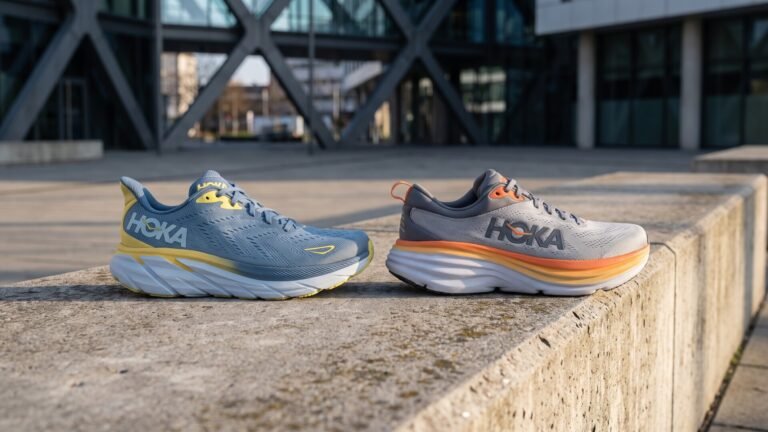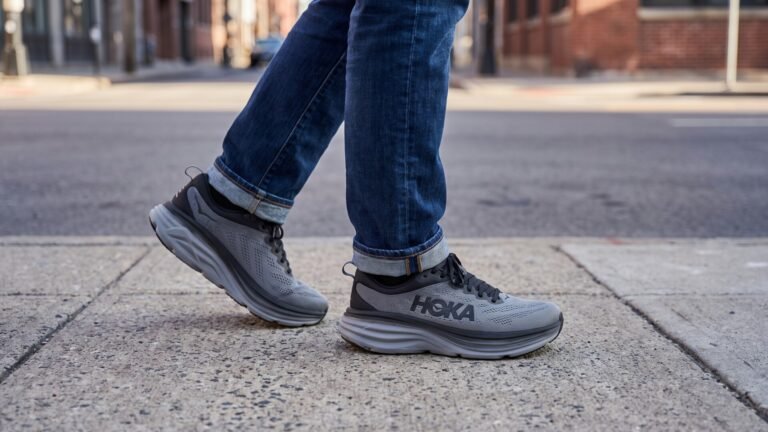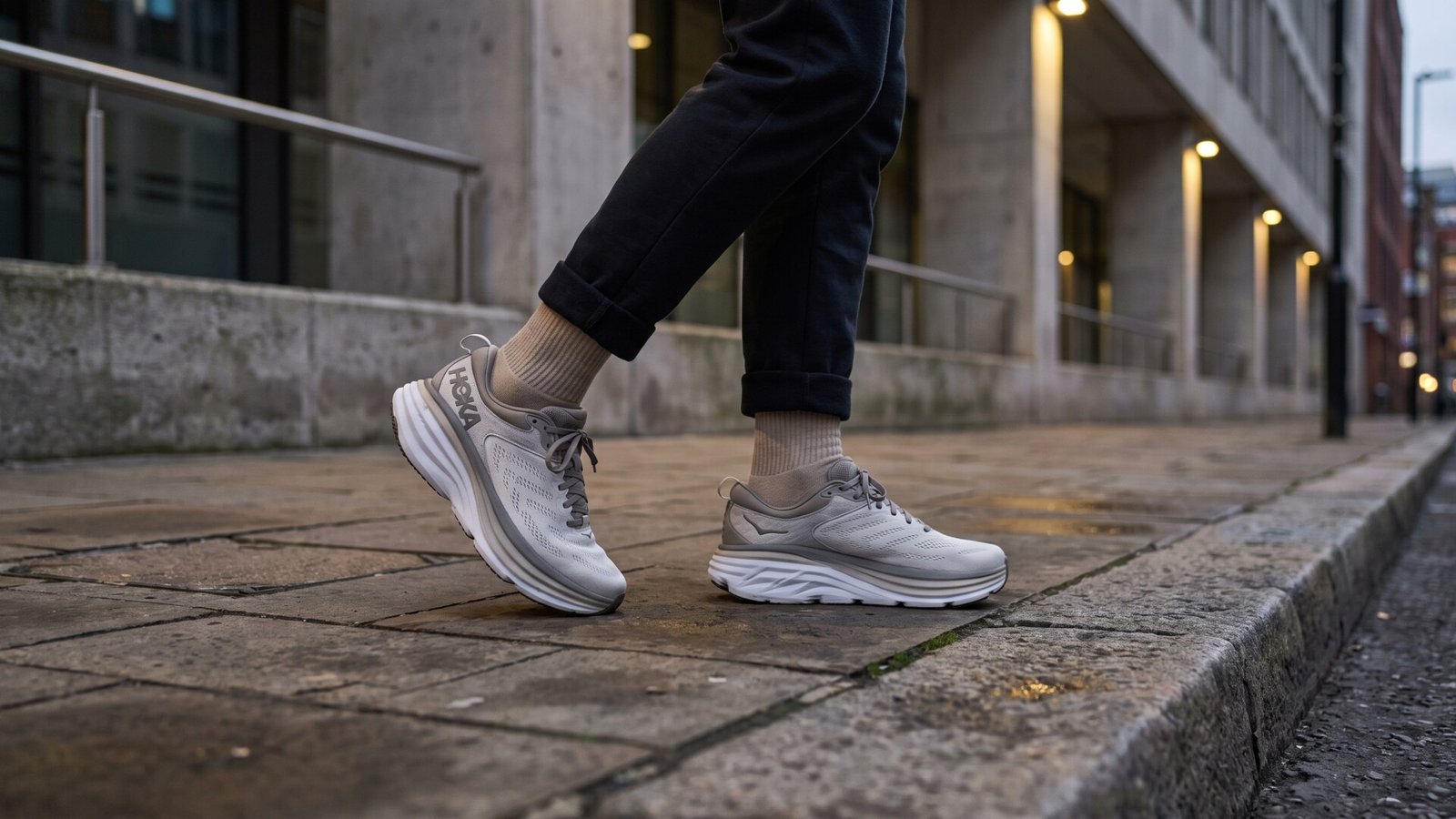
Hoka Bondi Review
The Hoka Bondi is one of the strongest choices you can make for maximum cushioning, long walks, and hours on your feet – but it is not the best pick for everyone, and pretending otherwise does you no favors.
Here is the central tradeoff in one line: you are trading a bulky, heavy-looking platform for plush underfoot comfort that nothing else in Hoka’s lineup quite matches. That is a great deal for some buyers and a genuine mistake for others.
The thing that makes buyers hesitate is fair. The Bondi costs more than most everyday sneakers, and the oversized stack makes you wonder whether you are paying for real engineering or just visual hype. The short answer is that the cushioning is real. The longer answer is that it comes with tradeoffs most reviews skip.
This one is for people considering the Bondi for daily walking, commuting, standing work, travel, recovery, or easy road running. Let us get into it.
Hoka Bondi At a Glance
| Category | Hoka Bondi assessment | What it means for buyers |
|---|---|---|
| Comfort | Excellent for easy walking and standing | Best for buyers who prioritize cushioning over a lightweight feel |
| Fit | Usually true to size, with wide options available | Check the specific width and leave room for swelling on long days |
| Walking | Excellent | A strong choice for commuting, travel, and neighborhood miles |
| Running | Good for easy road miles, less exciting for speed | Better for steady comfort than energetic workouts |
| Style | Distinctive maximalist look | Works well with athletic and casual outfits, less easily dressed up |
| Value | Good if worn often, weaker if used occasionally | Cost-per-wear depends on regular use |
Quick recommendations before we dig into the details:
- Best for: walking, standing all day, recovery, commuting, travel, and easy road running.
- Not ideal for: gym training, speedwork, minimalist-shoe fans, or shoppers wanting one sleek sneaker for every outfit.
- Editor’s choice: Hoka Bondi 9 for buyers wanting the current Bondi design and maximum everyday cushioning.
- Best value option: Hoka Bondi 8 if discounted and still available in the correct size and width.
- Main alternative: Hoka Clifton for a lighter, more versatile daily trainer.
What the Hoka Bondi Is Designed to Do
The Bondi sits at the top of Hoka’s cushioning lineup. It is the brand’s maximal-cushioning road shoe, built for buyers who want a protective, stable-feeling platform rather than a fast or minimalist ride. That positioning matters because it explains almost everything about how the shoe looks, feels, and performs.
Why does the thick midsole matter in practice? Because it changes how your body experiences repeated pavement contact. Every step you take on concrete sends impact up through your heel, into your knees, and along your spine. The Bondi’s job is to blunt that impact before it reaches you. For people who walk miles daily or stand on hard floors for shifts, that reduction in harshness can make long sessions feel noticeably less punishing. It is not magic. It is just a lot of foam doing what foam does.
Here is the part most buyers need to hear: more cushioning does not automatically mean better comfort for every foot. Some people genuinely prefer a lower, more flexible shoe that lets them feel the ground beneath them. The Bondi sits you up high and keeps you there. If you have spent years in minimal or low-profile shoes, the transition can feel like walking on marshmallows – in a good way for some, in a disorienting way for others.
To understand where the Bondi fits in Hoka’s range, it helps to see it next to its siblings:
- Bondi: maximum cushioning and everyday protection. The comfort king.
- Clifton: lighter and more versatile. The daily trainer most runners actually pick.
- Gaviota: more guidance and stability. For buyers who want structure along with cushioning.
- Arahi: stability-focused design with a more traditional daily-trainer role.
- Skyward X: premium performance shoe aimed at runners, not the typical Bondi buyer.
There is also a cultural shift worth understanding. The Bondi started as a specialist-looking running shoe that only serious runners and physical therapists recommended. Then something happened: people outside the running world noticed that the big foam shoe made their feet feel better at work. Nurses, teachers, retail workers, airport travelers – they all started showing up in Bondis. The shoe moved from running specialty into a recognizable lifestyle and workday comfort sneaker. That is why you now see them everywhere from hospital corridors to city sidewalks, and why Hoka has become one of the fastest-growing footwear brands in recent years.
The Bondi is not trying to be the shoe you wear to a dinner date. It is trying to be the shoe that gets you through the day without your feet complaining at hour nine. Understand that, and the whole design starts to make sense.
Comfort and Performance in Real Life
Walking and commuting
The Bondi genuinely shines on pavement-heavy routines. City commutes, airport walking, errands, long neighborhood strolls – this is the environment the shoe was built for. The smooth, rocker-shaped transition rolls you forward with each step, which means you do not need a highly flexible forefoot to keep moving comfortably. Your foot does less work because the shoe’s geometry is doing some of it for you.
That rocker shape is worth pausing on. It is one of the reasons the Bondi feels so good for walking even though it is technically a running shoe. The curved sole encourages a natural heel-to-toe motion, and the thick foam absorbs the shock of each heel strike. For people who log serious daily mileage on hard surfaces, that combination is genuinely hard to beat.
The tradeoff shows up in specific situations. The broad, cushioned platform can feel cumbersome on stairs, where the thick heel can catch if you are not careful. Uneven ground is another weak spot – the high stack means less stability when you step on a rock or a curb edge. Crowded public transport and narrow sidewalks also expose the shoe’s footprint. You take up more space, and you feel every jostle more because you are standing taller than you would in a conventional sneaker.
None of these are dealbreakers for most walkers. But if your commute involves tight subway cars, steep stairs, or lots of uneven terrain, the Bondi’s size becomes a real consideration rather than a cosmetic one.
Standing all day
For retail workers, teachers, healthcare staff, and hospitality workers, the Bondi has become something of a workplace legend. There is a reason you see nurses wearing them on twelve-hour shifts. The cushioning genuinely helps with perceived fatigue on hard floors, and the rocker shape encourages a more natural walking motion even when you are mostly on your feet.
But let us be straight about the limits. Cushioning can help, but it cannot fix an incorrect fit. If the shoe is too narrow, too wide, or too long, no amount of foam will save your feet by hour six. Fit, socks, floor conditions, and your individual foot shape all matter as much as the midsole. Someone with high arches, flat feet, or a narrow heel may find the Bondi comfortable in the store and problematic by mid-shift.
Practical advice for standing workers: pair the Bondi with moisture-managing socks. Sweaty feet inside a thick foam shoe is a recipe for blisters and discomfort, no matter how plush the ride feels. And if you use custom insoles, check that they maintain a secure fit inside the Bondi’s already-roomy interior. A thick aftermarket insole on top of the stock one can push your foot too high and cause heel slippage.
The hour-eight test matters more here than anywhere. The Bondi is one of the few shoes that still feels reasonably comfortable late in a long shift. That is its real value proposition for standing workers, and it is why so many people who stand for a living swear by it.
Running and exercise
If you want to run in the Bondi, choose your runs carefully. It is excellent for easy road miles, recovery runs, and runners who want a protective, forgiving ride. The cushioning takes the edge off tired legs, and the rocker shape keeps you moving forward efficiently at a steady pace.
What it is not: a natural choice for intervals, sharp turns, court sports, lifting, or treadmill sessions where a lighter, more stable training shoe is preferable. The high stack and heavy platform work against you when you need to change direction quickly or push off explosively. For gym work, you want something closer to the ground with better lateral support.
The comparison with the Hoka Clifton is instructive here. The Clifton is lighter, more agile, and generally feels like a more traditional daily trainer. The Bondi favors protection and presence underfoot. If you are a runner who wants one shoe for everything from easy miles to tempo work, the Clifton is the smarter choice. If you want a shoe specifically for recovery days and long, slow miles, the Bondi earns its keep.
Travel and daily wear
The Bondi is a legitimate travel companion. Airport terminals, sightseeing days, hotel walking, long city explorations – the cushioning keeps your feet fresher than most shoes would, and the rocker shape makes miles of walking feel less effortful. If your travel days involve ten thousand steps before lunch, the Bondi will earn its space in your bag.
The practical downside is the size and weight. The Bondi is not a packable shoe. It takes up serious room in luggage, and it adds noticeable weight to your carry-on. You are not slipping these into a gap in your bag; you are dedicating real space to them.
There is also the attention factor. The thick sole draws looks. Some people enjoy that maximalist statement; others feel self-conscious wearing what looks like orthopedic footwear with a fashion label. The Bondi works best as a purpose-driven comfort sneaker rather than a universal fashion shoe. It pairs fine with athletic wear, joggers, and casual outfits. It looks out of place with chinos and a button-down, and it is not the shoe you want if you are trying to make a style impression.
Fit, Sizing, and Foot Shape
Sizing is where a lot of Bondi purchases go wrong, so let us be direct. Most buyers should start with their usual athletic-shoe size. The Bondi generally runs true to size for most feet. But do not assume every Bondi version fits identically. Hoka has tweaked the fit across generations, and the Bondi 9 fits slightly differently from the Bondi 8 in ways that matter for some feet.
The bigger decision is standard versus wide width. Wide options are genuinely relevant here, not just a marketing checkbox. If you have a broad forefoot, experience swelling during long shifts, or dislike pressure over your toes, the wide version is worth serious consideration. Many buyers who think they need to size up actually need a wide width instead. Sizing up adds length you do not need and can create heel slippage; going wide addresses the actual problem.
Heel security versus forefoot room is the classic tension. A larger size is not automatically the answer if it creates heel lift. Your foot should feel secure at the back while having enough room in the toe box. If sizing up makes your heel slip, try the wide version in your normal size before you commit to a longer shoe.
Here is a simple fit test to run in the store or at home:
- Your toes should not touch the front of the shoe when you are standing.
- The widest part of your foot should sit comfortably over the shoe’s broadest area.
- Your heel should remain secure while walking, without slipping.
- Try on both shoes with the socks you intend to wear daily.
Some foot shapes will struggle with the Bondi. Very narrow feet may find it too roomy and bulky, with excess space that causes rubbing. High-volume feet may need the wide version rather than simply sizing up. And buyers who prefer close ground contact – people who like to feel the surface beneath them – may find the elevated platform uncomfortable regardless of how soft it feels.
If you use orthotics or replacement insoles, check the thickness before you commit. The Bondi already has a substantial insole, and adding a thick orthotic on top can make the fit too snug or push your heel too high. Some buyers need to remove the stock insole entirely to accommodate their orthotics, which changes the feel of the shoe.
Build Quality, Durability, and Ownership
The initial comfort impression of the Bondi is excellent. The question that matters is what happens after six months, or a year, or two years of regular use.
The Bondi’s construction is generally solid. The engineered mesh upper holds up reasonably well, the outsole rubber covers the high-wear areas, and the thick foam platform is built to handle serious mileage. But do not expect a guaranteed lifespan, because there is not one. Durability depends on body weight, mileage, pavement exposure, your gait, whether you rotate with other shoes, and whether you wear the shoe for work every single day.
The likely wear points are predictable. The heel lining and collar can wear down if you step into the shoe without fully loosening the laces, which crushes the back of the shoe over time. The outsole rubber wears in the most frequently loaded areas – usually the heel strike zone and the forefoot push-off area. And the midsole gradually compresses, which reduces the original plush feel before the upper shows any visible damage.
That last point is the one most owners miss. A Bondi that looks perfectly fine on the outside may be past its best if the cushioning feels flat, the shoe tilts to one side, or the outsole is unevenly worn. The foam is the shoe’s core feature, and when it compresses, the shoe has done its job. You do not need to wait for a hole in the upper to know it is time for a replacement.
Maintenance is straightforward but worth doing right:
- Air the shoes out after long shifts. Sweat trapped inside foam breaks down materials faster.
- Clean the upper with mild soap and a soft brush. A sneaker cleaning kit works well.
- Avoid the washing machine and high heat unless the manufacturer specifically permits it. Machine washing can break down the foam and glue.
- Rotate with another pair when possible. Giving the foam time to decompress between wears extends its life.
The hidden ownership cost is the price tag. The Bondi costs more than most everyday sneakers, and that cost is easier to justify when you wear the shoe several times a week. As an occasional sneaker worn once or twice a month, the cost per wear becomes hard to defend. This is a shoe that rewards regular use, not occasional appearances.
What Most Buyers Get Wrong About the Hoka Bondi
There are four misconceptions that come up constantly with the Bondi, and clearing them up will save you from a bad purchase.
First, the most cushioning is not automatically the most comfortable. This sounds counterintuitive, but comfort is not just about softness. Weight, platform height, rocker geometry, and foot shape all influence how a shoe feels over a full day. Some people find the Bondi’s high, heavy platform tiring in ways that a lighter shoe would not be. Others find the soft foam causes instability because their feet sink too deeply. The Bondi is extremely comfortable for many people. It is not objectively the most comfortable shoe for everyone.
Second, the large silhouette is not merely a fashion trend. The thick sole reflects a real performance and comfort priority – there is a lot of foam under there because the design goal is maximum impact absorption. But that same design limits outfit versatility. You cannot have a shoe with this much cushioning and also have a sleek profile that works with dressier clothing. The tradeoff is structural, not a marketing failure.
Third, a walking shoe is not automatically suitable for every workout. The Bondi’s shape and ride are designed for forward motion on relatively even surfaces. Lateral movement, strength training, and high-intensity gym work all demand different things from a shoe – stability, ground feel, and support for side-to-side forces. The Bondi does not deliver those. It is a walking and easy-running shoe, not a gym shoe, and using it for the wrong activity is how people get hurt.
Fourth, buying the newest Bondi is not always the smartest choice. The Bondi 9 is an excellent shoe, but a discounted Bondi 8 can deliver better value if the fit is right and the price is meaningfully lower. The differences between recent Bondi versions are incremental for most buyers. If the older model fits well and costs significantly less, that is often the smarter purchase.
There is also the difference between short-term softness and long-term support. The first time you put on a Bondi, the cushioning feels remarkable. That is not the test that matters. Judge the shoe by how it feels after a full day on your feet, and after weeks of repeated use. Some shoes that feel amazing for five minutes become uncomfortable by hour six. The Bondi tends to hold up better than most through a long day, but you need to verify that for your own feet rather than trusting the first impression.
Value, Alternatives, and the Three-Year Decision
Is the Hoka Bondi worth the price?
Value is a cost-per-wear question, not a sticker-price question. The Bondi costs more than many everyday sneakers, and whether that price makes sense depends entirely on how often you will wear it.
Run this framework against your own habits:
- Frequent work or walking use: the price makes sense if the shoe remains comfortable and durable over many months. A nurse wearing Bondis five days a week is getting genuine value from the purchase.
- Occasional wear: a less expensive daily sneaker may offer better value. If you wear the Bondi once a week for errands, you are paying a premium for comfort you rarely use.
- One-shoe buyer: the Bondi may be worth paying for if comfort matters more than style versatility. If you need one shoe that does everything from work to workouts to nights out, the Bondi’s limitations become harder to accept.
Do not forget the accessory costs. Quality socks matter more with the Bondi than with most shoes because the interior runs warm. Replacement insoles may be needed down the line. And if you wear the Bondi daily for work, a second pair for rotation extends the life of both shoes. These costs add up and should be part of your calculation.
Alternatives worth considering
| Shoe | Best for | Main advantage over Bondi | Main compromise |
|---|---|---|---|
| Hoka Clifton | Lighter daily running and walking | More agile and easier to wear casually | Less maximal and protective |
| Hoka Gaviota | Stability-focused walking and running | More guidance for buyers who want a structured ride | More specialized feel |
| New Balance 1080 | Soft daily comfort with a conventional look | More versatile styling and a less extreme silhouette | Different cushioning feel and fit |
| Brooks Ghost Max | Cushioned walking and easy running | Strong alternative for a stable, rocker-style ride | Heavier look and different upper fit |
| Skechers GO WALK Max | Budget walking and standing | Lower entry price and easy everyday use | Less premium feel and running versatility |
The Bondi remains the better choice when maximum cushioning, Hoka’s rocker geometry, and a broad, stable platform are your priorities. It is the strongest walking and standing shoe in this group, and for buyers who spend their days on hard floors, that matters more than anything else.
Choose the Clifton or New Balance 1080 instead when you want a lighter feel, broader outfit compatibility, or a more conventional daily-trainer shape. The Clifton is the better running shoe. The New Balance 1080 is the better all-around sneaker for someone who wants comfort without the maximalist look.
Here is the three-year perspective. The Bondi is most likely to remain satisfying if you value comfort above all and use the shoe consistently. Someone who wears it daily for work or walking will still appreciate it in year two. It is far less likely to satisfy someone who already dislikes maximalist styling, wants one shoe for every activity, or expected the Bondi to feel like a lighter, more agile trainer. Buy it for what it is, not for what you wish it were.
Who Should Buy the Hoka Bondi?
Let us make this simple.
Buy the Bondi if you spend long periods walking or standing on hard surfaces and prefer a cushioned, protective platform. Nurses, teachers, retail workers, hospitality staff, airport travelers – this shoe was effectively designed for your day.
Buy it if you want a recovery-oriented road shoe for easy miles and do not prioritize speed or low weight. The Bondi is the shoe you grab on tired-leg days when you just want the run to feel gentle.
Consider it if you need a wide-size option and the Bondi’s shape matches your foot better than narrower performance shoes. The wide version is genuinely accommodating.
Skip it if you want a lightweight gym shoe, a court shoe, a minimalist ride, or a sleek sneaker that works with smart-casual clothing. The Bondi is none of those things, and buying it expecting otherwise leads to disappointment.
Skip it if the Bondi feels unstable, restrictive, or too bulky during the return-period test, even if the cushioning feels soft in the store. That feeling will not improve with wear. Trust the discomfort and move on to something that fits your foot better.
Final Verdict
The Hoka Bondi wins for maximum everyday comfort, walking, standing, and easy road use. That is not hype and it is not about the look. It is the combination of serious cushioning, a smooth rocker-style movement, and a protective platform that genuinely helps on long pavement-heavy days.
Its main weakness is versatility. The Bondi is bulky, visually distinctive, and less suitable for fast running, gym training, or buyers who prefer a close-to-the-ground feel. If you need one shoe that does everything, this is not it. If you need a shoe that makes your feet feel better on the days when you are on them for hours, this is very much it.
For most buyers, the smart move is the Hoka Bondi 9 – it delivers the current Bondi experience with the latest updates. But if you can find a discounted Hoka Bondi 8 in the right size and width, that is often the better value. The differences between recent versions are smaller than the price gap suggests.
And here is the cheaper truth: you might not need the Bondi at all. If your days do not involve serious walking or standing, a lighter shoe like the Hoka Clifton or New Balance 1080 will serve you well for less money and with more style flexibility. The Bondi’s price is only justified by regular, demanding use. If that is not your life, spend less and get a shoe that fits your actual routine.
But if you are on your feet all day and your feet are telling you they have had enough, the Bondi is one of the best answers available. It is not the shoe for everyone. For the person it is for, nothing else quite compares.
Frequently Asked Questions About Hoka Bondi
Is the Hoka Bondi good for walking?
Yes, it is one of the strongest walking shoes available. The cushioning absorbs pavement impact and the rocker-shaped sole encourages a smooth heel-to-toe transition. The main caveats are the bulk on stairs and uneven ground, plus the need to get the width right for your foot.
Is the Hoka Bondi good for standing all day?
It is genuinely helpful for long shifts on hard floors. The thick foam reduces perceived fatigue in ways that thinner shoes cannot match. But cushioning cannot fix an incorrect fit – width, heel security, and sock choice all matter just as much. If the shoe does not fit properly, no amount of foam will save you by hour six.
Does the Hoka Bondi run true to size?
Most buyers should start with their usual athletic-shoe size. The Bondi generally runs true to size, but recent versions fit slightly differently. If you have a broad forefoot or experience swelling during long days, try the wide width before sizing up. A longer shoe that creates heel slippage is not the answer.
Is the Hoka Bondi good for running?
It is good for easy road miles and recovery runs where you want maximum protection. It is not a good choice for speedwork, intervals, gym sessions, or lateral sports. The high stack and heavy platform work against quick changes of direction. For a more versatile running shoe, look at the Hoka Clifton instead.
Which is better, the Hoka Bondi or Clifton?
It depends on what you need. The Bondi offers maximum cushioning and protection for walking, standing, and easy miles. The Clifton is lighter, more agile, and works better as a daily trainer or an all-around shoe. Buy the Bondi for comfort-first use. Buy the Clifton for versatility.
How long does the Hoka Bondi last?
There is no fixed lifespan because durability depends on body weight, mileage, surfaces, rotation with other shoes, and how the shoe is used. Most owners get significant use before the midsole compresses and the plush feel fades. Signs that replacement is due include flat cushioning, tilting, uneven outsole wear, and discomfort that was not there before.
Is the Hoka Bondi worth the money?
Only if you wear it regularly. The price is easier to justify for daily walking or standing work, where the comfort pays for itself over months of use. As an occasional casual sneaker, the cost per wear is hard to defend. If you are not on your feet for hours most days, a lighter, less expensive shoe is the smarter buy.