Hoka Challenger Review
Here is the Hoka Challenger review, written to the outline and in the site’s voice.
So, you’re looking at the Hoka Challenger. Let’s cut through it.
Here’s the quick verdict: this is one of the smartest single-shoe buys on the market, provided you aren’t asking it to be something it’s not. It’s the Swiss Army knife of the Hoka lineup—a cushioned, comfortable shoe that moves from pavement to packed dirt to park paths without you having to think about it. It’s not the best pure road runner, and it’s not a technical trail beast. Its whole game is versatility, and it plays that game better than almost anything else in the category.
The hesitation most people have is fair: does a hybrid design mean it’s mediocre at everything? In this case, no. But if you need aggressive trail traction, a snappy racing feel, or a super stable platform for serious pronation, this isn’t your shoe. Keep reading to see which side of the line you land on.
Note: Some links in this review are affiliate links. If you buy through them, we may earn a commission at no extra cost to you. It helps keep the lights on, and we only recommend gear we’d actually tell a friend to buy.
At a Glance: Hoka Challenger Review
| Category | Assessment | Buyer takeaway |
|---|---|---|
| Road comfort | Strong | Cushioned enough for everyday running and walking |
| Light-trail performance | Strong | Suitable for gravel, parks, and maintained trails |
| Technical trails | Limited | Choose the Hoka Speedgoat for rougher terrain |
| Fit | Generally true to size | Check width options and return policies |
| Durability | Good for a hybrid shoe | Road and light-trail use should be easier on the outsole than aggressive trail use |
| Overall value | Good for one-shoe versatility | Best value for buyers who will use both surfaces |
- Best for: Road-to-trail runners, walkers, commuters, travelers, and buyers who want one cushioned pair for mixed surfaces.
- Not best for: Technical mountain trails, fast workouts, minimalist-shoe fans, or anyone who dislikes a tall, noticeable sole.
- Editor’s choice: Hoka Challenger 7, assuming the current version is available at a reasonable price.
- Exact features, colors, and pricing vary by version and retailer. Confirm the current model before you buy.
What the Hoka Challenger Is Designed to Do
The Challenger sits right in the middle of Hoka’s lineup for a reason. It’s a road-to-trail shoe, built for the transitions most of us actually make: out the front door onto the sidewalk, through the park, onto a gravel path, and back home again. It doesn’t demand you change shoes when the surface changes.
That hybrid design matters more than most people realize. If you run or walk on mixed surfaces even a couple of times a week, the Challenger removes the need to own a separate pair of road shoes, a pair of trail shoes, and a pair of everyday walking sneakers. That’s three pairs of shoes doing a job one pair can handle. For the buyer who values convenience and simplicity, that’s the whole pitch.
To understand where it fits, look at the rest of the family:
- Hoka Clifton: More road-focused. If nearly all your miles are on pavement, this is usually the cleaner choice. It’s lighter, more streamlined, and built for road-running efficiency.
- Hoka Speedgoat: More trail-focused. Deeper lugs, better grip, and more protection for rocks, roots, and steep, loose terrain. This is the one for actual mountain trails.
- Hoka Transport: More lifestyle and commuting oriented. It has a less traditional running-shoe feel and leans into everyday casual wear.
The buyer psychology here is straightforward. The Challenger appeals to people who look at their week and see a mix of runs, walks, errands, and travel. They don’t want to pack three pairs of shoes for a weekend trip. They want one pair that handles the airport, the city streets, and the coastal path without complaint. That’s a completely reasonable way to buy.
One thing to be clear on: the Challenger is not a technical hiking boot, and it’s not a substitute for a dedicated mountain-trail shoe. Take it on maintained paths and easy singletrack all day. Take it up a scree field and you’ll be sorry.
Comfort and Ride Quality
Comfort is the main event here. It’s why most people even look at Hoka in the first place, so let’s dig into what the ride actually feels like.
Cushioning for Running and Walking
The midsole is soft, protective, and forgiving. It’s the kind of cushioning that makes easy miles feel easier and long walks feel shorter. You don’t feel the ground so much as you feel a thick layer of foam between you and it.
That’s great for recovery runs, conversational-pace runs, and any day where you just want to move without your joints complaining. It’s also excellent for walking, travel days, errands, and standing for moderate stretches. If your day involves being on your feet for a few hours at a time, this shoe absorbs a lot of that punishment.
The tradeoff is real, though. That plush ride isn’t lively. If you want to pick up the pace and feel the ground respond, the Challenger will feel a bit muted. It’s not a shoe for intervals or races. It’s a shoe for everything else.
For long days on hard pavement, the cushioning holds up well. We’re not going to make medical claims here, but the foam does what foam is supposed to do: it compresses, absorbs impact, and returns energy. If you’ve got specific foot or joint issues, talk to a professional. But for general comfort on concrete, this shoe is a solid choice.
Stability and Ground Feel
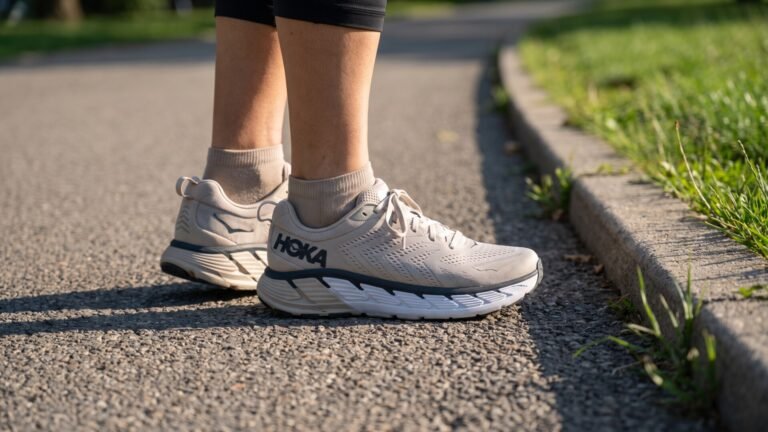
Here’s where the tall sole gets interesting. Hoka’s geometry—the elevated stack height and the rocker-like shape—feels secure to some people and strange to others. The rocker encourages a smooth heel-to-toe transition, which many runners love. But if you’re used to low-to-the-ground shoes with a lot of ground feel, the Challenger can feel like you’re walking on stilts.
On flat paths, sidewalks, and compact trails, lateral stability is fine. The wide base helps. But on uneven technical terrain, the limitations show. When the ground demands precise foot placement—stepping around rocks, roots, or angled surfaces—the tall platform works against you. You’re further from the ground, so you have less control.
If you have specific foot or injury concerns, don’t guess. Consult a qualified professional, and buy from a retailer with a reliable return policy so you can test the shoe on your own turf.
Comfort After Extended Wear
The first try-on is always promising with Hoka. The real test is hour eight.
For airport travel, city walking, commuting, and casual errands, the Challenger holds up well. The cushioning doesn’t pack down dramatically over the course of a day, and the upper is comfortable against the foot.
But sustained comfort depends on a few details. Heel hold matters—if your heel slips, you’ll get blisters by mile five. Forefoot pressure matters—if the shoe is too narrow across the toes, you’ll feel it by the afternoon. Sock choice matters more than people think; a thin dress sock in a running shoe invites friction. And the upper needs enough room to accommodate foot swelling during long days, especially in warm weather or after a long flight.
The good news: the Challenger’s upper is forgiving and doesn’t have a lot of rigid structure to dig into your foot. The bad news: if the fit isn’t right from the start, no amount of cushioning will save you.
Hoka Challenger Fit and Sizing
Let’s get practical about sizing, because this is where a lot of buying mistakes happen.
Start with your usual running-shoe size. Most buyers will find the Challenger runs true to size. But that’s a starting point, not a guarantee. Fit can shift between generations, so always check the specific version you’re buying and confirm the retailer’s return policy before you commit.
Here’s the thing about running shoes: they need more front-of-toe space than casual sneakers. Your foot slides forward on downhills, and it swells in warm weather and on long days. If you buy the Challenger the way you’d buy a fashion sneaker—snug and neat—you’re going to have a bad time at mile six. Leave about a thumb’s width between your longest toe and the end of the shoe.
Foot shape matters too:
- Average-width feet are the safest match. The Challenger fits most people without drama.
- Wider feet should look for wide versions where they’re offered. Sizing up half a size can work in a pinch, but it’s not the same as a genuine wide fit. The extra length can cause heel slip even if the forefoot feels better.
- Narrow heels should pay close attention to heel lockdown. The lacing system can help, but if your heel is significantly narrower than the shoe’s heel cup, you might need a runner’s loop or a different shoe entirely.
When you try the Challenger on—in-store or at home—run through this checklist:
- Heel should feel secure, with minimal slip.
- Toes should not touch the front of the shoe.
- No pressure or pinching across the forefoot.
- Enough room for your foot to move naturally as you walk.
And remember: fit can change between Challenger generations. The 6 and the 7 fit slightly differently, and the next version might change again. Always verify the return policy before you buy.
Road, Trail, Walking, and Everyday Performance
Enough theory. Let’s talk about what this shoe actually does in the real world.
Pavement and Road Running
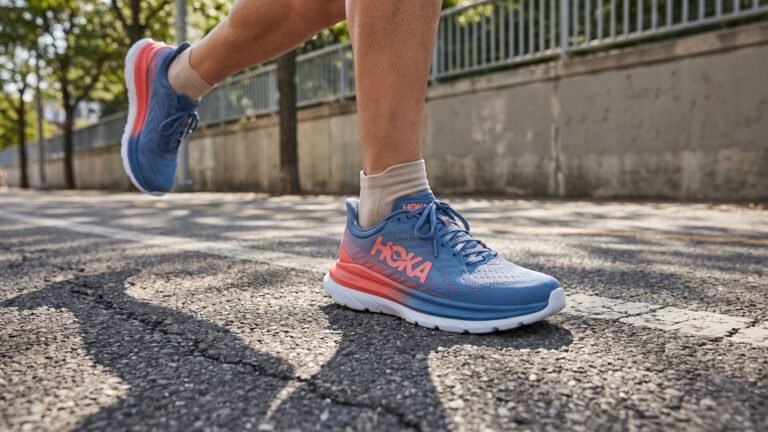
The Challenger handles easy road miles without complaint. Recovery runs, casual mixed-surface routes, days when you just want to cruise—this shoe is comfortable and capable on pavement.
Where it falls short is speed. If you’re doing intervals, tempo runs, or racing, the Challenger’s plush midsole works against you. It’s not a responsive platform. It doesn’t snap. It absorbs. For fast work, you want something firmer and lighter.
If nearly all your running is on pavement, the Hoka Clifton is the better buy. It’s more road-focused, more efficient, and usually a bit lighter. The Challenger makes sense when your routes mix surfaces. If they don’t, don’t pay for the trail capability you won’t use.
Gravel, Parks, and Light Trails
This is the Challenger’s home turf. Gravel roads, compact dirt, park paths, rail trails, maintained woodland routes—this shoe eats them all up.
The outsole has enough traction for these surfaces without being so aggressive that it feels clumsy on pavement. It’s a balanced lug pattern that grips loose gravel and packed dirt well, and it doesn’t sacrifice road comfort to do it.
But there are limits. On loose, deep gravel, the shoe can feel a little unsettled. On wet surfaces—especially wet rock or mud—traction drops off. On steep, technical sections, the Challenger will let you down. That’s Speedgoat territory.
The Speedgoat comparison is the important one here. If your trails are maintained paths and easy singletrack, the Challenger is plenty. If you’re hitting steep, rocky, muddy, or highly technical routes, the Speedgoat’s deeper lugs and more protective build are the safer choice. Don’t talk yourself into the Challenger for terrain that demands the Speedgoat.
Walking, Travel, and Commuting
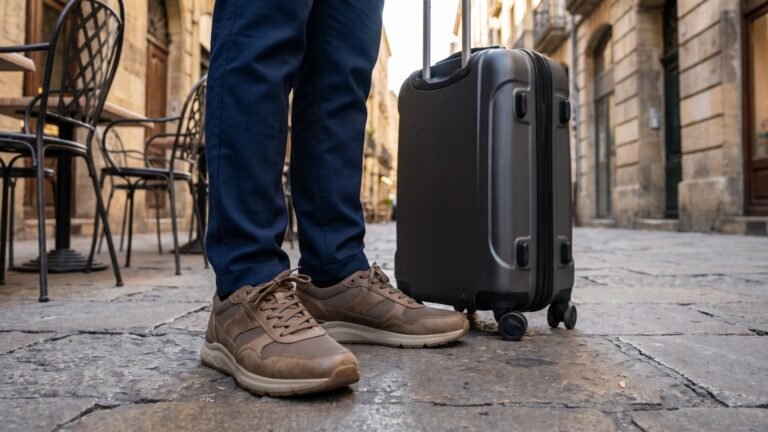
As a travel shoe, the Challenger is genuinely hard to beat. One pair for the airport, city streets, parks, and the occasional trail—that’s the whole value proposition in a single sentence.
It packs reasonably well, though it’s not a minimalist shoe you can stuff into a corner of your bag. The styling is sporty but not obnoxious; it looks like a running shoe, which is fine for most travel and casual settings. You can wear it with jeans or joggers without looking like you just stepped off a track.
The hidden tradeoff is worth knowing. The trail-inspired upper and slightly chunky outsole make it less visually streamlined than a dedicated lifestyle sneaker. If you want one shoe that works for a hike in the morning and a nice dinner at night, the Challenger will look out of place at the dinner. That’s not a flaw—it’s a tradeoff—but it’s worth being honest about.
Practical advice: pair the Challenger with moisture-managing socks for long days, keep a cleaning brush handy for dirt, and pack an alternate pair of shoes if you’ve got wet or formal settings on the itinerary.
Hoka Challenger Durability and Ownership Costs
What happens after the honeymoon period? Let’s talk about the long game.
The likely wear points are predictable:
- Outsole abrasion on pavement. Road running will wear the lugs down faster than trail running, which is counterintuitive but true. Asphalt is abrasive.
- Creasing and dirt on the upper. The mesh and overlays will show wear, especially if you’re hitting dusty trails.
- Midsole compression over time. The foam will lose some of its spring. This is normal and gradual.
- Heel lining wear from repeated slip-on use. If you don’t loosen the laces before you take the shoe off, you’ll accelerate this.
Use pattern matters a lot. A Challenger used mostly on smooth roads will show different wear than one used on rocky trails or abrasive gravel. The outsole on the trail-heavy pair will look rougher, but the midsole might hold up better because dirt and trail surfaces are less punishing than concrete.
There’s no rigid mileage promise here. Replace the Challenger when the comfort goes, when the tread is clearly compromised, when the midsole shows visible compression, or when the fit changes. If the shoe starts to feel flat or your knees start complaining on runs that used to feel fine, that’s your sign.
Maintenance is straightforward:
- Brush off dry dirt before washing.
- Use mild soap and cool water.
- Air-dry away from direct heat.
- Don’t treat it like a machine-washable sneaker unless the manufacturer specifically permits it.
The cost-per-wear math is where the Challenger shines. A pair bought around $150 and worn three times weekly becomes reasonable value if it replaces separate road, walking, and light-trail shoes. That’s three pairs of shoes doing a job one pair handles. The value falls apart if you only wear it occasionally or use it outside its intended terrain.
Resale is realistic: worn running shoes have limited resale value. This isn’t a limited-edition collab that’s going to appreciate. Judge the purchase by personal use, not hoped-for resale.
What Most Buyers Get Wrong About the Hoka Challenger
Let’s clear up the misconceptions that lead to disappointed buyers.
Mistake: treating “trail” as meaning technical trail. The Challenger is a road-to-light-trail shoe. It’s not a mountain-trail specialist. When people buy it expecting Speedgoat-level capability on rocky, steep terrain, they’re disappointed. Read the description: road-to-trail. That’s the promise, and it delivers on that promise.
Mistake: assuming maximum cushioning equals universal comfort. Cushioning is not the same thing as comfort for everyone. Some buyers prefer a lower, firmer, more flexible platform. The Challenger’s tall, plush midsole feels great to many people, but it can feel unstable or disconnected to others. Try it before you commit.
Mistake: buying it only for the Hoka look. The tall sole and rocker-like geometry are distinctive, and some people buy based on the side view alone. That’s backwards. Judge the shoe during walking, turning, and uneven-ground use. The look is a bonus, not the reason to buy.
Mistake: comparing only retail prices. The Challenger looks expensive compared to a basic road shoe. But the cost-per-wear advantage is real for buyers who use it across several activities. For a pavement-only runner who could choose a more specialized road shoe, the value is weaker. Compare the value, not just the price tag.
Here’s a simple decision rule:
- Buy the Challenger if mixed surfaces account for a meaningful part of your regular use.
- Choose the Clifton if road comfort and a cleaner everyday silhouette matter more.
- Choose the Speedgoat if grip, protection, and technical trail control matter more.
Is the Hoka Challenger Worth Buying?
Let’s land this plane.
Overall verdict: The Hoka Challenger is worth buying for anyone who wants a comfortable, adaptable shoe for road running, walking, travel, and light trails. It’s the best one-shoe solution in Hoka’s lineup.
Best value case: It makes the most sense when one pair can replace two or three less versatile pairs. If your week includes pavement runs, park walks, travel days, and the occasional gravel path, the Challenger earns its keep.
Weak value case: It’s less compelling at full price for someone who only runs on roads, needs a fast workout shoe, or regularly tackles technical trails. In those cases, you’re paying for capability you won’t use.
Version guidance: Compare the current Hoka Challenger with discounted previous-generation models. Older versions can be excellent buys if the fit works and the outsole is in good condition. Just confirm fit, outsole condition, and return terms before you commit.
Final winner by buyer:
- Best all-rounder: Hoka Challenger.
- Best pavement specialist: Hoka Clifton.
- Best technical-trail option: Hoka Speedgoat.
Choose the Hoka Challenger if versatility is the priority. If you know you’ll spend nearly all your time on one surface, buy the more specialized model that matches that surface. The Challenger is the best all-rounder, but the best shoe for you is the one that fits the way you actually move.
Frequently Asked Questions About Hoka Challenger
Is the Hoka Challenger good for everyday walking?
Yes, for most walkers. The cushioning is comfortable for all-day wear, and the outsole handles sidewalks, park paths, and gravel without complaint. That said, the elevated platform and relatively high weight don’t suit every walker. If you prefer a low-to-the-ground feel or have specific stability needs, try it on and walk around before committing.
Is the Hoka Challenger good for road running?
It can handle regular easy road running, recovery runs, and mixed-surface routes without issue. But it’s less specialized than the Hoka Clifton for pavement-only runners. If most of your miles are on roads and you care about road-running efficiency, the Clifton is the better buy. The Challenger’s advantage only shows when your routes mix surfaces.
Can you use the Hoka Challenger on technical trails?
You can, but you shouldn’t. The Challenger is built for gravel, packed dirt, and maintained paths. On steep, rocky, muddy, or highly technical routes, the shallow lugs and road-friendly midsole will hold you back. For that terrain, choose the Hoka Speedgoat, which has deeper traction and more protection.
Does the Hoka Challenger run true to size?
Most buyers should start with their usual running-shoe size. But fit can vary between generations, and width options are limited. Always check the specific version you’re buying, measure your foot if you’re unsure, and confirm the retailer’s return policy before you commit.
Is the Hoka Challenger good for wide feet?
It depends on the version and whether a wide option is available. Sizing up half a size can help in a pinch, but it’s not a reliable substitute for a genuine wide fit. If you have wide feet, look for the wide version where offered, and be prepared to return the shoe if the fit isn’t right.
How durable is the Hoka Challenger?
Durability depends on surface, frequency, and maintenance. Road use wears the outsole faster than trail use, but the midsole lasts longer on softer surfaces. Replace the shoe when the cushioning feels flat, the tread is clearly worn, the upper is compromised, or the fit changes—don’t rely on a mileage number alone.
Is the Hoka Challenger worth the price?
It depends on how you use it. For mixed-surface runners, walkers, and travelers who need one pair for multiple activities, the value is strong—it can replace two or three less versatile pairs. If it will only serve as an occasional road shoe, the value is weaker. Buy it for the versatility, not the hype.