Hoka Shoe Sizing Guide: How Hoka Shoes Fit and Which Size to Buy
If you’re here because you’re about to drop $150-plus on a pair of Hokas and you’re not sure which size to order, stop scrolling for a second. Here’s the quick answer: most Hoka shoes fit broadly true to size, but the right choice depends on your foot length, your width, the socks you’ll wear, and the specific model’s shape.
The reason so many people get stuck is that Hoka models genuinely differ. Some have roomier toe boxes, some run snugger through the midfoot, and width availability changes from model to model. On top of that, that thick, marshmallow-looking midsole tricks people into thinking they need to size up. You usually don’t.
The most important rule: prioritize your measured foot length and usable toe room over automatically sizing up for cushioning. By the end of this guide, you’ll know whether to keep your normal size, grab a wide version, or consider a half-size adjustment.
Hoka Sizing at a Glance
Before we dig into the details, here’s the fast-reference table you’ll want to bookmark.
| Buyer situation | Recommended starting point | Main caution |
|---|---|---|
| Average-width feet and normal running socks | Start with your usual athletic-shoe size | Check toe room before removing tags |
| Between sizes | Usually try the larger half size | A longer shoe does not fix a narrow upper |
| Wide forefoot | Look for a wide-width Hoka model first | Do not rely only on sizing up |
| Swollen feet or all-day standing | Consider a little extra room | Secure the heel with proper lacing |
| Narrow heels | Use heel-lock lacing and check for movement | A larger size may worsen heel slip |
| Trail or winter use | Allow room for thicker socks and downhill movement | Avoid excessive length that reduces control |
Editor’s quick picks:
- Best general starting point: your usual athletic-shoe size in the appropriate width.
- Best advice for wide feet: choose a wide model before trying to make a regular-width shoe work by sizing up.
- Best option for uncertain online purchases: measure both feet and use the larger measurement against Hoka’s current size chart.
Do Hoka Shoes Run True to Size?
Here’s the honest answer: Hoka sizing is generally close to standard athletic-shoe sizing, but “true to size” doesn’t guarantee the same fit you get from Nike, Adidas, New Balance, or your favorite casual sneakers. Different brands build their shoes on different lasts, and those shapes change how the same numeric size feels on your foot.
The real confusion comes from mixing up length with volume and width. A shoe can be the correct length while still feeling too tight across the forefoot or too loose around the heel. That’s not a sizing problem. That’s a shape problem. And it’s why two people with the same foot length can end up in different Hoka sizes or widths.
So why do some buyers swear Hoka runs small? A few reasons:
- Snug uppers. Many Hoka models use structured, form-fitting uppers that feel more secure than the loose, slipper-like fit of some casual shoes.
- Structured heel counters. The firm heel cup holds your foot in place, which can feel restrictive if you’re used to a sloppier fit.
- Thick socks. If you’re testing with heavy running socks, they eat up interior volume.
- High insteps. Hoka’s plush midsole and internal geometry can feel tight across the top of the foot.
- Expectation mismatch. People see maximum cushioning and expect the whole shoe to feel roomy everywhere. That’s not how it works.
Here’s your decision rule: keep your usual size if your toes have space to move, your heel stays secure, and the widest part of your foot sits comfortably inside the shoe without pressure. If any of those three things fails, that’s when you adjust.
How to Measure Your Feet for Hoka Shoes
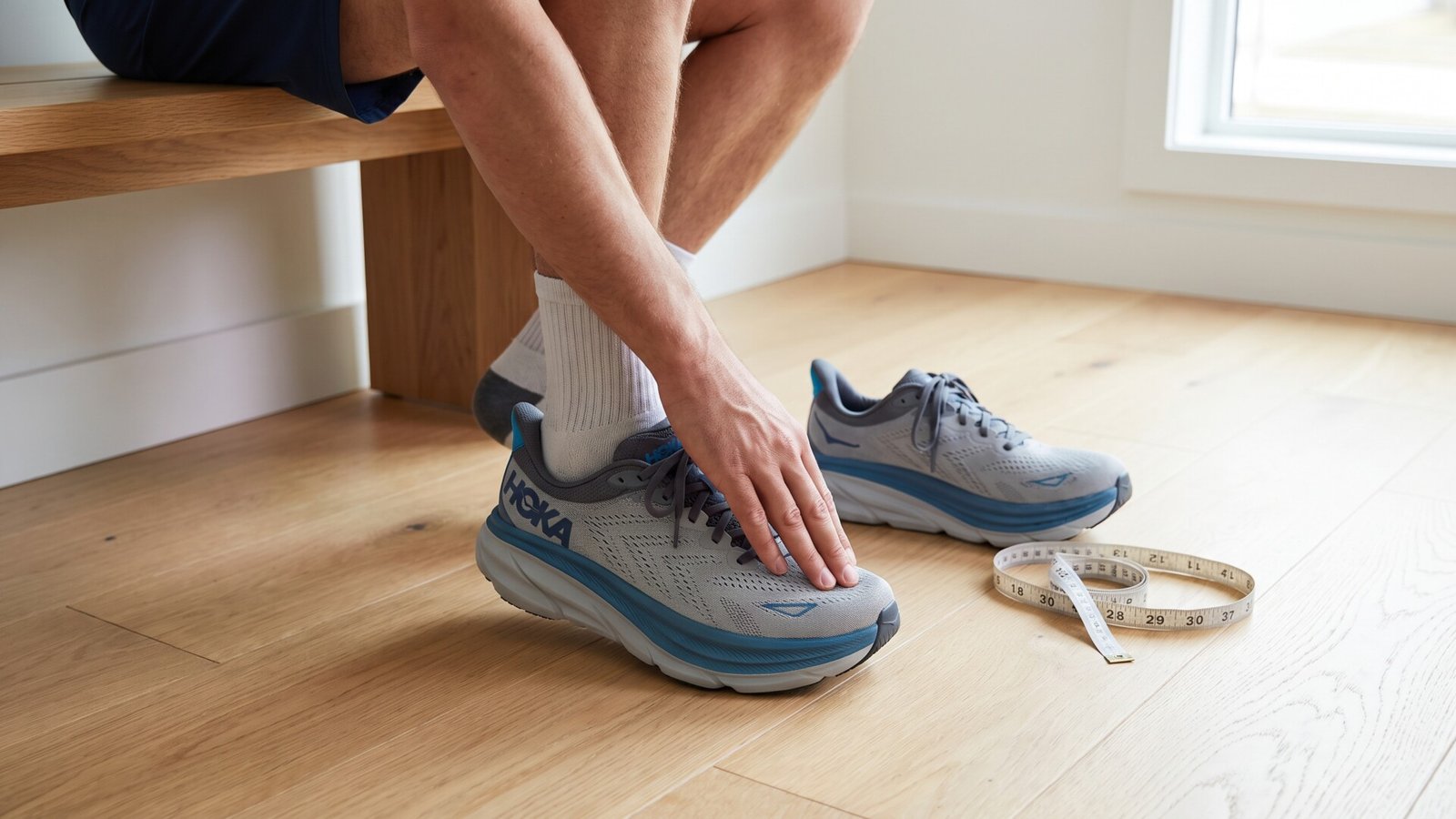
You can measure your feet at home in about five minutes, and it will save you a return shipping label. Here’s how to do it right.
Step 1: Measure at the end of the day. Your feet swell as the day goes on, and they swell more during activity. Measuring in the morning gives you a smaller number than what your feet actually are when you’re on them.
Step 2: Wear the socks you plan to use. If you’re buying Hokas for running, measure in your running socks. If they’re for everyday wear, use your everyday socks. Sock thickness changes the fit more than people expect.
Step 3: Measure both feet. One foot is almost always slightly longer than the other. Work with the larger measurement.
Step 4: Trace and measure. Stand on a piece of paper with your weight distributed normally, mark the back of your heel and the tip of your longest toe, then measure the distance. Don’t measure while sitting – your foot spreads when you stand.
Step 5: Compare against Hoka’s official size chart. Use the larger foot’s measurement and find your size. Hoka’s chart is based on foot length in centimeters, which is more reliable than guessing from a brand memory.
Now, a critical note: foot length is only the starting point. You also need to pay attention to:
- Forefoot width – where your foot is widest, around the ball
- Instep height – how much vertical room the upper needs
- Heel width – whether your heel is narrow, average, or wide
- Foot expansion – how much your foot spreads during walking or running
When you compare your measurement to the chart, don’t order the exact measured length. You want functional toe room – enough space for your toes to move and spread without hitting the front of the shoe.
After delivery fit check:
- Toes should not touch the front of the shoe
- The arch should sit naturally, not feel like it’s fighting the shoe
- Your heel should not lift excessively when you walk
- No pressure points should appear after several minutes of walking indoors
Wear them around the house on carpet. Keep the tags on. Check the return policy before you take them outside.
Hoka Widths and Toe-Box Fit
This is where most sizing mistakes happen. People confuse a width problem with a length problem, and they end up in shoes that are too long, too narrow, or both.
Hoka offers regular and wide widths on many models, but availability varies. Some models come in both widths. Some come in wide only in certain colorways or through certain retailers. Always confirm the exact width options for the specific model you’re looking at before you order.
Here’s the key distinction: needing a wide shoe is not the same as needing a larger size. Sizing up adds length throughout the shoe, but it doesn’t change the shape of the forefoot. If your foot is wide at the ball, a half-size-up regular-width shoe gives you a little more room but also leaves your heel swimming in extra space. A wide version keeps the length correct while giving your forefoot the shape it needs.
Signs a regular Hoka is too narrow:
- Pressure or pinching at the little toe
- Upper material bulging outward over the side of the foot
- Numbness or tingling during wear
- A hot spot developing at the ball of the foot
- Toes being pushed together rather than lying naturally
Signs the shoe is too wide or too long:
- Your foot slides forward when you walk downhill or at speed
- Excessive heel lift with every step
- Creasing across the upper in the wrong place, indicating your foot isn’t sitting where it should
- Needing to crank the laces down hard to feel secure
If you need a wide fit, look for wide versions of these models where available: Hoka Clifton 10, Hoka Bondi 9, Hoka Arahi 8, and Hoka Speedgoat 6. Wide availability changes, so verify the current options before you buy.
How Hoka Models Fit Differently
Not all Hokas fit the same. The brand builds different shoes for different purposes, and the uppers and platforms reflect that. Here’s what you need to know about the most popular models.
Hoka Clifton and Bondi
Hoka Clifton 10 is the brand’s versatile daily trainer, and for most people it’s the easiest Hoka to fit. The upper is forgiving without being sloppy, and the cushioning is substantial but not overwhelming. If you’re buying one Hoka for walking, commuting, and everyday wear, this is the model to start with. Focus on forefoot comfort and heel security rather than automatically sizing up for the cushioning.
Hoka Bondi 9 is the max-cushion king, and that substantial build changes how the shoe feels. The platform is wider and taller, which can feel different for people with low-volume feet. If your feet are narrow or you have a low instep, check the heel hold carefully and avoid excess length. The Bondi’s plush interior can make a slightly-too-long shoe feel fine for five minutes and then cause heel slip by hour two.
Comparing the two for everyday use: the Clifton is the easier all-purpose choice for most buyers. The Bondi makes more sense if you specifically want that maximum-cushion feel underfoot and you can confirm your heel sits securely.
Hoka Arahi and Gaviota
Hoka Arahi 8 is a stability model, and that shows in the fit. The structured upper and firmer medial post create a more secure, less forgiving feel. If you have a wide forefoot, the Arahi’s shape can feel more restrictive than the Clifton or Bondi. That’s not a sizing problem – it’s a model shape issue.
Hoka Gaviota 5 is Hoka’s maximum-stability option, and its roomy, supportive platform can appeal to walking and standing shoppers. The platform feels substantial and stable, which is great for long days on your feet. But don’t let the supportive feel convince you the fit is right – you still need to confirm the heel is held securely and your toes have room.
One warning: don’t choose a stability model just because it feels larger or more supportive. Width and foot shape are the deciding factors. If you don’t need stability features, a neutral shoe like the Clifton will likely fit better and feel more natural.
Hoka Speedgoat and Transport
Hoka Speedgoat 6 is a trail shoe, and trail fit is different from road fit. You need secure heel hold for downhill sections, enough toe protection that your toes don’t slam into the front on descents, and room for your feet to swell on long runs. The tricky part is balancing those needs – too much room and your foot slides forward on downhills; too little and your toes get battered.
Hoka Transport is a lifestyle and commuting option, and its fit should be judged with the socks and daily use you actually plan for. If you’re wearing it for work with dress socks, that’s a different fit than weekend wear with thicker socks.
Trail and commuter shoes genuinely require different fit priorities from road running shoes. Trail shoes need that secure heel and toe protection. Commuter shoes need all-day comfort without pressure points. Keep the intended use in mind when you’re evaluating fit.
Hoka Sizing Compared With Other Brands
Everyone wants a simple conversion formula – “I wear a 10 in Nike, so I should wear a…” – but it doesn’t work that way. Here’s a practical comparison table instead.
| Brand comparison | Best starting assumption | What may feel different | What to check |
|---|---|---|---|
| Hoka vs Nike | Start with the same numeric size | Hoka may feel roomier underfoot but not necessarily wider | Forefoot pressure and heel hold |
| Hoka vs New Balance | Start with the same size, then compare width | New Balance offers more visibly varied width options in many lines | Whether regular or wide is the better match |
| Hoka vs Adidas | Start with the same size but do not assume the same shape | Adidas models can feel narrower or lower-volume depending on the line | Toe spread and instep comfort |
| Hoka vs Brooks | Usually begin with the same size | Brooks and Hoka may differ in heel shape and upper tension | Heel movement during walking |
| Hoka vs casual sneakers | Do not copy the casual-sneaker size automatically | Casual shoes may be worn with a looser, less performance-focused fit | Functional toe room and secure lacing |
Why are brand-to-brand conversions so unreliable? Because every brand builds on different lasts – the foot-shaped form the shoe is constructed around. Nike tends toward a snugger, more athletic fit. New Balance offers more width options across more models. Adidas varies wildly between lines. And casual sneakers are often designed for a looser, more relaxed fit that has nothing to do with performance.
Here’s your priority order for online buying:
- Measure your foot and compare against Hoka’s size chart
- Choose the Hoka model based on your intended use
- Select the width option that matches your foot shape
- Account for your socks – the ones you’ll actually wear
- Use a familiar athletic shoe as a rough reference, not a rule
When you’re buying your second or third pair of Hokas, use your existing Hoka size as the reference point. That’s far more reliable than converting from a Nike or casual sneaker size.
What Most Buyers Get Wrong About Hoka Sizing
Let’s clear up the misconceptions that cause most of the returns.
Mistake: sizing up because the shoe looks bulky.
The thick midsole is under your foot, not around it. It doesn’t shorten the internal footbed. Sizing up because the shoe looks massive adds length you don’t need, which creates sliding, poor control, and blisters. Judge the fit by how your foot sits inside the shoe, not by how the shoe looks from the outside.
Mistake: treating wide feet as a length problem.
This is the most common error we see. Your foot is wide, the regular-width shoe feels tight, so you order a half size up. Now the shoe is too long, your heel slips, and your forefoot is still slightly cramped. The wide version solves the actual problem. Start there.
Mistake: judging fit from standing still.
Your foot spreads when you walk and run. It swells with activity. A shoe that feels fine standing in the store can develop pressure points after twenty minutes of walking. Do the indoor fit check properly – walk around, go up and down stairs if you can, and pay attention to hot spots that develop over several minutes.
Mistake: assuming maximum cushioning equals maximum comfort.
Cushioning is one factor. Width, heel hold, and natural foot placement matter just as much. A Bondi with the wrong width will feel worse than a properly fitted Clifton, regardless of how much foam is underfoot.
Mistake: ignoring the return window.
Once you wear shoes outside, most retailers won’t take them back. Check the fit indoors on carpet, keep the packaging intact, and confirm the return policy before you commit. That’s not paranoid – that’s smart shopping.
Which Hoka Size Makes Sense for Your Use?
Your ideal Hoka fit depends on what you’re actually doing in them. Here’s how to think about it by use case.
Running: Prioritize secure heel hold, adequate toe room, and a width that prevents forefoot pressure after your feet swell. Avoid an oversized fit that allows forward movement – that’s how you lose toenails on downhills.
Walking and standing all day: Comfort across the forefoot matters most, along with enough room for your feet to expand. Use lacing to secure the heel rather than buying a much longer shoe to compensate for a tight forefoot.
Travel and commuting: Choose the fit that works with the socks you’ll actually wear. If you’re going to be in and out of the shoes all day at airports or walking city streets, a loose heel becomes irritating fast.
Wide feet, bunions, or high-volume feet: Begin with a wide Hoka model when available. If the shoe still creates pressure, move to a different model shape rather than forcing the fit. The Clifton in wide is a solid starting point; the Bondi in wide gives you more platform if you want it.
Narrow feet: Test heel hold carefully and consider heel-lock lacing. A smaller size isn’t always the answer – it might fix the heel but cramp your toes. You may need to look at models with more adjustable lacing systems.
Trail use: Allow practical toe room for descents while keeping the midfoot and heel secure. The Speedgoat’s fit is designed for this balance, but you still need to verify it works for your specific foot.
The Hidden Cost of Choosing the Wrong Hoka Size
A poor fit isn’t just uncomfortable – it’s expensive. Here’s what actually happens when you get the size wrong.
The physical cost. Blisters, hot spots, and black toenails are the obvious consequences. But there’s also premature upper wear from your foot rubbing against the sides, uneven foot movement that can cause joint strain, and a shoe that breaks down faster because your foot isn’t sitting where the designers intended.
The financial cost. If you wear the shoes outside and discover the fit is wrong, you’re stuck with them. That’s $150 to $180 down the drain. Then you order the correct size, and now you’ve spent double. Or you try to fix the problem with insoles, thick socks, or other aftermarket solutions – and those add up too, without actually solving the shape mismatch.
The cost-per-wear math. A properly fitted pair of Hokas used several times per week can last a year or more of regular wear. That works out to a few dollars per wear. A cheaper pair that you abandon because it causes discomfort costs you the full price for zero wears. The correct size is always the better value.
Here’s your final decision framework:
- Keep the size if length, width, and heel hold all work together
- Exchange for a wide version if the length is right but the forefoot is tight
- Try a half size up if toes lack room but the width feels appropriate
- Try a different model if sizing changes create either heel slip or toe pressure
Which Hoka Fit Will Still Make Sense in Two Years?
Sizing is only part of long-term satisfaction. The best purchase is the model whose shape matches your foot without relying on temporary stretching or aftermarket fixes. A shoe that needs to “break in” significantly or that you have to pad with extra insoles to make work is a shoe that will never be truly comfortable.
Here’s how the popular models shake out for long-term value:
- Hoka Clifton 10 is the strongest general-purpose option for readers who want one Hoka for walking, commuting, and everyday wear. It’s versatile enough to handle multiple situations, and its fit is the most forgiving across different foot shapes.
- Hoka Bondi 9 is better for buyers who specifically prefer a more substantial cushioned ride and can secure the heel. If you love that max-cushion feeling, the Bondi delivers it consistently.
- Hoka Arahi 8 or Gaviota 5 are better for readers who need a structured, stability-focused fit and have confirmed the upper shape works for them. These are specialized tools for specific needs.
- Hoka Speedgoat 6 is better for trail-specific use, not as a default everyday sneaker. Its aggressive outsole and trail-focused fit are wasted on pavement.
On the trend and value front: Hoka’s recognizable maximal-cushioning look remains commercially relevant, and the brand shows no signs of slowing down. But a less specialized model like the Clifton is usually easier to wear across more situations and easier to replace later. The Bondi will always have its fans, but it’s a more specific purchase.
Here’s the contrarian conclusion: the most cushioned Hoka is not automatically the best long-term buy. The model with the cleanest heel-to-toe fit usually delivers better value, because you’ll actually want to wear it. A shoe that sits in your closet because it doesn’t fit right is worth nothing, no matter how much foam it has.
Final Verdict
Here’s the bottom line: start with your usual athletic-shoe size in the correct Hoka width, then adjust only when the fit check shows a specific length or shape problem.
For most buyers looking for one versatile pair for walking, commuting, and everyday wear, the Hoka Clifton 10 is the most practical starting point. Its fit is the most forgiving across different foot shapes, and it handles a wide range of situations without feeling out of place.
If you specifically want a more substantial cushioned feel and can confirm secure heel hold, the Hoka Bondi 9 delivers that experience better than anything else in the lineup.
And if you have wide feet, start with a wide version of the model you want. Don’t try to make a regular-width shoe work by sizing up – you’ll end up with a shoe that’s too long and still tight where it matters.
The number printed inside the shoe doesn’t matter. Correct length, comfortable width, and a secure heel do. Get those three right, and you’ll be happy with your Hokas for years.
Frequently Asked Questions About Hoka Sizing
Do Hoka shoes run true to size?
Most Hoka models are a reasonable starting point in your usual athletic-shoe size, but model shape and width can change the fit. Measure both feet and check toe room, forefoot comfort, and heel security.
Should I size up or down in Hoka shoes?
Start with your normal athletic-shoe size. Consider a half size up only when the shoe is short in the toe area and the width already feels suitable. Do not size up simply to solve a width problem.
Are Hoka shoes good for wide feet?
Several Hoka models are available in wide widths, but availability varies. Wide feet should usually start with a wide version rather than a longer regular-width shoe.
Do Hoka shoes have a wide toe box?
Hoka toe-box shapes vary by model. Some feel more accommodating than others, but a wide toe box is not the same as a wide overall shoe. Check forefoot pressure and heel fit together.
Should Hoka shoes feel tight at first?
The upper should feel secure but not painful, restrictive, or numb. Do not rely on a shoe stretching significantly if it already creates pressure during an indoor fit check.
How much space should I leave in front of my toes in Hoka shoes?
Leave enough functional room for your toes to move without touching the front, especially for running and downhill walking. Too much empty space can cause the foot to slide and create blisters.
Why do my Hoka shoes feel loose in the heel?
The model may not match your heel shape, or the shoe may be too long or insufficiently laced. Try heel-lock lacing first. If the heel still moves, changing models may work better than sizing down.