Top Asics Sneakers for Running in 2026
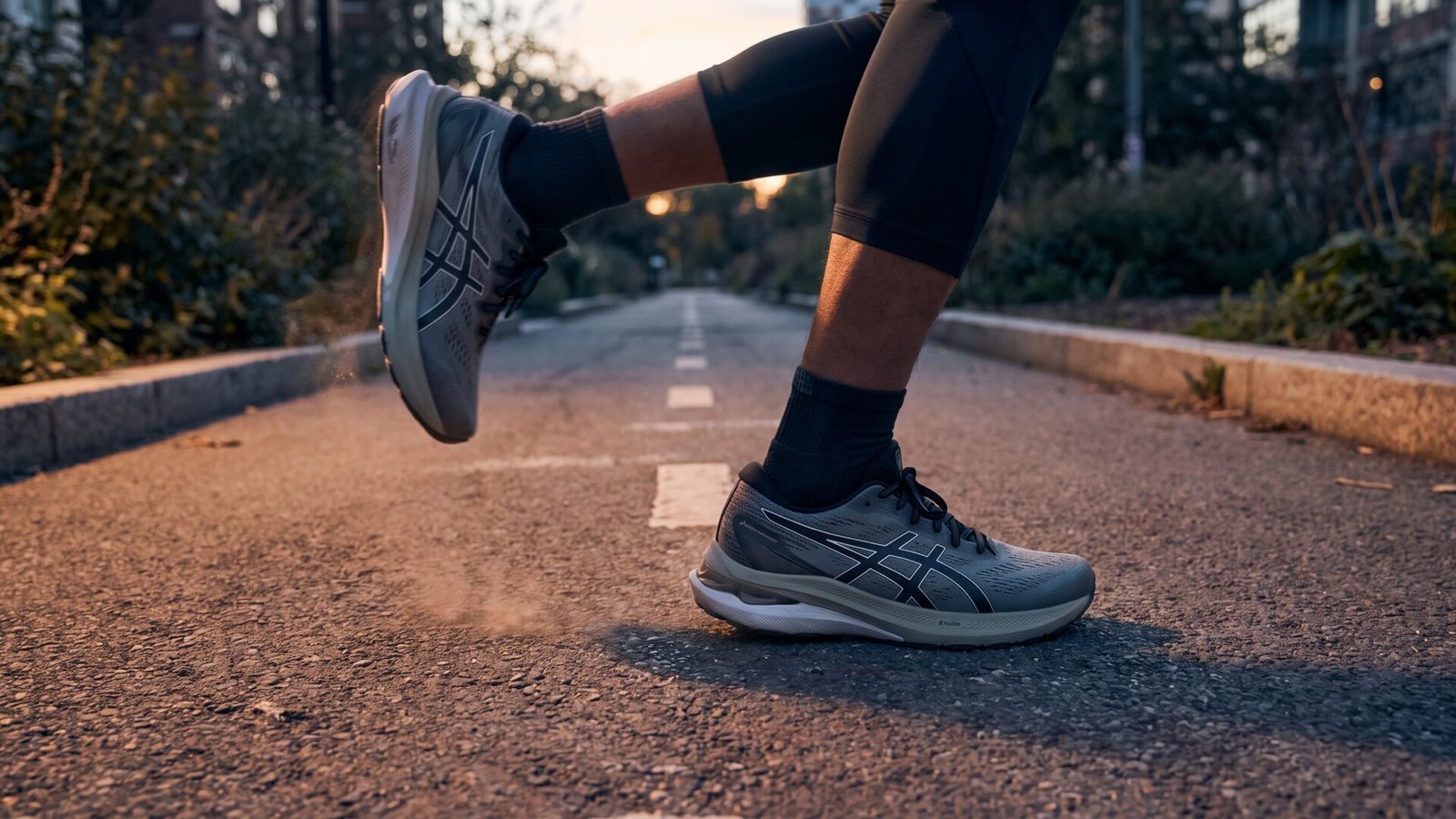
Asics has long been a benchmark for comfort and durability in running shoes. The names in this guide have moved on a lot since the first edition, though: the Gel-Kayano is now on version 33, the Gel-Nimbus on 28, the Gel-Cumulus on 28, and the GT-2000 on 15. If you are shopping for the best Asics running shoes in 2026, this page walks through the current lineup, what each shoe is actually for, and which one to try first.
A quick note on how to read the prices: they are US list or typical retail ranges checked against Asics and large running retailers in October 2026. Sales, colorways and last-season versions move them around, so treat them as a guide, not a promise. Where I could not verify a spec, I have left it out instead of guessing.
Quick Answer: Which Asics Running Shoe Should You Buy?
- Softest, most cushioned daily shoe: Gel-Nimbus 28, roughly $165–$175.
- Stability for overpronators: Gel-Kayano 33, roughly $165–$175, or the cheaper GT-2000 15, roughly $145–$155.
- Do-it-all neutral trainer: Gel-Cumulus 28, roughly $140–$150.
- Fun, bouncy daily trainer: Novablast 6, roughly $150–$160.
- Budget-friendly daily trainer: Dynablast 6, roughly $115–$125.
- Race day: Metaspeed Sky Tokyo or Metaspeed Edge Tokyo, roughly $265–$275, or the more affordable Magic Speed 5 at roughly $175–$185.
- Triathlon: Noosa Tri 16, roughly $140–$150.
Asics Running Shoes at a Glance (2026 Versions)
Asics sorts its road shoes into neutral and stability, and the model you pick should start with that choice. Here is the current lineup covered in this guide:
| Model | Type | Typical price (USD) | Key tech | Best for |
|---|---|---|---|---|
| Gel-Nimbus 28 | Neutral, max cushion | $165–$175 | FF Blast Plus foam, PureGEL in the heel | Long easy miles, recovery runs |
| Gel-Kayano 33 | Stability | $165–$175 | FF Blast Max over FF Blast Plus, PureGEL heel, FluidSupport | Overpronators wanting plush support |
| Gel-Cumulus 28 | Neutral | $140–$150 | FF Blast Max, FLUIDRIDE | All-round daily mileage |
| GT-2000 15 | Stability | $145–$155 | 3D Guidance System, FF Blast Max | Mild to moderate overpronation |
| Novablast 6 | Neutral | $150–$160 | FF Blast Max, FF Turbo pod, AsicsGRIP | Bouncy daily runs and some speed |
| Dynablast 6 | Neutral | $115–$125 | FF Blast Plus, central midsole pod | Value daily trainer |
| Superblast 3 | Neutral, max cushion | $205–$215 | FF Leap, FF Blast Plus | Premium long-run trainer |
| Magic Speed 5 | Neutral, speed | $175–$185 | FF Leap, FF Blast Plus, carbon plate | Fast training and tempo days |
| Metaspeed Sky Tokyo | Neutral, race | $265–$275 | FF Leap, FF Turbo Plus, carbon plate | Racing, long stride runners |
| Noosa Tri 16 | Neutral / guided | $140–$150 | FF Blast Plus, 3D Guidance, 5 mm drop | Triathletes and quick-lacing needs |
Prices and foam names come from Asics launch listings and large US running retailers, October 2026. Weights and stack heights are given below only where a review or the brand published them.
A quick glossary
- Stack height is how much material sits between your foot and the ground. More stack usually means a softer, more protected ride.
- Drop is the height difference between heel and forefoot, in millimeters. A lower drop shifts load a little toward the forefoot and calves.
- Overpronation means the foot rolls inward more than average on landing. Stability shoes add structure to guide that motion; neutral shoes do not.
- FF Blast, FF Leap, FF Turbo are Asics’ FlyteFoam midsole compounds. Blast Max is the softer, bouncier everyday foam, Blast Plus is a bit firmer, and Leap and Turbo are the high-rebound race and tempo foams.
1. Asics Gel-Kayano 33
The Gel-Kayano has been Asics’ flagship stability shoe for decades, and the 33rd edition changes the support system. Asics replaced the older 4D Guidance System with FluidSupport, which uses a broad platform and a firmer foam layer to steady the foot instead of a hard plastic post. The midsole is a soft FF Blast Max top layer over FF Blast Plus, with a PureGEL insert under the heel.
- Weight: about 10.5 oz (298 g) for men’s and about 9.1 oz (258 g) for women’s, per lab testing and brand specs published by RunRepeat.
- Drop: 8 mm per Asics (lab measurement was 8.5 mm).
- Price: roughly $165–$175; the previous Kayano 32 is often discounted into the $120s.
Watch out for: if you loved the Kayano 32, do not assume the 33 rides the same. Reviewers describe the new version as firmer. The support is more of a guided platform than a stiff wall, so very severe overpronators should talk to a running store or podiatrist.
Best for: overpronators, long-distance runners, heavier runners and walkers who want cushioning and structure in the same shoe. If you came here looking for the retro fashion shoe, that is a different animal: our Nike Vomero 5 vs ASICS Kayano 14 comparison covers the Gel-Kayano 14 reissue, which should not be confused with this running shoe.
2. Asics Gel-Nimbus 28
The Gel-Nimbus is the plush one. The 28th version keeps FF Blast Plus foam and a PureGEL insert in the rearfoot, and a new engineered knit upper makes it the lightest Nimbus to date.
- Weight: about 9.9 oz (280 g) for men’s size 9 and about 8.5 oz (241 g) for women’s size 8, according to Doctors of Running.
- Stack height: about 43.5 mm at the heel and 35.5 mm at the forefoot for men’s, listed with an 8 mm drop. Women’s is roughly 1 mm lower.
- Price: roughly $165–$175, unchanged from the previous generation.
What changed from the Nimbus 27: reviewers say the ride is firmer and snappier than the 27, helped by a later forefoot rocker, and that the thinner tongue can cause lace bite for some. There is also a bit less outsole rubber, so keep an eye on wear if you log heavy mileage.
Best for: neutral runners, recovery days, long easy miles, and anyone who stands or walks all day and wants the softest Asics. It also lines up with the picks in our most comfortable sneakers for standing all day guide.
3. Asics Gel-Cumulus 28
The Gel-Cumulus is the quiet workhorse of the range: not the plushest, not the most exciting, but a shoe that works for a lot of feet. Version 28 uses FF Blast Max foam and Asics’ FLUIDRIDE midsole geometry, with a neutral platform. European retail listings put it at around 265 g with an 8 mm drop.
- Price: roughly $140–$150.
- Why pick it over the Nimbus: it is lighter in feel and about $25 cheaper, with slightly less cushion.
- Why pick it over the Novablast: a calmer, more predictable ride with less bounce.
Best for: neutral runners training three to four days a week, beginners who want one reliable shoe, and walkers who prefer a cushioned but not mushy ride.
4. Asics GT-2000 15
The GT-2000 replaces the GT-3000 name many older guides still cite; the current stability shoe one step below the Kayano is the GT-2000 15. It uses the 3D Guidance System (a wide base and flared platform) and FF Blast Max foam, and Asics lists it as a stability model.
- Price: roughly $145–$155.
- Weight: about 8.8 oz for men’s and 7.8 oz for women’s, based on retailer specs.
- Fit with the lineup: a lighter, cheaper alternative to the Kayano 33 for mild to moderate overpronation. If you want a budget stability option, the GT-1000 15 (roughly $110–$120) offers lighter guidance.
Best for: everyday runners and walkers who want some guidance without the weight or price of the Kayano. For heel-pain shopping specifically, see our best Asics sneakers for plantar fasciitis, which compares these models against each other in detail.
5. Asics Novablast 6
The Novablast has become the model many runners point to when asked for one fun Asics. It pairs FF Blast Max foam with an FF Turbo Squared pod and AsicsGRIP rubber, and a rockered shape that makes it feel lively. It is a neutral shoe, so it will not do the job of a Kayano.
- Price: roughly $150–$160 (the Novablast 5 is on clearance for around $130 at some retailers).
- Ride: bouncy and light enough for intervals, soft enough for easy days.
Best for: runners who own one pair for everything, plus anyone who likes a springy feel. The same bounce also makes it a good casual crossover, a point we cover in ASICS vs HOKA Clifton 9 for road running.
6. Asics Dynablast 6
The Dynablast is the value pick in the bouncy family. Version 6 uses FF Blast Plus foam with a central midsole pod and a light, breathable upper. It sits at the lower end of the daily-trainer range at roughly $115–$125, which is why it keeps showing up in gift guides and first-pair recommendations.
Best for: neutral runners on shorter to medium runs, newer runners, and anyone who wants a lively ride without paying Novablast money. Heavier runners or those doing very high mileage should look at the Cumulus or Nimbus for more cushioning.
7. Asics Superblast 3 and Megablast
If you want a long-run shoe with a premium feel, the Superblast 3 (roughly $205–$215) combines FF Leap with FF Blast Plus foam. The newer Megablast (roughly $220–$230) uses FF Turbo Squared and AsicsGRIP. Both are neutral max-cushion trainers with a high price, so they suit runners who put in serious weekly mileage and want a bouncy, protective ride. Most casual runners will be just as happy with a Cumulus or Novablast.
8. Asics Magic Speed 5, Metaspeed Sky Tokyo and Metaspeed Edge Tokyo
The speed shoes are where Asics uses its carbon plates. The Magic Speed 5 (roughly $175–$185) is the entry point: FF Leap and FF Blast Plus foam with a carbon plate, and a weight drop of about 50 g versus the Magic Speed 4. It works for fast training days and plenty of racers use it as a 10K or half-marathon shoe.
The Metaspeed Sky Tokyo and Metaspeed Edge Tokyo (each roughly $265–$275) are the race flagships, with FF Leap and FF Turbo Plus foam and a full carbon plate. Asics positions the Sky for runners who gain speed through longer strides and the Edge for those who rely on higher cadence. They are race-day shoes: they are not what you want for every easy run, and their durability will be shorter than a daily trainer.
Best for: competitive runners and anyone chasing a personal best in a 10K to marathon. If you are not racing, save the money.
9. Asics Noosa Tri 16
Triathletes get their own shoe: the Noosa Tri 16 (roughly $140–$150) is a neutral/guided shoe with FF Blast Plus foam, the 3D Guidance System, AsicsGRIP and a 5 mm drop. Its upper and lacing are built for fast transitions, which is the whole point of the line. Outside of triathlon, there is little reason to choose it over a Cumulus or Novablast.
What Happened to the Gel-Quantum 360?
An earlier version of this guide listed the Gel-Quantum 360 7 as a running shoe. It is better described as a lifestyle shoe built around full-length gel, and its gel unit and look appeal to sneaker fans more than to runners. I have removed it from the running list. If you like the style, see our GEL-Lyte III vs GEL-Quantum lifestyle showdown.
How to Choose the Right Asics Running Shoe
Start with foot motion: neutral or stability
If your foot rolls inward noticeably when you land, a stability shoe (Kayano 33 or GT-2000 15) adds guidance. If it does not, a neutral shoe (Nimbus 28, Cumulus 28, Novablast 6, Dynablast 6) gives you more freedom. A running store gait check can help, but comfort matters more than a label.
Match the shoe to your runs
- Easy and long runs: Nimbus 28, Cumulus 28 or Superblast 3.
- Mixed training: Novablast 6 or Dynablast 6.
- Speedwork and racing: Magic Speed 5, Metaspeed Sky Tokyo or Metaspeed Edge Tokyo.
- Walking and standing all day: Nimbus 28, Cumulus 28 or GT-2000 15.
Check fit and sizing
Asics sizing varies by model and by width. Many models come in wide options; if standard widths feel tight, see our best sneakers for wide feet. Try shoes on in the afternoon, when feet swell a little, and leave about a thumb’s width in front of your longest toe. Sizing tendencies differ from model to model, so use the Asics size guide and retailer reviews rather than a fixed rule.
Know when to replace them
Many running brands suggest replacing daily trainers after several hundred miles. The midsole usually flattens before the upper looks worn, so aches in your feet or shins are a better signal than the visible wear.
Which Asics for Which Runner? Four Quick Scenarios
The new runner starting with three runs a week. Go for the Gel-Cumulus 28 or the cheaper Dynablast 6. Both are neutral and forgiving, and neither needs a gait analysis to get right. Spend the saved money on good socks and a second pair so you can rotate.
The heavier runner or someone who logs lots of easy miles. The Gel-Nimbus 28 and Gel-Kayano 33 have the most cushioning in the road range. Pick the Nimbus if your foot is neutral and the Kayano if it rolls inward. Both are in the $165–$175 range, and last-generation versions are often cheaper.
The runner who wants one shoe for everything. The Novablast 6 is the closest Asics gets to a single-shoe answer: soft enough for easy days and lively enough for strides and tempo work. If you later want to add a race shoe, a Magic Speed 5 sits nicely beside it.
The walker or commuter. You do not need a racing shoe. The Nimbus 28, Cumulus 28 and GT-2000 15 are the most comfortable for long days on your feet, and our guide to comfortable sneakers for standing all day shows how they compare with other brands.
Common Mistakes When Buying Asics Running Shoes
- Buying an outdated version by accident. Many listings still show the Kayano 31, Nimbus 25 or Cumulus 26. They can be good deals, but know that the current versions are Kayano 33, Nimbus 28 and Cumulus 28, and the ride can differ.
- Choosing stability you do not need. If you are neutral, a stability shoe may feel restrictive. Stability is about how your foot behaves, not a sign of a better shoe.
- Racing shoes for every run. Carbon-plated Metaspeed shoes are made for race days; using them daily wears them out fast.
- Ignoring width. A shoe that pinches at the forefoot will not get comfortable with mileage. Check available widths before you decide.
- Treating shoes as medical treatment. No shoe treats foot pain. If you have lingering pain, see a podiatrist or physical therapist.
Asics Running Shoes vs the Competition
Asics is not the only way to go. If you are comparing, look at ASICS vs HOKA Clifton 9 for a cushioned daily shoe, and if you want retro style rather than a running shoe, New Balance 2002R vs ASICS Gel-1130 and ASICS Gel-1130 vs Nike Vomero 5 cover that side. For running-flavored shoes you can wear all day, the best chunky dad shoes for 2026 is another good read.
On a budget, the best sneakers under $150 for everyday wear and how to find comfortable sneakers under $150 pair well with the Dynablast, Cumulus and GT-2000 prices here. Our Sneakers Buying Guides hub collects the rest, and the history of ASICS sneakers explains where the brand came from.
Frequently Asked Questions
Asics Running Shoes: Frequently Asked Questions
What is the best Asics running shoe in 2026?
It depends on the run. The Gel-Nimbus 28 is the plush pick, the Gel-Kayano 33 is the stability pick, the Gel-Cumulus 28 is the all-round neutral pick, and the Novablast 6 is the bouncy daily trainer. For racing, look at the Metaspeed Sky Tokyo or Edge Tokyo.
What is the difference between the Asics Nimbus and the Kayano?
The Nimbus is a neutral, max-cushion shoe. The Kayano is a stability shoe with a guided platform, which suits runners whose feet roll inward. Pick the Nimbus for softness and the Kayano for structure.
Is the Asics Gel-Cumulus 28 good for beginners?
Yes, it is a common first pair because it is neutral, cushioned and predictable. It is a sensible default if you do not need stability support.
Which Asics running shoes are best for overpronation?
Stability models: the Gel-Kayano 33 for more support and plush cushioning, and the GT-2000 15 for a lighter, cheaper option. The GT-1000 15 offers milder guidance at a lower price.
What happened to the Asics GT-3000?
Older guides cite a GT-3000 as the middle stability shoe, but the current stability range is the Kayano 33, GT-2000 15 and GT-1000 15, so those are the ones listed here.
Are Asics Metaspeed shoes worth it?
Only if you race. The carbon-plated Metaspeed Sky Tokyo and Edge Tokyo cost roughly $265–$275 and are built for race day, not everyday training. The Magic Speed 5 is the cheaper way to get a plated shoe.
How long do Asics running shoes last?
It varies with body weight, gait and surface. Many brands suggest replacing daily trainers after several hundred miles, and the midsole tends to flatten before the upper looks worn.
Can I wear Asics running shoes casually?
Yes. The Novablast 6, Cumulus 28 and Nimbus 28 are comfortable for all-day wear, though the retro Gel-Kayano 14 and Gel-1130 are the lifestyle models.
The Bottom Line
For most people, the choice comes down to three shoes: the Gel-Cumulus 28 if you want one dependable neutral trainer, the Gel-Kayano 33 if you need stability, and the Gel-Nimbus 28 if you want maximum cushion. Add a Novablast 6 or Dynablast 6 for fun days, and keep the Metaspeed line for race day. Try a couple on, run or walk in them around the store, and trust how your feet feel.