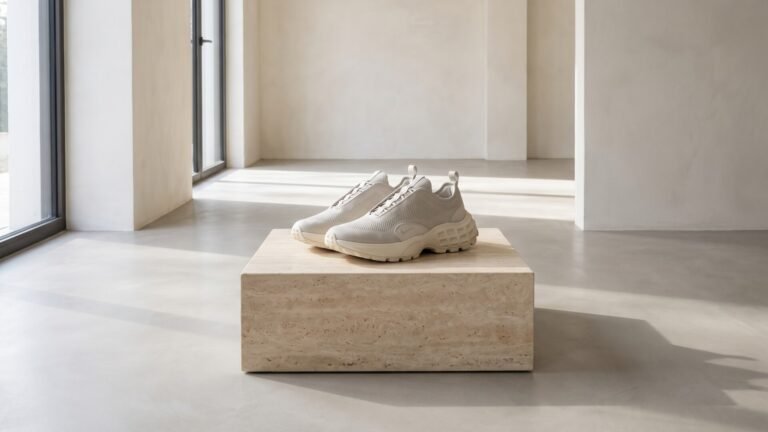
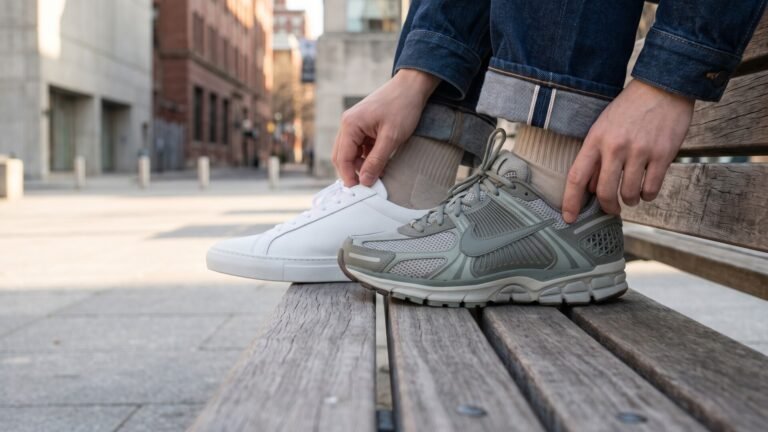
New Balance 530 vs. Nike Pegasus: Retro Style or Running Performance?
The New Balance 530 is the better-looking shoe; the Nike Pegasus is the better shoe. That’s the whole thing, and everything else in this comparison is a version of that sentence.
Here’s why that’s more annoying than it sounds. Both are comfortable enough that you can wear either one all day and not hate your life. So the decision doesn’t get made on comfort in the abstract – it gets made on what kind of comfort you actually need. The 530 gives you a firm, old-school running feel and a silhouette that carries an outfit. The Pegasus gives you modern cushioning, smoother transitions, and a shoe that’s genuinely built around forward motion. Pick the 530 for fashion and casual wear. Pick the Pegasus if walking performance, standing comfort, or active daily use is the point. That’s the tradeoff in one line, and the rest of this is us showing our work.
At a Glance: New Balance 530 vs. Nike Pegasus
| Category | Winner | Why |
|---|---|---|
| Retro style | New Balance 530 | Layered early-2000s runner look you can’t fake |
| Running performance | Nike Pegasus | Actually built for road miles, not just styled like it |
| Casual outfits | New Balance 530 | Loves denim, wide-leg pants, cargos, streetwear |
| Long walks | Nike Pegasus | Purposeful cushioning and a smoother ride |
| Trend appeal | New Balance 530 | Plugged into the retro-runner moment |
| Everyday value | Depends on use | 530 for casual wear, Pegasus for mixed active use |
Quick calls, no hedging:
- Choose the New Balance 530 if style, retro design, and casual versatility are what you’re actually shopping for.
- Choose the Nike Pegasus if walking, commuting, running, and all-day practicality matter more than the fit pic.
- Editor’s choice for most active daily wear: Nike Pegasus.
- Editor’s choice for a fashion-first wardrobe: New Balance 530.
If you already know which camp you’re in, you can stop reading. If you’re not sure, the next section is the one that matters.
New Balance 530 vs. Nike Pegasus: The Core Difference
The 530 started life as a performance running shoe. It isn’t one anymore. Today it functions as a retro lifestyle sneaker, and that’s not a knock – it’s the entire point. The layered upper, the traditional running shape, the early-2000s proportions: those are style decisions now, not engineering ones. New Balance knows exactly what they’re selling, and so do the people buying it. For the full breakdown of what you’re getting, our [Internal: New Balance 530 review] goes deeper than we can here.
The Pegasus is the opposite story. It’s a current performance running shoe that happens to be comfortable enough that a huge number of people buy it for walking and daily wear. Nike keeps updating it around cushioning, foot transitions, and repeated movement. That’s why it feels the way it does. It wasn’t designed to complete an outfit. It was designed to carry you through a day of steps.
Here’s the buying psychology, because it’s doing more work than any spec sheet. The 530 signals that you know retro sneaker culture. The Pegasus signals that you’re active, practical, maybe a little boring in the best way. Neither is wrong. They’re just answering different questions.
So use this framework. Buy the 530 when the shoe completes the outfit. Buy the Pegasus when the shoe needs to carry the day. If you’re honest about which of those describes your actual life, you’ll land on the right pair in about ten seconds.
Design, Styling, and Cultural Relevance
Why the New Balance 530 wins on retro style
The 530’s upper is busy in a way that works. Mesh base, synthetic overlays, visible running details, a shape that looks like it came out of a 2002 catalog in the best possible way. That layered look is the whole appeal. It reads as vintage athletic without trying too hard.
It also plays nice with a lot of outfits. Straight-leg denim, relaxed trousers, cargo pants, leggings, casual streetwear – the 530 slots into all of it. The silhouette has real presence, and it’s tied directly into the current revival of early-2000s running shoes and the whole "dad sneaker" styling wave. That’s not a small thing. It means the shoe looks intentional even when you threw the outfit together in four minutes.
The tradeoff is real, though. That busy upper can be harder to dress up, and it can look messy next to a clean minimalist outfit. If your wardrobe is all plain tees and tailored trousers, the 530 might fight you. It wants to be the loudest thing you’re wearing, or close to it.
Why the Nike Pegasus is easier to wear actively
The Pegasus is cleaner. More performance-led. It fits gym clothing, commute outfits, travel clothing, and technical sportswear without any friction. Throw it on with joggers and a hoodie and it looks correct. Throw it on with travel pants and a quarter-zip and it looks correct. It’s a shoe that disappears into an active outfit, which is exactly what you want from it.
What it doesn’t have is the 530’s fashion character. In a streetwear fit, the Pegasus looks like a running shoe you wore to a streetwear thing. That’s fine. It’s just not the same statement.
Colorway flexibility cuts both ways here. Understated Pegasus versions – black, grey, white – vanish into an outfit, which is useful. The 530’s color combinations often become a visible styling element, which is the point. If you want the shoe to be part of the look, that’s the 530. If you want the shoe to get out of the way, that’s the Pegasus.
Bottom line: the Pegasus has broader activity credibility. The 530 has stronger retro-fashion credibility. Pick the credibility you actually need.
Which shoe has better trend longevity?
This is where we push back on the hype a little.
The 530’s fashion relevance depends on retro running shoes staying popular. Right now they are, hard. But trends move, and a shoe whose main job is being on-trend is exposed when the trend cools. That doesn’t mean it becomes unwearable – it means its peak visibility fades.
The Pegasus is far less exposed to trend cycles because it stays useful as a running and walking shoe no matter what’s fashionable. Nobody stops needing a comfortable shoe to walk in.
So the practical conclusion: the 530 makes a stronger first impression, but the Pegasus is less likely to feel like a fashion-only purchase after a few years. If you’re the kind of person who buys a shoe and wears it for four years, that matters. If you rotate pairs and treat sneakers as part of a wardrobe, the 530’s trend risk is smaller than it sounds. For more on how the retro-runner wave is holding up, our [Internal: New Balance brand hub] tracks the broader picture.
Comfort, Walking, and Running Performance
Cushioning and ride feel
The 530 feels like an old running shoe, because that’s what it is underneath. Relatively firm, grounded, stable. For casual walking and short trips it’s supportive and pleasant. What it isn’t is smooth over long, repetitive activity – the ride wasn’t tuned for that, and you’ll feel it after a few hours of continuous steps.
The Pegasus is the opposite approach. Modern, responsive cushioning built around forward motion. It rolls you through a stride instead of making you work for it. That’s why it feels better the longer you’re on your feet.
One warning, because this trips up a lot of buyers: softer does not automatically mean better. Some people genuinely prefer the 530’s firmer, more grounded feel for short daily use. A mushy shoe can feel unstable if you like feeling the ground. Know which person you are before you assume more cushion equals more comfort.
Standing and long-distance walking
If your day involves airports, commuting, sightseeing, or a job where you’re on your feet for hours, get the Pegasus. That’s not a close call. The cushioning and transition are built for exactly that kind of repeated movement.
The 530 is better for errands, short walks, casual social use, and moderate daily movement. It’ll get you through a normal day fine. It’s the eight-hour sightseeing day where it starts to show its age.
The hidden variable here is foot fatigue. A shoe can feel great in a two-minute try-on and become a different shoe at hour six. Heel security, forefoot room, and how the midsole holds up under repeated load are separate questions from "does this feel nice right now." Try shoes late in the day when your feet are at their largest, and check the retailer’s return policy before you commit. That single habit saves more bad purchases than any review.
Running and gym use
The Pegasus is the obvious choice for regular road running. It’s a current running shoe, and it’s good at being one. Treadmill, warmups, walking workouts, mixed gym sessions – it handles all of it. For a fuller look at what it’s built for, our [Internal: Nike Pegasus review] covers the version-by-version differences.
The 530 is not the sensible pick for structured running, full stop. Yes, it started as a running model. No, that doesn’t make it one now. Heritage is not performance. If you try to run real miles in a 530, you’re asking a lifestyle shoe to do a job it wasn’t designed for, and your knees will file a complaint.
Neither shoe is a universal sports solution, either. Court sports, lifting, and specialized training all want shoes designed for those things. Don’t force one pair to cover everything.
Fit, Sizing, and Foot Shape
New Balance 530 fit
The 530 generally runs close to true to size. The layered upper and traditional shape mean it can feel different depending on your foot volume – people with average-width feet usually have the easiest time. If your foot is wider, don’t assume the standard fit will stretch out enough. Look for a wide version where it’s offered, size up carefully, or buy from a retailer with a generous return policy. Our [Internal: New Balance 530 sizing guide] breaks down the width options in more detail.
Heel security is the thing to check. A shoe that feels roomy in the forefoot but slips at the heel is not a good fit, no matter how good the toe box feels in the store. Walk around. If your heel lifts, size down or pass.
Nike Pegasus fit
The Pegasus also runs close to true to size for many wearers, but the fit is more performance-oriented. Runners tend to like the secure midfoot hold. Everyday buyers sometimes want more toe room than the Pegasus gives by default. Measure your feet later in the day and leave practical space in front of your toes, especially if you’ll use them for long walks or running.
One important note: Pegasus fit can shift from version to version. Nike tweaks the upper and last over time, so verify the current model’s sizing guidance before you order. Don’t assume last year’s fit carries over.
Best choice for wide feet and foot comfort
We’re not going to promise either shoe suits every wide foot, because that would be a lie. Here’s the honest comparison of the risk. The 530’s layered upper can feel restrictive in spots. The Pegasus’ secure performance fit can feel too snug if you wanted a relaxed casual fit.
Prioritize three things over brand loyalty: available wide sizing for the exact model, a return policy that lets you actually test the fit, and your intended activity. Buy for your foot, not for the photo.
Durability, Weather, and Long-Term Ownership
Both shoes wear at the same basic points: outsole abrasion, mesh staining, heel lining wear, and midsole compression. What differs is how fast and how visibly.
The 530’s lifestyle use works in its favor – casual wear is gentler than running miles. But the visible light-colored mesh makes it look worn sooner. A scuff on a grey mesh 530 is a lot more noticeable than the same scuff on a dark Pegasus. Cosmetic aging is real aging when the shoe is part of your outfit.
The Pegasus used for running accumulates more impact and mileage, so replacement timing depends on use, not calendar age. A Pegasus worn for errands can last years. A Pegasus run in regularly will need replacing on a mileage basis, and you’ll know because the midsole starts feeling flat before the outsole looks dead.
Maintenance is straightforward for both. Soft brush, mild cleaning solution, air dry. Don’t machine-wash either one and don’t treat them as weatherproof – neither is. A basic [Affiliate: sneaker cleaning kit] and a pair of shoe trees will do more for longevity than any product claim. Rotate pairs when you can; letting a shoe fully dry between wears extends its life more than most people realize.
Here’s the ownership insight most listings skip: the longer-lasting shoe is usually the one used for the right job. Run in the 530 and you’ll wreck it fast. Use the Pegasus as a fashion-only purchase and you’ve paid for performance you’re not using. Match the shoe to the job and both last.
What Most Buyers Get Wrong
Mistake one: choosing the 530 because it was once a running shoe. Heritage doesn’t make a current lifestyle sneaker equivalent to a modern running model. If you want to run, buy a running shoe. The 530’s running DNA is a design story, not a performance feature.
Mistake two: assuming the Pegasus is too technical for casual outfits. It isn’t. Neutral colors and simple clothing make it work for commuting, travel, and understated streetwear. A black Pegasus with jeans and a plain tee looks completely normal. People overestimate how "sporty" a clean running shoe reads.
Mistake three: judging comfort in a quick try-on. Short-term softness, heel security, forefoot room, and fatigue over several hours are four separate things. The try-on only tests the first one. Wear them around the house for a day if the return policy allows it.
Mistake four: buying on trend momentum alone. The 530 has a stronger current fashion signal. The Pegasus has a more durable practical role. If you buy the 530 purely because it’s everywhere right now, you might be shopping for a moment instead of a shoe. Buy it because you like how it looks with your clothes, which is a reason that survives the trend.
Which Shoe Still Makes Sense in Three Years?
Run the clock forward. In three years, the 530 is still wearable if you already dress in retro, casual, or streetwear silhouettes. Even if its peak trend visibility fades, it still works with the clothes you own. That’s the test – does the shoe depend on the trend, or does it depend on your wardrobe? If it’s the latter, you’re fine.
The Pegasus offers stronger long-term utility for anyone who walks, commutes, travels, runs, or wants one active pair. It doesn’t need a trend to justify itself. It just needs you to keep moving.
Cost per wear makes this concrete. A 530 makes sense when you wear it frequently with casual outfits and keep it clean. A Pegasus makes sense when it replaces separate walking and light running shoes – one pair doing two jobs is real value. And sometimes a second pair beats forcing one shoe to cover incompatible uses. A 530 for style plus a Pegasus for steps is a smarter two-shoe setup than trying to find one shoe that’s great at both. If that’s the direction you’re leaning, our [Internal: best sneakers for walking and travel] roundup covers the walking side properly.
Firm recommendation: the Pegasus is the safer long-term utility purchase. The 530 is the more rewarding style purchase for the right wardrobe.
Value for Money and Buyer Recommendations
Cost and value comparison
Check current retailer pricing rather than trusting any fixed number – both models vary by colorway, version, sale timing, and retailer. What matters is value by use, not sticker price.
The 530’s value comes from styling range and how often you’ll actually wear it casually. The Pegasus’ value comes from performance, walking comfort, and activity versatility. A shoe you wear four times a week is a better buy than a cheaper shoe that sits in the box.
Sale buying is where this gets interesting. The 530 is especially attractive when discounted, because its lifestyle role doesn’t require the newest version – last season’s colorway is just as good. The Pegasus can justify a higher price when you’re using it for regular activity, because you’re paying for function you’ll actually consume. Watch for [Affiliate: New Balance 530 deals] and [Affiliate: Nike Pegasus markdowns] around seasonal sales.
Who should buy the New Balance 530?
- Buyers who want a recognizable retro runner aesthetic and will style around it.
- Shoppers who mostly need a casual sneaker for outfits, errands, and social wear.
- Anyone who prefers a firmer, more traditional sneaker feel over a performance ride.
- Buyers who already own a separate running or walking shoe and want a style pair.
Who should buy the Nike Pegasus?
- Buyers who walk long distances, commute, travel, or stand for extended periods.
- Runners who want a current road-running shoe, not a retro lifestyle model.
- Shoppers looking for one pair that moves between exercise, errands, and casual daily wear.
- Buyers who value function and long-term utility over a strong retro-fashion statement.
Final Verdict: Nike Pegasus for Performance, New Balance 530 for Style
The Nike Pegasus is the overall winner for most practical buyers. It handles walking, running, commuting, travel, and active daily use more convincingly, and it stays useful no matter what’s trending. If you want one pair that gets you through the day, that’s the one.
The New Balance 530 is the pick if style is the primary reason you’re buying and the shoe will mostly be worn casually. It’s not a consolation prize – it’s a genuinely great-looking sneaker that does its job well.
This was never a comparison between two equal types of shoe. It’s a retro lifestyle sneaker against a current performance runner that also works casually. Once you see it that way, the choice stops being confusing.
The One Thing to Remember
If you take nothing else from this, take this: buy the 530 to improve your outfits, buy the Pegasus to improve the day your feet have to get through. Everything else – the sizing, the colorways, the sale timing – is detail you can sort out once you’ve answered that one question honestly. Most people already know which kind of shoe they need. They just want permission to stop researching. You have it.
Frequently Asked Questions About New Balance 530 Vs. Nike Pegasus
Is the New Balance 530 more comfortable than the Nike Pegasus?
Depends on use. The 530 can feel comfortable for casual wear and short walks. The Pegasus is generally the stronger choice for long walks, running, and repeated daily movement. “Comfortable” means different things in each shoe.
Can you run in the New Balance 530?
Treat it as a lifestyle sneaker today. It handles light casual activity fine, but the Pegasus is the more appropriate choice for regular running. Heritage doesn’t equal performance.
Is the Nike Pegasus good for everyday casual wear?
Yes, especially for commuting, travel, errands, gym clothing, and understated casual outfits. It just has less retro-fashion character than the 530, so it won’t make the same statement.
Which shoe is better for standing all day?
The Pegasus, for most people who stand or walk for extended periods. Fit, socks, foot shape, and individual cushioning preferences still matter, so try them late in the day and check the return policy.
Do New Balance 530 and Nike Pegasus fit the same?
Both are commonly close to true to size, but the fit isn’t identical. The 530 has a more traditional casual-runner shape; the Pegasus typically has a more secure performance fit. Try both if you can.
Which is better for wide feet, the New Balance 530 or Nike Pegasus?
No universal answer. Check the exact width options for the model and retailer, then prioritize toe room, heel security, and a return policy over brand assumptions.
Which one is better for travel?
The Pegasus for trips with extensive walking or mixed activity. The 530 when outfit versatility and casual appearance matter more than maximum walking performance.