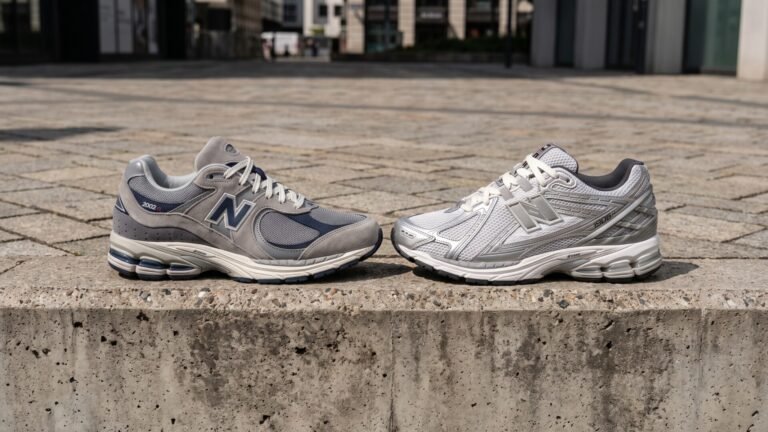
New Balance 2002R vs. Nike Vomero 5: Comfort, Style & Everyday Performance Compared
Two pairs of mesh-and-suede retro runners sitting on the same shelf, and the wrong pick can cost you two years of “these are fine, I guess.” Here is the short version: the New Balance 2002R is the better everyday sneaker for most people. It is more substantial underfoot, easier to style with real clothes, and generally easier to fit. The Nike Zoom Vomero 5 wins when you want a lighter-feeling, more athletic, more breathable shoe and you already know your wardrobe leans sporty.
Compare both: Get the 2002R →Vomero 5 – Men’s →Vomero 5 – Women’s →
That is the answer. The harder part is why these two get compared at all. Both borrow from performance-running design, both are layered and technical-looking, and both have been pulled out of the running catalog and dropped into streetwear. The difference is in the feel: the 2002R is denser and more grounded, the Vomero 5 is open, airy, and sharper. Which one is right for you comes down to how you walk, how your foot is shaped, and what you actually wear on a normal Tuesday.
At a Glance: New Balance 2002R vs. Nike Vomero 5
| Category | Winner | Why |
|---|---|---|
| Overall comfort | New Balance 2002R | More substantial underfoot feel and supportive construction |
| Lightweight feel | Nike Vomero 5 | Sportier build with less visual bulk |
| Walking | Slight edge to New Balance 2002R | Stable, cushioned ride for casual daily mileage |
| Breathability | Nike Vomero 5 | More open mesh and heel ventilation ports |
| Style versatility | New Balance 2002R | Easier with relaxed denim, cargos, and workwear-inspired outfits |
| Sporty styling | Nike Vomero 5 | Stronger technical-running visual identity |
| Fit forgiveness | New Balance 2002R | Vomero 5 has a narrower toe bed, per Nike’s own review summary |
| Price | New Balance 2002R (slightly) | 2002R launched at $150; Vomero 5 lists at $170 on Nike US |
| Value | Tie, depending on sale price | Both become more compelling below retail |
Quick recommendations
- Choose the New Balance 2002R if: you want a cushioned, substantial sneaker that works with streetwear, denim, cargos, and casual office outfits.
- Choose the Nike Vomero 5 if: you prefer a lighter-feeling, more athletic-looking sneaker with breathable mesh and a sharper running-shoe profile.
- Editor’s choice: New Balance 2002R for most everyday buyers, because it offers the more adaptable combination of comfort, styling range, and stable all-day wear.
- Best alternative: Nike Vomero 5 for warm-weather commuting, sportier outfits, and buyers who dislike the heavier feel of chunky retro runners.
Side by Side: Specs and Where the Money Goes
Prices move around, so treat these as approximate US retail positioning (checked November 2026) rather than gospel. Colorways and seasonal sales change the picture fast.
| Category | New Balance 2002R | Nike Zoom Vomero 5 |
|---|---|---|
| Typical US retail | Around $150–$160 (launched at $150) | $170 list on Nike US; often discounted |
| Running roots | New Balance 2002 (2010), from NB’s premium 1000-series era; reissued as the 2002R in 2020 | Nike’s Vomero running line, reissued as an early-2000s-style lifestyle shoe |
| Cushioning tech | ABZORB plus N-ergy in the midsole | Zoom Air unit in a foam midsole |
| Cushioning feel | Soft but structured, with a stable base | Responsive, lighter-feeling, and more athletic |
| Upper | Suede/nubuck overlays with mesh | Mesh, textiles and synthetic suede with plastic side caging |
| Ventilation | Mesh panels | Mesh plus heel ventilation ports |
| Fit | Usually true to size; see our NB sizing guide | Usually true to size; narrower toe bed, so wider feet may want a half size up |
| Best for | Everyday wear, walking, streetwear | Casual walking, commuting, sporty styling |
| Main tradeoff | Heavier-feeling and less breathable | Less substantial and snugger for broad feet |
Quick tech translation. ABZORB is New Balance’s softer, impact-absorbing foam blend, and N-ergy is a resilient cushioning element used alongside it; together they give the 2002R its dense, plush-but-stable feel. Zoom Air is Nike’s pressurized air unit with stretched fibers inside, which gives the Vomero 5 a snappier, more responsive step. Neither tech makes these performance running shoes today, but it explains why they feel different.
One thing to get straight before we go further: neither of these is a serious running shoe. Both borrow the look of performance running, and neither is a substitute for a current running model or a purpose-built walking shoe. Their strongest use case is lifestyle wear, commuting, casual walking, and everyday outfits. If you are training for a half marathon, you are in the wrong aisle.
Where These Two Come From
The New Balance 2002R draws from the New Balance 2002, a premium running shoe that debuted in 2010. New Balance brought it back as the 2002R in 2020 with a nubuck-and-mesh upper and the ABZORB/N-ergy midsole, and almost nobody buying it today is buying it to run. It is a lifestyle sneaker that rode the technical-retro-runner wave and New Balance’s reputation for comfort and fit options. The brand’s whole pitch — understated, premium-looking, quietly expensive — lines up perfectly with the “dad shoe” and silver-runner moment. Our full New Balance 2002R review covers the model in depth.
The Nike Zoom Vomero 5 comes from Nike’s Vomero running family and got repositioned as a lifestyle shoe. Nike itself describes it as inspired by early-2000s running styles, with layered textiles, synthetic suede and plastic caging. It leans more openly athletic than the 2002R, and it plugs into Nike’s enormous lifestyle sneaker ecosystem, which means you will see it everywhere. For our take on why it got so popular, read why the Nike Zoom Vomero 5 is the most comfortable sneaker of 2026.
Here is the trend call, and it matters for your wallet. Both have moved past the short-lived microtrend stage. But the 2002R is likely to stay easier to style after the current technical-runner cycle cools, because its shape is less aggressively sporty. The Vomero 5 will always read as a running shoe. That is a strength now and a limitation later. If you want to see how these silhouettes fit into the bigger picture, our New Balance sneakers hub and Nike sneakers guide break down the wider lineups.
Design and Style: Which One Works With More Outfits?
New Balance 2002R: grounded and versatile
The 2002R’s layered upper, visible cushioning structure, and substantial midsole are why it reads as a premium everyday sneaker rather than a basic running shoe. There is a lot going on, but it sits close enough to neutral that it does not shout.
Neutral 2002R colorways — gray, cream, black, white — pair especially well with straight-leg denim, relaxed trousers, cargos, overshirts, hoodies, and workwear-inspired layers. This is the shoe that disappears into an outfit in the good way. It does not need to be the star.
The drawback: that chunkier shape can look oversized with slim jeans or very minimal outfits. If your whole closet is skinny-fit and monochrome, the 2002R can feel like a lot of shoe.
Nike Vomero 5: technical and sport-forward
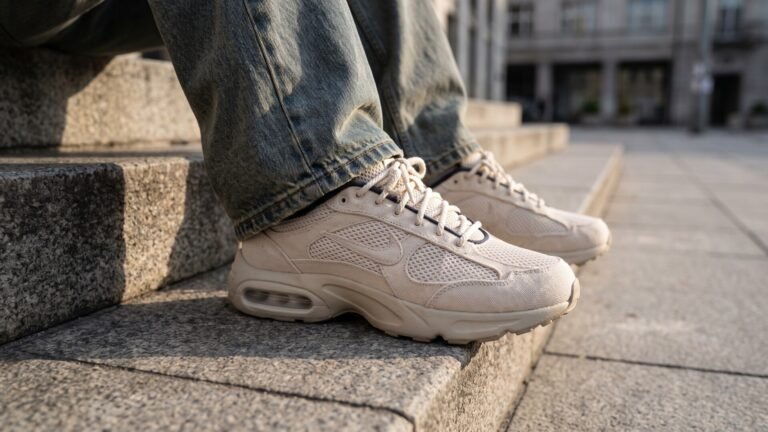
The Vomero 5’s mesh-heavy construction, layered panels, and exposed plastic caging make it a stronger match for nylon pants, track pants, shorts, wide-leg trousers, and modern sportswear. It looks sharper and more performance-inspired than the 2002R, which is exactly what some buyers want. It makes an outfit feel more athletic.
The limitation is the flip side of that strength. Its technical details and often busy color blocking make it harder to wear with formal-casual clothing or simple outfits. A loud Vomero 5 with a quiet outfit can look like two different people got dressed.
Colorway strategy for each
Both shoes are at their best in grey and silver tones – the colorways that kicked off the whole retro-runner wave. If you want metallic, our best silver and metallic sneakers roundup compares the options. For the 2002R, grey/white or cream/beige is the safest everyday pick; darker “Protection Pack”-style or black versions hide dirt better in winter. For the Vomero 5, the neutral grey/sail/black palettes are far easier to wear than high-contrast color blocking, and they mean the mesh shows less grime.
Style verdict
Versatility goes to the New Balance 2002R. Technical fashion appeal goes to the Nike Vomero 5.
Here is the buyer rule that cuts through it: choose the 2002R if you need one sneaker to work across several wardrobes. Choose the Vomero 5 if the sneaker itself is meant to be the sporty focal point of the outfit.
Comfort, Walking, and Everyday Performance
This is the section that actually decides the purchase, so pay attention here.
Cushioning and underfoot feel
The 2002R generally feels more planted and substantial. That suits buyers who spend long periods walking casually or standing on hard floors. There is a sense of structure underfoot that some people find reassuring and others find heavy.
The Vomero 5 feels more like a lifestyle running shoe. Less heavy impression, more athletic transition through the step thanks to that Zoom Air unit. It moves with you rather than sitting under you.
And here is the thing most reviews get wrong: softer does not automatically mean better. The 2002R’s stability may be more useful than a highly flexible or lightweight feel for a lot of wearers. A shoe that feels springy in the store can feel flimsy by hour eight. A shoe that feels dense in the store can feel supportive by hour eight. The first try-on lies to almost everyone.
Walking and commuting
For city walking, errands, travel days, and casual commuting, the 2002R is the safer bet if you prefer a supportive, secure-feeling sneaker. It gives you something to push against.
The Vomero 5 is the better call for buyers who dislike the dense feel of chunky sneakers. It feels lighter and breathes better on a long, warm day of transit.
Neither model should replace a purpose-built walking shoe for demanding daily mileage, foot-specific support needs, or medical concerns. If you have plantar fasciitis or another diagnosed issue, talk to a podiatrist, not a sneaker blog. For all-day walking ideas, see our guide to the best sneakers for theme parks and all-day walking.
Standing and all-day wear
The 2002R’s structured feel tends to be more reassuring on hard surfaces. The Vomero 5’s lighter, more breathable sensation tends to be less tiring in warm conditions. That is the honest tradeoff: stability versus airflow.
Comfort also depends heavily on sock choice, foot shape, and break-in expectations rather than cushioning technology alone. A good pair of cushioned or merino socks can change your day more than a $20 price difference between shoes. Do not sleep on that.
Comfort verdict
New Balance 2002R for most buyers who prioritize stable, substantial everyday comfort. Nike Vomero 5 for buyers who prioritize a lighter feel, airflow, and a more athletic stride.
Fit and Sizing: Where People Get Burned
Both models are generally purchased true to size, but fit varies by release, colorway, and regional version. Check the retailer’s current size chart and, more importantly, the return policy.
The 2002R can feel more accommodating overall, especially for buyers who prefer a roomier, less tapered lifestyle sneaker. Wide-foot shoppers should check which widths a specific release is offered in rather than assuming every 2002R has the same options. New Balance does widths better than most brands, but not every colorway gets the full range. Our New Balance sizing guide for the 990v6 and 2002R goes deeper.
The Vomero 5 can feel more athletic and structured through the midfoot and forefoot. Nike’s own review summary says it fits true to size but has a narrower toe bed, so wider feet may want a half size up. Forefoot feel can also vary a little by colorway and materials.
Normal sizing for average-width feet. A possible half-size adjustment only when you already know you need extra toe room or you are between sizes. Do not size up preemptively to “be safe” — that is how you end up with heel slip.
A practical fit check: leave comfortable space in front of the longest toe, make sure the heel does not lift excessively, and assess fit with the socks you actually wear daily. Not the thin dress socks you grabbed because they were by the door.
How They Compare to the Other Retro Runners
The 2002R and Vomero 5 are part of a wider pack of technical retro runners. If you are still deciding, these head-to-heads put each one against its other main rivals:
- New Balance 2002R vs 1906R – the sleeker, more technical NB alternative (see also our 1906R review).
- New Balance 530 vs 2002R – whether the cheaper 530 is enough.
- New Balance 9060 vs 2002R – chunky versus retro.
- New Balance 2002R vs ASICS GEL-1130 – the budget-friendlier ASICS option.
- Nike Vomero 5 vs ASICS Kayano 14 – the Vomero’s closest style rival.
Weighing the rivals? See the 1906R →Gel-1130 – Men’s →Gel-1130 – Women’s →
Durability and Long-Term Ownership
Both sneakers use layered construction. Mesh gives you breathability; suede or synthetic overlays give you structure but make cleaning more involved. That is the basic deal with this whole category.
What tends to age first: outsole wear at high-contact areas, creasing across the forefoot, dirt trapped in mesh, and compression or flattening of the midsole with regular use. The midsole is usually what retires a lifestyle sneaker, not a blowout.
The 2002R’s dense upper and substantial construction may feel more durable in casual wear, but its suede and nubuck panels demand more careful cleaning. The Vomero 5’s mesh-forward upper is comfortable in warm weather but may show dirt and abrasion more quickly, particularly in light colorways, and the plastic caging can scuff. A white Vomero 5 is a commitment.
Maintenance advice that actually works: use a soft brush, avoid saturating suede panels, rotate pairs when possible, and use shoe trees or paper inserts for storage rather than wearing either sneaker every day without rest. A basic sneaker cleaning kit pays for itself the first time you save a light-colored pair. Some cedar shoe trees will keep the shape between wears.
Now the cost-per-wear math. A $150 2002R worn twice weekly for two years (about 208 wears) costs roughly $0.72 per wear before maintenance. A $170 Vomero 5 worn once a week for two years (about 104 wears) costs about $1.63 per wear. The more important question is not the sticker price — it is which model will remain comfortable and versatile enough to actually receive that use. The shoe you reach for is the cheap shoe. The shoe that sits by the door is the expensive one, no matter what you paid.
What Most Buyers Get Wrong
The biggest mistake: assuming the most technical-looking sneaker is automatically the better performer. Both are lifestyle interpretations of running shoes. Visual technology does not make either one a substitute for a current performance running or walking model. The vents and the molded caging are mostly styling, not modern running engineering.
The second mistake is overvaluing the first try-on. The 2002R may feel immediately secure because of its structured build. The Vomero 5 may feel immediately light. Neither sensation alone predicts which will be better after a full day. You need the hour-eight test, and you cannot run it in the store.
The third mistake is ignoring outfit compatibility when calculating value. A cheaper sneaker that only works with athletic clothing can have a higher cost per wear than a slightly more expensive pair that works with jeans, trousers, and casual workwear. If the Vomero 5 only leaves the house with track pants, it is not really a $170 shoe — it is a $170 track-pants shoe. That math changes everything.
The fourth mistake is buying based only on a popular colorway or resale attention. These are generally better purchased for comfort and wardrobe use than for investment potential. General-release pairs are not lottery tickets. Buy them to wear.
Which One Still Makes Sense in Three Years?
Both silhouettes should retain relevance as long as retro-running sneakers remain part of everyday streetwear. But the 2002R has the safer long-term styling profile because of its neutral, balanced shape. It does not depend on the trend staying hot to look right.
Resale, honestly: most general-release pairs are not guaranteed investments. Condition, colorway, sizing, and purchase price matter more than the model name alone. A neutral 2002R bought on sale will hold more practical value than a hyped colorway bought at a premium, because you will actually wear it.
Replacement and maintenance costs favor the neutral 2002R too. It is easier to keep in rotation because it works with more outfits. A bright or highly technical Vomero 5 colorway may feel more tied to a particular moment, which means it gets fewer wears.
The three-year decision rule: buy the 2002R if this is your only everyday sneaker. Buy the Vomero 5 if you already own a versatile neutral pair and want a lighter, more athletic second option. That is the whole thing in two sentences.
Who Should Buy the New Balance 2002R?
- Buyers who want the stronger all-round everyday sneaker for jeans, cargos, relaxed trousers, and streetwear.
- People who prefer a substantial, stable underfoot feel for casual walking, commuting, and standing.
- Shoppers who value New Balance’s broader fit reputation and may need to investigate width options.
- Buyers who want one pair with a better chance of remaining useful after the current retro-runner trend changes.
Avoid or reconsider if:
- You strongly prefer lightweight, flexible shoes.
- You live in a hot climate and prioritize maximum upper breathability.
- You want a sleek, low-profile sneaker rather than a chunky runner shape.
Want the details on colorways and how the suede panels hold up? Our New Balance 2002R review digs in.
Who Should Buy the Nike Vomero 5?
- Buyers who want a lighter-feeling, more athletic-looking alternative to chunky lifestyle sneakers.
- People who wear track pants, nylon trousers, shorts, and sport-inspired outfits.
- Commuters and travelers who prefer less visual bulk and more airflow.
- Shoppers who like technical detailing and want a sneaker with a stronger early-2000s performance-running identity.
Avoid or reconsider if:
- You need a naturally roomy forefoot and cannot try the shoe on first.
- You want the most versatile sneaker for business-casual or workwear-heavy outfits.
- You prefer a dense, planted feel underfoot rather than a sportier sensation.
Shopping Nike on a tighter budget? See our best Nike sneakers under $150.
Final Verdict: New Balance 2002R Wins for Most Everyday Buyers
The New Balance 2002R takes it. Not by a knockout — by decision. It offers the more balanced mix of comfort, stability, styling versatility, fit accessibility, and long-term wardrobe value, and it usually costs a little less. If you are buying one sneaker to do everyday work, this is the one.
But the win is not absolute. The Nike Vomero 5 is the better choice for buyers who prioritize a lighter feel, more breathable construction, and a technical sportswear look. If that describes you, do not let this verdict talk you out of it.
The whole decision in one line: buy the 2002R for the most dependable everyday rotation; buy the Vomero 5 when you want your sneaker to feel and look more like a modern running-inspired shoe. If your wardrobe is all nylon and track pants, flip that.
Practical buying advice: prioritize a neutral colorway and a sale price if possible. Both models become stronger value purchases below retail. Check the current price on the New Balance 2002R and the Nike Vomero 5 (men’s / women’s) before you commit, and compare return policies if you are ordering without trying them on. For more model deep-dives, browse our sneaker models hub.
Frequently Asked Questions About New Balance 2002R Vs. Nike Vomero 5
Is the New Balance 2002R more comfortable than the Nike Vomero 5?
The 2002R generally feels more substantial and stable thanks to its ABZORB and N-ergy midsole, while the Vomero 5 feels lighter and more athletic with its Zoom Air unit. Buyers who stand or walk on hard surfaces may prefer the 2002R. Buyers who dislike heavier-feeling sneakers may prefer the Vomero 5. Neither is objectively more comfortable; it depends on what your feet and your day demand.
How much do the New Balance 2002R and Nike Vomero 5 cost?
The 2002R launched at $150 and usually sits around $150-$160 in the US. The Nike Zoom Vomero 5 lists at $170 on Nike US and is often discounted. Special colorways and collabs cost more.
Which sneaker is better for walking, the New Balance 2002R or Nike Vomero 5?
The 2002R is the better pick for casual daily walking and commuting because of its planted feel. Neither is a specialist walking shoe for high-mileage use or foot-specific support needs. If you are logging serious miles, look at a purpose-built walking shoe instead.
Do the New Balance 2002R and Nike Vomero 5 fit true to size?
Both are commonly worn true to size. Nike’s review summary notes the Vomero 5 has a narrower toe bed, so wider feet may want a half size up. Check the size chart and return policy before ordering, and do not assume your size in one brand translates cleanly to the other.
Which one is better for wide feet?
The New Balance 2002R is usually the safer starting point because of New Balance’s fit reputation and possible width options on some releases. The Vomero 5’s narrower toe bed makes it the riskier choice. Either way, order from somewhere with a real return policy.
Which sneaker has better style versatility?
The 2002R, clearly. It works with more outfits. The Vomero 5 is stronger for athletic, technical, and early-2000s-inspired outfits. If your closet is mostly sportswear, that gap narrows fast.
Is the Nike Vomero 5 good for standing all day?
It can work for casual standing and commuting, especially for buyers who prefer a lighter shoe. But the 2002R is generally the safer choice for a more stable, substantial feel on hard floors. If you are on concrete for ten hours, err toward structure.
Which sneaker is better value at full price?
The edge goes to the 2002R for most buyers because it is a little cheaper, easier to style and likely to receive more frequent wear. The Vomero 5 becomes highly competitive when discounted and when its sportier design matches your wardrobe.
Should I buy either of these for actual running?
No. Both are lifestyle sneakers that borrow running design. If you are running, buy a current running model. For walking, commuting, and standing, both work well; just do not confuse the look with the function.