Adidas Indoor Super vs. Samba: Which Classic Sneaker Should You Choose?
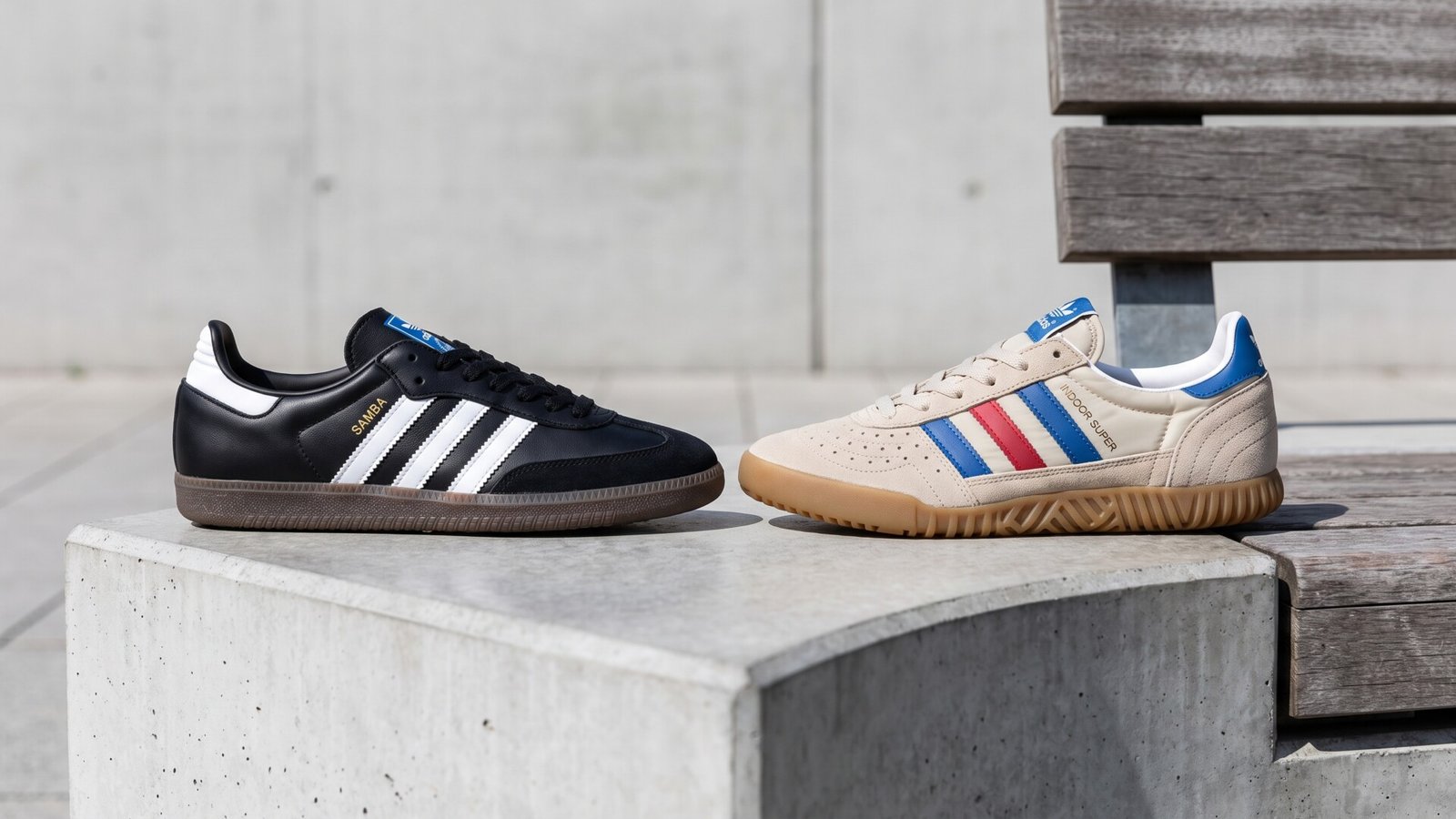
The question people actually type is “Adidas Indoor Super vs. Samba,” but the question underneath it is usually “do I buy the famous one or the interesting one?” That is the whole tradeoff in a sentence: the Samba is the safest, most versatile, most recognizable low-profile sneaker Adidas makes, and the Indoor Super is the same terrace language spoken with a slightly different accent, one fewer people in the room understand. Both are flat, low, gum-soled, retro-proportioned shoes with overlapping color palettes, which is exactly why they get compared. The decision gets hard because names, materials, and regional releases keep shifting the real fit, comfort, and price. Quick answer before we get into it: Samba for maximum styling range and recognition, Indoor Super if you want a roomier-feeling, less overexposed alternative.
At a Glance: Adidas Indoor Super vs. Samba
Here is the short version for people who already know they want one of these and just need the scorecard.
| Category | Adidas Indoor Super | Adidas Samba | Winner |
|---|---|---|---|
| Approximate retail | Usually $90-$120 | Usually $100-$130 | Indoor Super (slightly) |
| Comfort on foot | Softer, rounder feel for some | Firm, flat, narrow | Indoor Super |
| Style impact | Niche terrace knowledge | Instant recognition | Samba |
| Walking suitability | Fine for short trips | Fine for short trips | Push |
| Fit forgiveness | Generally more room in the forefoot | Runs narrow | Indoor Super |
| Durability | Years with rotation | Years with rotation | Push |
| Outfit versatility | Sporty, vintage, relaxed | Almost everything | Samba |
| Value | Good, less hype tax | Good if bought at retail | Samba |
Quick picks:
- Best overall for most buyers: Adidas Samba.
- Best for a less common look: Adidas Indoor Super.
- Best with tailored or minimalist outfits: Adidas Samba.
- Best for casual daily wear if you prefer a softer indoor-sport aesthetic: Adidas Indoor Super.
Editor’s choice: the Samba, narrowly. It wins because it is easier to style, easier to find in your size, and more dependable as a long-term wardrobe purchase. Not because it is more comfortable. It is not.
[Affiliate: Check current Samba pricing]
[Affiliate: Check current Indoor Super pricing]
The Difference in Design and Cultural Positioning
How the two silhouettes developed
The Samba started life in the 1950s as an Adidas football shoe built for frozen pitches, then migrated to indoor courts, skate parks, Britpop, and eventually every fashion editorial on earth. That journey matters because it explains the shoe’s proportions. It was designed to be low to the ground and close to the foot so a player could feel the ball. Those same qualities are why it looks so sharp with tailored trousers today and why it feels so flat after eight hours.
The Indoor Super comes out of Adidas’ indoor training lineage, the same family tree that produced the Handball Spezial and a stack of lesser-known court shoes. It carries a more explicitly indoor-sport visual language: a rounder toe, chunkier overlays, a gum sole that looks like it belongs on a gym floor. Real talk, neither shoe is a modern lifestyle sneaker dressed up in retro clothing. Both borrow credibility from actual sport. The Samba just has a much bigger mainstream footprint, which is why your coworker, your barber, and your cousin all own a pair.
What the difference looks like on foot
On foot, the Samba reads narrow and pointed. The low profile, the slim toe box, and the clean three-stripe overlay make it look refined. It disappears under a wide trouser leg and holds its own with a cropped one.
The Indoor Super reads rounder and more relaxed. The toe box is generally fuller, the overlays sit differently, and the overall shape looks more like a shoe you would actually play sport in. Exact proportions vary by version, so check photos of the specific colorway rather than assuming.
That visual difference is the whole decision in miniature. Samba looks cleaner and more formalized. Indoor Super looks more casual and less shaped by fashion trends. If you want a sneaker that reads “I know what I am doing,” the Samba does that. If you want one that reads “I know what I am doing and I did not buy what everyone else bought,” the Indoor Super does that.
Which one has more staying power?
The Samba is currently one of the most visible sneakers in the world. Strong recognition, real resale interest on select colorways, and a fashion cycle that has kept it hot for several years running. The risk is overexposure. When everyone from teenagers to finance guys wears the same shoe, some buyers start looking for the exit.
The Indoor Super has better appeal for people who want terrace styling without buying the most obvious trend item. It is not invisible, but it is not saturated either.
Here is the nuance most articles miss: classic status does not protect every colorway. Neutral leather, suede, and gum combinations tend to hold up. Loud seasonal versions of either shoe usually look dated within two years. If longevity matters, buy the boring color.
Style and Outfit Versatility
This is where the Samba runs away with it, and pretending otherwise does nobody any favors.
The Samba’s strongest pairings:
- Straight-leg denim, especially with a slight break
- Cropped trousers with or without socks showing
- Relaxed tailoring, the kind of wide-leg wool trouser that has been everywhere
- Track pants
- Workwear, chore coats, cargos
- Minimalist casual outfits where the shoe is the only interesting thing happening
The Indoor Super’s strongest pairings:
- Wide-leg jeans
- Casual trousers
- Cargos
- Vintage sportswear, retro track jackets, old-school football tops
- Outfits that benefit from a slightly less polished sneaker
Notice the pattern. The Samba can climb up into smart-casual and even soft tailoring. The Indoor Super stays in the sporty and relaxed lane. That is not a knock. It is just what the silhouette does.
Colorway selection matters more than people think. On the Samba, black with white stripes and a gum sole, white with black stripes, and neutral suede combinations work with almost any wardrobe. On the Indoor Super, restrained color combinations are the move if you want it to be an everyday default rather than a statement piece. A wild colorway of a less common shoe is a double risk: hard to style and hard to resell.
Trend positioning is the other half of this. The Samba communicates immediate fashion awareness. The Indoor Super communicates more niche terrace and indoor-football knowledge. Both are signals. They just signal different things to different people.
Styling verdict: Samba is more versatile across smart-casual outfits. Indoor Super is more interesting when the outfit already leans sporty, vintage, or relaxed.
For more on how these fit into a broader rotation, see our [Internal: Adidas sneakers hub] and our guide to the [Internal: best terrace sneakers].
Comfort, Walking, and Everyday Wear
Let us be honest about what these shoes are. Both are low-profile lifestyle sneakers with thin soles and minimal cushioning. Neither is a walking shoe. If you need arch support, plush foam, or something for a ten-hour shift on concrete, you are looking at the wrong category entirely.
That said, there is a real comfort distinction.
The Indoor Super may feel less restrictive to buyers who prefer a roomier, more rounded forefoot. The indoor-shoe shape gives your toes more room to spread, and the upper tends to feel softer out of the box on suede versions. Depending on the release, it can be the more forgiving everyday wear.
The Samba can feel firm, flat, and narrow, especially for people with high-volume or wide feet. The leather upper is stiff at first, the toe box is snug, and the sole gives you very little under the arch. Wearers commonly report it breaking in over a few weeks, but breaking in is not the same as cushioning. It stays flat.
Real-world scenarios:
- Short commutes and errands: both are fine. This is the sweet spot for either shoe.
- Full days of sightseeing: neither is ideal. The Samba will leave your feet tired faster than the Indoor Super for most people, but both will let you know by hour six.
- Standing at work: skip both. Get a dedicated walking sneaker.
- Indoor use and light activity: both handle it easily.
If you need substantial arch support, cushioning, or genuine wide-foot comfort, look at the [Internal: New Balance 530] or the [Internal: Adidas Spezial review] instead of forcing either classic model to do a job it was not designed for. The Spezial in particular keeps the terrace look while adding a bit more room and a softer feel.
[Affiliate: Shop comfort insoles for low-profile sneakers]
Fit and Sizing: Which One Is More Forgiving?
Neither shoe has one universal fit, because Adidas updates materials and lasts across releases. Treat any sizing advice, including ours, as a starting point and confirm against the specific product listing.
Samba fit:
- Often feels narrow through the forefoot
- Buyers between sizes should think about width, not just length. Do not automatically size down for the sleek shape; that is how you end up with a shoe that looks great and hurts.
- Wide-foot shoppers should be cautious with leather uppers and rigid toe construction
Indoor Super fit:
- Potentially the more forgiving option if you prefer a rounder indoor-shoe shape
- Still confirm measurements and check the retailer’s return policy
- Suede and leather versions may soften differently over time
Foot-shape recommendations:
- Narrow and average feet: either model, depending on the look you want
- Wide feet: the Indoor Super may be the better first try, but neither should be assumed wide-foot friendly
- High insteps: check the tongue construction and opening depth before buying
Practical sizing advice: wear the socks you normally wear with the shoes, compare against Adidas’ official size chart, and do not rely only on the size of another Adidas model. A Samba in your size does not guarantee an Indoor Super in the same size fits, and vice versa.
For a deeper dive, our [Internal: Adidas Samba sizing guide] covers the width question in more detail.
Materials, Durability, and Ownership Experience
Most versions of both shoes use leather, suede, synthetic panels, a textile lining, and a rubber outsole. Not every colorway is identical, so check the materials listed on the specific product page.
What tends to age well:
- Gum rubber hides everyday marks but can discolor over time
- Suede adds visual depth but needs more careful cleaning
- Smooth leather is easier to wipe down but shows creasing
- Light midsoles and foxing reveal dirt quickly on both models
The practical durability picture is similar for both. Neither is built like a technical running sneaker, but both can last years when rotated and kept dry. What tends to fail first:
- Creasing at the forefoot
- Heel lining wear
- Sole separation after heavy wet-weather use or poor storage
- Staining and color transfer on lighter suede
Ownership guidance that actually matters:
- Use a soft brush and an appropriate cleaner
- Never soak suede
- Rotate pairs rather than wearing either shoe every day
- Use shoe trees or simple stuffing to preserve shape
A basic cleaning kit and a suede brush will extend the life of either shoe more than any other purchase you make alongside them.
[Affiliate: Pick up a sneaker cleaning kit]
[Affiliate: Add a suede brush and shoe trees]
What Most Buyers Get Wrong About These Shoes
The biggest mistake is assuming the more famous shoe is automatically more comfortable or better made. It is not. Samba popularity reflects styling, recognition, and cultural momentum. It does not reflect superior construction or a more forgiving fit.
The second mistake is judging comfort from a two-minute try-on. The flat, firm feel of the Samba does not register in a store mirror. It registers at hour eight, when you are still on your feet and your arch is filing a complaint. Photos and short visits hide the thing that matters most.
The third mistake is buying a cheap colorway that does not go with anything you own. A discounted shoe you wear once a month is worse value than a full-price shoe you wear three times a week. Price is not the same as value.
Then there is the psychology. The Samba offers instant cultural recognition and the confidence of a widely validated choice. The Indoor Super appeals to buyers who want the same Adidas terrace language without looking identical to everyone else. Neither motivation is wrong. But the best choice is not the sneaker with the strongest trend signal. It is the one that fits your foot and your existing clothes well enough to earn frequent wear.
Value, Cost Per Wear, and the Three-Year Choice
Prices shift with availability and colorway, so treat these as approximate. The Indoor Super usually lands around $90-$120. The Samba usually lands around $100-$130 at retail, and popular colorways can run higher on resale. Common colorways regularly go on sale, so compare before paying above retail.
The cost-per-wear framework is simple. A $100 pair worn twice a week for two years costs less per use than a discounted pair worn once a month. Fit problems destroy value faster than small differences in retail price. That is the hidden cost of choosing wrong: discomfort and low outfit compatibility lead to low wear frequency, which makes a cheaper shoe more expensive per actual use.
Resale considerations:
- Samba demand and recognition make popular colorways easier to identify and potentially easier to resell
- Indoor Super resale is more dependent on colorway, condition, availability, and whether the model is getting renewed attention
- Neither should be purchased as a guaranteed investment
After three years, the Samba makes more sense for a dependable capsule wardrobe sneaker with strong style continuity. The Indoor Super makes more sense for buyers who value distinctiveness and expect to keep wearing it as part of a broader terrace rotation.
[Affiliate: Compare current sale prices before you buy]
Who Should Buy the Adidas Indoor Super?
Buy it if you:
- Want a less common alternative to the Samba
- Prefer an indoor-football or vintage sportswear aesthetic
- Like a slightly more relaxed-looking silhouette
- Already own a Samba and want a complementary Adidas terrace shoe
- Mostly wear casual denim, cargos, track pants, or loose trousers
Avoid it if you:
- Want the easiest possible smart-casual sneaker
- Need a heavily cushioned walking shoe
- Are choosing it only because it is less popular, without checking fit and outfit compatibility
Neutral colorways make the Indoor Super a safer first purchase than highly contrasting or seasonal versions. Start boring, get weird later.
Who Should Buy the Adidas Samba?
Buy it if you:
- Want the most versatile and recognizable option
- Need one low-profile sneaker that works with denim, trousers, tailoring, and sportswear
- Prefer a sharper, more streamlined silhouette
- Care about easier resale recognition and broad secondhand demand
- Are comfortable with a firmer, flatter feel and an average-to-narrow fit
Look elsewhere if you:
- Have wide feet and already know narrow shoes cause pressure
- Stand or walk for long hours every day
- Dislike wearing highly visible trend products
Stick to classic neutral versions for maximum cost per wear, and do not pay inflated prices for ordinary colorways when retail or sale alternatives are available.
Final Verdict: Samba Wins, but the Indoor Super Is the Better Alternative for Some
The Adidas Samba is the overall winner. Stronger outfit versatility, clearer cultural positioning, easier wardrobe integration, and more dependable resale recognition. It is the one to buy if you are only buying one.
It is not the comfort winner. Do not treat it as a long-distance walking sneaker. If that is what you need, neither of these is your shoe.
The Adidas Indoor Super is the better pick for buyers who want a less common silhouette, a more relaxed indoor-sport look, or a second Adidas terrace shoe with a different visual character. It is also the more promising first try for wide-foot buyers, with the caveat that neither shoe is guaranteed wide-foot friendly.
The buying rule is simple. Buy the Samba if this will be your one everyday classic Adidas sneaker. Buy the Indoor Super if you already understand the terrace look and want something less obvious. If neither fits comfortably, prioritize a better-fitting alternative over the cultural status of either model. For more options, see our [Internal: Adidas Spezial vs. Samba comparison].
Frequently Asked Questions About Adidas Indoor Super Vs. Samba
Is the Adidas Indoor Super more comfortable than the Samba?
Comfort depends on foot shape and version, but the Indoor Super may feel more forgiving to some buyers because of its indoor-inspired shape and roomier forefoot. Neither offers the cushioning of a modern walking sneaker.
Are Adidas Samba and Indoor Super true to size?
Sizing varies by release and foot shape. The Samba often feels narrow, so confirm the size chart and return policy rather than assuming a standard Adidas size will work for both.
Which is better for wide feet, the Indoor Super or Samba?
The Indoor Super is the more promising first option if its shape is roomier, but neither should be treated as a guaranteed wide-foot model. Buyers with known width issues should try before committing.
Which sneaker is easier to style?
The Samba, for the broadest styling range, especially with tailored trousers, straight-leg denim, and minimalist outfits. The Indoor Super is strongest with relaxed, sporty, and vintage-inspired clothing.
Can you wear either sneaker for all-day walking?
Both can work for ordinary daily walking but are limited by low-profile cushioning and firm soles. For sightseeing, work shifts, or high mileage, a more supportive walking sneaker is usually the better purchase.
Which holds resale value better?
The Samba has stronger general recognition and a more established resale audience, but resale depends heavily on condition, size, colorway, and current fashion demand. Neither purchase should be treated as guaranteed profit.
Is the Adidas Indoor Super a good alternative to the Samba?
Yes, for buyers who want similar Adidas terrace energy with a less overexposed look. It is not a perfect substitute if you specifically want the Samba’s narrow profile, cultural recognition, or tailoring versatility.
Do both shoes work with wide-leg trousers?
Yes, both do, but the Indoor Super looks more natural with very wide or relaxed cuts because of its rounder shape. The Samba can get swallowed by a wide hem if the break is heavy.
Should I size up in the Samba for wide feet?
Sizing up adds length, not width, so it often does not solve forefoot pressure. If the Samba feels tight across the ball of your foot, a different model is usually the better answer than a bigger size.
If you take one thing from all of this, take the rule: buy the Samba if you want one classic Adidas sneaker that works with everything, and buy the Indoor Super if you already know the terrace look and want the version fewer people are wearing. Everything else, the colorway debates and the resale chatter and the sizing anxiety, is noise around that single decision.