Nike Air Max 90 vs. Air Max 97: Which Is More Comfortable?
Let’s settle an Air Max debate that’s been going on for decades: Nike Air Max 90 vs. Air Max 97. Two legends. Two different eras. Both have visible Air cushioning. Both are still best sellers. But here’s the thing – they feel completely different on foot.
The Air Max 90 dropped in 1990 and became the everyman’s Air Max. It’s comfortable, versatile, and works with almost anything. The Air Max 97 arrived in 1997 with its futuristic, bullet‑train design and full‑length Air unit. It’s a style icon.
So which one is actually more comfortable in 2026? After weeks of wearing both – standing, walking, traveling, and just hanging out – I’ve got the answer.
Quick answer:
- Buy the Air Max 90 for comfort, walking, and daily wear.
- Buy the Air Max 97 for style, nostalgia, and visual impact.
Let’s break it all down.
At a Glance: Which Sneaker Wins?
| Goal | Winner |
|---|---|
| Comfort | Air Max 90 |
| Walking | Air Max 90 |
| Style | Air Max 97 |
| Cushioning Feel | Air Max 97 |
| Everyday Wear | Air Max 90 |
| Durability | Air Max 90 |
| Travel | Air Max 90 |
| Nostalgia | Air Max 97 |
| Value | Air Max 90 |
| Overall | Air Max 90 |
Editor’s Choice:
- Best Overall: Nike Air Max 90
- Best Style Choice: Nike Air Max 97
Comparison Table
| Feature | Air Max 90 | Air Max 97 |
|---|---|---|
| Price | $130–$150 | $175–$190 |
| Comfort | ⭐⭐⭐⭐⭐ | ⭐⭐⭐⭐ |
| Cushioning | ⭐⭐⭐⭐½ | ⭐⭐⭐⭐½ |
| Walking | ⭐⭐⭐⭐⭐ | ⭐⭐⭐⭐ |
| Style | ⭐⭐⭐⭐½ | ⭐⭐⭐⭐⭐ |
| Durability | ⭐⭐⭐⭐⭐ | ⭐⭐⭐⭐ |
| Everyday Wear | ⭐⭐⭐⭐⭐ | ⭐⭐⭐⭐ |
| Breathability | ⭐⭐⭐⭐ | ⭐⭐⭐ |
| Travel | ⭐⭐⭐⭐⭐ | ⭐⭐⭐⭐ |
| Value | ⭐⭐⭐⭐⭐ | ⭐⭐⭐⭐ |
History & Legacy: Two Different Air Max Eras
Air Max 90 – The Accessible Icon
The Air Max 90 (originally called the Air Max III) was released in 1990, designed by the legendary Tinker Hatfield. It followed the original Air Max 1 (1987) and Air Max Light (1989). The 90 refined the formula: a larger visible Air unit in the heel, a more aggressive outsole, and that iconic mudguard that wraps around the toe.
Unlike the earlier Air Max models that were pure running shoes, the Air Max 90 quickly crossed over into lifestyle. It was affordable, durable, and looked good with jeans. It became the Air Max for everyone – from skaters to dads to fashion kids.
Air Max 97 – The Futuristic Statement
The Air Max 97 was released in 1997, designed by Christian Tresser. It was a radical departure. Instead of a single heel Air unit, it featured a full‑length visible Air unit – the first of its kind. The upper was inspired by Japanese bullet trains, with wavy, metallic, layered panels.
The 97 was expensive ($150 in 1997, roughly $250 today adjusted), and it looked like nothing else. It became a status symbol – especially in Europe, where it was huge in the UK garage and Italian streetwear scenes.
Cultural Impact Winner
Air Max 97 – The 97 is more iconic as a design object. The 90 is beloved, but the 97 changed how sneakers looked.
Design & Aesthetic Comparison
Air Max 90 – Balanced, Sporty, Timeless
The Air Max 90 has a balanced, sporty profile that has barely changed since 1990. It’s chunky enough to feel substantial but not so bulky that it overwhelms your outfit. The mudguard – that plastic/rubber wrap around the toe – is a signature detail. The visible Air unit in the heel is large and prominent, framed by a plastic heel clip. The outsole has deep, waffle‑style tread.
Key design elements:
- Mudguard – A durable plastic/rubber wrap that protects the toe and sides. It’s available in contrasting colors (white on black, black on white) or matching tones.
- Visible Air unit – A large window in the heel shows off the cushioning. The Air unit has multiple columns (or “pillars”) that are visible through the sole.
- Heel clip – A plastic piece with “Nike Air” branding that adds structure and a pop of contrast.
- Mesh and suede/leather upper – A mix of materials that adds texture and breathability.
- Swoosh – Positioned mid‑panel, often in a contrasting color.
Visual personality: Sporty, approachable, and timeless. The Air Max 90 works with almost everything – jeans, shorts, joggers, chinos, even some casual trousers. It’s the Air Max for people who don’t want their sneakers to shout.
Colorways: The 90 comes in endless variations – from OG colorways like “Infrared” and “Laser Blue” to clean triple‑white and triple‑black. The classic white/black/infrared combination is the most iconic.
Air Max 97 – Aggressive, Futuristic, Unmistakable
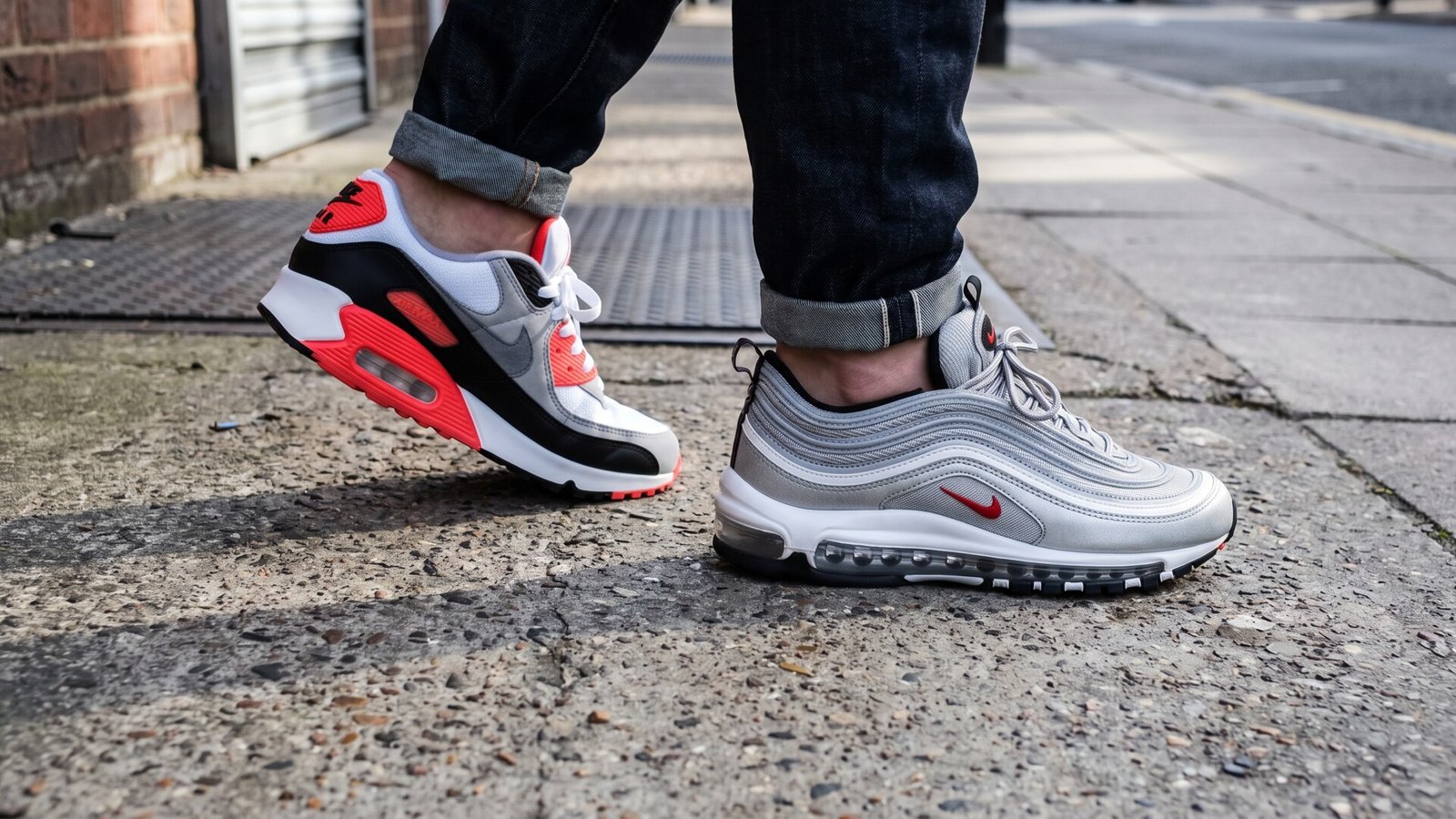
The Air Max 97 is a radical departure. Its layered, wavy upper was inspired by Japanese bullet trains, with overlapping synthetic leather panels that catch light from every angle. The full‑length Air unit is visible through the side of the sole – a first for Nike. The laces are hidden under a thin overlay, giving the shoe a clean, streamlined look. The toe is pointed and narrow.
Key design elements:
- Wave upper – Multiple layers of synthetic leather with mesh underlays. The waves flow from heel to toe, creating a sense of motion.
- Full‑length Air unit – Visible through the midsole. The Air unit has distinct chambers that compress and rebound.
- Hidden lacing system – The laces are tucked under a neoprene-like overlay, reducing visual clutter.
- Metallic finishes – The OG silver, gold, and copper colorways are legendary. The metallic material has a reflective, almost liquid quality.
- Narrow silhouette – The 97 is noticeably slimmer than the 90, especially in the toe box.
Visual personality: Aggressive, futuristic, and unmistakable. The Air Max 97 is a statement piece. It works best with minimalist or monochrome outfits that let the shoe shine – think all black, cargo pants, or techwear.
Colorways: The 97 is famous for its metallic OG colorways (silver, gold, copper). Later releases include all‑black, all‑white, and collaborations with designers like Sean Wotherspoon and Patta.
Style Verdict
Winner for visual impact: Air Max 97 – The 97 is a design icon. It gets noticed.
Winner for versatility: Air Max 90 – Fits into more wardrobes and occasions.
Comfort Comparison: Which Feels Better All Day?
Air Max 90 – Balanced, Stable, Supportive
The Air Max 90 uses a traditional visible Air unit in the heel and a foam midsole in the forefoot. The foam is firm but flexible, and the heel Air unit provides cushioning on impact. The shoe has a wide base and a slight rocker shape, which encourages a natural gait.
Underfoot feel: Balanced and stable. Your heel sits slightly elevated (about a 10mm drop), which reduces strain on your Achilles. The forefoot is flat and flexible, allowing your toes to splay naturally. The foam isn’t “squishy” – it’s resilient and supportive.
Technical details: The Air unit is made from polyurethane, which is durable and retains its shape for years. The foam midsole is compression‑molded EVA, which softens slightly over time but doesn’t collapse quickly.
Real‑world tests:
- Standing all day (8+ hours): Very good. The heel Air unit reduces pressure under your heel, and the wide base provides stability. Your lower back will feel better than in flat sneakers.
- Walking all day (10k+ steps): Outstanding. The transition from heel to toe is smooth, and the forefoot flexibility means you’re not fighting the shoe. Many walkers and travelers swear by the Air Max 90.
- Travel (airport, sightseeing): Excellent. The combination of comfort, durability, and style makes it a top choice for one‑bag trips.
Potential downsides: The Air unit can be felt as a “bump” under the heel if you’re not used to it. Some people find the shoe too firm if they’re used to modern max‑cushion shoes (like Hoka).
Air Max 97 – Firmer, Narrower, More Rigid
The Air Max 97 features a full‑length visible Air unit that runs from heel to toe. You might expect it to be super plush – but it’s not. The Air unit is pressurized and sits inside a rigid foam carrier. The result is a firmer, more responsive ride, not a soft one.
Underfoot feel: Firm and springy. You feel the Air unit “push back” – it’s not sinking like a Hoka or an Ultraboost. The shoe is narrow and has a stiff upper, so it feels more like a performance sneaker from the 1990s. The toe box is low and tight, which can cause rubbing.
Technical details: The full‑length Air unit has multiple chambers that compress independently. The foam carrier is polyurethane, which is durable but less forgiving than EVA. The outsole is thinner than the 90’s.
Real‑world tests:
- Standing all day (8+ hours): Acceptable for the first 3–4 hours. After that, the narrow toe box and firm ride can cause fatigue in the balls of your feet and heels.
- Walking all day (10k+ steps): Not ideal. The lack of forefoot flexibility and the rigid Air unit make longer walks tiring. Your feet will feel it.
- Travel: Fine for short trips or days with limited walking, but the 90 is much better for all‑day exploration.
Potential downsides: The shoe is narrow; wide feet will struggle. The upper is stiff and doesn’t break in much. The metallic finish can crease and show wear.
Comfort Winner
Air Max 90 – More stable, more forgiving, better for long days. The 97 is not uncomfortable – it’s just designed for a different purpose (style over all‑day wear).
Fit & Sizing Guide
Air Max 90 | Air Max 97 | |
|---|---|---|
| Toe box | Moderate, rounded | Narrow, pointed |
| Midfoot | Standard width | Snug, tight |
| Heel | Secure, padded | Narrow, minimal padding |
| Arch support | Low to moderate | Low |
| Break‑in period | Minimal | 1–2 weeks (upper softens slightly) |
| Best for | Most foot shapes (average to slightly wide) | Narrow to medium feet |
Air Max 90 sizing details: The 90 fits true to size. If you have wide feet, the 90 is generally fine – the toe box is rounded, and the materials have some give. If you’re between sizes, size up for a roomier fit or size down for a snug fit. The shoe runs about a half size longer than some other Nikes.
Air Max 97 sizing details: The 97 runs narrow. Many buyers with average or wide feet go up half a size. Even then, the toe box may still feel tight. The upper is stiff and doesn’t stretch much. If you have narrow feet, true to size should work. The shoe also runs slightly long – your heel may slip if you size up too much.
Fit Winner: Air Max 90 – More accommodating for more foot shapes.
Walking, Travel & Daily Wear
Air Max 90 – The All‑Day Champion
The Air Max 90 is one of the best everyday sneakers Nike has ever made. Its blend of comfort, durability, and style is hard to beat.
Strengths:
- Shock absorption – The heel Air unit reduces impact on pavement and tile.
- Stability – The wide base and firm foam keep you planted.
- Durability – The outsole tread and leather overlays hold up to daily abuse.
- Versatility – Works with jeans, chinos, shorts, joggers – even some office‑casual fits.
Best use cases:
- Travel – Long airport days, all‑day sightseeing, walking tours.
- Commuting – Walking to work, standing on trains.
- Daily errands – Grocery store, coffee runs, dog walks.
- Casual office – With dark jeans or chinos (in neutral colorways).
Air Max 97 – The Occasional Statement
The Air Max 97 is better suited for shorter wear or style‑first occasions.
Strengths:
- Visual appeal – The metallic finish and wave design are unmatched.
- Nostalgia – A true 1990s icon.
- Unique cushioning feel – Some people enjoy the firm, responsive ride.
Best use cases:
- Weekend casual – Brunch, hanging with friends, dates.
- Sneaker events – Meetups, conventions, collectors’ gatherings.
- Streetwear fits – With baggy cargos, technical pants, or all‑black outfits.
- Short walks – Under 3 miles, they’re fine.
Daily Wear Winner: Air Max 90 – More comfortable, more versatile, better for real life.
Streetwear & Fashion Appeal in 2026
Why Air Max 97 Still Turns Heads
The 97’s metallic, layered upper is timeless in a “retro future” way. It’s been adopted by streetwear fans, collectors, and hypebeasts.
Popular with: Sneaker collectors, nostalgic buyers, streetwear enthusiasts.
Best outfits: Cargos, baggy denim, technical fits, all‑black fits (to let the shoe pop).
Why Air Max 90 Never Goes Out of Style
The 90 is the “people’s Air Max.” It’s not trying to be flashy – it just works. You see it on everyone from teenagers to professors.
Popular with: All age groups, casual wearers, longtime Air Max fans.
Best outfits: Almost everything – jeans, shorts, joggers, chinos.
Fashion Winner
Air Max 97 – The 97 is a more distinctive, statement‑making design. The 90 is a classic, but the 97 is an icon.
Materials & Build Quality
Why Air Max 97 Still Turns Heads
The Air Max 97’s metallic, layered upper is timeless in a “retro future” way. It’s been adopted by streetwear fans, collectors, and hypebeasts – and it shows no signs of fading.
Popular with:
- Sneaker collectors – The 97 is a must‑have in many collections.
- Nostalgic buyers – People who remember the 90s or early 2000s.
- Streetwear enthusiasts – The 97 works with cargo pants, baggy denim, and technical fits.
Best outfits:
- Cargos and a hoodie – Classic streetwear.
- All‑black fit – Let the metallic silver pop.
- Baggy denim and a vintage tee – 90s nostalgia.
- Techwear – The futuristic look fits perfectly.
Why it works: The 97 has no competition in the Nike lineup for sheer drama. The full‑length Air unit and wave upper are unmistakable.
Why Air Max 90 Never Goes Out of Style
The 90 is the “people’s Air Max.” It’s not trying to be flashy – it just works. You see it on everyone from teenagers to professors.
Popular with:
- All age groups – It’s a true universal sneaker.
- Casual wearers – People who want one comfortable, good‑looking shoe.
- Longtime Air Max fans – The 90 has been a staple for decades.
Best outfits:
- Jeans and a t‑shirt – Effortless.
- Shorts and crew socks – Summer ready.
- Chinos and a button‑down – Smart casual.
- Joggers and a hoodie – Athleisure.
Why it works: The 90 is unassuming but handsome. It doesn’t compete with your outfit – it complements it.
Fashion Winner
Air Max 97 – The 97 is a more distinctive, statement‑making design. The 90 is a classic, but the 97 is an icon.
Durability & Long‑Term Ownership
Air Max 90:
- Outsole: The deep waffle tread lasts for years. Heel wear is minimal if you don’t drag your feet.
- Midsole foam: Compresses slowly. Expect 3–5 years of regular wear before noticeable flattening.
- Upper: Leather and suede hold up well. The mesh can fray if snagged, but it’s not a common issue.
- Air unit: The heel Air unit is well‑protected and rarely fails.
- Overall lifespan: 3–5 years of regular use. Many people have Air Max 90s from a decade ago that are still wearable.
Air Max 97:
- Outsole: Thinner tread wears faster. The heel area can go smooth after 1–2 years of heavy use.
- Midsole foam: The full‑length Air unit is durable, but the foam carrier can yellow and crack.
- Upper: The metallic finish scratches easily. The synthetic leather can peel over time.
- Air unit: The full‑length unit is more exposed and can yellow; deflation is rare but possible.
- Overall lifespan: 2–3 years of regular use. They’ll still look good if you take care of them, but they won’t hold up as well as the 90.
Durability Winner: Air Max 90
Value for Money
| Aspect | Air Max 90 | Air Max 97 |
|---|---|---|
| Retail price | $130–$150 | $175–$190 |
| Typical sale price | $90–$120 | $120–$160 |
| What you’re paying for | Comfort, versatility, durability, everyday usability | Design, nostalgia, cultural icon status, statement styling |
| Cost per wear (2 years, 3x/week) | ~$0.48–$0.55 | ~$0.67–$0.73 |
| Cost per wear (2 years, 2x/week) | ~$0.72–$0.83 | ~$1.01–$1.10 |
| Better long‑term value | Yes – more versatile, more durable, cheaper | No – more of a special occasion shoe |
Analysis: The Air Max 90 is cheaper upfront and you’ll likely wear it more often. The 97 is more expensive and often reserved for specific outfits. Even if you love the 97, the 90 delivers more value per dollar.
Value Winner: Air Max 90
Who Should Buy the Air Max 90?
Perfect for:
- Daily wear users – You want one shoe for work, errands, and weekends.
- Travelers – Long airport days, walking tours, all‑day sightseeing.
- Walkers – Commuting, fitness walking, dog walks.
- Comfort‑focused buyers – You prioritize how a shoe feels over how it looks.
- First‑time Air Max owners – The 90 is the safest entry point into Air Max.
- People with average or wide feet – The fit is more forgiving.
- Budget‑conscious buyers – Better value for money.
Who Should Buy the Air Max 97?
Perfect for:
- Sneaker enthusiasts – You appreciate the history and design.
- Collectors – The 97 is a must‑have for many collections.
- Nostalgic buyers – You remember the 97 from the 90s or early 2000s.
- Streetwear fans – You want a statement sneaker that turns heads.
- People who prioritize style over all‑day comfort – You’re okay with less cushioning for a bolder look.
- Narrow‑footed buyers – The fit works well for you.
- Those with multiple shoes – The 97 is a great second or third pair for fashion‑forward outfits.
Final Verdict: Which Is More Comfortable?
Let’s call it.
Buy the Air Max 90 if:
- Comfort is your top priority.
- You walk frequently (commuting, travel, errands).
- You want the most versatile Air Max.
- You’re on a budget (it’s cheaper and better value).
- You have average or wide feet.
Buy the Air Max 97 if:
- Style is your priority.
- You love 90s sneaker culture and nostalgia.
- You want a statement sneaker that turns heads.
- You have narrow feet (the fit is snug).
- You’re okay with less all‑day comfort.
Overall Winner
Nike Air Max 90
The Air Max 97 is a design icon. It’s beautiful, nostalgic, and culturally significant. But the Air Max 90 is the better shoe for daily life. It’s more comfortable, more durable, more versatile, and a better value. For most people, the Air Max 90 is the smarter purchase.
Final Score:
- Nike Air Max 90: 9.4/10
- Nike Air Max 97: 9.1/10
If you can only pick one, get the 90. Your feet will thank you at the end of a long day.
Frequently Asked Questions About Nike Air Max 90 And Air Max 97
Is the Air Max 90 more comfortable than the Air Max 97?
Yes – for most people, especially for all‑day wear and walking.
Why does the Air Max 97 feel firmer than expected?
The full‑length Air unit is pressurized and sits in a rigid carrier, providing a firm, responsive feel rather than a soft, plush one.
Which sneaker is better for walking all day?
The Air Max 90 – it’s more stable, more forgiving, and less fatiguing.
Does the Air Max 97 run small?
It runs narrow. Many buyers with average or wide feet go up half a size.
Which Air Max is more stylish in 2026?
The Air Max 97 remains the stronger statement sneaker, especially in metallic colorways.
Which Air Max lasts longer?
The Air Max 90 generally has a slight durability advantage – thicker outsole and more robust upper.
Is the Air Max 97 worth the higher price?
Yes for style‑focused buyers and collectors. No if you prioritize comfort and value.
Which Air Max should most people buy?
The Air Max 90 offers the better overall ownership experience – comfort, durability, versatility, and value.
Street Sneakers Vault – Keeping you fresh since day one.
You might also like: [Nike Air Max Plus (TN) Review] | Best Sneakers Under $200 | Most Comfortable Sneakers for Standing All Day | Air Force 1 vs. Stan Smith