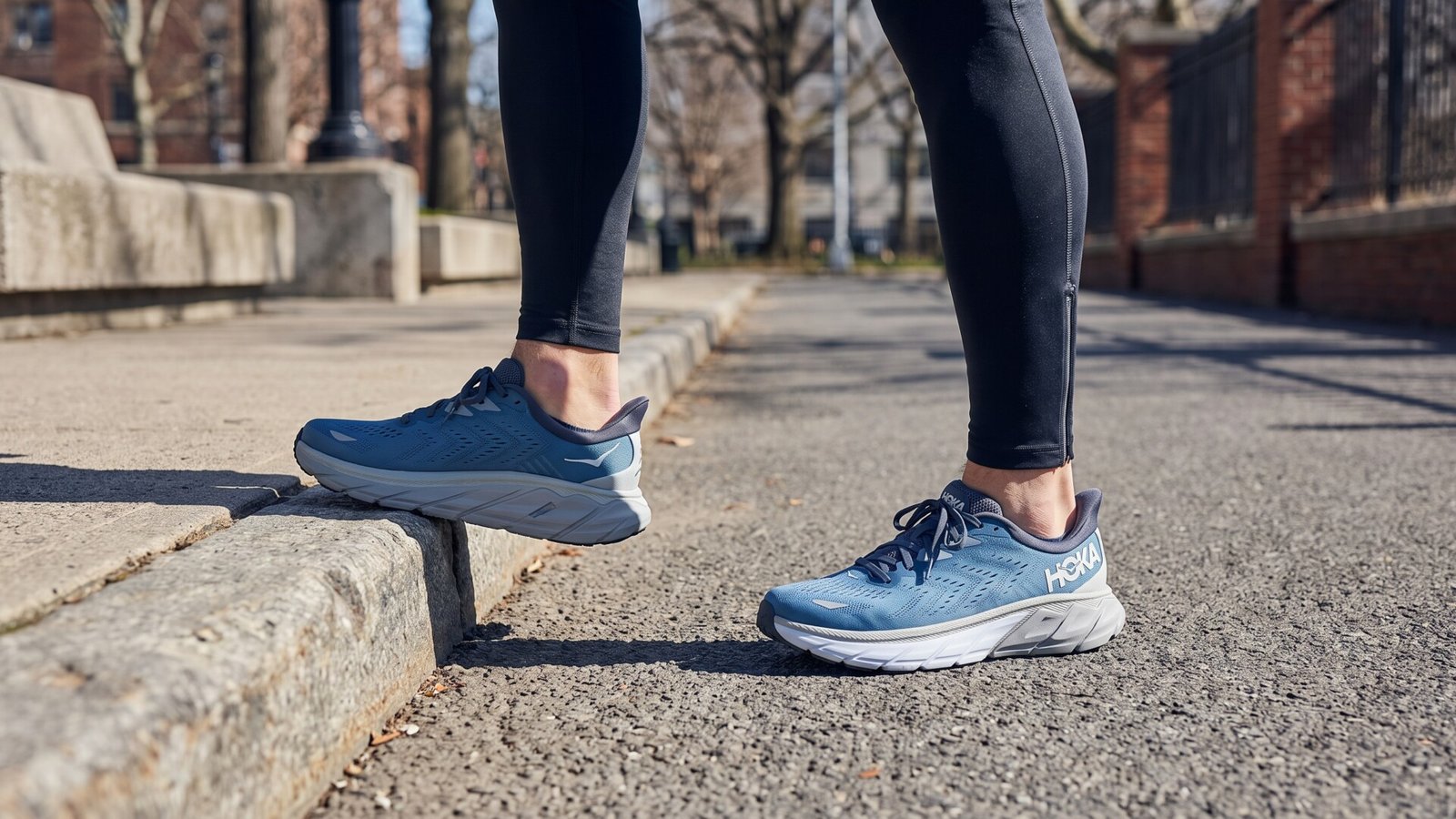
Hoka Arahi 6 Review
You know that friend who texts you before they buy anything? The one who will tell you straight that your grail is overrated and that the sensible option is sitting right there at half the price? That’s us. And today, we’re talking about the Hoka Arahi 6.
Here’s the verdict you came for: the Hoka Arahi 6 is a genuinely smart buy for runners and walkers who want a relatively light stability shoe with a guided, structured ride. It is not, however, the shoe for anyone chasing the softest, most pillowy cushioning Hoka is famous for. The Arahi 6 is the thinking person’s Hoka – the one that prioritizes support and efficiency over that sink-in feeling.
Buyers still circle back to the Arahi 6 because it nails a specific brief: Hoka’s signature rocker, a lower weight than most stability tanks, and a reputation for everyday comfort that holds up. The hesitation is real, though. This model can feel firmer and more controlling than neutral Hokas, and its value depends heavily on sale pricing since newer models have taken over the shelves.
The central question isn’t whether the Arahi 6 is technically capable. It is. The real question is whether its stability system and firmer ride match how you actually use a shoe. Let’s break that down.
Hoka Arahi 6 at a Glance
| Category | Assessment | Best Takeaway |
|---|---|---|
| Best for | Stability-focused daily running and walking | Great for runners who want guidance without a bulky shoe |
| Cushioning | Moderate and structured | More controlled than plush |
| Stability | Strong for its weight | Suits runners who want mild to moderate support |
| Walking comfort | Good for many users | Rocker helps forward movement, but the firm feel is not universal |
| Fit | Generally secure, width options vary | Check current retailer sizing and width availability |
| Value | Best at a discount | Older stock can be attractive, but compare with current Hoka models |
Quick Verdict
- Editor’s choice: Hoka Arahi 6 for runners who want a lightweight stability trainer and don’t need maximum softness.
- Buy it if: you like a guided ride, need everyday support, and can find it at a meaningful discount.
- Skip it if: you want a soft recovery shoe, a roomy forefoot, or a highly flexible sneaker.
- Better alternative for more cushioning: Hoka Gaviota 5.
- Better alternative for a neutral ride: Hoka Clifton 8 or a current Clifton equivalent.
What the Hoka Arahi 6 Is Designed to Do
Let’s get one thing straight before we go further: the Arahi 6 is a stability road-running shoe. It is not a general lifestyle sneaker, and it is not a maximal-cushioning recovery model in the way the Bondi is. Hoka positions the Arahi line as the answer for runners who need support but don’t want to feel like they’re wearing orthopedic devices from 2005.
The magic – if we can call it that – lives in what Hoka calls its J-Frame technology. Instead of a rigid medial post or a hard plastic shank, the Arahi 6 uses geometry and firmer foam placement to guide your foot. The denser foam wraps around the heel and along the inner edge, creating a J-shaped support frame that reduces excessive inward rolling without the clunky, board-like feel of traditional motion-control shoes.
This matters more than the tech specs suggest. Because the guidance comes from foam density and shape rather than embedded plastic, the shoe stays relatively light and flexible where it counts. You get stability that works with your foot’s natural movement rather than locking it down. That translates directly to commuting, walking, and everyday mileage – activities where a heavy stability shoe makes you feel like you’re dragging cinder blocks.
Here’s the honest part nobody wants to hear: stability features are not automatically good for every runner. The Arahi 6 is a fit and ride-preference decision, not a medical correction and definitely not a guarantee against injury. If you don’t overpronate noticeably, or if you simply prefer a neutral platform, the stability system might feel like it’s bossing your foot around for no reason. That’s not a flaw in the shoe. It’s a mismatch between the product and the buyer.
Ride, Comfort, and Everyday Use
Cushioning and Underfoot Feel
The Arahi 6’s ride is structured, moderately cushioned, and rocker-assisted. It is not exceptionally soft. It is not springy. What it is, is efficient.
Underfoot, the foam compresses just enough to absorb road impact, then the rocker shape takes over and rolls you forward into your next step. That sensation is the Arahi signature – movement that feels propelled rather than plush. For some of us, that’s exactly right. You stop thinking about your feet and start thinking about the miles.
But let’s talk about hour eight, because that’s where this shoe separates from the pack. After several hours, the firmer platform can feel stable and efficient – or it can feel like standing on a yoga block that’s been left in the sun. It depends on what your feet and legs actually want. If you’re someone who craves that soft, marshmallow-like sink on recovery days or slow walks, the Arahi 6 will leave you underwhelmed. The structure that makes it supportive during movement becomes more noticeable when you’re standing still.
The rocker deserves its own mention. It’s a practical feature for forward movement, especially during walking and steady road running. Your foot rolls through the gait cycle with less effort. But if you’re used to flat, flexible shoes, the rocker can feel like you’re perpetually walking slightly downhill. Some people never notice it. Others find it disconcerting for the first week. You’ll know which camp you’re in pretty quickly.
Running and Walking Performance
The Arahi 6 shines in the scenarios most of us actually live in: easy road runs, daily training, treadmill sessions, errands, and the commute. It’s a daily trainer in the truest sense – a shoe you can grab without thinking because it’ll handle whatever the day throws at it.
Where it’s less convincing? Fast workouts that demand a lively, responsive feel. The Arahi 6 isn’t dead, but it’s not snappy either. It wants to cruise, not sprint. Uneven trails are also out of its lane – this is a road shoe with road-shoe grip, and loose gravel or muddy paths will have you wishing for something with actual lugs.
There’s a real difference between walking comfort and running comfort in this shoe. During movement, the rocker and guidance work together to create a smooth, rolling sensation. At a standstill, or during slow, meandering walks, the support structure becomes more apparent. You feel the firmer frame around your heel and arch. For some, that’s reassuring. For others, it’s the reason they reach for a softer shoe on rest days.
Standing, Travel, and Work
Can you wear the Arahi 6 for a full shift on your feet? Maybe. It depends entirely on what your feet need.
Workers who benefit from a stable base and mild guidance will find the Arahi 6 a solid companion. The shoe keeps your foot aligned and reduces the fatigue that comes from your arch collapsing over hours of standing. But if you have sensitive pressure points, or you prefer a wide, unstructured toe box that lets your foot spread naturally, this shoe will fight you. The firm frame that provides support during movement doesn’t switch off when you stop moving.
For travel, the Arahi 6 is genuinely good. It’s lighter than most stability shoes, so it won’t weigh down a carry-on. The secure upper means your foot stays put through airport sprints and long city walks. And the outsole handles polished floors, pavement, and the occasional cobblestone without drama. If you’re a one-shoe traveler who needs something that works from gate to dinner, this is a legitimate option.
One buyer warning before you commit: if you have sensitive pressure points or a preference for wide, unstructured shoes, try the Arahi 6 indoors first where possible. Walk around your house in them for an hour. Feel where the support frame sits. If it’s bothering you at home, it will be unbearable after a full day of sightseeing or a twelve-hour shift.
Fit, Sizing, and Foot Shape
Start with your usual running-shoe size. That’s the honest baseline for the Arahi 6. But don’t treat it as gospel – verify the specific retailer’s return policy before you buy, because older inventory means sizing and width availability can vary wildly depending on where you shop.
The fit profile is secure. The midfoot is snug, the heel lockdown is solid, and the forefoot is… adequate. If you have average-width feet, you’ll likely find the fit comfortable without being sloppy. Runners who prefer a locked-in upper – the kind where your foot doesn’t slide around inside the shoe – will appreciate how the Arahi 6 holds you in place.
Genuinely wide feet are the complication. The standard width runs snug through the midfoot, and the forefoot may feel cramped if your toes need room to splay. Hoka does offer wide versions of the Arahi 6, but availability depends on the colorway, the retailer, and how much old stock is actually left. If you’re a wide-footer, track down a wide version rather than trying to make the standard fit work.
Here are the fit checks that matter:
- Toe room: You should have about a thumb’s width between your longest toe and the end of the shoe.
- Midfoot pressure: The J-Frame support sits here. It should feel supportive, not like a vice.
- Heel security: Your heel should stay locked in without needing to cinch the laces down like a tourniquet.
- Forefoot space: Walk around for a few minutes. Your toes shouldn’t feel pinched or cramped.
[Internal: See our Hoka sizing guide] for the full breakdown, and [Internal: check our dedicated Hoka wide shoes article] if you’re shopping for extra room.
Build Quality, Durability, and Ownership Experience
The Arahi 6 is built to a standard that reflects Hoka’s experience with high-mileage runners. The engineered mesh upper is breathable without being flimsy, with overlays that add structure where your foot needs it most. The foam midsole is the workhorse – it handles compression well but will eventually lose its freshness. The rubber outsole covers the high-wear areas, which is where you’ll see the first signs of aging.
Let’s talk about what actually wears out. The outsole will show abrasion at the heel strike and forefoot push-off zones first. That’s normal – every running shoe does this. The foam midsole will gradually lose its bounce, usually becoming noticeable after several hundred miles depending on your weight and gait. The upper can crease and stretch around the forefoot, especially if you’re hard on shoes or wear them loose.
We’re not going to give you a fake lifespan number because durability depends on too many variables: body weight, mileage, walking surfaces, rotation, and gait mechanics. What we can tell you is that a stability shoe with firmer foam often holds its structure longer than a soft neutral shoe. The tradeoff is that the firmness that makes it durable is the same firmness that some people find uncomfortable.
Owning an older model like the Arahi 6 creates a different experience than buying a current release. Replacement pairs are harder to find. Colorway availability is a lottery. Pricing is inconsistent across retailers. The original retail specification matters less than the actual deal in front of you.
Maintenance is straightforward. Let the shoe air out between wears – don’t stuff it in a gym bag. Clean the upper gently with mild soap and water. Never machine dry it; the heat destroys the foam. And if you’re wearing it daily, rotate with another pair. Giving the foam time to decompress extends its life significantly.
What Most Buyers Get Wrong About the Arahi 6
The biggest misconception about the Arahi 6 is that because it’s a Hoka, it must be soft. That assumption will lead you straight to disappointment. The Arahi 6 prioritizes guidance and controlled movement over the pillowy sensation associated with Hoka’s maximal-cushioning models like the Bondi. It’s a Hoka that happens to be a stability shoe, not a stability shoe that happens to be a Hoka.
Second misconception: stability means this shoe is only for severe overpronation. Not true. The Arahi 6 can suit runners who simply prefer a guided platform – people who like feeling that the shoe is working with their foot rather than just sitting under it. The flip side is that if you don’t want that sensation, you’ll find it intrusive. There’s no middle ground here.
Third: “lightweight” doesn’t mean flexible. The Arahi 6 is easy to move in, sure. But it resists certain foot movements through its geometry and structure. That’s the point. If you want a shoe that twists and bends freely with your foot, this isn’t it.
And here’s the one that costs people real money: the best deal is not always the lowest listed price. An older Arahi 6 at a small discount can be worse value than a newer Hoka model with better availability, warranty support, and an updated fit. A $20 saving on a shoe that doesn’t fit right is $20 wasted. A $50 saving on a shoe that fits perfectly is a genuine win.
Arahi 6 Versus the Alternatives
| Shoe | Ride and Support | Best For | Main Advantage | Main Drawback |
|---|---|---|---|---|
| Hoka Arahi 6 | Guided, structured stability | Everyday road running and walking | Lighter stability feel | Can feel firm or restrictive |
| Hoka Clifton 8 | Neutral, cushioned, rocker-based | Neutral runners and daily walking | More relaxed and versatile ride | Less guidance |
| Hoka Gaviota 5 | More substantial stability and cushioning | Maximum support and easy mileage | Softer, more protective platform | Heavier and bulkier |
| Brooks Adrenaline GTS 23 | Traditional stability with balanced cushioning | Runners wanting a familiar stability trainer | Predictable, versatile support | Less distinctive rocker feel |
| ASICS Gel-Kayano 30 | Cushioned modern stability | Long daily runs and comfort-focused users | Plush protection and support | Heavier and pricier in many listings |
Arahi 6 vs Hoka Clifton 8
This is the comparison most buyers actually wrestle with. Both are Hokas. Both have the rocker. Both work for daily miles. The difference is fundamental.
The Clifton 8 is a neutral shoe. It doesn’t guide your foot anywhere – it just cushions and rolls. If you have a neutral gait, or you simply don’t want a shoe telling your foot what to do, the Clifton is the more relaxed, versatile option. It’s the shoe you can grab for anything from a 5K to a day of errands without thinking about it.
The Arahi 6 is for when you want structure. If you’ve noticed your arches collapsing, your knees complaining after long days, or you simply prefer the feeling of a shoe that keeps you aligned, the Arahi 6 delivers that guidance without the bulk of traditional stability shoes.
Neither is automatically better for walking. The Clifton is softer and more forgiving; the Arahi 6 is more structured and efficient. Your call depends on whether you value softness or support.
Arahi 6 vs Hoka Gaviota 5
The Gaviota 5 is the Arahi’s bigger, softer sibling. Where the Arahi 6 aims for lightweight guidance, the Gaviota 5 goes all-in on support and cushioning. It has a broader base, more foam underfoot, and a more substantial feel overall.
If you want maximum support and easy mileage – think long, slow runs or full days on your feet – the Gaviota 5 is the more protective choice. It’s the shoe you reach for when you want your feet to feel coddled rather than guided.
The Arahi 6 wins on portability and discretion. It’s easier to carry, less visually bulky, and less likely to make you feel like you’re wearing medical devices. For travel and daily wear, it’s the more practical option. For slow, extended mileage where comfort is king, the Gaviota takes it.
Arahi 6 vs Brooks Adrenaline GTS 23 and ASICS Gel-Kayano 30
Step outside the Hoka family and the comparison gets interesting. The Brooks Adrenaline GTS 23 is the conventional stability option – predictable, adaptable, and trusted by runners who want a familiar feel. It doesn’t have the Hoka rocker, but it offers balanced cushioning and support that works for a wide range of runners.
The ASICS Gel-Kayano 30 is the premium comfort pick. It’s plush, protective, and packed with modern stability features. But it’s heavier and often pricier than the Arahi 6, especially if you’re shopping sale racks.
The Arahi 6 is most attractive when you specifically want a lighter Hoka-style rocker with stability built in, and you can find it below current-model pricing. If you want a traditional stability shoe that doesn’t reinvent the wheel, the Brooks is the safer bet. If you want maximum cushioning and don’t mind the weight, the Kayano 30 is worth the premium.
Value, Pricing, and Whether It Still Makes Sense
Here’s the truth about the Arahi 6’s value: it’s determined by its current selling price, not its original launch position. This is an older model. Retailers are clearing stock. The deals are out there, but they require hunting.
At roughly $100 to $130, the Arahi 6 becomes a compelling purchase. That’s a meaningful discount from its original price point, and it puts the shoe in territory where it competes favorably with newer alternatives. Above that range, the value proposition weakens quickly. If you’re paying close to current-model pricing for old stock, you’re better off with something newer.
Cost per wear is where this shoe makes or breaks its case:
- A runner using the Arahi 6 several times a week can justify the purchase easily if the fit is reliable. Spread across a year of training, even $130 is pennies per run.
- A casual buyer who doesn’t need stability might get better value from a more versatile neutral sneaker. Paying for support you don’t need is paying for nothing.
- A worker standing all day should prioritize comfort and returnability over a small discount. The wrong shoe at any price is the wrong shoe.
Hidden ownership costs are real. Buying the wrong width means buying insoles or starting over. A worn-out outsole means replacement sooner than expected. Old stock means limited size options and potentially no path to a replacement pair when this one dies.
Resale? Don’t count on it. Used performance running shoes have limited resale appeal compared with fashionable lifestyle sneakers. The Arahi 6 is a tool, not a collectible. Buy it for personal use and don’t expect to recover your money when it’s done.
The three-year perspective: the Arahi 6 remains a sensible buy for the right stability-focused buyer at a discount. It’s not a strong purchase if its price approaches newer models. In three years, you’ll either be glad you saved the money on a shoe that worked, or you’ll be wishing you’d spent a bit more on something current.
Who Should Buy the Hoka Arahi 6?
- Runners who want a lightweight-feeling stability shoe for regular road miles without the bulk of traditional support trainers.
- Walkers and commuters who prefer a rocker and a secure upper over a soft, loose fit.
- Buyers who have used supportive running shoes before and know they like a guided ride.
- People who find the Arahi 6 at a substantial discount and can confirm the correct width and return policy.
- Anyone who wants a less bulky alternative to the Hoka Gaviota 5.
Who Should Skip It?
- Neutral runners who dislike feeling guided or constrained by their footwear.
- People seeking very soft cushioning for recovery days or long periods of slow standing.
- Runners with genuinely wide feet who can’t access a suitable wide version.
- Trail users, gym users who need lateral stability, and anyone wanting a casual sneaker with strong fashion versatility.
- Buyers paying near-new-model pricing for old stock without a clear return option.
Final Verdict: Is the Hoka Arahi 6 Worth Buying?
The Hoka Arahi 6 wins for buyers who want a lighter, structured stability trainer and can find it at a sensible discount. Its strengths are real: a guided ride that keeps your foot aligned, manageable weight that doesn’t punish you on long days, a secure fit that locks you in, and a rocker that makes steady movement feel effortless.
Its weaknesses are just as real. It’s not especially plush – anyone chasing maximum softness will be disappointed. It can feel too controlling for neutral runners who just want a shoe to disappear under their feet. And its status as an older model means pricing and availability are the deciding factors, not the shoe’s technical merits.
Here’s your purchase rule: buy the Arahi 6 when the fit is right and the discount is meaningful. If you’re paying close to full price, or if the fit is a compromise, compare current Hoka and stability models before you check out. The Arahi 6 is a great shoe at the right price. At the wrong price, it’s just an older shoe.
Frequently Asked Questions About Hoka Arahi 6
Is the Hoka Arahi 6 good for walking?
It can work well for road walking and commuting because of its rocker and stable platform. The shoe rolls forward smoothly and keeps your foot aligned through the gait cycle. Just know that the structured, moderately firm feel won’t suit people who want a very soft walking shoe.
Is the Hoka Arahi 6 good for standing all day?
It may suit workers who prefer support and a stable base – the guidance keeps your foot aligned and reduces fatigue from arch collapse. But if you need plush cushioning or have pressure-sensitive feet, the firmer frame will become noticeable after hours of standing. Consider the softer Hoka Gaviota 5 instead.
Does the Hoka Arahi 6 run true to size?
Start with your usual running-shoe size, then check the specific width and retailer return policy. Fit can vary by foot shape and remaining inventory, so don’t assume your standard size will work without trying them on or confirming the return options.
Is the Hoka Arahi 6 good for wide feet?
The standard fit may not suit genuinely wide feet. The midfoot runs snug and the forefoot can feel cramped if your toes need room. Check whether your desired size and colorway are offered in a wide version, and watch for pressure at the forefoot and midfoot during the fit test.
Is the Arahi 6 a neutral or stability shoe?
It’s a stability running shoe designed to provide guidance through its geometry and firmer structural elements. It is not a neutral model like the Clifton. If you don’t need or want that guidance, you’ll likely find the stability system intrusive.
Is the Hoka Arahi 6 better than the Clifton?
It depends on what you need. The Arahi 6 is better for guided support and a more controlled platform. The Clifton is better for a neutral, softer, and more generally versatile ride. Match the shoe to your gait and preference, not to the hype.
Should I buy the Arahi 6 or a newer stability shoe?
Buy the Arahi 6 only when its price is clearly lower than current models and its fit is confirmed. If the discount is small, compare it with newer options like the Hoka Gaviota 5, Brooks Adrenaline GTS 23, or ASICS Gel-Kayano 30. An older shoe at near-current pricing is rarely the smart move.