On Cloudsurfer Review
$149.99. That is the number in front of you when you are staring down the On Cloudsurfer, and it is the number that makes this review necessary. Because here is the thing about On’s lineup: every shoe in it looks like it was designed by the same person who designed the other one, and the differences that actually matter are buried under a whole lot of visual similarity.
So let us give you the verdict in the first two sentences, because that is what you came for. The Cloudsurfer is a genuinely good choice for neutral runners and active walkers who want a smooth, lightweight daily trainer that does not look like you crawled out of a race corral. It is not the most stable or supportive option On makes, and if you buy it expecting a plush cloud-like marshmallow experience, you are going to be confused by how firm it actually feels.
Here is why you are probably reading this. You have seen the Cloudsurfer on someone’s feet, or in an ad, and the clean styling and that recognizable hollowed-out sole caught your eye. You want one pair that can handle a few miles in the morning and still look right with jeans later. That is exactly the use case On is chasing with this shoe.
The confusion is real, though. On sells like eight shoes that all look similar from across the room, and the Cloudsurfer sits awkwardly between performance running and lifestyle sneaker territory. So we are going to judge it on what actually matters: comfort over repeated use, fit, durability, versatility, price, and whether this shoe still makes sense six months after the novelty of the sole design wears off.
At a Glance: Is the On Cloudsurfer Worth Buying?
Here is the short version before we get into the weeds.
| Category | Assessment |
|---|---|
| Best for | Neutral runners, walking, commuting, everyday wear |
| Ride | Smooth and moderately cushioned |
| Comfort | Good for daily use, firmer and more responsive than plush max-cushion shoes |
| Fit | Close to true to size, but check width and return policy |
| Style | More versatile than most technical running shoes |
| Main drawback | Limited stability, outsole collects debris |
| Value | Good if used regularly; hard to justify for casual wear only |
Quick Recommendations
- Buy the Cloudsurfer if you are a neutral runner who wants one lightweight shoe for easy runs, walking, travel, and casual outfits. This is the honest sweet spot.
- Look at the On Cloudswift instead if you want a more structured everyday running feel and prefer a firmer, more guided ride.
- Consider the On Cloud 5 for casual lifestyle use and a more familiar sneaker-like fit. Just know it is not a running shoe in the same way the Cloudsurfer is.
- Editor’s choice: Cloudsurfer if you genuinely plan to run or walk regularly. Cloud 5 if you are buying primarily for appearance and casual wear.
What the On Cloudsurfer Is Designed to Do
Let us clear something up right away. The Cloudsurfer is a neutral daily trainer. That means it is not a racing shoe, not a stability shoe, and not a maximum-cushion recovery shoe. It is the everyday workhorse of On’s performance line, the shoe you grab when you want to log miles without thinking too hard about what is on your feet.
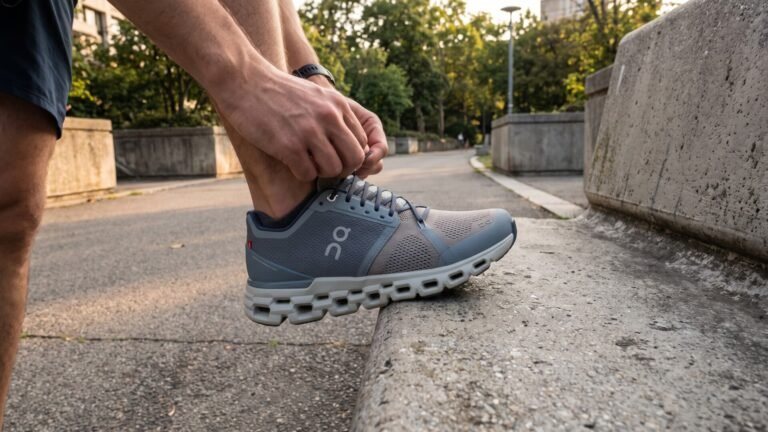
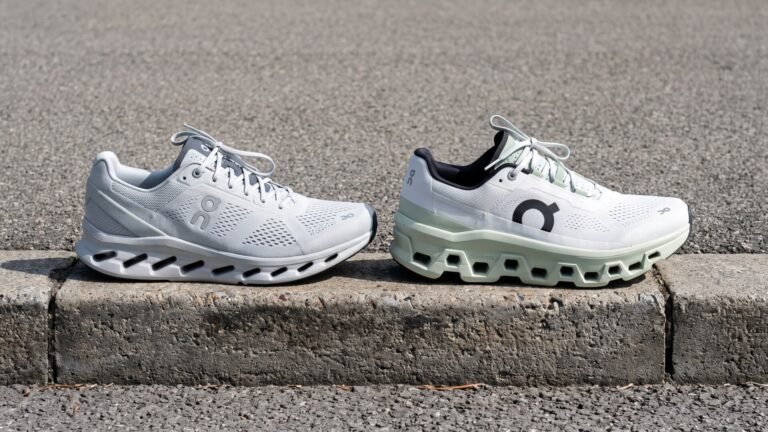
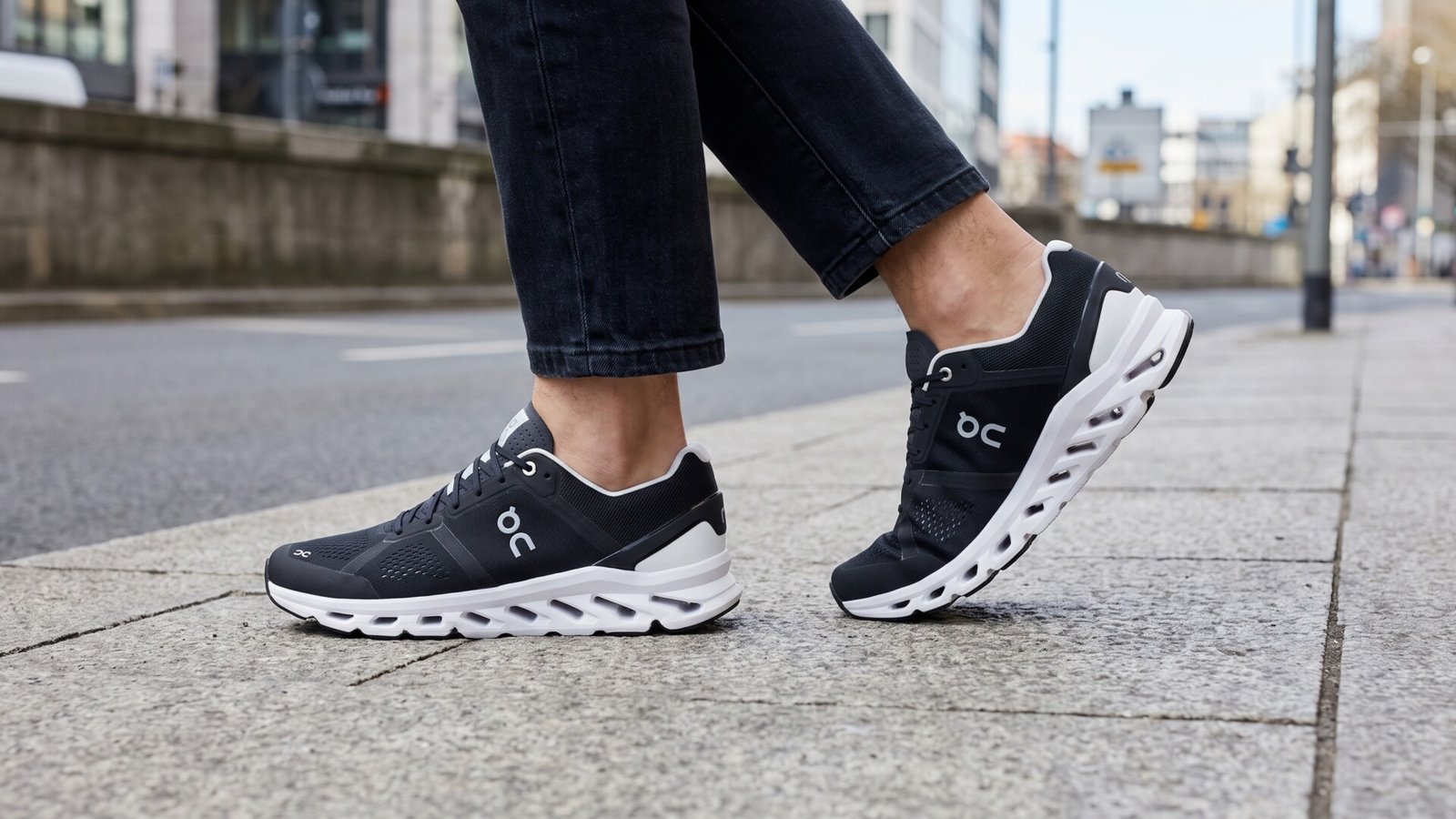
The design centers on what On calls CloudTec cushioning. Those hollow pods you see along the sole are not just there to look like a waffle iron – they are meant to compress on impact and then spring back as you roll through your stride. On the Cloudsurfer specifically, the pods are arranged to create a rocker-like transition that carries you forward. In practice, that means the shoe wants to roll you through your gait rather than let you sink into it.
Here is the practical translation. The ride is smooth. Really smooth. You get a sense of forward motion that makes easy miles feel almost effortless, and the moderate cushioning keeps you connected to the ground instead of floating above it. The shoe is also light – noticeably lighter than it looks – which helps on longer days when your legs are already tired.
But here is what the design does not deliver, and this is where buyers get misled. That futuristic sole makes people expect a dramatic, pillowy experience. The Cloudsurfer is not that. It is firmer than the marketing photos suggest, more responsive than plush. The appeal is controlled, efficient comfort, not sinking into a cloud.
That distinction matters because it shapes who should buy this shoe. If you want maximum softness underfoot, there are better options. If you want a shoe that makes ordinary runs and long walking days feel smoother and less tiring, the Cloudsurfer delivers exactly what it promises.
Comfort and Ride Quality in Everyday Use
Running Comfort
Let us talk about what the Cloudsurfer actually feels like when you run in it, because that is the core question.
For easy runs and steady miles, this shoe is a pleasure. The rocker geometry does real work – your foot transitions smoothly from heel to toe without the clunky, flat feeling you get from some daily trainers. The cushioning strikes a balance that On has been dialing in for years: enough protection to keep your joints happy on a five-mile morning run, but enough ground feel that you never feel disconnected from the road.
Where the Cloudsurfer shows its limits is at the extremes. If you are doing serious speed work, this is not the shoe. It is not designed to snap through quick turnover, and the moderate cushioning does not give you the pop you want for intervals. And if you are logging marathon-level mileage on hard pavement, you may find yourself wanting more impact protection than the Cloudsurfer provides. It is a daily trainer, not a long-run recovery shoe.
The hour-eight test matters here. After a full day that started with a run and moved into walking, errands, and standing around, the Cloudsurfer holds up well. Your feet feel tired – they will in any shoe – but the Cloudsurfer does not add unnecessary fatigue. The lightness helps more than you would expect.
Walking, Standing, and Commuting
Here is where the Cloudsurfer surprises people. It is genuinely good for city walking and travel days.
The same rocker geometry that makes running feel smooth translates to walking. Your foot rolls through each step with less effort, and the lightweight construction means you are not dragging around a heavy trainer all day. For commuters who walk a mile or two to transit, then stand on a train, then walk to the office, the Cloudsurfer handles the mixed demands well.
The caveat comes with prolonged standing. The Cloudsurfer is a performance shoe with a performance shape, meaning it is narrower through the midfoot and more streamlined than a casual sneaker. If you are on your feet for eight hours without moving much, the relatively firm cushioning can start to feel less forgiving. This is not a shoe designed for static standing – it is designed for motion.
Practical notes for long days: wear proper socks, not thin dress socks, and give the shoe a few short wears before you take it on a full travel day. The Cloudsurfer does not need a long break-in, but your feet need to adapt to the rocker feel if you are not used to it.
Stability and Foot Feel
Let us be direct about stability. The Cloudsurfer is a neutral shoe, and it feels like one. The platform is not especially wide, and there is no medial post or guidance system to correct overpronation.
For neutral runners – people whose feet roll naturally without excessive inward motion – this is fine. The shoe does not need to correct anything. But if you know you need stability features, or if you simply prefer a broad, planted base underfoot, the Cloudsurfer will feel less secure than you want.
The streamlined shape also means the shoe may feel narrow through the arch area for people with wide or high-volume feet. We will dig into sizing next, but the short version is this: the Cloudsurfer rewards a neutral foot with a smooth, efficient ride, and it punishes feet that need more space or more structure.
If you have specific support needs, do not take our word for it. Compare the Cloudsurfer with what your clinician or a specialist running store fitter recommends. This is not a shoe that will correct anything.
Fit, Sizing, and Foot Shape
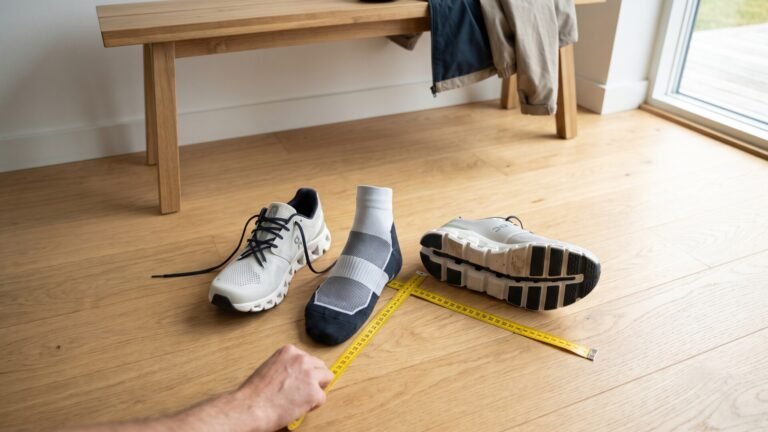
The starting point for sizing is simple: order your usual running shoe size. The Cloudsurfer runs close to true to size for most buyers, and there is no need to size up or down as a default.
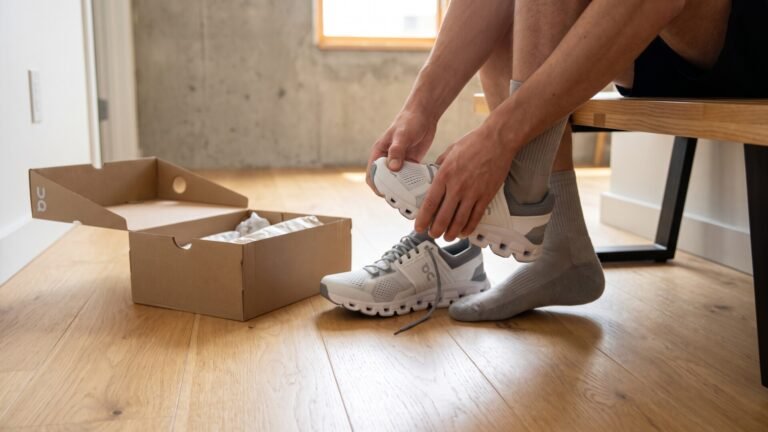
But that is a starting point, not a guarantee. Fit varies by release version, and On has tweaked the Cloudsurfer’s upper across generations. Check the specific model you are buying and, more importantly, check the retailer’s return policy before you commit. A shoe that fits perfectly in one colorway may fit differently in another release.
Here is what you can generally expect from the fit. The toe box offers reasonable space – enough to wiggle your toes without feeling cramped, though not as generous as some maximalist trainers. The midfoot hold is snug, with the upper wrapping your arch area more firmly than the relaxed fit of the On Cloud 5. Heel security is good, with the collar holding your heel in place without excessive pressure.
Who struggles with the Cloudsurfer? Wide feet, first and foremost. The streamlined platform and snug midfoot can feel restrictive if you need extra width. High-volume feet may also find the upper a bit confining across the top of the foot. On does offer wide versions of some models, but do not assume every Cloudsurfer release comes in wide – check the specific version you want.
Your buying checklist:
- Leave about a thumb’s width of space between your longest toe and the end of the shoe
- Try the shoe with the socks you will actually run or walk in
- Walk around on a hard surface, not just carpet
- Do not size up automatically to compensate for width – that creates heel slippage and blisters
Design, Styling, and Cultural Positioning
Let us talk about why the Cloudsurfer looks the way it does, because the design is doing a lot of work here.
Visually, the Cloudsurfer is a success. The technical mesh upper is clean and modern without being aggressive. The sole geometry is distinctive – those hollowed-out pods are immediately recognizable as On – but the overall silhouette is more streamlined than the chunky maximalist trainers that dominate much of the market. It reads as athletic and intentional rather than bulky.
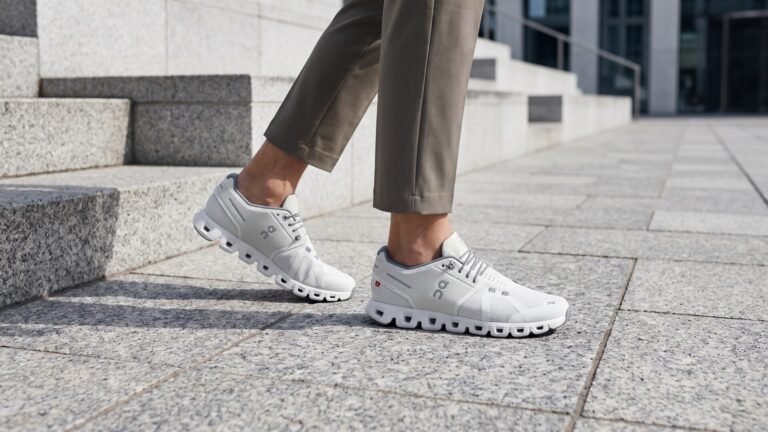
That visual appeal translates into real crossover value. The Cloudsurfer works with joggers and technical trousers, which is expected. But it also works with denim in a way that most running shoes do not. The clean lines and relatively low profile let it pass as something closer to a lifestyle sneaker when your outfit calls for it. For travelers who want one pair of shoes that can handle a morning run and an afternoon of sightseeing, that versatility is genuinely useful.
The fashion tradeoff is real, though. The same technical details that make the Cloudsurfer recognizable also make it harder to style with minimal or formal clothing. This is not a shoe you wear with tailored trousers or a dress. It is athletic, and it looks athletic, and no amount of clever styling changes that.
So why are people buying it now? On has become a status-conscious performance brand. The logo is subtle, the design language is distinctive, and wearing On signals that you are someone who runs or at least thinks about running. The Cloudsurfer lets buyers tap into that identity without choosing an overtly retro sneaker or a screaming-racer aesthetic.
Trend longevity is worth considering. The Cloudsurfer should remain wearable because it functions as a real running shoe – it is not purely a fashion object that will look dated when the next silhouette drops. But its technical styling may date faster than simpler, low-profile sneakers. The Cloud 5, with its more conventional shape, is likely to age more gracefully as a casual shoe.
Durability, Maintenance, and Long-Term Ownership
Here is where the Cloudsurfer gets complicated, and where buyers who only look at marketing photos get surprised.
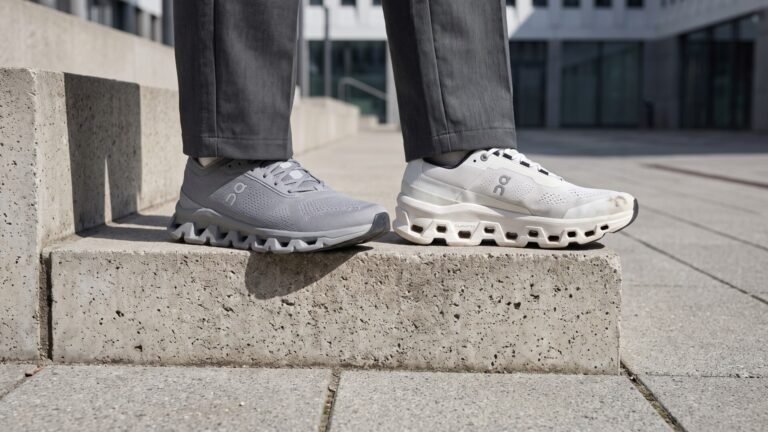
The upper is a technical mesh, which means it is breathable and light – and also more vulnerable than leather or heavier synthetics. Scuffs, abrasion, and difficult stains are real risks. The mesh is not fragile, but it is not armor. If you wear the Cloudsurfer for its intended purpose – running and walking – you should expect visible wear over time.
The wear points to monitor are predictable. The outsole areas with frequent pavement contact will wear first, especially at the heel strike zone and the forefoot push-off area. The exposed cushioning elements along the sole can show scuffs and nicks from curbs and rough surfaces. The heel lining may wear with repeated use, particularly if you have heel slippage. And the upper around the toe crease can develop creasing and, eventually, breakdown.
The outsole debris issue deserves specific mention. The Cloudsurfer’s open sole design – those visible pods – creates spaces where small stones and dirt can collect. On city streets, this can be genuinely annoying. You will pick pebbles out of the sole, and you will do it more often than you want. This is not a design failure, exactly – it is a tradeoff of the CloudTec approach – but it is a real ownership consideration for urban users.
Ownership guidance, in practical terms:
- Rotate the Cloudsurfer with another pair if you run regularly. Every shoe lasts longer with rest days.
- Let the shoe air out after sweaty runs. Do not stuff it in a gym bag.
- Clean with a soft brush and mild soapy water. Avoid harsh cleaners and never machine wash.
- Keep the shoe away from high heat – no dryers, no radiators.
- Replace the shoe when the cushioning feels noticeably dead or the structure feels compromised, not just when it looks worn.
The hidden cost point matters here. If you buy the Cloudsurfer for casual wear only – a few hours on weekends, maybe a short walk – you will be paying a lot of money per wear. If you run or walk in it several times per week, the cost per wear drops dramatically. This shoe earns its price through frequency of use.
Is the On Cloudsurfer Good Value?
Let us talk money honestly, because the Cloudsurfer is not cheap.
At its typical full retail price of around $150, the Cloudsurfer needs to work for a living. This is not a $100 shoe with a fancy name. You are paying for On’s design language, their cushioning technology, and the brand recognition that comes with those visible pods.
The cost-per-wear math makes the case. Wear the Cloudsurfer three times per week for a year – roughly 150 wears – and you are looking at about a dollar per wear. That is easy to defend for a shoe that carries you through runs, walks, commutes, and travel days. Wear it once or twice per month for casual outings, and you are looking at $6 to $12 per wear. That is much harder to justify.
When should you pay full price? If the current version fits you well, the colorway solves a specific need, and you will genuinely run or walk in the shoe regularly. Full price makes sense when the shoe is earning its keep.
When should you wait for a sale? If you are buying primarily for casual wear, if you are uncertain about sizing and want to minimize risk, or if you are a first-time On customer who is not sure the brand’s ride matches your preferences. On shoes do go on sale, and the Cloudsurfer is no exception. Patience can save you $30 to $50.
The comparison with alternatives matters for value. The On Cloud 5 is often priced similarly, but it is not a running shoe in the same way – it is a lifestyle shoe with running-inspired design. The Cloudswift offers a more structured training experience but typically costs more. Outside the On lineup, the Brooks Ghost and ASICS Gel-Cumulus are conventional neutral trainers that often undercut the Cloudsurfer on price while delivering dependable daily running performance.
Resale considerations are minimal here. Running shoes lose value once worn, period. Popular On colorways may attract some attention in resale markets, but you should buy the Cloudsurfer for use, not as an investment. The shoe that serves you for a year of running and walking is worth more than the shoe you keep pristine hoping someone will pay near-retail for it later.
What Most Buyers Get Wrong About the Cloudsurfer
Let us correct some assumptions, because there is a lot of confusion floating around this shoe.
The most visually advanced sole does not mean the softest ride. Those hollow pods look like they should be marshmallow-soft. They are not. The Cloudsurfer is moderately cushioned and relatively firm compared with max-cushion shoes from brands like Hoka or ASICS. Comfort is subjective – some buyers will love the firmer, more responsive feel, and others will find it disappointingly stiff. Know which camp you are in before you buy.
The Cloudsurfer is not an all-purpose sneaker for every foot. The neutral design is excellent for neutral runners and walkers. It can be frustrating for people who need stability features, extra width, or a more forgiving upper. This is not a failure of the shoe – it is a mismatch between the shoe’s design and certain buyers’ needs.
Do not size based on your casual On shoes. If you wear the Cloud 5 as a lifestyle sneaker, do not assume the Cloudsurfer fits the same. Running shoes need to be assessed with movement in mind – toe room for the push-off, heel security for the stride, and enough space for the foot to swell during longer efforts. Try the Cloudsurfer the way you would any running shoe, not the way you would a fashion sneaker.
You are paying partly for the design language. This is the purchase psychology that nobody wants to admit. On’s visual identity is part of the appeal, and the social visibility of the brand is part of what you are buying. That is not inherently bad – we all buy things partly for how they look and what they signal. But be honest with yourself about it. If the Cloudsurfer looked like a generic running shoe, would you still pay $150 for it? If the answer is no, make sure the styling is worth the premium to you.
Who Should Buy the On Cloudsurfer?
The Cloudsurfer is not for everyone, and pretending otherwise does nobody any favors. Here is who should genuinely consider it:
- Neutral runners who want a versatile daily trainer for easy and moderate-paced runs. If you log three to five miles a few times per week and want a shoe that makes those miles feel smooth and effortless, this is a strong candidate.
- Walkers, commuters, and travelers who prefer a lightweight technical shoe over a traditional lifestyle sneaker. The Cloudsurfer handles mixed active days well.
- Buyers who want a running shoe that works with modern streetwear and travel clothing. The crossover styling is a genuine advantage over most technical trainers.
- Existing On fans who want something more performance-oriented than the Cloud 5. The Cloudsurfer is the natural upgrade path.
And here is who should wait for a sale:
- Casual users who will rarely run. If you want a shoe for occasional weekends and the occasional walk, the Cloudsurfer is hard to justify at full price.
- Shoppers uncertain about sizing. On’s fit varies by model, and the Cloudsurfer’s snug midfoot may not work for you. Wait for a deal so the risk is lower.
- People comparing only on appearance. If you are choosing between On models based on looks alone, you are shopping for the wrong reasons. Run in the shoe before you commit.
Who Should Skip It and What to Buy Instead
Let us be straight about alternatives, because the Cloudsurfer is not the only good shoe in this category.
Choose the On Cloudswift if you want a more structured On option for everyday running. The Cloudswift has a firmer, more guided ride and a slightly more substantial platform. It is the better choice if you want your On shoe to feel more like a traditional trainer and less like a minimalist daily runner.
Choose the On Cloud 5 if your priorities are primarily casual. The Cloud 5 is easier to treat as an everyday sneaker – the fit is more relaxed, the styling is more conventional, and it slips into casual outfits more naturally. Just understand that it is not a running shoe in the way the Cloudsurfer is. If you plan to run regularly, the Cloudsurfer is the better tool.
Choose the Brooks Ghost if you value a conventional, proven daily-running format and care less about On’s visual identity. The Ghost is the default recommendation for neutral runners who want dependable performance without branding theatrics. It is often available at better prices, too.
Choose the ASICS Gel-Cumulus if you want a neutral trainer with a more traditional design and a potentially broader fit search. The Gel-Cumulus has been a staple of the category for years, and its fit tends to accommodate a wider range of foot shapes.
Choose a stability-focused model from a specialist running brand if you know you need support. The Cloudsurfer will not correct your gait, and pretending otherwise sets you up for disappointment. Go to a running store, get properly fitted, and buy the shoe that addresses your actual needs.
Final Verdict: Should You Buy the On Cloudsurfer?
Here is the bottom line.
The On Cloudsurfer is worth buying for neutral runners and active commuters who want a smooth, lightweight shoe with genuine running capability and lifestyle versatility. It delivers a ride that makes daily miles feel easier, it looks good with a range of casual outfits, and it holds up well under regular use.
Its main weakness is plain: it is less compelling for buyers seeking maximum cushioning, a wide and highly stable platform, or a casual sneaker that will spend most of its life in the closet. If you want a cloud-soft marshmallow ride, this is not that shoe. If you need stability features or extra width, look elsewhere.
But for the target buyer – someone who will actually run or walk in this shoe several times per week – the Cloudsurfer wins. It bridges running and everyday style more successfully than most technical trainers, and that versatility makes the price easier to justify through frequent use.
The final decision rule is simple. Buy the Cloudsurfer if you will run or walk in it several times per week and you like a moderately cushioned, streamlined ride. Choose the Cloud 5 if appearance and casual comfort matter more than running performance. And choose the Cloudswift, Brooks Ghost, or ASICS Gel-Cumulus if the Cloudsurfer’s fit, stability, or price does not align with your needs.
The Cloudsurfer is not the most exciting shoe On makes, and it is not the softest. It is the shoe that does its job quietly and well, day after day – and for the right buyer, that is exactly what makes it worth the money.
Frequently Asked Questions About On Cloudsurfer
Is the On Cloudsurfer good for everyday walking?
Yes, for most people. The lightweight construction and smooth rocker transition make it a strong walking and commuting shoe. The caveat is that it has a neutral running geometry and a streamlined platform, so if you want a broad, very stable base or a purely casual sneaker feel, another model may serve you better.
Is the On Cloudsurfer true to size?
For most buyers, yes – your usual running shoe size is a sensible starting point. But foot width, sock thickness, version differences, and retailer return policies can all change the best choice. The midfoot runs snug, so wide-footed buyers should check availability of wide versions and be ready to return if the fit does not work.
Is the On Cloudsurfer good for standing all day?
It depends on your foot and your needs. Some users find the moderate cushioning sufficient for long days, but the neutral running geometry and streamlined platform are not automatically ideal for prolonged static standing. Prioritize personal fit and stability over the assumption that running cushioning equals standing comfort.
Can you use the On Cloudsurfer for gym workouts?
For light gym work and general movement, yes. For heavy lifting, lateral court movement, or workouts requiring a very stable, flat base, no. The Cloudsurfer is a running shoe with a rockered sole – it is not designed for the demands of a lifting platform or a basketball court.
How does the On Cloudsurfer compare with the Cloud 5?
The Cloudsurfer is the more credible running and walking shoe, with a smoother ride and better performance credentials. The Cloud 5 is more lifestyle-oriented, with a relaxed fit and easier integration into casual outfits. If you plan to run, choose the Cloudsurfer. If you want a casual sneaker, the Cloud 5 is the better match.
How long should the On Cloudsurfer last?
Most runners get somewhere between 300 and 500 miles from a daily trainer like the Cloudsurfer, depending on body weight, running surface, rotation, and gait. Replace the shoe when comfort, cushioning, or structural integrity noticeably declines – do not rely only on visual appearance, because the midsole can lose its resilience before the outsole looks worn.
Is the On Cloudsurfer worth the price?
At around $150, the Cloudsurfer is easier to justify for frequent runners, walkers, and commuters who value its styling and ride. The cost per wear drops quickly with regular use. Casual buyers who will wear the shoe occasionally should compare sale pricing and alternatives before paying full retail.