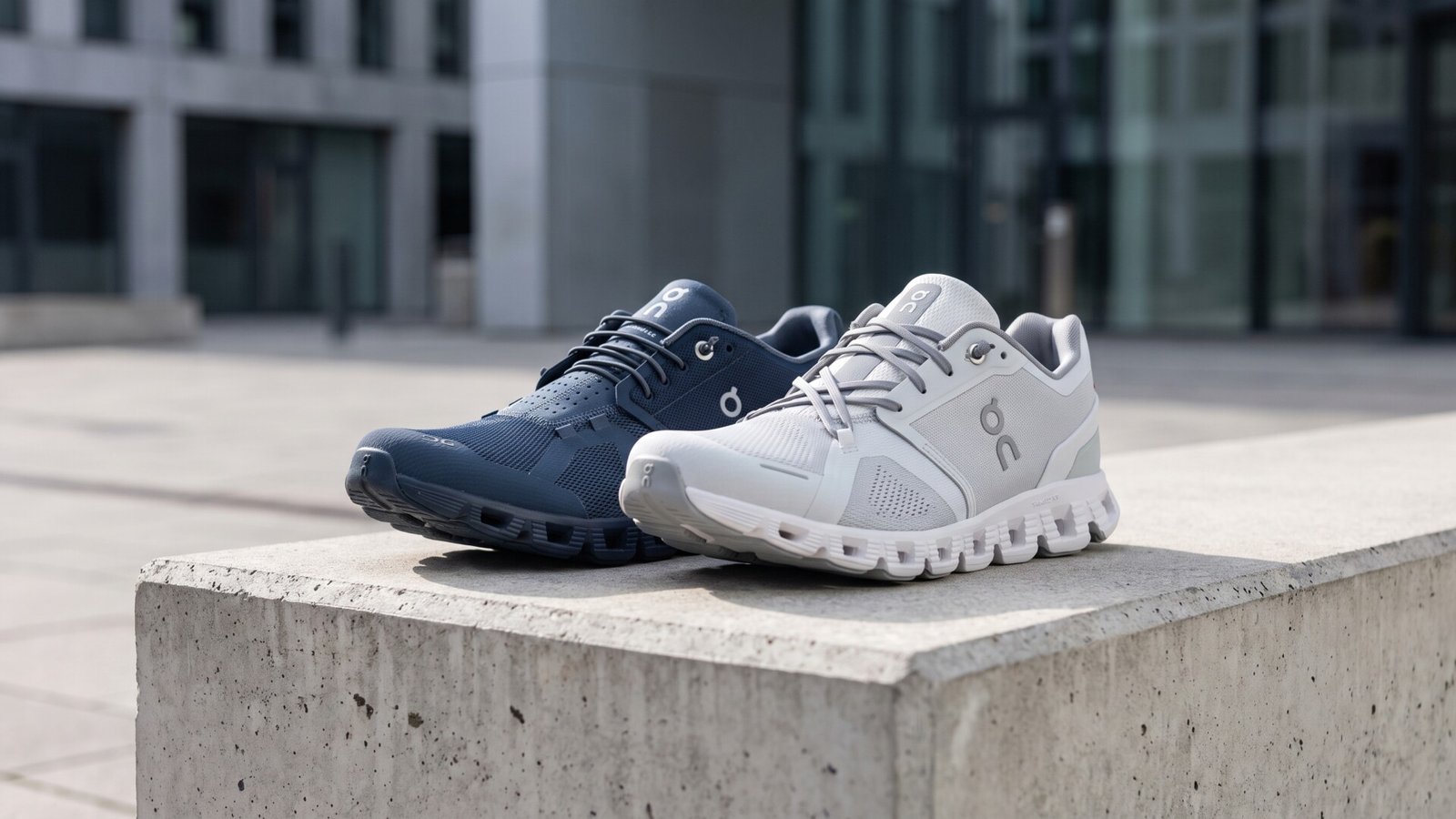
On Cloud 5 vs Cloud 6
You are standing in the aisle of a shoe store, or maybe you have two browser tabs open, and you are staring at a decision that should not be this hard. Two sneakers from the same brand. Same CloudTec sole pods. Same general “Swiss precision” vibe. One is newer, one is usually cheaper. You just want a pair that will not wreck your feet on a long travel day or make you regret the price tag by week three.
Here is the quick answer: the On Cloud 6 is the better buy for most people because the updated fit and refined everyday comfort make it a more complete shoe for walking, commuting, and long casual days. The Cloud 5 is the smarter bargain when you find it heavily discounted or you already know it fits your foot perfectly.
This comparison is genuinely tricky because both shoes share the same family DNA. Same recognizable sole, same lightweight feel, same lifestyle positioning rather than serious performance. The decision comes down to fit, walking comfort, price, and whether you want the newest version or the better deal. And here is the thing to understand upfront: the Cloud 6 is not a massive performance upgrade. It is an evolution of the everyday On formula, and knowing that changes how you should choose between them.
At a Glance: On Cloud 5 vs Cloud 6
Before we dig into the details, here is the quick breakdown.
| Category | On Cloud 5 | On Cloud 6 | Better Choice |
|---|---|---|---|
| Typical price | Usually lower, especially during sales | Usually higher at full price | Cloud 5 for value |
| Everyday comfort | Lightweight and responsive | More polished fit and daily comfort | Cloud 6 |
| Walking and commuting | Good for short-to-moderate use | Better for longer everyday wear | Cloud 6 |
| Style | Sleek, compact, recognizable | Slightly more substantial and current | Personal preference |
| Fit | Can feel snug through the forefoot | More accommodating for many feet, but still not a wide shoe | Cloud 6 |
| Value | Strong when discounted | Strong if fit and comfort justify the premium | Depends on price |
Three quick recommendations before we go deeper:
- Choose the Cloud 6 for the best overall everyday On sneaker, longer walks, commuting, and shoppers who want the updated fit.
- Choose the Cloud 5 for the lowest price, a lighter-feeling shoe, or a discounted pair that fits well.
- Choose neither if your priority is serious running, maximum cushioning, or a naturally wide fit.
Our editorial call: Cloud 6 as the overall winner, Cloud 5 as the value winner.
What Actually Changed From the Cloud 5 to the Cloud 6?
On did not reinvent the wheel here. The Cloud 6 is an update to the same lifestyle-focused concept, not a completely new category of shoe. If you are expecting a ground-up redesign, you will be disappointed. If you want a more refined version of a formula that already works, you are in the right place.
The changes that actually matter to buyers are in the details you feel rather than the ones you see in marketing photos. The upper construction got reworked, which changes how the shoe wraps your foot. The step-in feel is different, slightly more polished. Heel security is better, meaning less slippage when you are walking at a decent clip. And there is a bit more room through the forefoot, which addresses one of the most common complaints about the Cloud 5.
Here is the catch though: you will not notice most of these improvements in a thirty-second try-on. The Cloud 6’s advantages show up when you are walking for several consecutive hours, commuting across a city, or wearing the shoes from morning until evening. That is the real test, and it is also why so many people buy the wrong one. They try both for a minute in the store, feel nothing dramatically different, and grab whichever is cheaper or looks better on the shelf.
Both models sit firmly in the lifestyle and everyday sneaker category. They are not substitutes for a dedicated high-cushion walking shoe, and they are not performance running shoes. Understanding that positioning matters more than any spec sheet comparison.
Why the Cloud 5 Still Has a Case
The Cloud 5 is not a bad shoe just because a newer model exists. It has two real advantages working in its favor.
First is price. The Cloud 5 has been out longer, which means it shows up in clearance sections and seasonal sales much more often. If you can grab it for $40 to $60 below the Cloud 6’s price, the value conversation changes completely. A comfortable shoe at a meaningful discount beats a slightly better shoe at full price for a lot of buyers.
Second is the look. Some people genuinely prefer the Cloud 5’s slimmer, lower-profile appearance. It sits closer to the ground visually and reads as slightly more understated. If you liked the way the Cloud 5 looked when it released and you still like it now, there is no shame in sticking with it.
The risk is buying the Cloud 5 simply because it looks similar to the Cloud 6 without checking the fit. The uppers are different. The way they hold your heel and forefoot is different. If you have not tried either, do not assume the older model fits you just because the newer one does. Check the fit, check the condition if buying from a third-party seller, check the colorway actually works with your wardrobe, and confirm the return policy before you commit.
Comfort and Walking Comparison
This is the section that actually decides the purchase, so let us take our time here.
Cushioning and Underfoot Feel
Both the Cloud 5 and Cloud 6 share the same fundamental ride character. They are lightweight, responsive, and relatively firm compared to the plush, sink-in feel you get from a max-cushion walking shoe. The CloudTec sole pods compress on impact and create a sensation that On describes as landing on clouds, but the reality is more nuanced. It is a springy, energetic feel rather than a soft, cushioned one.
This is where the buyer mismatch happens. People hear “Cloud” and expect marshmallow softness. That is not what these shoes deliver. If you are used to the deep cushioning of something like a Hoka Bondi or a New Balance Fresh Foam model, the On line will feel firmer and more structured. Some people love that responsive sensation because it makes walking feel efficient and lively. Others find it less forgiving over long periods on hard floors.
Neither model is objectively wrong here. It is a preference thing, and it is the single biggest reason you should not buy either shoe without understanding what the ride actually feels like.
Standing, Commuting, and Travel
The Cloud 6 is the stronger option for daily commuting, airport walking, city travel, and casual all-day use. The updated fit is designed to make the shoe easier to wear for extended periods, and that intention shows. The better heel hold keeps your foot locked in place during long walks. The slightly more accommodating forefoot reduces the pinching sensation that can develop after hours of wear in the Cloud 5.
Where do both models fall short? Long standing shifts are the weak point. If your job has you on your feet for eight or ten hours on concrete, neither the Cloud 5 nor the Cloud 6 provides the cushioning and stability you need. Very high daily mileage, meaning five or more miles every single day, will also push these shoes past their comfort zone. And if you need substantial stability features because of overpronation or other biomechanical needs, this is not the right platform.
Think about it in scenarios. Short errands, casual office days, meeting friends for lunch, light walking around the neighborhood: either model works fine. Full travel days with a flight, a train ride, and miles of city walking: the Cloud 6 handles this better. Demanding work shifts where you barely sit down: you should be looking at a different On model or another walking shoe entirely.
Comfort After the Novelty Wears Off
Here is the hidden trade-off that nobody mentions in the marketing. The Cloud design’s distinctive sole can feel comfortable and springy for some users but less natural for others, and you often cannot tell which camp you are in until the novelty wears off.
The first few steps in a new pair of On shoes feel interesting. The sole pods compress in a way you have not felt before. That novelty can mask whether the shoe actually suits your foot. By hour three or hour six, the real story emerges. The firmness that felt responsive now feels unforgiving. The sole pods that felt springy now feel like they are pushing back against your natural gait.
This is why you should judge comfort after several hours, not from the first few steps. It is also why the return policy matters so much. Foot shape, arch preference, and tolerance for a firmer ride vary wildly between individuals. A shoe that feels perfect in the store can become uncomfortable by dinner time, and you need the option to send it back.
Fit, Sizing, and Width
Let us talk sizing directly, because this is where a lot of people make their mistake.
General guidance: both the Cloud 5 and Cloud 6 are commonly purchased in a person’s usual sneaker size. If you wear a 10 in most athletic shoes, you will probably wear a 10 in these. But the exact fit depends heavily on your foot shape and how the upper materials behave on your particular foot.
The Cloud 6 may feel more accommodating to some wearers through the midfoot and forefoot. The reworked upper has a bit more give, and the overall fit is less restrictive. But neither model should automatically be treated as a true wide-foot shoe. These are not wide lasts. They are standard-width sneakers with slightly different volume characteristics.
If you have broad forefeet, bunions, or feet that swell during the day, you need to be careful. Do not assume the Cloud 6 solves your problem just because it is newer. Check whether On offers a wide version of the model you want. If they do not, or if the wide option still feels cramped, consider a more spacious walking model from a brand that prioritizes width. Sizing up blindly creates its own problems, especially heel slippage, which leads to blisters and an unstable feel.
Socks and insoles also change the equation. Thicker socks can make an already snug fit uncomfortable, especially in the Cloud 5. Replacing the stock insole with a thicker aftermarket one can alter the volume of the shoe and affect heel security. If you know you will wear thick socks or need orthotic-level support, factor that into your size decision.
Fit Decision Rules
- Narrow to average feet: either model can work. Choose by price and which feel you prefer.
- Average feet needing more room: start with the Cloud 6, and confirm the retailer’s return policy before committing.
- Wide feet: do not assume the Cloud 6 solves the issue. Compare available width options and look at alternatives if needed.
- Between sizes: avoid automatic sizing up if it creates heel movement. Use the brand’s current size chart and try both sizes when possible.
Design, Styling, and Daily Versatility
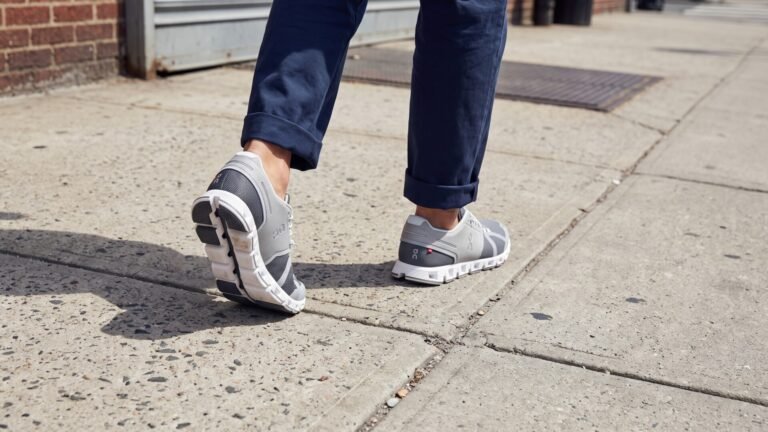
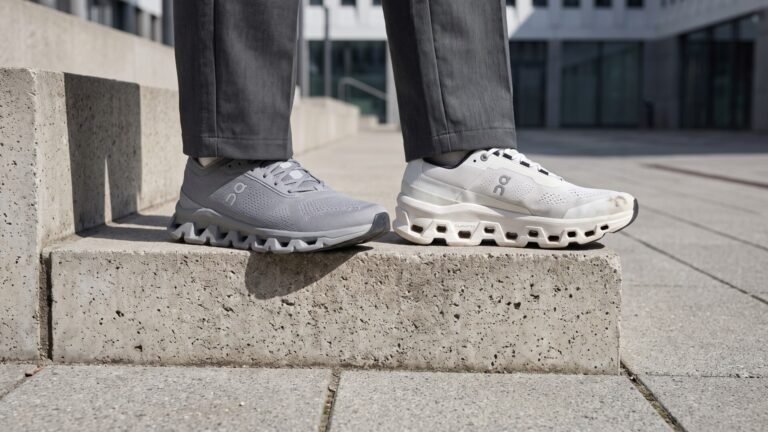
The Cloud 5 has a sleeker, more compact lifestyle look. It sits lower on the foot and has a slightly more understated presence. The Cloud 6 looks a bit more substantial, with a shape that leans into the current technical-running-inspired sneaker aesthetic that dominates streetwear right now.
Neither shoe is a major trend piece. You are not buying a hype sneaker here. The appeal of both models comes from clean technical styling and that recognizable On branding. People will notice them, but they will not stop you on the street to ask where you got them. That is exactly what most everyday buyers want.
Outfit compatibility is broad for both. Jeans, chinos, joggers, travel pants, shorts, casual workwear: all of these work without much thought. The Cloud line is about as versatile as a technical sneaker gets, which is a big part of why it became so popular in the first place.
Color choice is a genuine value decision. Neutral shades like black, white, or gray are easier to wear across more outfits and will likely earn more cost-per-wear over the life of the shoe. Bright or limited colorways look more distinctive but become harder to style, which means they often spend more time in the closet.
Which Looks Better?
This genuinely comes down to personal preference, so let us give you a framework.
Choose the Cloud 5 if you prefer a lower-profile, less bulky silhouette. It reads as slightly more casual and understated, closer to a traditional sneaker shape.
Choose the Cloud 6 if you like the current technical-running-inspired shape. It has a bit more visual presence and aligns more closely with what is popular in sneaker design right now.
Neither model is ideal for formal settings, heavy outdoor use, or outfits that require a traditional leather sneaker. If you need one shoe that does everything, these are not it. If you need a clean, comfortable, modern sneaker that works with most casual outfits, either one will serve you well.
Durability and Ownership Experience
Let us talk about what wearing these shoes for months actually looks like.
The expected wear points are fairly predictable. The outsole contact areas, especially the rubber pods that hit the ground, will show wear first. The mesh or textile upper can develop issues around the toe crease area. Laces, heel lining, and the visible foam components all have their own lifespans.
These shoes are best treated as everyday lifestyle sneakers rather than disposable fashion pieces. With reasonable care, you can expect them to last a while. But the lifespan depends heavily on walking volume, surfaces, weather, and whether you rotate them with other shoes. Someone who wears the same pair every day for miles of city walking will wear through them much faster than someone who rotates between three pairs.
Cleaning and maintenance matter more than most people think. Keep the upper clean by wiping off dirt regularly. Avoid unnecessary soaking, which breaks down adhesives and materials. Let the shoes dry naturally, away from direct heat. And rotate pairs to reduce odor and material fatigue. A sneaker cleaning kit is a worthwhile investment if you plan to wear these often.
Here is the ownership trade-off: the distinctive sole design makes the shoe visually recognizable, which is part of the appeal. But it also shows dirt and wear more clearly than a conventional flat outsole. The gaps between the sole pods collect grime, and the visible foam can yellow or scuff in ways that are hard to clean. If you like your shoes to look fresh for a long time, you will need to stay on top of maintenance.
What Usually Breaks the Value Equation?
Four mistakes kill the value proposition faster than anything else.
Buying at full price when the Cloud 5 is heavily discounted somewhere else. That is just leaving money on the table.
Buying the Cloud 6 for its appearance while ignoring a poor forefoot fit. A shoe that pinches will not get worn, no matter how good it looks.
Using either model for a work environment that needs oil resistance, heavy protection, or specialized safety features. These are not work boots.
Treating either shoe as a replacement for a dedicated running or maximum-cushion walking shoe. They are lifestyle sneakers, and expecting more from them leads to disappointment.
Price, Value, and Cost Per Wear
Here is how to think about the money.
The basic value comparison is straightforward. The Cloud 5 becomes compelling when its price is meaningfully below the Cloud 6. If you can save $50 or more, that is a real difference. The Cloud 6 needs to justify its premium through better fit, comfort, and expected use. If you will wear it constantly, the premium spreads across hundreds of wears and becomes negligible.
Run the cost-per-wear math yourself. A $150 pair worn twice a week for a year costs roughly $1.44 per wear. A $170 pair worn four times a week for a year costs roughly $0.82 per wear. The more expensive shoe becomes the cheaper option when you actually wear it. That is the framework that matters, not the sticker price.
Fit is the most important value variable in this entire comparison. A cheaper shoe that causes discomfort and stays in the closet is more expensive than a pricier shoe that becomes your daily default. The shoe you actually wear is always the better value, regardless of what it costs.
Resale considerations are minimal here. Standard used everyday sneakers have limited resale value. The market for gently worn On shoes exists but is not strong enough to factor into your decision. Buy these to wear them, not as an investment.
Here is the price rule to follow:
- Buy the Cloud 5 when it is substantially discounted and fits well.
- Pay extra for the Cloud 6 when the price gap is modest and the shoe will be used frequently.
- Wait for a sale if the Cloud 6 premium feels difficult to justify. On shoes go on sale regularly, and the Cloud 6 will eventually drop in price.
What Most Buyers Get Wrong About This Comparison
Let us clear up the four biggest misconceptions.
Mistake: assuming the newer model is automatically more comfortable. The Cloud 6 is a refinement, not a magic fix. A better update cannot overcome an incompatible foot shape or a personal dislike of the ride. If the CloudTec sensation does not work for your foot, the Cloud 6 will not save you.
Mistake: choosing based only on appearance. The shoes look similar, and the visual differences are subtle. Heel hold, forefoot space, and walking duration matter far more after the first week. The shoe that looks better in the store is not necessarily the shoe that feels better at hour six.
Mistake: treating CloudTec as maximum cushioning. The Cloud line’s sole is distinctive and responsive, not universally soft or supportive. If you need serious cushioning for long days on hard floors, this is the wrong platform entirely.
Mistake: ignoring use case. Calling one model universally best ignores the reality that different activities need different shoes. Errands, travel, casual office wear, long walks, standing shifts, and running all place different demands on a shoe. Match the shoe to what you will actually do with it.
Which One Should You Buy?
Buy the On Cloud 6 If
- You want the best overall choice for everyday wear, commuting, travel, and regular walking.
- You value the updated fit and are willing to pay more for a newer model.
- You want a current technical sneaker silhouette that works across casual outfits.
- You expect to wear the shoes frequently enough for the price premium to spread over many uses.
Buy the On Cloud 5 If
- You find it at a meaningful discount from a reputable retailer.
- You prefer its slimmer look or lighter-feeling presentation.
- You already know the Cloud 5 fits your foot comfortably.
- You need a casual everyday sneaker and do not require maximum cushioning or performance running features.
Consider Another Shoe Instead If
- You need a genuinely wide toe box or a specialty work shoe.
- You stand on hard floors for long shifts and need more cushioning.
- You want to run regularly rather than walk and commute.
- You dislike a firmer, more structured underfoot feel.
If you fall into those last categories, look at other options in the On lineup. The On Cloudmonster delivers significantly more cushioning for those who need it. The On Cloudrunner offers more structured support for daily wear. The On Cloudsurfer is built for runners who want a softer, more natural ride. They serve different comfort and activity priorities, and knowing that distinction will save you from buying the wrong shoe.
Final Verdict: Cloud 6 Wins, but the Cloud 5 Is the Smarter Bargain
Here is where we land.
The On Cloud 6 is the overall winner because it is the more complete everyday option for most current buyers. The updated fit, better heel security, and more accommodating forefoot make it the stronger choice for commuting, travel, and repeated daily wear. If you are buying one pair to do everything, this is the one.
The On Cloud 5 wins on value. When the discount is substantial, the fit is already proven, or you prefer its lower-profile design, it remains a genuinely smart buy. A proven shoe at a real discount beats a marginally better shoe at full price for many shoppers.
The decisive buying rule is simple. If the price difference is small, buy the Cloud 6. If the Cloud 5 is heavily discounted and comfortable on your foot, buy the Cloud 5. That is the whole decision.
One final warning: neither shoe should be selected solely for brand recognition. If you need wide-fit comfort, maximum cushioning, or serious running performance, the Cloud line is not the answer, no matter which version you choose.
The one thing to carry into the store with you: the better shoe is the one that fits your foot and your actual daily routine, not the one with the newer model number.
Frequently Asked Questions About On Cloud 5 Vs Cloud 6
Is the On Cloud 6 more comfortable than the Cloud 5?
Many shoppers will find the Cloud 6 more comfortable for everyday walking because of its updated fit and refinement. But comfort still depends on your foot shape, sock thickness, and whether you prefer a responsive ride over a plush one. Try both if you can, and judge them after several hours of wear, not just a few steps.
Is the On Cloud 5 or Cloud 6 better for walking?
The Cloud 6 is better for longer everyday walking and commuting thanks to its improved fit and heel security. Neither model is automatically the best choice for very long walks or all-day standing if you need maximum cushioning. For serious walking mileage, consider a dedicated walking shoe instead.
Do the On Cloud 5 and Cloud 6 fit true to size?
Both generally fit true to size for most people. But forefoot width and upper feel can change the decision, especially if you have wider feet or prefer a roomier fit. Use the current size chart, and buy from a retailer with free returns so you can test the fit at home.
Are the On Cloud 6 good for wide feet?
They may feel more accommodating than the Cloud 5 for some people, but they should not be treated as a guaranteed wide-foot solution. Check whether On offers a wide version of the model you want, and avoid blind sizing up, which can create heel slippage and instability.
Is the On Cloud 5 still worth buying?
Yes, when it is substantially discounted, fits correctly, and will be used as a casual everyday sneaker. The value weakens when its price is close to the Cloud 6, because the newer model offers a better fit for a similar cost.
Can you run in the On Cloud 5 or Cloud 6?
Both can handle light casual movement, but they are lifestyle sneakers, not performance running shoes. If you want to run regularly, compare dedicated performance models like the On Cloudsurfer or another running shoe designed for that purpose.
Which is better for travel, the On Cloud 5 or Cloud 6?
The Cloud 6 is better for most travel because its updated everyday comfort and current design suit airport walking, commuting, and city use. But prioritize a proven fit before a trip. A shoe that works for your foot is always better than a shoe that looks right on paper.