Salomon XT-6 vs. Hoka Clifton: Trail Style vs. Comfort King
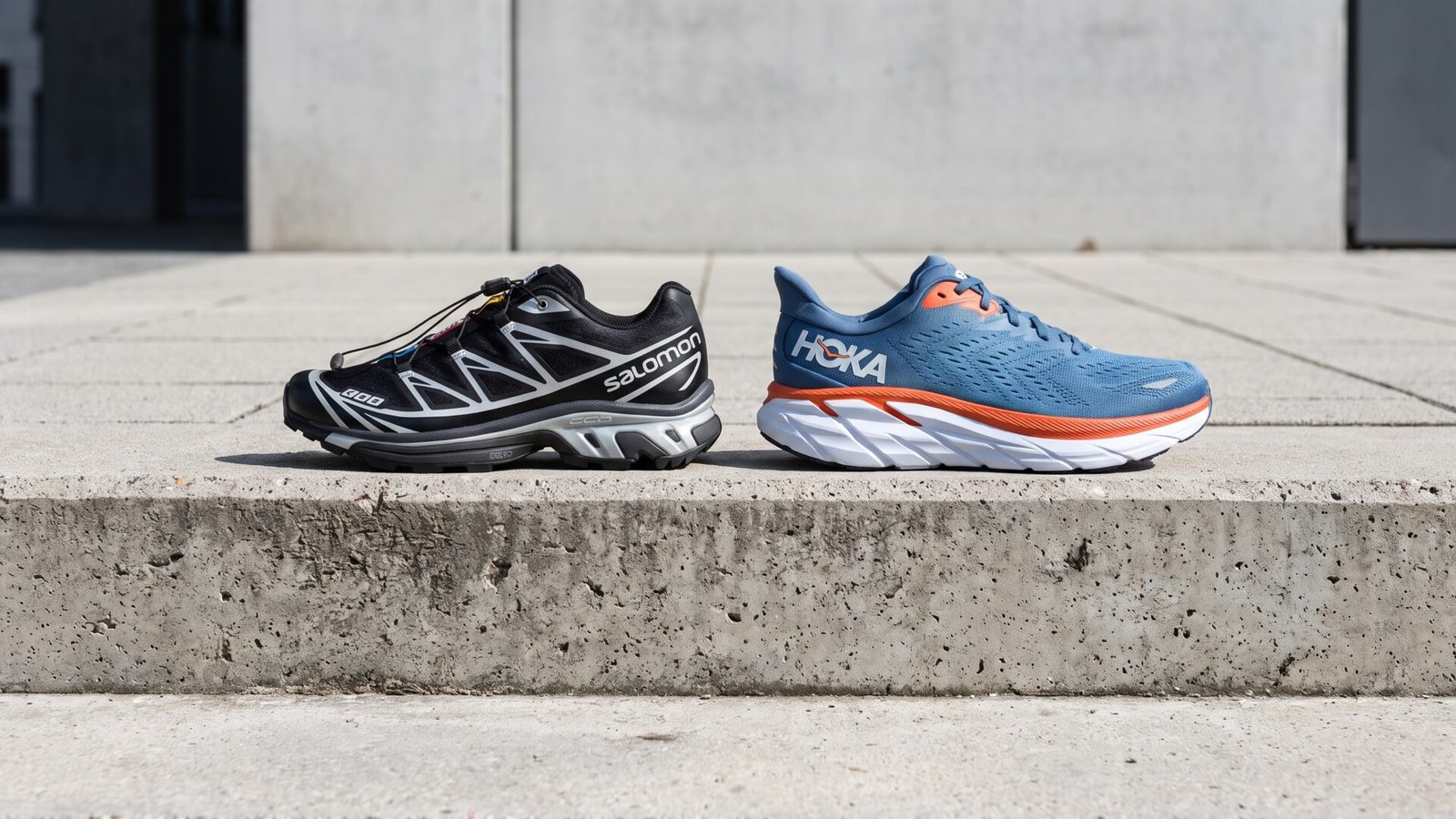
Let’s talk about the most unexpected sneaker battle of 2026. On one side, you’ve got the Salomon XT-6 – a technical trail runner that became the unofficial uniform of Gorpcore, techwear, and fashion week sidewalks. On the other side, the Hoka Clifton – a max‑cushion road runner that nurses, travelers, and walking enthusiasts swear by.
Two shoes. Two completely different missions. Yet somehow, they end up in the same shopping cart comparisons all the time.
Why? Because both have transcended their original purposes. The XT‑6 is no longer just for ultra‑distance trail running – it’s a fashion icon. The Clifton is no longer just for pavement pounding – it’s a lifestyle comfort staple. And in 2026, plenty of buyers are trying to decide between looking cool and feeling great.
So which one should you actually buy? It comes down to one question: Do you want maximum style or maximum comfort?
Quick answer:
- Buy the Salomon XT‑6 for aesthetics, techwear fits, and streetwear credibility.
- Buy the Hoka Clifton for all‑day comfort, walking performance, and travel.
Let’s break down everything – design, comfort, walking, styling, durability, value – so you can make the right call.
At a Glance: Which Sneaker Wins?
| Goal | Winner |
|---|---|
| Comfort | Clifton |
| Walking | Clifton |
| Style | XT‑6 |
| Techwear Fits | XT‑6 |
| Travel | Clifton |
| Stability | XT‑6 |
| Breathability | XT‑6 |
| Standing All Day | Clifton |
| Trend Appeal | XT‑6 |
| Overall Daily Wear | Clifton |
Editor’s Choice:
- Best Overall Daily Wear Shoe: Hoka Clifton
- Best Style Choice: Salomon XT‑6
Comparison Table
| Feature | Salomon XT‑6 | Hoka Clifton |
|---|---|---|
| Price | $190–$220 | $145–$170 |
| Comfort | ⭐⭐⭐⭐ | ⭐⭐⭐⭐⭐ |
| Cushioning | ⭐⭐⭐⭐ | ⭐⭐⭐⭐⭐ |
| Style | ⭐⭐⭐⭐⭐ | ⭐⭐⭐⭐ |
| Walking | ⭐⭐⭐⭐ | ⭐⭐⭐⭐⭐ |
| Stability | ⭐⭐⭐⭐⭐ | ⭐⭐⭐⭐ |
| Breathability | ⭐⭐⭐⭐⭐ | ⭐⭐⭐⭐ |
| Travel | ⭐⭐⭐⭐ | ⭐⭐⭐⭐⭐ |
| Trend Appeal | ⭐⭐⭐⭐⭐ | ⭐⭐⭐⭐ |
| Value | ⭐⭐⭐⭐ | ⭐⭐⭐⭐⭐ |
Origins: How These Shoes Became Lifestyle Icons
Salomon XT‑6 – From French Alps to Fashion Week
The XT‑6 was originally designed for ultra‑distance trail running – think 100‑mile races through mud, rocks, and steep descents. It featured a stiff EnergyCell midsole, a Quicklace system for one‑pull tightening, a grippy Contagrip outsole, and a durable mesh and synthetic upper.
For years, it was a niche shoe for serious trail runners. Then something strange happened. Around 2018–2019, the Gorpcore trend emerged – outdoor gear worn as streetwear. Fashion people started wearing technical hiking and running shoes with baggy cargos and Patagonia fleeces. The XT‑6, with its aggressive, futuristic look, became the poster child.
Collaborations with Palace, Beams, SATISFY, and MM6 Maison Margiela pushed it into luxury territory. By 2026, the XT‑6 is as likely to be seen on a runway as on a mountain trail. It’s the uniform of “I dress like I’m about to summit Everest, but I’m just going to brunch.”
Hoka Clifton – The Runner That Conquered the World
The Clifton launched in 2014 and changed the running shoe industry. Hoka, a relatively young brand, introduced a shoe with an insanely thick, lightweight midsole – more cushioning than anything else on the market, yet still light. The original Clifton was a revelation.
Runners loved it. Then healthcare workers discovered it. Then travelers. Then anyone who stands or walks for a living. The Clifton’s combination of soft, forgiving foam and a rocker shape that rolls you through each step made it a comfort legend.
Unlike the XT‑6, the Clifton didn’t become a fashion icon – it became a lifestyle essential. It’s the shoe you reach for when you know you’ll be on your feet for 12 hours. No hype, no drama – just reliable, plush comfort.
Cultural Impact Winner
XT‑6 – The XT‑6 transformed a technical tool into a fashion statement. The Clifton is beloved, but it hasn’t shaped streetwear the same way.
Design & Aesthetic Comparison
The Salomon XT‑6 and Hoka Clifton come from opposite ends of the design spectrum. One is aggressive, technical, and futuristic; the other is clean, modern, and comfort‑oriented. Here’s the detailed breakdown.
Salomon XT‑6 – The Techwear Icon
The XT‑6’s design is unmistakable. It was born on the trails, but its visual language has been adopted by fashion.
Key design elements:
- Quicklace system – A thin, strong cord with a cinch‑lock instead of traditional laces. It sits flush against the upper, giving the shoe a clean, almost laceless look. The excess cord tucks into a small pocket on the tongue.
- Multi‑layered upper – A combination of open mesh, welded synthetic overlays, and a protective toe cap. The layers create depth and texture, catching light differently from every angle.
- Contagrip outsole – Deep, multi‑directional chevron lugs that look aggressive and functional. The outsole wraps up the toe and heel for added protection.
- Sensifit construction – The shoe hugs your foot with internal straps connected to the laces, creating a secure, locked‑in feel that also looks sleek.
- Low‑profile, wide stance – The XT‑6 sits close to the ground but has a broad base, giving it a planted, stable appearance.
Visual personality: Aggressive, technical, and unapologetically outdoor. The XT‑6 demands attention. It looks best with baggy cargos, technical shell jackets, and oversized fits. The colorways range from muted earth tones (black, grey, olive) to bold neon accents (red, yellow, blue). Even the quietest colorway still feels loud because of the shape.
Why it works in fashion: The XT‑6 arrived at exactly the right time – when Gorpcore and techwear were exploding. It doesn’t look like a traditional sneaker, which is precisely its appeal. It signals that you’re plugged into subcultural trends.
Hoka Clifton – The Understated Workhorse
The Clifton’s design is all about function, but it has a clean, modern aesthetic that has aged well.
Key design elements:
- Max‑cushioned midsole – The signature Hoka look: a thick, curved slab of foam that looks almost exaggerated. The early Cliftons were polarizing; now, this silhouette is normalized.
- Engineered mesh upper – Lightweight, breathable, and seamless. The mesh has a subtle texture, with thin fused overlays for structure. No bulky panels.
- Rocker geometry – The sole is curved from heel to toe, promoting a smooth transition. You can see the curve clearly from the side.
- Minimal branding – A small Hoka logo on the tongue and heel. No flashy graphics.
- Pull tab – A small loop at the heel for easy on/off.
Visual personality: Clean, athletic, and unassuming. The Clifton doesn’t scream for attention. In neutral colorways (black, white, grey, navy), it blends into casual outfits without clashing. It looks like a running shoe – because it is. But over the years, that simplicity has become a kind of quiet style.
Why it works: The Clifton is the anti‑hype sneaker. It doesn’t rely on trends. It just looks like a comfortable, well‑made shoe. For many people, that’s exactly what they want.
Style Verdict
Winner for understated versatility: Clifton – If you don’t want your shoes to be the center of attention, the Clifton wins.
Winner for visual impact: XT‑6 – No contest. The XT‑6 is a fashion piece; the Clifton is a utility piece.
Comfort Comparison: Which Actually Feels Better?
This is the Clifton’s home turf, but the XT‑6 has its own strengths.
Hoka Clifton – Pillow Soft, Fatigue‑Fighting
The Clifton uses CMEVA foam – a compression‑molded EVA that Hoka has refined over multiple generations. It’s soft, resilient, and lightweight (around 220–250g per shoe, depending on size).
Technical breakdown: CMEVA has a lower density than traditional EVA, which allows more foam volume without adding weight. The trade‑off is durability – the foam compresses faster than firmer compounds. But for the first 6–12 months, it’s heavenly.
Rocker geometry: The Clifton’s sole is curved from heel to toe. This reduces the work your foot has to do – you’re not “flexing” the shoe as much. The rocker also smooths out your gait, reducing impact on your knees and hips.
Underfoot feel: Soft, smooth, and forgiving. The foam compresses easily under heel strike, then returns energy gradually (not as springy as Boost, but more than standard EVA). Your foot sinks in slightly, then rolls forward.
Real‑world tests:
- Standing all day (8+ hours): Exceptional. The thick foam distributes pressure evenly. Nurses, teachers, and retail workers swear by Cliftons.
- Walking all day (10k+ steps): One of the best shoes for this. Your feet will feel fresh, even after miles of pavement.
- Recovery days: If you’ve been on your feet for days, the Clifton is like a foot massage.
Salomon XT‑6 – Firm, Stable, Controlled
The XT‑6 uses EnergyCell – a firmer EVA foam that prioritizes stability and durability over softness. It’s the same basic foam used in many trail runners, but tuned for responsiveness.
Technical breakdown: EnergyCell has higher density than CMEVA. It compresses less, which means you feel more of the ground. That’s a feature for trail runners – you need to feel the terrain. For casual wear, it’s a trade‑off.
Quicklace system: The lacing system provides a precise, locked‑in fit. Your foot doesn’t slide around inside the shoe. This improves stability but can feel restrictive if you prefer a loose fit.
Underfoot feel: Firm and controlled. You feel the ground more – every crack in the pavement, every pebble. The shoe doesn’t “bounce”; it protects and supports. The wide base and low profile make it very stable.
Real‑world tests:
- Standing all day (8+ hours): Good, but firmer. After 5–6 hours, you’ll notice pressure under your heels. The lack of soft foam means less fatigue reduction.
- Walking all day (10k+ steps): Acceptable for moderate distances (3–5 miles). For longer walks, the firm ride becomes tiring.
- Recovery days: Not the shoe for sore feet. You want something softer.
Comfort Winner
Clifton – The Clifton is one of the most comfortable shoes on the market. The XT‑6 isn’t uncomfortable, but it’s in a different league. If comfort is your priority, there’s no contest.
Walking & Everyday Wear
These shoes are lifestyle shoes, not performance runners. Here’s how they perform in real life.
Salomon XT‑6 – Stable and Durable
Strengths:
- Stability – The wide base and firm foam make it great for uneven terrain. Cobblestones, gravel, light trails – the XT‑6 handles them confidently.
- Durability – The rugged upper and deep outsole lugs resist wear. This shoe will look decent after a year of abuse.
- Weather resistance – The synthetic overlays and tight mesh repel light rain. Not waterproof, but better than mesh‑only shoes.
Weaknesses:
- Firm ride – On pavement, the XT‑6 feels harsh. Your feet will feel every crack.
- Weight – Not heavy, but heavier than the Clifton (around 310g vs. 240g).
- Break‑in – The upper is stiff out of the box. Takes a few wears to soften.
Best use cases: Light hiking, outdoor errands, rainy city walks, techwear fits.
Hoka Clifton – Fatigue Fighter
Strengths:
- Cushioning – Soft foam absorbs shock. Your knees and lower back will thank you.
- Smooth transitions – The rocker shape rolls you through each step. Walking feels effortless.
- Lightweight – At ~240g, it’s noticeably lighter than the XT‑6. Your legs will feel less tired at the end of a long day.
Weaknesses:
- Less stable – The soft foam compresses under weight, which can feel unstable on uneven ground. Not ideal for trails.
- Minimal tread – The outsole is mostly flat foam with small rubber pads. Slippery on wet grass or mud.
- Durability – The foam flattens after 6–12 months of heavy use.
Best use cases: Commuting, travel, standing jobs, pavement walking, recovery days.
Walking Winner
Clifton – For most people (city walking, commuting, travel), the Clifton is superior.
Techwear, Gorpcore & Streetwear Styling
Why the XT‑6 Dominates Fashion
The XT‑6 is a perfect fit for current trends:
- Gorpcore – Pair with baggy cargos, a fleece vest, a beanie, and a Patagonia synchilla. Instant outdoor‑cool.
- Techwear – Match with Acronym P10 pants, a Nike ACG shell jacket, and a messenger bag. The XT‑6’s technical details complement the look.
- Streetwear – Wear with oversized hoodies, straight‑leg denim, and a cap. The XT‑6 adds texture and interest.
Why it works: The XT‑6 has no competition in its niche. No other shoe looks quite like it. The Quicklace system, the chunky lugs, the layered upper – these are unique visual cues that signal “I know what’s current.”
Colorway strategy: Earth tones (black, grey, olive) are the most versatile. The neon and pastel colorways are for bold dressers.
Can the Clifton Be Stylish?
Surprisingly, yes – but in a different way.
- Normcore – Pair with straight‑leg jeans, a plain tee, and a chore coat. The Clifton’s clean, unassuming look fits the “anti‑style” aesthetic.
- Athleisure – Wear with tapered joggers, a quarter‑zip pullover, and a baseball cap. The Clifton looks natural here because it’s an athletic shoe.
- Minimalist casual – Combine with black chinos, a white tee, and a denim jacket. The Clifton’s neutral colorways won’t clash.
Limitations: The Clifton lacks visual drama. It won’t turn heads. For many people, that’s fine – they don’t want their shoes to be the center of attention.
Fashion winner: XT‑6 – The XT‑6 is the style king. The Clifton is merely acceptable.
Fit & Sizing Guide
Both shoes fit true to size, but they suit different foot shapes.
| Salomon XT‑6 | Hoka Clifton | |
|---|---|---|
| Toe box | Moderate, slightly tapered | Roomy, wide forefoot |
| Midfoot | Snug, performance fit | Generous, relaxed |
| Heel | Deep, secure | Standard, cushioned |
| Arch support | Moderate, neutral | Low to moderate, neutral |
| Best for | Narrow to medium feet | Average to slightly wide feet |
XT‑6 sizing details: The XT‑6 runs true to length but is snug throughout. If you have wide feet, go up half a size – but the midfoot may still feel tight. The Quicklace system allows micro‑adjustments, but it won’t fix a too‑narrow shoe.
Clifton sizing details: The Clifton’s toe box is famously wide and accommodating. Standard D width fits many wide‑footed wearers. If you have very narrow feet, you may find the Clifton too loose – try the “Narrow” version (limited availability).
Wide‑foot winner: Clifton – Much more accommodating.
Narrow‑foot winner: XT‑6 – The snug fit is ideal.
Durability & Build Quality
Salomon XT‑6 – Built for Abuse
The XT‑6 was designed for ultra‑distance trail running – hundreds of miles over rocks, roots, and mud. That DNA shows.
Strengths:
- Upper – The combination of mesh and synthetic overlays is tough. The overlays protect high‑wear areas (toe, heel, sides). The mesh resists tearing.
- Outsole – Contagrip rubber is grippy and slow‑wearing. The deep lugs will last for years of casual use.
- Quicklace system – The cord is strong, and the cinch‑lock is replaceable. The lace pocket prevents snags.
Weaknesses:
- Foam – EnergyCell is durable but can harden over time (not as bad as some EVA).
- Stitching – Heavy, but thread can fray if snagged.
Lifespan: 3–4 years of daily casual wear, longer if rotated.
Hoka Clifton – Soft Foam, Shorter Life
The Clifton’s cushioning is its biggest strength and its biggest weakness.
Strengths:
- Upper – Engineered mesh is durable. The fused overlays don’t come unglued.
- Outsole – Small rubber pads protect high‑wear areas. The foam wears faster than rubber.
Weaknesses:
- CMEVA foam – Soft and lightweight, but it compresses permanently over time. After 6–12 months of daily use, the shoe will feel flatter.
- No outsole in midfoot – Exposed foam can get chewed up if you drag your feet.
Lifespan: 1–2 years of daily wear before cushioning noticeably degrades. The upper may still be fine, but the ride changes.
Durability Winner
XT‑6 – It’s built to take abuse and will outlast the Clifton.
Travel Test: Which Shoe Would You Pack?
When you’re packing for a trip, you can usually only bring one or two pairs of shoes. Here’s how these two perform.
Salomon XT‑6 – The Mixed‑Terrain Choice
Ideal travel scenarios:
- Outdoor‑heavy trips – Hiking, camping, exploring national parks. The XT‑6 handles light to moderate trails well.
- Rainy city destinations – The rugged upper and deep lugs provide good grip on wet pavement and cobblestones.
- Mixed terrain – If your trip includes both city walking and light trails, the XT‑6 is a solid one‑shoe solution.
Packing drawbacks:
- Bulky – The wide shape and deep lugs take up more suitcase space than the Clifton.
- Heavier – At 310g, it’s not heavy, but it’s noticeable.
- Less comfortable for long walking days – The firm ride can be tiring.
Hoka Clifton – The City Explorer
Ideal travel scenarios:
- City trips – Airports, museums, walking tours, long days on pavement. The Clifton excels here.
- Beach vacations – Lightweight, breathable, easy to slip on and off.
- Any trip where you’ll be on your feet 8+ hours – The Clifton reduces fatigue better than almost any shoe.
Packing drawbacks:
- Not for trails – Minimal tread and soft foam are unsuitable for uneven terrain.
- Shoe shape – The curved rocker sole can feel odd on stairs or ladders, but fine for normal walking.
Travel winner: 🏆 Clifton – Most travel involves pavement, where the Clifton shines.
Value for Money
Let’s break down the dollars and sense.
| Aspect | Salomon XT‑6 | Hoka Clifton |
|---|---|---|
| Retail price | $190–$220 | $145–$170 |
| Typical sale price | $150–$180 (rare) | $120–$150 (common) |
| What you’re paying for | Style, exclusivity, outdoor credibility, durability | Comfort, performance, daily usability, proven design |
| Cost per year (if worn daily) | ~$200/year (if lasts 3 years) | ~$145/year (if lasts 1.5 years) |
| Cost per wear (3 wears/week for 2 years) | ~$0.64–$0.74 | ~$0.46–$0.54 |
Analysis:
- The XT‑6 costs more upfront and has a longer lifespan. It’s an investment in style and durability.
- The Clifton costs less upfront but needs replacement sooner. However, its lower price and higher daily comfort make it a better value for most people.
Value winner: Clifton – Better performance for less money, and you’ll actually wear it more often.
Who Should Buy the Salomon XT‑6?
Perfect for:
- Techwear and Gorpcore enthusiasts – The XT‑6 is a uniform piece in these subcultures.
- Fashion‑conscious buyers – You want a sneaker that starts conversations and looks current.
- Outdoor adventurers – You actually hit trails, or at least want shoes that can handle them.
- Sneaker collectors – You appreciate collaborations and limited releases.
- People with narrow to medium feet – The snug fit works for you.
- Rainy climate dwellers – The XT‑6 handles wet pavement and light mud better than mesh‑only shoes.
Who Should Buy the Hoka Clifton?
Perfect for:
- Travelers – Airport days, city exploration, long walking tours.
- Healthcare workers, retail staff, teachers – Anyone standing for 8+ hours daily.
- Comfort‑first buyers – You prioritize foot health and fatigue reduction over style.
- Frequent walkers – Commuters, dog walkers, fitness walkers.
- People with wide feet – The roomy toe box is a blessing.
- Budget‑conscious shoppers – You want maximum comfort for your dollar.
Final Verdict: Trail Style or Comfort King?
Let’s settle this.
| Buy the Salomon XT‑6 if… | Buy the Hoka Clifton if… |
|---|---|
| Style is your top priority | Comfort matters most |
| You love technical, aggressive footwear | You walk or stand for hours daily |
| You wear Gorpcore or techwear fits | You travel frequently (airports, city walks) |
| You want a sneaker that starts conversations | You want the best value for daily wear |
Overall Winner
Hoka Clifton
The Salomon XT‑6 is one of the coolest sneakers you can buy in 2026. It’s a fashion icon. But the Hoka Clifton simply delivers a better experience for most people – superior comfort, better walking performance, lower price, and broader usability.
Final Score:
- Hoka Clifton: 9.4/10
- Salomon XT‑6: 9.1/10
If you have space in your rotation for both, get both – they serve completely different purposes. But if you can only pick one, ask yourself: Do I want to look cool for two hours, or feel great all day?
The Clifton is the smarter answer.
Frequently Asked Questions About Salomon XT‑6 And Hoka Clifton
Is the Salomon XT‑6 comfortable for everyday wear?
Yes, but it feels firmer and more structured than the Hoka Clifton. It’s fine for casual wear, not for all‑day walking.
Is the Hoka Clifton good for walking all day?
Absolutely – it’s one of the best walking and standing shoes available.
Why is the Salomon XT‑6 so popular in fashion?
Its technical trail‑running aesthetic fits perfectly with Gorpcore and techwear trends.
Which shoe is better for travel?
The Clifton – superior cushioning for long airport and city walking days.
Is the XT‑6 worth the higher price?
Yes for style‑focused buyers, but not necessarily for comfort‑focused shoppers.
Which shoe is better for standing all day?
The Hoka Clifton – the soft foam reduces pressure points.
Which shoe lasts longer?
The XT‑6 generally has the edge in durability (rugged materials).
Which shoe should most people buy?
The Hoka Clifton – better comfort, better value, better daily wear experience.
Street Sneakers Vault – Keeping you fresh since day one.
You might also like: Salomon XT‑6 vs. XT‑4 | Best Sneakers for Standing All Day | Best Travel Sneakers 2026 | Hoka Clifton 9 Review