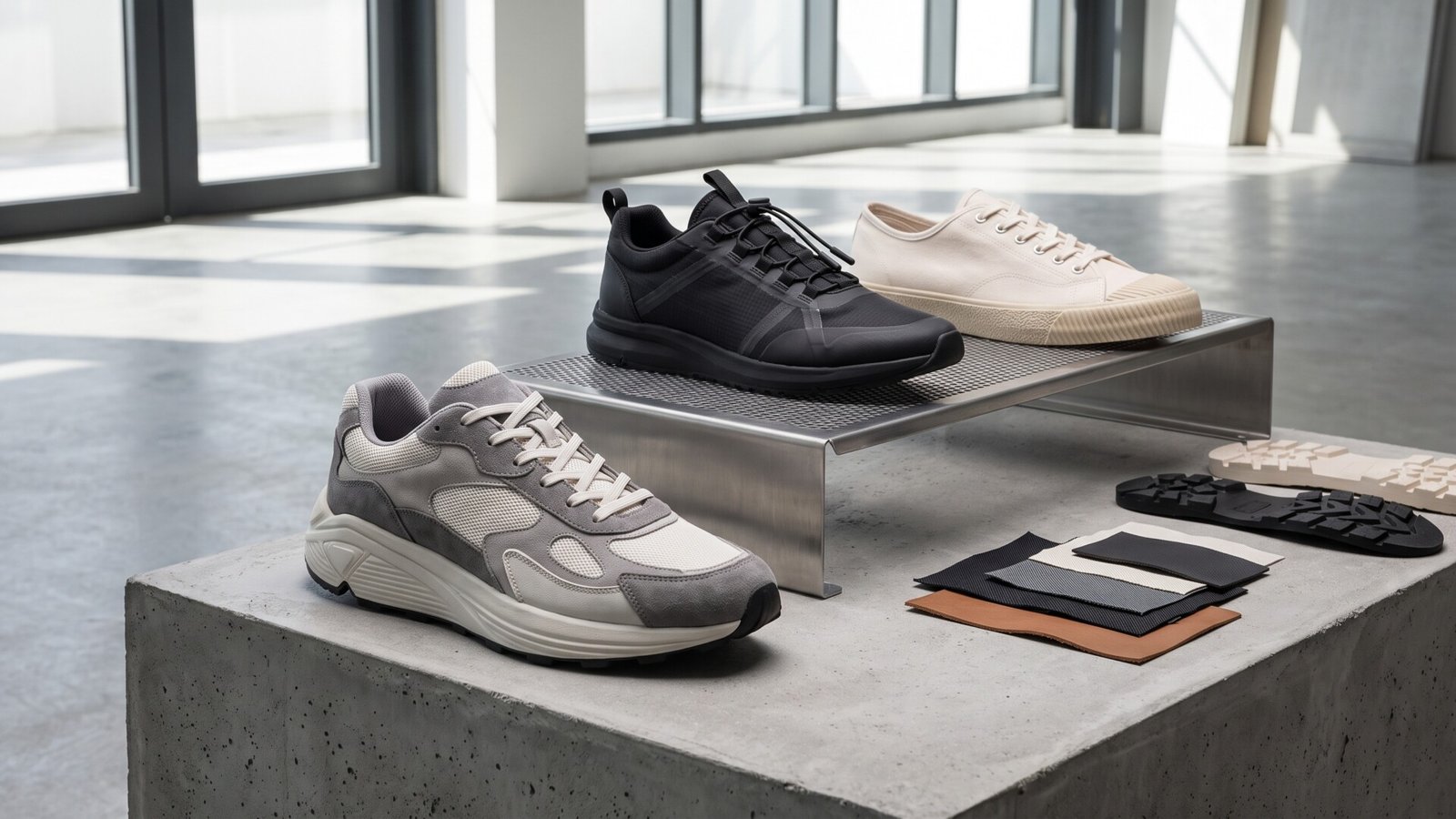
Emerging Sneaker Brands to Watch — Fresh Kicks, Fresh Energy
Sneakers aren’t just about the old-school giants anymore. Nike, Adidas, and Jordan will always have a spot in the game, but a lot of the interesting stuff right now comes from smaller labels, revived heritage brands and newer names with a clear point of view. This guide covers the emerging and under-the-radar sneaker brands worth knowing in 2026: where they come from, what they actually make, and which pair to start with.
Quick definition so we are on the same page: “emerging” here means brands that are newer, smaller or newly back in the conversation, not necessarily brand-new companies. Some of them, like Karhu and Novesta, have been around for decades. Others, like P448 and Axel Arigato, are only a few years old. Explore our Sneakers Brands hub to see them alongside the established icons.
Emerging Sneaker Brands at a Glance
| Brand | Origin | Known for | Start with |
|---|---|---|---|
| Karhu | Helsinki, Finland (founded 1916) | Heritage running shoes with bold colorways | Fusion 2.0 |
| Novesta | Partizánske, Slovakia (founded 1939) | Vulcanized canvas sneakers | Star Master |
| P448 | Italy (founded 2014) | Premium leather sneakers with playful details | Soho or John |
| Axel Arigato | Sweden (founded 2014) | Minimalist leather sneakers | Clean 90 |
| Veja | Paris, France (founded 2004) | Sustainability-focused everyday sneakers | Campo or V-10 |
| Fear of God | Los Angeles | Luxury streetwear and Fear of God Athletics | Athletics 1 Basketball |
Prices are not listed for every brand because many of these are sold through boutiques and retailers with changing prices and currencies. Where I could verify a US price, it is given as a range and dated.
1. Karhu: A Finnish Heritage Brand With a Second Wind
Karhu isn’t new, and that is part of its appeal. The brand was founded in Helsinki in 1916, and its name means “bear” in Finnish. It built its name on athletics gear, and its shoes are tied to the “Flying Finns” era of distance running. One famous footnote: in 1952 Karhu sold the three-stripes trademark to Adidas, reportedly for around 1,600 euros and two bottles of whisky, and then introduced its own M logo.
Today it makes retro runners in loud, well-considered colorways. The Fusion 2.0 is the easy entry point: a heritage running shoe built around the brand’s Fulcrum midsole system and made for everyday wear. The Mestari 76 and Legacy 96 are lower-profile, simpler retro shapes, while the Fusion XT and Fusion XC add a rugged, outdoor angle.
- Why it works: retro running lines, cushioned midsoles and colors that stand out without shouting.
- Fit with your wardrobe: pairs well with straight-leg denim and relaxed chinos.
- If you like it, try: the retro runners in our New Balance and ASICS hubs.
Karhu also shows up in Slam Jam collaborations, which are worth searching for if you collect limited colorways. I have not verified specific current drops, so check the brand and retailer pages.
2. Novesta: Simple Canvas Sneakers From Slovakia
Novesta is a Slovak footwear maker founded in 1939 in Partizánske. It started with rugged rubber-soled shoes and boots for workers, soldiers and firefighters, and its signature Star Master emerged in the 1960s. The shoe is built the old way: a canvas upper on a vulcanized rubber sole, which gives it traction, flexibility and breathability.
- Classic silhouette: low-profile and easy to wear with shorts, jeans or cropped trousers.
- Newer shapes: a Chukka-style Star Chukka draws on the factory archive.
- Who it suits: anyone who likes Converse or Vans shapes but wants something less obvious. See our Converse hub for the comparison point.
Canvas on a vulcanized sole is flat and not especially cushioned, so it is better for casual wear than all-day walking. Novesta has also highlighted organic materials in its production, as Slovak press has reported, but check current product pages for specifics.
3. P448: Italian Sneakers With a Playful Streak
P448 is an Italian brand founded in 2014 by Marco Samorè and Andrea Curti. It makes leather sneakers with luxe touches such as suede, metallic accents and terry-lined interiors. A published review of the John sneaker described the leather as buttery-soft, with a cushioned tongue and heel and a stiff sole. Retail listings for P448 sneakers have run from roughly $200 to $300 at US department stores, though prices change.
- Where it fits: between affordable streetwear sneakers and designer pairs; a good comparison point is our guide to Italian sneaker brands every enthusiast should know.
- Watch for: a stiff sole means a short break-in period.
- Good with: tailored trousers, dark denim and knitwear.
For the broader luxury picture, see The Rise of Luxury Sneakers and Affordable Alternatives to Luxury Sneakers.
4. Axel Arigato: Minimal Leather Sneakers
Axel Arigato is a Swedish label founded in 2014, and its Clean 90 is the model most people know: a minimalist leather sneaker inspired by Scandinavian and Japanese design. Full-price listings have been around $300 on US retailer sites, with sale prices as low as about $135 seen on END. If you want a clean white sneaker with a little more design than a basic court shoe, this is the type of pair to try; our best white sneakers and minimalist white sneakers buying guide help you compare it against alternatives.
5. Veja: Sneakers Built Around Sustainability
Veja is a French footwear brand founded in 2004 in Paris by Sébastien Kopp and François-Ghislain Morillion. It is known for its Campo and V-10 sneakers and for making environmental sourcing a central part of its pitch. A women’s Campo was listed at about €98 on one retailer (regular €140), but US pricing varies, so check current listings in dollars.
If sustainability matters to you, read the brand’s own sourcing and production reports rather than relying on marketing language, and look at how long the shoes last: a pair that wears well for years is the most sustainable thing you can buy. Our guide on why expensive sneakers aren’t always better covers the cost-per-wear logic.
6. Fear of God: Luxury Streetwear Meets Sport
Fear of God has redefined the intersection of high fashion and streetwear, with sneakers that combine bold design and everyday versatility. Designer Jerry Lorenzo announced a partnership with adidas in December 2020, and the Fear of God Athletics line launched with four shoes: the Athletics 1 Basketball, the 86 Lo, the Los Angeles Runner and an Adilette slide. The 1 Basketball launched at $250.
- Chunky, sculpted soles with a muted palette
- Premium materials such as leather, suede and technical fabrics
- Subtle signature detailing that works in both casual and dressed-up outfits
- Strong silhouette proportions that read as statement pieces without extra graphics
Fear of God is not a tiny brand anymore, but its footwear is still newer than most of the names in this guide.
Brands That Went From Underdog to Mainstream
Part of watching emerging brands is spotting the ones that already broke through. Several have their own pages on this site:
- On: Swiss performance brand now common on city streets.
- Hoka: maximal cushioning that crossed from running to everyday wear.
- Salomon: trail shoes adopted by fashion.
- Saucony: runner’s favorite getting a lifestyle moment.
- Onitsuka Tiger: Japanese heritage with a retro revival.
- KITH: streetwear label with a serious collaboration track record.
- A Bathing Ape: Japanese streetwear brand known for the Bapesta.
- DC Shoes and Keds: skate and heritage canvas, respectively.
- Puma and Reebok: legacy names that keep reinventing themselves.
Sustainability: What to Look For
The sneaker game is slowly shifting toward more eco-conscious design, and smaller brands tend to move first. When you evaluate a claim, look for specifics: which recycled or bio-based materials are used, what percentage of the shoe they make up, where it is made, and whether the brand publishes sourcing details. Limited production runs can reduce waste, but only if the shoes are built to last.
Styling Tips for Emerging Sneakers
If you’re wearing newer or lesser-known brands, here’s how to make them work:
- Pair low-profile sneakers like the Novesta Star Master or Axel Arigato Clean 90 with relaxed tees, straight jeans or wide trousers; our wide-leg trousers sneaker guide has specific pairings.
- Let colorful retro runners such as Karhu be the statement and keep the rest of the outfit neutral.
- Match tailored pieces with sleeker leather pairs like P448 or Clean 90.
- Use socks to add color, but keep one element of the outfit quiet.
Basically, your fit should vibe with the shoe, not overshadow it.
Why Emerging Brands Matter
- Design variety: smaller labels take chances that bigger brands might skip.
- Cultural relevance: collaborations and limited drops give you something less common.
- Individuality: you are less likely to see someone else in the same pair.
- Value: some smaller brands offer solid construction at fair prices. Our guide to underrated sneaker brands that make great budget shoes covers the budget side.
Which Emerging Brand Is Right for You?
- You want comfort and a retro running look: Karhu Fusion 2.0, then compare it with the retro runners in our New Balance hub.
- You want an easy, low-key everyday sneaker: Novesta Star Master.
- You want a dressier leather sneaker: P448 or Axel Arigato Clean 90.
- You care about sourcing and longevity: Veja Campo or V-10, plus careful reading of the brand’s own reports.
- You want a fashion-forward statement: Fear of God Athletics, or the luxury picks in our luxury leather sneakers for the office ranking.
How to Shop Smaller Sneaker Brands Without Regrets
Newer and smaller labels often have less consistent sizing information and thinner reviews than the big names, so a little homework goes a long way.
- Check the return policy first. Brands sold through boutiques and department stores can have different rules than the brand’s own site. Free returns are worth a lot when sizing is uncertain.
- Read sizing notes from several sources. Look at the brand’s size guide, retailer notes and customer reviews. Do not assume a smaller brand fits like your Nike or Adidas size.
- Look closely at construction. Check stitching, how the sole is attached, and whether the insole is removable. Vulcanized canvas, cemented leather and cupsole construction all wear differently.
- Buy from authorized sellers. Higher-priced labels are copied. If a deal looks too good, compare the box, tags and finishing details. Our guide on how to authenticate designer sneakers explains what to check.
- Compare cost per wear. A pair you wear three times a week for two years beats a bargain you wear twice.
If your budget is tight, start with the lower-priced pairs on this list and check out best sneakers under $150 for everyday wear and best sneakers under $200.
Emerging Brands vs the Big Names
Big brands win on availability, sizing consistency and technology. Smaller labels win on character, differentiation and, sometimes, craftsmanship. A good approach is a mix: keep a dependable pair from a major brand for daily wear, and add a smaller-brand pair for outfits where you want something different. If you want a reference for the established side, our Sneakers vs Fashion: Streetwear Meets Luxury piece shows how heritage brands and fashion labels interact.
Frequently Asked Questions
Emerging Sneaker Brands: Frequently Asked Questions
What are the best emerging sneaker brands in 2026?
Good starting points are Karhu for retro running shoes, Novesta for canvas classics, P448 for premium Italian leather, Axel Arigato for minimalist leather sneakers and Veja for sustainability-minded everyday pairs.
Is Karhu a new brand?
No. Karhu was founded in Helsinki in 1916. It is getting renewed attention for its retro running shoes.
Where is Novesta from?
Novesta is a Slovak brand founded in 1939 in Partizánske. Its Star Master sneaker emerged in the 1960s.
How much do P448 sneakers cost?
US retail listings have run from roughly $200 to $300 depending on the style and retailer, but prices change, so check current listings.
Who founded Veja?
Sébastien Kopp and François-Ghislain Morillion founded Veja in Paris in 2004.
Is Fear of God an emerging brand?
It is newer than most sneaker giants but already well established. Its Athletics line with adidas launched after a partnership announced in December 2020.
How do I know if a new sneaker brand is good quality?
Look at the materials and construction, read independent reviews, check the return policy, and compare the price per wear against what you already own.
Final Thoughts: 2026’s Fresh Wave
The game isn’t just about Nike or Adidas anymore. It’s about finding brands that innovate, tell a story, and bring something different to the streets. Karhu, Novesta, P448, Axel Arigato and Veja are a handful of names to start with, and the list keeps growing. Try a pair, see how it wears, and build from there. To see how the biggest names fit in, start with Nike, Adidas and Air Jordan.