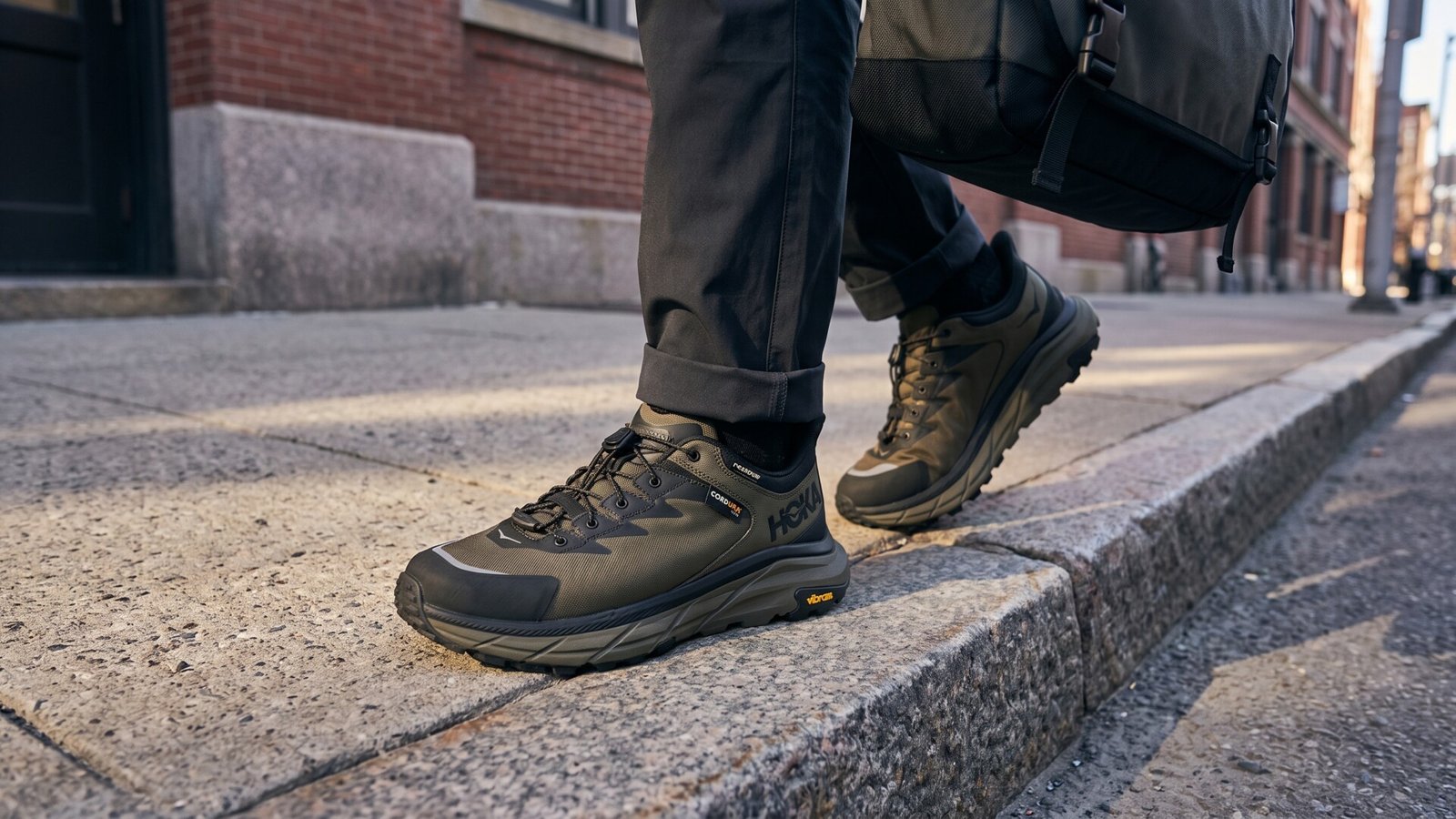
Hoka Transport Review
Alright, let’s talk about the Hoka Transport.
Most people see that Hoka logo and assume one thing: maximum softness. They picture that thick slab of foam and think they’re getting the same marshmallow ride as the Bondi or Clifton, just in a slightly different wrapper. That’s the mistake.
The Hoka Transport is not that shoe. It’s firmer, more structured, and more protective. It’s a different animal, built for a different job.
And honestly? That’s exactly why it might be the best Hoka for a lot of you.
If you’re a commuter, a traveler, or someone who wants that famous Hoka comfort in a shoe that doesn’t scream “I just finished a marathon,” this review is for you. We’re going to break down the comfort, the fit, the weather readiness, and whether it’s actually worth the money. The short version: it’s a strong choice for daily urban life, but it’s not the shoe for everyone. Let’s dig into why.
Hoka Transport at a Glance
Here’s the quick breakdown before we get into the weeds.
| Category | Assessment |
|---|---|
| Best for | Commuting, travel, everyday walking, mixed urban surfaces |
| Comfort | Supportive and cushioned, but firmer and more structured than a soft running shoe |
| Walking | Strong for long city walks and daily errands |
| Fit | Generally familiar Hoka-style fit, but check width and toe-box preferences |
| Weather protection | Better prepared for light wet conditions than a typical mesh sneaker; confirm the exact version |
| Style | Technical outdoor-inspired look that works with casual streetwear |
| Value | Good if worn frequently; less compelling as an occasional fashion sneaker |
| Main drawback | Bulkier and less breathable than lightweight running shoes |
Here’s the bottom line in three quick recommendations:
- Buy the Hoka Transport if: your priority is one pair for commuting, travel, walking, and casual daily wear. It’s a true all-rounder.
- Choose the Hoka Clifton instead if: softness, lighter weight, and that classic running-shoe feel matter more to you than structure and weather readiness.
- Choose the Hoka Bondi instead if: maximum cushioning for extended standing or walking is your main goal, and you’re fine with a bigger, more obvious walking shoe silhouette.
Our editorial take? This is the best all-around Hoka for urban travel and daily walking. It is not the best Hoka for running, and it’s not the plushest. But for the person who wants one shoe to do a lot of different jobs, it’s hard to beat.
What the Hoka Transport Is Designed to Do
The Transport is a crossover. It sits right in that space between a performance sneaker, a casual everyday shoe, and a light outdoor-leaning commuter model. Hoka took their cushioning tech and wrapped it in a more protective, more structured package that’s meant for the city, not the track.
Think about the design choices. You’ve got a more durable upper material instead of a flimsy knit. There’s a secure lacing system that actually locks your foot in. The outsole has real grip for wet pavement and uneven sidewalks. These aren’t features for a runner chasing a PR. They’re features for someone navigating a commute, hopping on and off trains, and walking miles of concrete.
The buyer psychology here is pretty clear. This shoe is for people who like what Hoka does for their feet but don’t want to wear something that looks like a high-tech racing flat to the office or out to dinner. It’s for the person who wants comfort without looking like they’re about to go for a jog. The Transport lets you blend in a little more while still getting that rockered, cushioned ride.
But let’s be clear about what it’s not. This is not a trail shoe. It’s not a technical hiking boot. And it’s not a replacement for a dedicated running model. It’s a very good urban walking and travel shoe with a bit of outdoor attitude. Don’t ask it to do jobs it wasn’t built for.
Comfort and Walking Performance
Cushioning and underfoot feel
Let’s get this straight right now: the Transport is not trying to be the softest shoe in the Hoka lineup. It’s designed to feel supportive and stable. The midsole is firmer and more responsive than what you’d find on a Clifton, and it doesn’t have that sink-in plushness of a Bondi.
And that’s a good thing for a lot of people. A firmer platform gives you more stability on uneven sidewalks and helps prevent that “sinking” sensation some folks dislike. You feel more connected to the ground. It’s a more controlled, confident ride. If you’ve ever felt like a Bondi was a little too squishy or unstable for walking, the Transport might be exactly what you’re looking for.
Standing, commuting, and travel
This is where the Transport earns its keep. For airport walking, sightseeing, daily errands, and commuting on hard pavement, it’s a seriously strong performer. The cushioning absorbs impact, the rockered sole helps propel you forward, and the structured upper keeps your foot secure over miles of walking.
Standing comfort is a bit of a tradeoff. You get more support than a minimalist shoe, but the shoe is heavier and more substantial. For some, that added weight can cause a bit more fatigue over a full day on your feet compared to a lighter shoe. It’s not a dealbreaker, but it’s something to be aware of.
As a travel shoe, the Transport shines. It offers everyday styling that works for a casual dinner, walking comfort for a full day of sightseeing, and a more protective build that handles changing weather. It genuinely can be the only pair of shoes you pack for a city break, which is a huge win for luggage space.
Breathability and break-in
Set your expectations here. The Transport is not as airy as a lightweight mesh running shoe. The materials are more substantial, which means less ventilation. In warm weather, your feet are going to run warmer than they would in a Clifton or a knit sneaker.
There’s also a bit of a break-in period. The structured upper, the heel security, and the firmer overall feel might take a few wears to get used to. Your foot needs to adjust. This isn’t a shoe that feels perfect right out of the box like a soft, flexible knit sneaker.
If you need a highly flexible shoe, maximum ventilation, or that super-soft step-in sensation, you should probably look elsewhere. The Transport is a shoe that rewards a little patience.
Fit, Sizing, and Foot Shape
Alright, let’s talk fit, because this is where a lot of people get tripped up.
Start with your usual Hoka size. That’s your baseline. But don’t just order without thinking. Fit can vary slightly between versions and, crucially, with width availability. Check the current product listing to see if a wide version is offered and what the reviews say about sizing for that specific model.
The toe box has a decent amount of room, which is good for natural toe splay. The heel hold is secure, which prevents slipping. But if you plan on wearing thicker travel or hiking socks, you might need to consider how that affects the fit.
Here’s a critical piece of advice: do not solve a width problem by sizing up. If your foot is wide and the regular width feels snug, a longer shoe won’t fix that. It’ll just give you a shoe that’s too long and causes heel slippage. Look for a wide version if it’s available.
Here’s a quick buying checklist:
- Try shoes on later in the day. Your feet swell as the day goes on.
- Leave about a thumb’s width of space between your longest toe and the end of the shoe.
- Test heel security. Your heel shouldn’t slip when you walk.
- Wear the socks you’ll actually use for commuting or travel.
One more thing: orthotics. The insole is removable, which is good. That means there’s potential for aftermarket insoles. But if you need prescribed support, you need to confirm there’s enough depth in the shoe to accommodate them. That’s a conversation for you and a qualified professional, not something to guess at.
Build Quality, Materials, and Weather Readiness
The Transport’s build is a big part of its appeal. You’re getting a more protective construction than a standard knit or lightweight mesh sneaker. The upper is more durable, and it’s going to hold up better against the scuffs and scrapes of daily city life.
Over time, here’s what you should keep an eye on:
- Outsole wear at the heel and forefoot, which is normal.
- Creasing near the toe box where the shoe flexes.
- Separation at high-flex points where the upper meets the midsole.
- Breakdown around the collar, which can stretch out over time.
Now, about weather. This is a common point of confusion. The Transport has a more rugged look, so people assume it’s waterproof. That’s not always the case.
The standard Transport can handle light rain, damp sidewalks, and the occasional splash better than a typical casual sneaker. The materials have some water resistance. But that is not the same as being fully waterproof. If you’re expecting to stand in a downpour and keep your feet dry, you need to look for a waterproof-specific version of the Transport. Hoka makes different versions, and the materials and weather performance can differ. Always confirm exactly which version you’re buying and read the manufacturer’s description.
For maintenance, keep it simple. Brush off dirt regularly. Let the shoes dry naturally away from direct heat. Never throw them in a dryer. Use a cleaner that’s appropriate for the shoe’s materials. A little care goes a long way in extending their life.
How the Hoka Transport Performs in Real Life
Let’s ditch the spec sheet and talk about what this shoe is actually like to live in.
Commuting and office wear
This is the Transport’s home turf. Walking to the train, standing on the platform, hustling through the station, then sitting at a desk for eight hours – this shoe handles all of it. It moves easily between indoor and outdoor environments without missing a beat.
Style-wise, it’s a winner for casual and smart-casual dress codes. The technical design works with jeans, chinos, cargo pants, and relaxed trousers. It has that clean, purpose-built look. But let’s be real: it might look a little too outdoorsy for a formal workplace. If you’re in a suit every day, this isn’t the shoe for you.
The big advantage is that it reduces the number of shoes you need. You can wear the same pair for the commute and for after-work plans. No need to carry a second pair of shoes.
Travel and sightseeing
For a city break, the Transport is a legitimate one-pair travel option. It handles airport days, long days of sightseeing, and casual meals. The traction is solid on wet pavement, and the supportive cushioning keeps your feet happy when you’re logging 15,000 steps a day.
The downside? It takes up more suitcase space than a lightweight sneaker. And if you’re traveling somewhere hot, the less breathable upper might not be ideal. For travelers who are mostly indoors or heading to warm climates, a lighter, more breathable alternative might be a better call.
Everyday streetwear
Here’s where things get interesting. Technical footwear and outdoor-inspired sneakers are having a real moment in streetwear. The Transport fits right into that trend. It has that functional, utilitarian aesthetic that’s popular right now.
Our advice? Stick to neutral colorways. They’re easier to style and they’re more likely to remain wearable after the current technical-sneaker trend cools off. You don’t want a shoe that looks dated in two years.
For outfits, the Transport works best with:
- Straight-leg denim
- Relaxed cargos
- Nylon trousers
- Shorts
- Understated outerwear
Skip the formal clothing. This is a casual shoe, and it looks best when you lean into that.
Gym, running, and trails
Let’s be direct. The Transport is acceptable for casual movement and general daily use. It’s fine for a light gym session or a quick walk. But it is not the default choice for dedicated running, serious gym training, or technical trails.
If you want a road-running shoe, look at the Hoka Clifton. If you want maximum cushioning for long days on your feet, check out the Hoka Bondi. If you’re hitting actual trails, get a proper trail shoe. The Transport is a jack of many trades, but it’s not a specialist in any of them.
Hoka Transport Compared With Alternatives
Let’s see how it stacks up against the competition.
| Shoe | Best for | Main advantage over Transport | Main disadvantage versus Transport | Buying verdict |
|---|---|---|---|---|
| Hoka Clifton | Running and lighter daily walking | Lighter, more athletic, more breathable feel | Less protective and less casual-outdoor in styling | Choose for running and softer everyday movement |
| Hoka Bondi | Maximum cushioning and long standing | More cushioning underfoot | Bulkier and less versatile in appearance | Choose when plushness is the priority |
| Hoka Transport | Commuting, travel, urban walking | Best balance of protection, cushioning, and casual styling | Heavier and less flexible than a running shoe | Best all-around option for mixed daily use |
| New Balance 2002R | Casual streetwear and lifestyle wear | More fashion-led styling and broad outfit appeal | Less purpose-built for long walking and wet commutes | Choose for style-first daily wear |
| On Cloud 5 | Lightweight commuting and casual use | Lighter, cleaner, and easier to pack | Less substantial cushioning and protection | Choose for light, warm-weather commuting |
Here’s how to make the call:
- Choose Transport over Clifton when versatility, grip, and protection matter more to you than low weight. If you’re not running, the Transport’s extra durability and casual look are worth the heft.
- Choose Transport over Bondi when the shoe needs to look less like a dedicated walking shoe and work with more outfits. The Bondi is a comfort tool; the Transport is a lifestyle shoe.
- Choose Transport over lifestyle sneakers like the 2002R or Cloud 5 when you expect to be doing frequent long walks rather than mainly short casual wear. The Transport is built for distance and conditions in a way those shoes aren’t.
What Most Buyers Get Wrong About the Hoka Transport
There are a few misconceptions that trip people up. Let’s clear the air.
First, the Hoka logo does not mean maximum softness. We said it at the top, but it bears repeating. The Transport’s appeal is its balance of cushioning, stability, and protection. It’s a different kind of comfort.
Second, buying the wrong size is more damaging than choosing the wrong color. This is a structured shoe. If it’s too narrow or too short, it’s going to become uncomfortable during long walks. You can’t just “power through” a fit issue in a shoe like this. Get the fit right.
Third, a rugged appearance does not mean waterproof. The Transport looks like it could handle a monsoon, but that’s not necessarily the case. Check the exact version you’re buying.
Fourth, the Transport can be a poor value for occasional wear. At its price point, it makes sense when it’s replacing multiple shoes for commuting, walking, travel, and casual use. If you’re only going to wear it for short errands on the weekend, you’re paying for a lot of capability you’re not using.
Finally, there’s a style tradeoff. The technical look is relevant right now. But if you’re looking for a timeless, minimalist sneaker that will look good for a decade, a simpler silhouette might be a better investment.
Long-Term Value and Ownership
Let’s talk about cost per wear, because that’s the real measure of value.
Consider three scenarios:
- Occasional use for short errands: At this price, the cost per wear is going to be high. It’s hard to justify.
- Frequent commuting and travel: Now we’re talking. If the Transport is replacing separate walking shoes and casual shoes, the cost per wear drops dramatically. It becomes a sensible investment.
- Heavy daily use: If you’re wearing these every single day, consider getting a second pair to rotate. This reduces odor, moisture, and wear, and extends the life of both pairs.
What’s going to wear out first? Look for outsole abrasion at the heel and forefoot, creasing in the upper, interior heel wear, and a gradual loss of cushioning feel over time. That last one is inevitable with any foam midsole.
Now, about resale. Used performance footwear generally has weak resale appeal compared to limited-edition sneakers. Don’t buy the Transport expecting to make money on it later. Buy it because you’re going to use it. The value is in the wear, not the resale.
To extend the life of your shoes:
- Rotate pairs if you can.
- Keep the upper clean.
- Dry the shoes properly after they get wet.
- Replace the insoles when they start to wear out.
Here’s the three-year test: the Transport makes sense if you’re actually using its practical versatility on a regular basis. It’s a much less convincing purchase if you’re buying it just because Hoka is a fashionable brand right now.
Who Should Buy the Hoka Transport?
This shoe has a clear audience. You should seriously consider it if you are:
- A commuter who walks substantial distances on pavement and needs a shoe that can move between outdoor and indoor settings.
- A traveler who wants one dependable pair for airports, sightseeing, casual meals, and changing weather.
- Someone who prefers a structured, supportive feel over a soft, lightweight running shoe.
- A Hoka fan who wants a less overtly athletic model for everyday outfits.
- Someone who is willing to confirm sizing and accept a slightly bulkier silhouette in exchange for added versatility.
Who Should Skip the Hoka Transport?
Just as important is knowing who should pass on this shoe. You should skip it if you are:
- A runner looking for a dedicated road-running shoe. Get a Clifton or another running model.
- Someone who wants the lightest, most breathable sneaker for hot weather. This isn’t it.
- Looking for maximum softness and cushioning for standing all day. Compare the Bondi first.
- Someone who wants a minimalist, low-profile fashion sneaker.
- Expecting complete waterproofing without checking the exact Transport version and product materials.
- An occasional sneaker buyer who won’t walk, commute, or travel in the shoe often enough to justify the price.
Final Verdict: Is the Hoka Transport Worth It?
Here’s the bottom line: the Hoka Transport is worth buying for frequent urban walking, commuting, and travel when versatility matters as much as cushioning.
It wins because it combines a more protective build, supportive comfort, everyday styling, and practical traction in a way that many running shoes and lifestyle sneakers simply don’t. It’s a shoe that’s designed for the way most of us actually live, not just for workouts.
The main compromise? It’s not the lightest, softest, or most breathable Hoka. If those are your priorities, this isn’t the shoe for you.
Here’s your final guide:
- Choose the Hoka Clifton for lighter road-running comfort.
- Choose the Hoka Bondi for maximum cushioning and extended standing.
- Choose the New Balance 2002R for a more fashion-led lifestyle sneaker.
But before you order anything, confirm the exact version you’re buying, the available width, the return policy, and the weather-resistance claims. A little homework now will save you a lot of hassle later.
Frequently Asked Questions About Hoka Transport
Is the Hoka Transport good for walking?
Yes, it’s well suited to daily urban walking, commuting, errands, and travel because it balances cushioning with structure and protection. If you’re looking for the softest possible feel, though, you might prefer the Bondi.
Is the Hoka Transport true to size?
You should generally start with your usual Hoka size, but confirm current sizing, width options, and return terms. Your foot shape and the thickness of your socks can change the best fit for you.
Is the Hoka Transport waterproof?
It depends on the version. Some are water-resistant, but that’s not the same as fully waterproof. Check the exact product version and the manufacturer’s description rather than relying on the Transport name alone.
Can you run in the Hoka Transport?
It might handle a casual jog or some general movement, but it’s not the best choice for regular road running. For that, consider the Hoka Clifton or another dedicated running model.
Is the Hoka Transport good for travel?
It works well for city travel, airports, and sightseeing. Just keep in mind that it’s a bit bulkier and warmer than a lightweight sneaker, so it won’t pack as small.
How does the Hoka Transport compare with the Hoka Bondi?
The Transport prioritizes versatility, structure, and a more casual-outdoor build. The Bondi prioritizes maximum cushioning and has a more overt walking-shoe profile. One is an all-rounder; the other is a comfort specialist.
Is the Hoka Transport worth the price?
The value depends entirely on how often you use it. It’s easy to justify for commuters and frequent travelers. It’s a harder sell for someone who just wants an occasional casual sneaker. The one thing to remember? The Transport isn’t the softest Hoka, and it isn’t supposed to be. It’s the most versatile one. Buy it for the miles of city sidewalks, the airport terminals, and the days when you need one shoe to do everything – and it will pay you back every step.