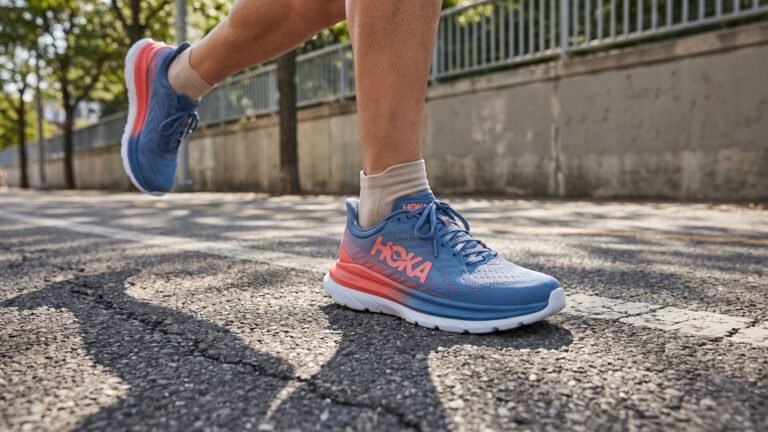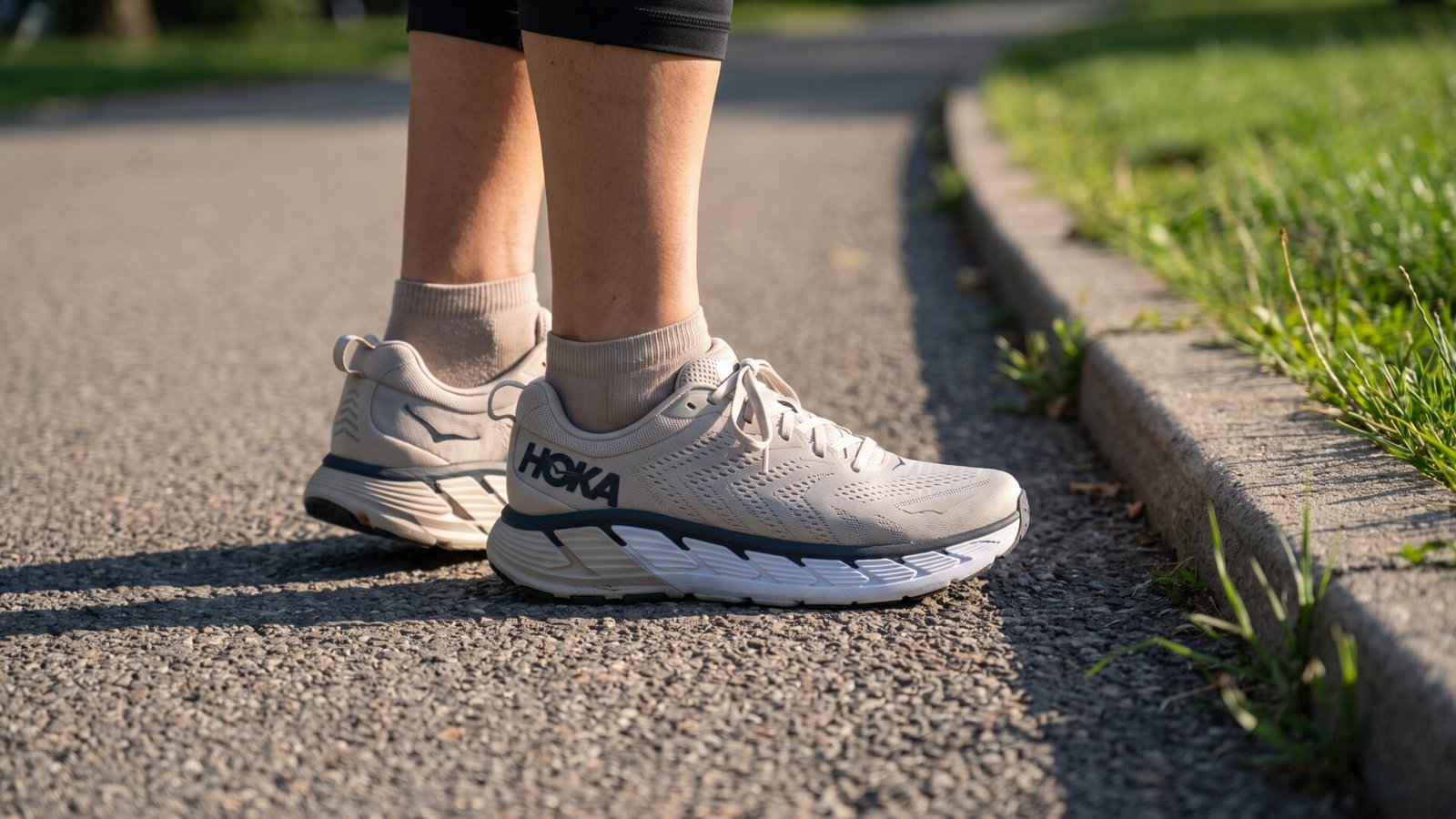
Hoka Gaviota Review
Most people look at the Hoka Gaviota and assume it is just a softer, squishier version of the Arahi or a slightly more structured Bondi. That is not quite it. The Gaviota is its own thing, and understanding what that thing is decides whether you will love it or feel like you are walking around on hovercrafts you never asked for.
The real story is the combination. The Gaviota stacks serious cushioning on top of a genuinely guided stability platform. That makes it a brilliant choice for runners, walkers, and workers who want their stride organized and their feet protected. It also makes it a poor fit for anyone who wants a light, flexible shoe that gets out of the way.
So the buying decision is simple: do you need the stability, or do you just want the Hoka cloud feel? Your answer determines whether the Gaviota is your next daily workhorse or a very expensive mistake.
Hoka Gaviota Review: At a Glance
Here is the short version before we get into the weeds.
| Category | Assessment | What it means for buyers |
|---|---|---|
| Cushioning | Excellent | Soft, protective underfoot feel for daily use |
| Stability | Excellent | Strong guidance without relying on a traditional rigid post |
| Walking comfort | Excellent | Particularly appealing for long walks and commuting |
| Running feel | Good | Better for easy miles than fast workouts |
| Fit | Good | Generally secure, with wide options available |
| Durability | Good | Substantial construction, but the outsole and foam will wear with heavy use |
| Value | Good | Worth the price for buyers who genuinely need stability and cushioning |
Quick recommendations
- Best for: Easy running, long walks, travel, commuting, and standing for extended periods.
- Best buyer: Someone who wants a stable, cushioned trainer and does not mind a larger shoe.
- Avoid if: You want a lightweight tempo shoe, a flexible casual sneaker, or a minimal stability feel.
- Editor’s choice: The Hoka Gaviota is our pick for comfort-focused daily mileage and all-day wear, provided the fit is correct.
One honest note before we continue. Exact materials, weight, colors, and pricing vary by generation and retailer. We are reviewing the current model available at publication, but you will likely see discounted prior versions floating around. We will get to whether those are worth chasing later.
What the Hoka Gaviota Is Designed to Do
Hoka’s lineup can feel like a wall of similarly chunky shoes. The Gaviota occupies a specific spot: it is the brand’s highly cushioned stability trainer. That means it is built to guide your foot through each stride while keeping the ride soft and protective.
Here is how Hoka does stability, in plain language. Instead of jamming a hard plastic post into the midsole like older stability shoes, the Gaviota uses a broad platform, firm sidewalls, and geometry that encourages your foot to track in a straight line. The shoe is shaped to catch your stride and steer it, not to lock your foot into a rigid position.
This matters because stability and motion restriction are different things. The Gaviota is not trying to force every foot into the same movement pattern. It is trying to make your stride feel more controlled, more planted, less like your foot is searching for solid ground on every step.
Why do people buy this type of shoe? A few reasons, and they are all practical:
- Fatigue management during long days on your feet
- Confidence on uneven sidewalks and long walks
- Support during easy runs when your form starts to slip
- A more planted feel than a neutral max-cushion shoe provides
The Gaviota is not a correction device. It is a comfort tool with guardrails.
Comfort and Ride Quality
Cushioning for running and walking
The Gaviota’s cushioning is protective and steady rather than fast or lively. That is not a criticism. It is the point.
Underfoot, the shoe feels substantial. You sink in slightly, the platform catches you, and the ride smooths out the harshness of pavement. This makes the Gaviota excellent for easy runs, recovery days, long walks, and travel. It is a lousy choice for speedwork or racing, because the same cushioning that protects your legs also deadens your toe-off. You will not feel quick in these. You will feel stable.
The first few wears can go one of two ways. Some people put the Gaviota on and immediately feel supported and secure. Others find it bulky and overly structured, especially if they are used to flexible, low-profile trainers. Neither reaction is wrong. It depends on what your feet are accustomed to.
Standing and all-day wear
This is where the Gaviota earns its keep for a lot of buyers. Retail workers, teachers, healthcare staff, travelers, and commuters who spend hours on their feet have made this shoe a quiet favorite.
The math is straightforward. More foam means less harshness when you are standing on concrete or tile for eight hours. The Gaviota’s broad platform also spreads your weight across a larger surface, which reduces the pressure points that make hard floors miserable by hour six.
But there is a tradeoff. A large, cushioned shoe can feel tiring if you prefer flexible footwear. Your foot muscles still have to work inside any shoe, and a substantial trainer changes how your feet move. Some people find the Gaviota relieves fatigue. Others find it exhausting. It depends on your foot shape, the socks you wear, and the surface you stand on.
One thing we will say plainly: this is not a medical device. If you have persistent foot pain or a diagnosed condition, the Gaviota is not the solution. See a professional. A shoe can help manage discomfort, but it cannot fix a structural problem.
What most reviews miss about the ride
Here is the insight that most reviews skip. Stability is part of the comfort equation. A shoe can feel incredibly soft and still be tiring if your foot is constantly micro-adjusting to find a stable landing. The Gaviota removes that mental and physical load. You stop thinking about your footing and just move.
Compare this with the Hoka Bondi. The Bondi is Hoka’s neutral max-cushion shoe. It feels broad and soft, but it does not actively guide your stride. For some people, that neutrality is exactly what they want. For others, the lack of guidance means their feet wander and fatigue faster.
The Gaviota adds structure to the softness. That combination is why it works for so many people. It is also why runners accustomed to lightweight shoes need an adjustment period. Your feet are used to doing their own thing. The Gaviota gently tells them where to go.
Fit, Sizing, and Width
Sizing guidance for the Gaviota starts simple: begin with your usual running-shoe size. Then make adjustments based on how the shoe actually fits your foot.
The Gaviota’s fit profile is generally true to size, but the shape matters more than the number on the box. The toe box is roomy without being sloppy. The midfoot hold is secure. The heel pocket is well-padded and should lock your foot in place without aggressive tightening.
Leave enough space at the toes for swelling. Your feet expand during long walks and runs. If your toes touch the front of the shoe when you start, they will be jammed by the time you finish.
Width options exist, but they vary by generation. Check whether the current Gaviota is offered in standard, wide, or extra-wide before you order. Wide-footed buyers should not assume the standard width will work just because the shoe looks substantial. The platform is wide, but the upper can still run snug through the midfoot.
Who should be cautious? People with very narrow heels, shallow feet, or a strong preference for a close-to-the-ground fit. The Gaviota is a tall shoe with a structured heel. If your heel is narrow, you may struggle to get a secure lock without cranking the laces so tight that they cause discomfort.
Here is a practical fit checklist to run through:
- Heel should stay secure without aggressive tightening
- Toes should not touch the front when walking downhill
- Midfoot should feel held, not compressed
- Try with the socks and insole you intend to use regularly
And check the retailer’s return policy before you buy. Fit can vary between Gaviota generations, and individual foot shapes react differently to the same shoe. Buy from somewhere that lets you test them properly.
Stability, Build Quality, and Durability
How the stability works in daily use
The Gaviota’s guided-stability design translates to one thing in daily use: your foot stays put. The broad base and structured geometry reduce unwanted side-to-side movement. When you are tired, when the pavement is uneven, when you are carrying a bag through an airport, the shoe keeps your stride on track.
This feels reassuring during slow miles and long walks. It feels especially good on fatigue-heavy days when your form would normally start to break down. You can feel the shoe stepping in to help.
The tradeoff is real. The more controlled platform feels less natural to runners who want a soft, flexible, unstructured shoe. If you like your feet to move freely inside your trainers, the Gaviota will feel like it is micromanaging your stride. That is not a flaw. It is a design choice, and it is not for everyone.
Materials and construction
The Gaviota is built from substantial materials. The engineered upper is breathable and comfortable, with padding around the heel where you need it most. The midsole is thick and responsive in a steady, protective way. The rubber outsole covers the high-wear areas.
For daily use, the upper’s comfort and breathability matter more than how it looks. In warm weather or during long shifts, a shoe that lets your foot breathe makes a real difference. The Gaviota handles this well.
The flip side is cosmetic. This is a tall, substantial shoe. It collects visible wear, and the light colorways show dirt quickly. Keeping a Gaviota looking fresh takes more effort than a simple low-profile sneaker. If you are the type who likes your shoes to stay clean, budget for a good cleaning routine or choose a darker colorway.
What wears first
Without pretending we ran a laboratory test, here is what owners commonly report wearing out first:
- Outsole rubber in high-contact areas, especially the heel and forefoot
- Creasing and abrasion in the upper where the foot flexes
- Compression of the midsole foam after extensive mileage
Heavier runners, frequent pavement use, and standing on hard floors all accelerate visible wear. That is physics, not a defect.
You can extend the Gaviota’s life with a few habits. Rotate it with another pair so the foam has time to recover between wears. Let the shoe dry fully between uses. And replace it when the cushioning or stability has noticeably deteriorated, not just when the outsole looks worn. A shoe that has lost its bounce is not protecting you anymore, regardless of how the tread looks.
Real-World Use: Running, Walking, Work, and Travel
Easy running and recovery miles
The Gaviota shines on relaxed daily mileage and recovery runs. If you are a runner who values a guided, cushioned platform over speed, this shoe will serve you well. The stability keeps your stride organized when you are running slow and tired, which is exactly when form breaks down.
It is less suitable for intervals, racing, hill repeats, or any run where you want a quick, flexible toe-off. The Gaviota is not slow because it is badly designed. It is slow because it prioritizes protection and guidance over propulsion.
Newer runners often love the Gaviota. The confidence and protection it provides matter more than a performance-oriented feel when you are still building your stride. If you are just starting out and want a shoe that makes running feel safer, this is a strong candidate.
Walking and commuting
This is where the Gaviota becomes one of the stronger Hoka choices. Long walks, airport travel, urban commuting – the Gaviota handles all of it with authority.
The broad platform pays off on uneven sidewalks. The cushioning absorbs the shock of hard pavement. The stability keeps your stride organized when your legs are tired from carrying luggage or standing in queues.
The tradeoff is size and weight. The Gaviota is a bulky shoe. It takes up space in a bag, feels heavy on stairs, and can be awkward in crowded public transportation. If you are a minimalist traveler, this is not your shoe. If you want one pair that handles miles of walking and feels great at the end of the day, the Gaviota earns its bulk.
Standing at work
For buyers who spend hours standing, the Gaviota offers more cushioning than a traditional casual sneaker. The combination of soft foam and a stable platform makes long shifts on hard floors more bearable.
But we need to be honest about limits. Workplace dress codes matter. The Gaviota is a technical running shoe, not a uniform-friendly work shoe. Check whether your workplace allows this style before you invest. Also check slip resistance. The outsole is designed for pavement and trails, not necessarily for greasy kitchen floors or wet industrial surfaces. Do not assume it meets every occupational standard.
Pair the Gaviota with moisture-managing socks for long shifts. And replace the shoe when the midsole feels flat. A compressed midsole stops providing the support your feet need, no matter how good the upper looks.
Gym and casual wear
The Gaviota can handle light gym work and general errands. It is not an ideal lifting shoe, because the soft, tall midsole is unstable under heavy weights. And it is not a fashion-first sneaker, because its technical profile is aggressively athletic.
Styling the Gaviota works best with joggers, athletic trousers, relaxed denim, and casual streetwear. It looks out of place with tailored clothing or anything remotely dressy.
There is a cultural angle worth noting. Maximal running shoes have become accepted as everyday streetwear. The chunky, technical look that once marked you as a serious runner is now a casual style statement. But the Gaviota remains more functional than fashion-led. It is not a statement piece like some retro runners. It is a tool that happens to look like contemporary athletic wear.
Hoka Gaviota vs Alternatives
The Gaviota does not exist in a vacuum. Here is how it stacks up against the shoes you are likely comparing it with.
| Alternative | Choose it instead if… | Main tradeoff |
|---|---|---|
| Hoka Arahi | You want a lighter, less substantial stability shoe | Less plush and protective for long standing |
| Hoka Bondi | You want maximum neutral cushioning without as much guidance | Less stability-focused |
| Brooks Adrenaline GTS | You want a more conventional stability trainer and familiar everyday fit | Less maximal and less distinctly Hoka in feel |
| ASICS Gel-Kayano | You want a structured stability shoe with a more performance-running identity | Ride and fit may feel more traditional |
| New Balance Fresh Foam X 860 | You need a stability option with broader width availability | Different cushioning character and upper fit |
Gaviota vs Hoka Arahi
The Arahi is the Gaviota’s lighter sibling. It delivers stability with less bulk and a more agile daily trainer feel. If you want your stride guided but still want to feel quick and responsive, the Arahi is the better pick.
The Gaviota wins for long walks, slow runs, and buyers who prioritize underfoot protection above everything else. The extra cushioning makes a difference when you are on your feet for hours.
Here is the warning. Do not choose the Gaviota simply because it is the more cushioned model. More shoe is not automatically better for every stride. If the Arahi provides enough protection for your needs, the Gaviota’s additional foam is just extra weight.
Gaviota vs Hoka Bondi
The Bondi is Hoka’s neutral max-cushion shoe. The distinction is simple: Bondi gives you cushioning, Gaviota gives you cushioning plus guidance.
Buy the Bondi if you dislike pronounced support or want a smoother neutral walking shoe. The Bondi’s ride is soft and uninterrupted, with no structural elements telling your foot where to go.
Buy the Gaviota if you feel more secure when the shoe actively organizes your stride. Some people find the Bondi’s neutrality leaves their feet wandering. The Gaviota’s guidance removes that uncertainty.
Gaviota vs traditional stability trainers
Brooks Adrenaline GTS, ASICS Gel-Kayano, and New Balance Fresh Foam X 860 all represent the traditional approach to stability. These are excellent shoes with proven track records.
They appeal to runners who want a less towering, more conventional shoe. The Gaviota’s maximal profile is a deliberate choice. Some people love the tall, cushioned feel. Others find it unstable or simply too much shoe.
The traditional stability trainers offer a more familiar geometry. They sit closer to the ground, feel more like standard running shoes, and integrate more easily into a conventional rotation.
Our advice is to prioritize the stability feel and fit over assumptions about price or popularity. The most expensive or most cushioned option is not automatically the best. Try the Gaviota against a traditional stability shoe and see which one actually makes your stride feel better.
Is the Hoka Gaviota Worth It?
Value depends entirely on how you will use the Gaviota. At full retail, this is a premium shoe. At a discount, it becomes a much easier decision.
Let us run a cost-per-wear framework.
Occasional use – a few times a month for short walks or the occasional run – makes the full price hard to justify. You are paying for durability and support you will not fully use.
Several weekly wears changes the math. If the Gaviota replaces the need for separate running, walking, and work shoes, the cost becomes easier to defend. One pair doing three jobs is better value than three pairs doing one job each.
Daily use makes the Gaviota a sound investment. When you wear a shoe every day, durability, fit, and comfort matter more than a small upfront price difference. The Gaviota’s substantial construction is built for this.
There is also a hidden cost to getting the choice wrong. Buy the wrong stability shoe and you face return shipping, an unused pair sitting in your closet, compensating with insoles, and eventually buying a second pair anyway. Getting the decision right the first time is worth real money.
Sale strategy deserves attention. Compare current and previous Gaviota generations. Discounted prior versions can be excellent value. But do not assume an older model is a bargain if the fit or support profile has changed. Hoka tweaks its shoes between generations, and what worked in the last version may not work in the current one.
Resale considerations are minimal. Used running shoes have limited resale value once worn heavily. Buy the Gaviota for personal use, not as an investment you expect to recover money from later.
Our value verdict: the Gaviota is good value for the buyer who needs its specific combination of cushioning and guidance. It is mediocre value for someone who only wants a soft casual sneaker. Know which buyer you are before you spend.
Who Should Buy the Hoka Gaviota?
The Gaviota suits a specific set of buyers. If you recognize yourself here, this shoe was designed for you.
- Runners who want a stable, cushioned option for easy and recovery miles
- Walkers and commuters who spend substantial time on pavement
- Workers who stand for long periods and prefer a supportive running-shoe platform
- Buyers with wider feet who can use an appropriate width option and need more room than narrow performance shoes provide
- People who prefer a planted, guided ride and are comfortable with a substantial shoe
If you are nodding along, the Gaviota is worth serious consideration.
Who Should Skip It?
Equally important is knowing when the Gaviota is not for you.
- Runners looking for a lightweight tempo or race shoe
- Wearers who dislike tall, maximal footwear or want strong ground feel
- Buyers who need a flexible casual sneaker for styling versatility
- People whose feet are narrow enough that the upper cannot secure the heel without excessive lacing
- Anyone expecting the shoe to solve a medical foot problem
On that last point, we will repeat ourselves because it matters. Persistent pain or diagnosed conditions require a qualified professional, not a shoe recommendation from the internet. The Gaviota is a well-designed trainer. It is not a medical intervention.
Final Verdict: Should You Buy the Hoka Gaviota?
The Hoka Gaviota is our pick for comfort-focused daily running, walking, commuting, and standing when stability matters as much as cushioning. It earns its price through a combination of protection and guidance that neutral max-cushion shoes do not always provide.
The alternatives are clear:
- Pick the Hoka Arahi if you want a lighter stability trainer
- Pick the Hoka Bondi if you want neutral cushioning without as much guidance
- Pick the Brooks Adrenaline GTS, ASICS Gel-Kayano, or New Balance Fresh Foam X 860 if you want a more conventional stability feel
Here is the purchase rule. Buy the Gaviota if you want a supportive workhorse and accept its bulk. Skip it if you are mainly attracted to Hoka’s cushioning but do not actually need stability. The Gaviota is a fantastic shoe for the right buyer. The trick is being honest about whether that buyer is you.
Frequently Asked Questions About Hoka Gaviota
Is the Hoka Gaviota good for walking?
Yes, for most walkers. The cushioning absorbs pavement shock and the guided stability keeps your stride organized on long walks, commutes, and travel days. The caveat is that the substantial profile may feel excessive if you prefer lightweight walking shoes. Try them on and walk for a while before committing.
Is the Hoka Gaviota good for standing all day?
It can be, particularly on hard floors. The thick midsole reduces the harshness of concrete and tile, and the stable platform spreads your weight effectively. But fit, socks, floor surface, and individual comfort matter more than the brand name. What works for one person standing ten hours may not work for you.
Is the Hoka Gaviota a stability shoe?
Yes. The Gaviota is designed as a stability shoe. Its broad platform and guided geometry differ from a traditional rigid support post. Instead of forcing your foot into a fixed position, it encourages a more controlled stride while maintaining a soft, cushioned ride.
Does the Hoka Gaviota run true to size?
Generally, yes. Start with your usual running-shoe size, then check toe room, heel security, and width. Leave space at the toes for swelling. And because fit can vary between generations, trying on the current model is always the safest approach.
Is the Hoka Gaviota good for wide feet?
It can be. Available wide sizing makes it a useful option for many wide-footed buyers. But width availability and the shape of the toe box vary by generation. Check the current listing for wide options and confirm the retailer’s return policy before ordering.
What is the difference between the Hoka Gaviota and Hoka Bondi?
The Gaviota adds stability guidance to its cushioning. The Bondi is primarily a neutral max-cushion shoe. If you want your stride actively organized, choose the Gaviota. If you prefer soft cushioning without structural guidance, choose the Bondi.
How long should Hoka Gaviota shoes last?
Most buyers get several hundred miles of running or a year or more of regular walking use, but that range depends heavily on body weight, running surface, walking frequency, and rotation. Outsole wear is normal. Replace the shoe when the cushioning or stability has noticeably deteriorated, because that is when it stops protecting you.