On Cloudsurfer vs Cloudmonster
I almost bought the Cloudmonster. It was sitting there in the shop, looking like the obvious choice. Bigger cushioning, more shoe, more of everything. It felt like the safer bet. Then I laced up the Cloudsurfer sitting next to it, and the whole decision got complicated. The lighter shoe just disappeared under my foot in a way the chunkier one didn’t. It was a reminder that “more” doesn’t always mean “better.” It just means more.
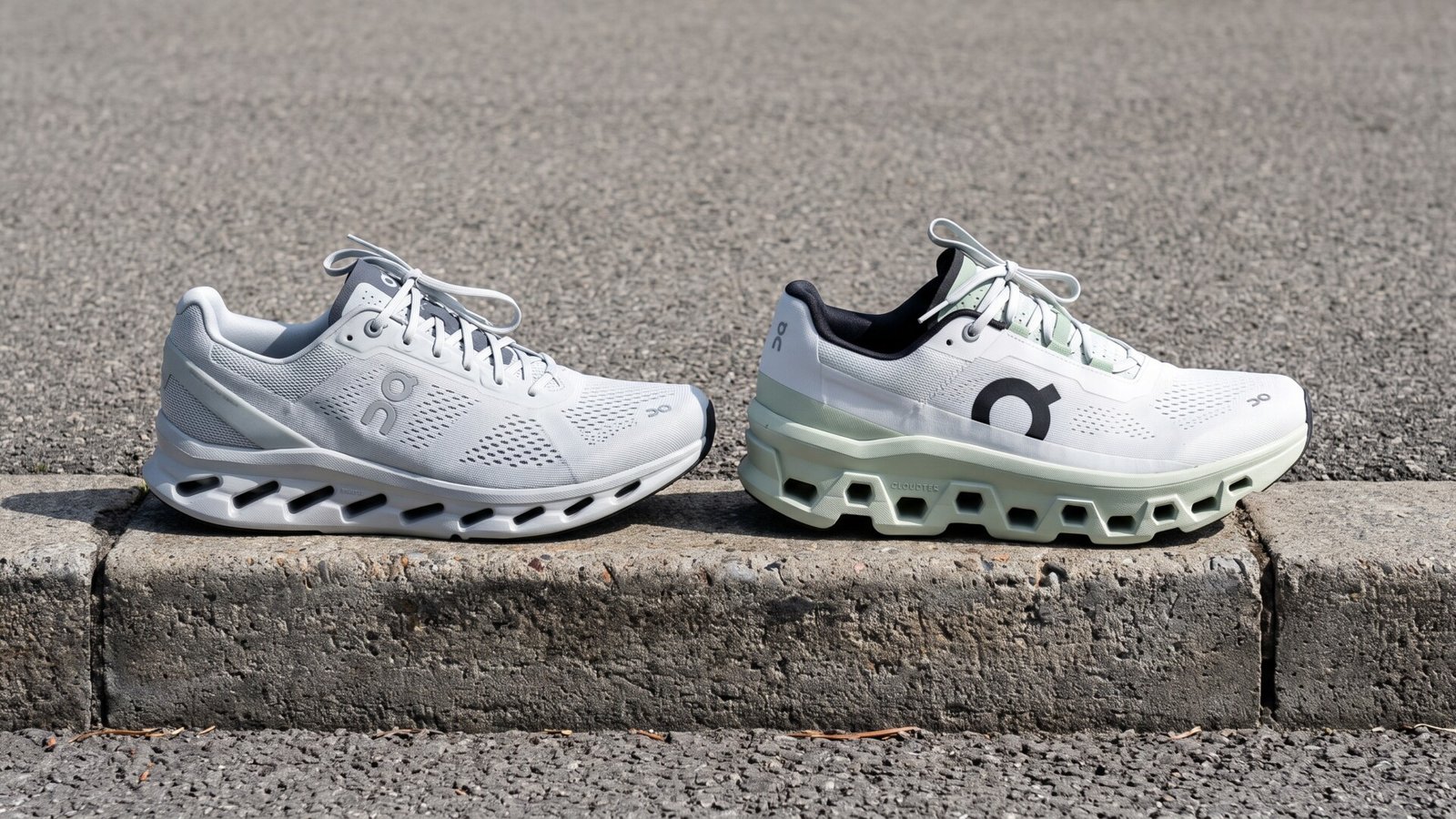
This is the real On Running showdown. Two shoes that share a design language but go looking for completely different runs. The Cloudsurfer is the lighter, more natural everyday trainer. The Cloudmonster is the max-cushion cruiser built for long, easy miles and serious underfoot protection. They cost close enough that picking wrong stings more than it should.
Here’s the quick answer: choose the Cloudsurfer for a lighter, less bulky shoe that handles running, walking, and everything in between. Choose the Cloudmonster if maximum cushioning, long easy runs, or extended standing are your top priorities. Neither is universally “better.” It all comes down to what your feet actually need.
On Cloudsurfer vs Cloudmonster at a glance
Before we get into the weeds, here’s the 30-second version.
| Category | Cloudsurfer | Cloudmonster | Better choice |
|---|---|---|---|
| Typical price | Usually around $150 | Usually around $170 | Cloudsurfer for value |
| Ride character | Smooth, lighter, more natural | More cushioned, rockered, energetic | Depends on preference |
| Comfort | Balanced for daily use | Better for long easy efforts and standing | Cloudmonster |
| Walking and commuting | Easier to live with | Cushioned but bulkier | Cloudsurfer |
| Fit | Secure, moderately streamlined | Roomier feel in some versions | Foot-shape dependent |
| Best buyer | Everyday runner or walker | Cushion-focused runner or standing worker | Depends on use |
Quick recommendations
- Best overall for most buyers: On Cloudsurfer, because it is easier to use across running, walking, commuting, and casual wear.
- Best for maximum cushioning: On Cloudmonster, particularly for long easy runs and buyers who dislike minimal-feeling trainers.
- Best for standing all day: Cloudmonster if cushioning is the main concern, Cloudsurfer if weight and flexibility matter more.
- Best value: Cloudsurfer when both are available near their standard prices.
- Editor’s choice: Cloudsurfer for versatility; Cloudmonster for a clearly defined cushioning-first buyer.
What separates the Cloudsurfer from the Cloudmonster
Ride and cushioning
The Cloudsurfer is built around a balanced daily-trainer feel. It’s not a bare-bones racing flat, but it’s not a plush luxury cruiser either. It sits right in the middle, giving you enough cushioning for daily miles without making you feel disconnected from the ground.
The Cloudmonster, on the other hand, is all about the underfoot experience. It’s On’s max-cushion model, designed to swallow up road noise and keep you comfortable for hour after hour. The ride is more substantial, more present, and more protective.
Here’s the honest part that a lot of reviews skip: On shoes have a distinctive feel. They are not like the soft, sinking foam slabs from some other big brands. They’re more structured, more responsive, and can feel firm if you’re expecting that plush, marshmallow sensation. If you want your foot to disappear into a cloud of foam, neither of these is going to be your dream shoe. They’re both more about a controlled, energetic ride than pure softness.
The Cloudsurfer is less cumbersome during errands and quicker changes of direction. It doesn’t feel like you’re wearing a pair of hovercrafts. The Cloudmonster is more appealing when your feet are tired or the run is intentionally easy, when you just want the road to feel less like a road.
Weight, rocker, and daily usability
Weight is where these two really split. The Cloudsurfer is noticeably lighter and has a more straightforward profile. It feels like a regular running shoe that happens to have some clever tech built in. This makes it a far better companion for daily life. Bending down to tie it, walking up stairs, kicking around a market, it just gets out of the way.
The Cloudmonster is taller and has a more pronounced rocker geometry. That curved sole is designed to help propel you forward, creating a rolling sensation that keeps you moving efficiently. It works well when you’re in a steady rhythm, but it can feel less natural for slow walking, tight turns, or just standing around. The rocker wants you to move, and it can feel a little awkward when you don’t.
A larger shoe isn’t automatically more comfortable. That extra cushioning can be a godsend for long-duration comfort, but it comes at the cost of versatility and ground feel. You trade a little bit of connection to the world for a lot of protection from it.
Stability and control
If you like a stable, predictable platform, pay attention here. The Cloudsurfer is the easier shoe to control. Its lower height and lighter weight make it feel more planted, especially during mixed daily activity where you’re not just running in a straight line. You can make quick cuts, navigate a crowded sidewalk, or hop on and off a curb without thinking about it.
The Cloudmonster’s height and rocker can feel less intuitive for people who want to feel rooted. It’s not unstable, but it does have a personality. It wants to roll you forward, and if you’re not used to that, it can feel like the shoe is making decisions for you.
This is a preference and usage issue, not a medical one. If you have specific injury or support needs, don’t take my word for it. Talk to a qualified professional who can look at your gait and history. But for the average runner, the Cloudsurfer is the more neutral, easier-to-control platform.
Comfort in real-world use
Running
For easy runs and daily mileage, both shoes work. The Cloudsurfer is the more adaptable option for runners who vary their pace and distance. It’s happy at an easy jog, but it won’t hold you back if you want to pick it up for a few strides. It’s a jack-of-all-trades that does everything competently.
The Cloudmonster is better suited to relaxed, cushion-focused efforts. It’s a recovery-run hero and a long-run companion. If you’re doing a 10-miler at a conversational pace, this shoe will keep your legs fresh. But if you want to do strides or tempo work, it can feel a bit bulky and unresponsive.
Don’t pick a shoe just because it looks highly cushioned. Think about the kind of running you actually do. If you value flexibility and lightness, the Cloudsurfer is your pick. If you want protection and rolling momentum for those long, slow slogs, the Cloudmonster is the one.
Walking, commuting, and travel
This is where the Cloudsurfer really pulls ahead. It’s the shoe you can wear for a run, then keep on for a coffee run, a walk through the park, and a casual dinner. It transitions from performance gear to everyday wear without looking or feeling out of place. The lighter weight and lower profile make it a dream for city walking and airport travel. You can pack it easily and wear it for hours without feeling like you have bricks on your feet.
The Cloudmonster is a lot of shoe for a casual walk to the grocery store. It’s cushioned, sure, but it’s also bulky. It takes up more space in your luggage, and it can feel like overkill for short errands. For long walking days where you’re going to be on your feet for hours, the cushioning is a plus. But for everyday mixed movement, it’s just a lot.
Standing all day
If you work on your feet, this is the question that matters. The Cloudmonster’s thick midsole offers serious underfoot cushioning that can help reduce fatigue on hard floors. It’s a popular choice for people in retail, hospitality, or healthcare who are stationary for long stretches.
But here’s the twist: the Cloudsurfer might be better for workers who move frequently. If you’re constantly walking, bending, and changing direction, the lighter, more flexible shoe will feel less tiring at the end of the day. The Cloudmonster’s tall platform can start to feel heavy and awkward if you’re not just standing in one spot.
Also, a practical note: don’t rely on one pair of shoes to solve all your foot problems. Rotate between two pairs if you can, wear appropriate socks, and make sure the fit is right before you commit to wearing them for a 10-hour shift.
Fit, sizing, and foot shape
Here’s the baseline: both models are generally intended to fit true to size. But you should always check the current model’s official size chart before buying, because upper construction and regional availability can change.
The shape is where they differ. The Cloudsurfer is likely to feel more streamlined and secure through the midfoot. The Cloudmonster may provide a roomier overall impression, but it’s not a true wide-foot specialist. It’s just a bigger shoe.
Here’s who needs to be cautious:
- Wide-foot buyers: Don’t assume either model will solve your width issues. Neither is a dedicated wide shoe. Prioritize retailers with easy return policies and look for a clearly available wide option if you need one.
- Narrow-foot buyers: Pay attention to heel lockdown. The Cloudsurfer should be fine, but you might find the Cloudmonster’s roomier feel leaves your heel slipping. Don’t size up to gain forefoot space if it compromises the heel fit.
- Runners between sizes: Compare your usual running-shoe size with On’s current measurement guidance. When in doubt, a store with a good return policy is your best friend.
Use this fit checklist before you commit:
- You should have about a thumb’s width of space in front of your longest toe.
- Your heel should feel secure, with no slipping when you walk.
- There should be no pressure points over the top of your instep.
- Your foot shouldn’t slide laterally when you make sharp turns.
Durability, materials, and ownership costs
What is likely to wear first
On’s use of exposed foam on the midsole is a signature look, but it’s also a durability question mark. The outsole rubber covers the high-wear areas, but the exposed foam can get chewed up if you’re not careful. Expect the outsole contact zones to show wear first, followed by creasing in the upper.
The Cloudmonster’s larger cushioning platform doesn’t guarantee a longer life. Durability depends on your mileage, body weight, the surfaces you run on, and whether you rotate your shoes. Road use is the most appropriate context for both. Rough trails or gravel will accelerate wear on any running shoe.
Cost per wear
Let’s talk money. The Cloudsurfer usually sits around $150, while the Cloudmonster is typically $170. That $20 gap isn’t nothing, but over the life of the shoe, it’s pretty small.
Let’s do some illustrative math. If you wear a shoe 100 times, that $20 difference works out to 20 cents per wear. At that level, comfort and actual use matter way more than saving a few bucks upfront. If you get to 150 to 200 wears, the better purchase is the shoe that avoids early discomfort and remains useful across more activities.
The Cloudsurfer has the stronger value case for most people because it’s more versatile. You can use it for more things, which means you’ll get more wears out of it. The Cloudmonster justifies its premium only if you consistently prefer that maximum cushioning and will use it for its intended purpose.
Sales change everything. If the Cloudmonster drops to $140 and the Cloudsurfer stays at $150, the value equation flips. Always check current prices before you make a final call.
Maintenance and replacement
To get the most out of either shoe, rotate them with another pair if you can. Let them air out between runs. Clean the upper according to On’s care guidance, and don’t throw them in the washing machine unless you’re prepared for the consequences.
This is also where the cross-sells come in. A good pair of running socks makes a real difference. A shoe-cleaning kit will keep them looking fresh. Replacement insoles can work if your fit allows, but don’t use thicker socks or inserts to compensate for a shoe that’s fundamentally the wrong size. That’s a recipe for blisters and foot pain.
What most buyers get wrong about this comparison
The biggest mistake is assuming the Cloudmonster is automatically the superior shoe because it looks more substantial. It’s bigger, it has more foam, and it costs more. That must mean it’s better, right?
Not necessarily. The most cushioned model is often less versatile. It’s bulkier for casual walking, takes up more space in your luggage, and can feel like too much shoe for runners who prefer a lighter feel. The Cloudmonster is a specialized tool for a specific job. The Cloudsurfer is a multi-tool.
The flip side of that coin is the assumption that the Cloudsurfer is only for short or easy use. That undersells it. Its balanced design makes it a legitimate daily trainer that can handle a wide range of paces. For many buyers, it’s the more practical single-shoe purchase.
The hidden decision here is that you’re not just choosing between two levels of cushioning. You’re choosing between a more adaptable shoe and a more specialized comfort profile. That’s the real fork in the road.
Which shoe still makes sense in three years?
Trends come and go. The oversized, chunky running shoe has had a long moment, but tastes are already shifting toward sleeker, more versatile silhouettes.
The Cloudsurfer’s less extreme profile is going to age better. It’s a shoe that pairs naturally with joggers, travel clothes, casual trousers, and everyday streetwear. It looks like a running shoe, but it doesn’t scream “I only do one thing.” It’s the kind of shoe you’ll still be happy to wear when it’s not your primary running shoe anymore.
The Cloudmonster makes a stronger technical statement. It’s a shoe that says, “I take my cushioning seriously.” That’s great if you’re a dedicated runner, but it’s a harder look to integrate into a casual wardrobe. It will always look like a performance shoe.
On resale: On has strong brand recognition, but used running shoes lose value fast. By the time you’ve put 200 miles on them, they’re not worth much to anyone but you. Don’t let resale value drive this purchase. It’s a non-factor.
Here’s a simple replacement decision framework:
- Choose the Cloudsurfer if the shoe will cover commuting, casual wear, walking, and regular easy runs.
- Choose the Cloudmonster if you already know that high cushioning and a rockered ride are consistently more comfortable for you.
- Consider a different On model or another brand entirely if neither provides the width, stability, or ride feel you need.
Who should buy the Cloudsurfer?
This is the shoe for the person who wants one pair to do everything. It’s for the buyer who wants an On shoe for running, walking, commuting, and travel, without having to switch shoes every time their plans change.
You should buy the Cloudsurfer if:
- You prefer a lighter, less bulky daily trainer with a relatively natural feel.
- You dislike overly tall or strongly rockered shoes.
- You’re focused on value, especially when the Cloudsurfer is discounted below the Cloudmonster.
- You’re style-conscious and want a technical sneaker that’s easier to integrate into everyday outfits.
- You want a shoe that can go from a 5K to a coffee shop without missing a beat.
Who should buy the Cloudmonster?
This is for the runner who knows exactly what they want: maximum cushioning and a ride that keeps them rolling forward. It’s a shoe for people who prioritize protection over versatility.
You should buy the Cloudmonster if:
- You prioritize maximum cushioning and a noticeable rolling sensation.
- You do long, easy runs and prefer a protective and substantial platform.
- You work or travel in environments where you spend many hours on hard surfaces and don’t mind a heavier, bulkier shoe.
- You already enjoy highly cushioned, rockered running shoes.
- You’re willing to pay a modest premium for a more specialized comfort experience.
Final verdict: Cloudsurfer for versatility, Cloudmonster for cushioning
Here’s where we land. The On Cloudsurfer is the overall winner because it’s the more flexible purchase for the largest number of buyers. It’s lighter, easier to style, practical for walking and commuting, and more than capable of handling regular easy running. It’s the shoe I’d recommend to anyone who wants one pair to do many jobs.
The On Cloudmonster is the better choice if your priority is clearly maximum cushioning, long easy efforts, or extended standing, and you enjoy a taller, more rockered ride. It’s the specialist’s pick for a specific kind of comfort.
Here’s the decision rule, plain and simple:
- Buy Cloudsurfer if you want one pair that does many jobs.
- Buy Cloudmonster if you know you want the most cushioned and substantial option.
One final caveat: if the Cloudmonster is discounted to the same price as the Cloudsurfer, its extra cushioning may make it the better value for buyers who prefer that ride. But for the average person standing in the store, trying to figure out which one to grab? The Cloudsurfer remains the safer, more versatile recommendation.
Frequently Asked Questions About On Cloudsurfer Vs Cloudmonster
Is the On Cloudsurfer more comfortable than the Cloudmonster?
Comfort is subjective and depends on your ride preference. The Cloudmonster offers more cushioning and a more substantial platform, which some find more comfortable for long distances. The Cloudsurfer is lighter and may feel more comfortable for mixed daily use, walking, and commuting.
Is the Cloudmonster better for walking?
It can be better for long walks when cushioning is your top priority. However, the Cloudsurfer is usually the more natural choice for short walks, commuting, errands, and mixed activities because it’s lighter and less bulky.
Which shoe is better for standing all day?
The Cloudmonster is the better pick for buyers who want more underfoot cushioning during long periods on hard floors. The Cloudsurfer may suit people who move around frequently during the day or dislike the feeling of a heavier, taller shoe.
Do the Cloudsurfer and Cloudmonster fit the same?
Both generally run close to their expected size, but their uppers and overall shape can feel different. The Cloudsurfer feels more streamlined, while the Cloudmonster can feel roomier. Always compare the current size chart and buy from a retailer with an easy return policy.
Are either of these shoes good for wide feet?
Neither should be treated as a guaranteed wide-foot solution. They are not dedicated wide models. Wide-foot buyers should check the exact version, available widths, toe-box pressure, and return terms before purchasing.
Which On shoe is better for beginners?
The Cloudsurfer is the better recommendation for most beginners. Its ride is more adaptable and less specialized, making it easier to use for a variety of runs and daily activities. The Cloudmonster is a good choice for beginners who already know they prefer highly cushioned, rockered shoes.
Is the Cloudmonster worth the extra money?
It’s worth the premium when you value its more cushioned, substantial ride and plan to use it for long easy runs or prolonged standing. Otherwise, the Cloudsurfer offers better versatility and value for the price.