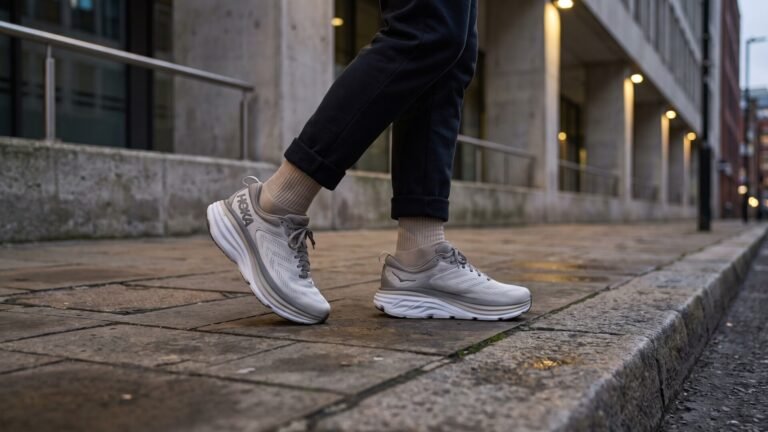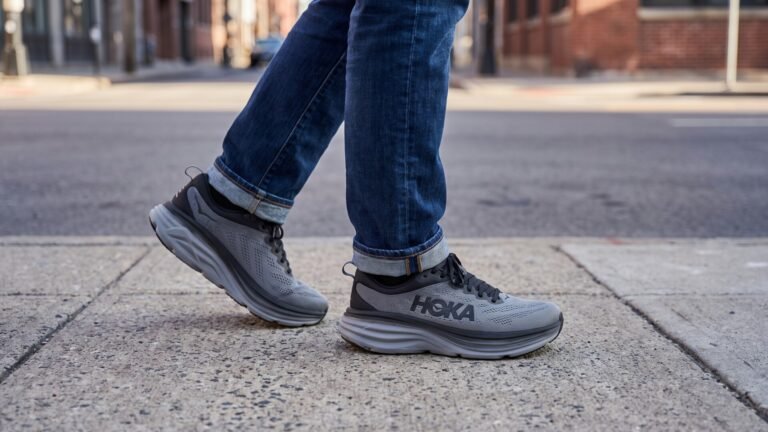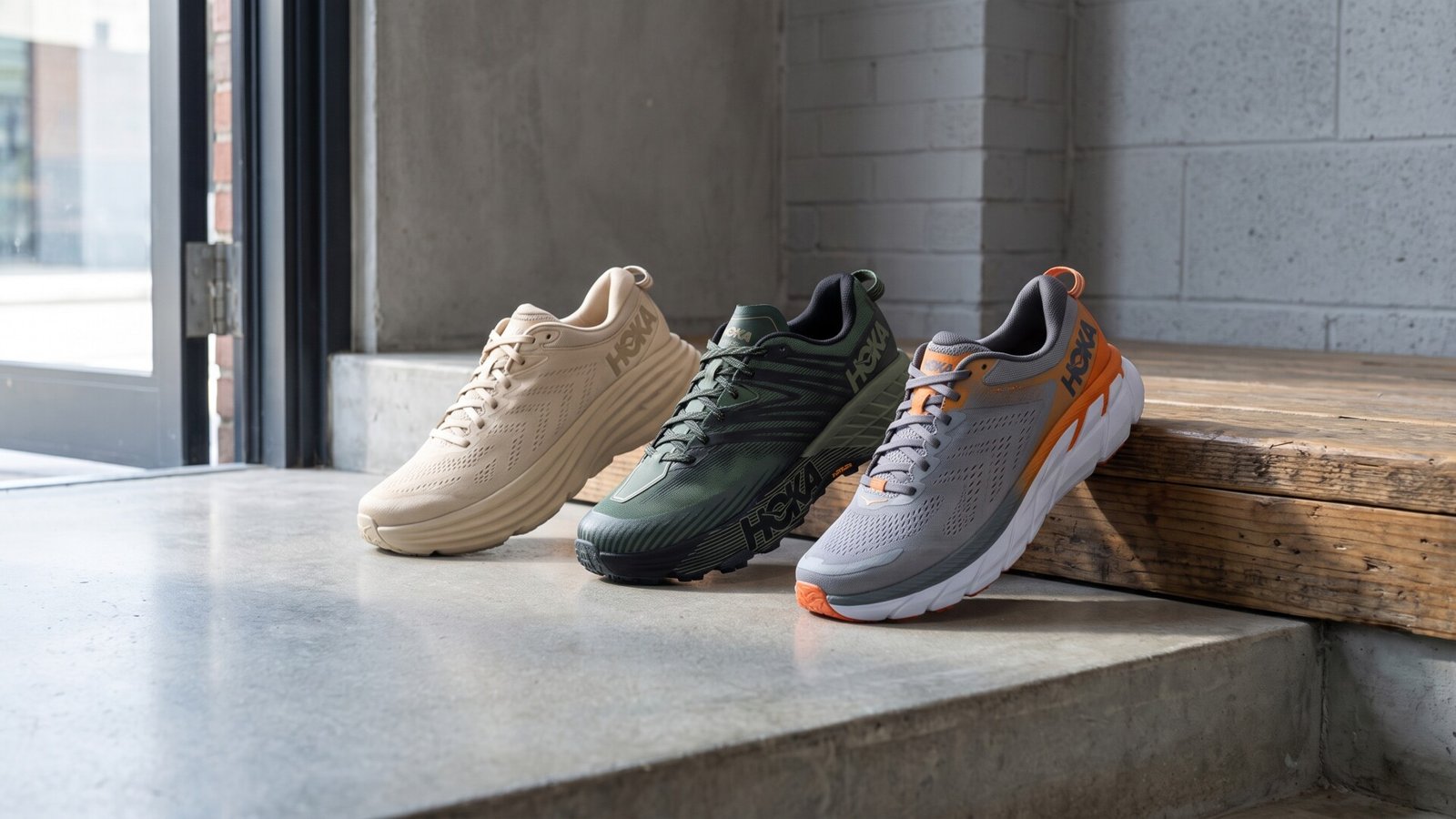
Hoka Sneaker Models
If you are here because you have heard that Hoka makes the most comfortable shoes on earth and you want to know which pair to buy, stop. That is not the question you are actually asking.
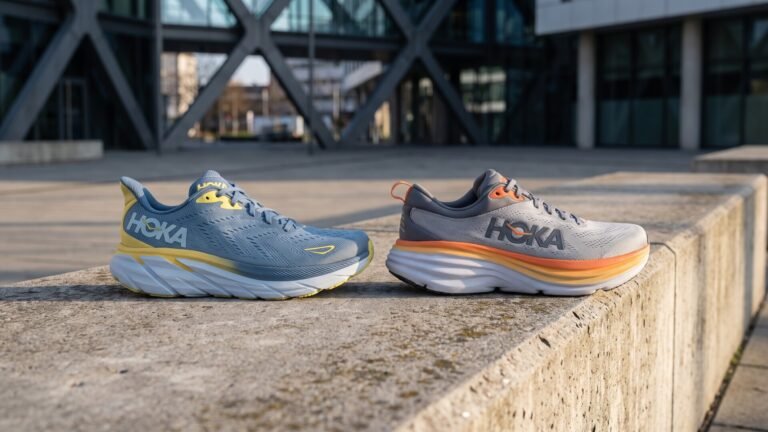
The real question is which Hoka model fits your routine. The lineup is not one type of shoe. It is a spectrum that runs from lightweight daily trainers to max-cushion walking platforms, from stability-heavy guidance shoes to aggressive trail specialists, and from pure running gear to travel-friendly lifestyle sneakers. The oversized midsole you see on Instagram is not the whole story – it is just the family resemblance.
The quick version: Clifton is the strongest all-around starting point for most buyers. Bondi is the maximum-cushion comfort king. Arahi and Gaviota bring stability guidance. Speedgoat handles technical trails. Transport is the one you can wear to the airport and out to dinner. And the most cushioned Hoka is not automatically the best Hoka for you.
Here is how to sort the lineup without getting stuck.
Hoka Models at a Glance
| Hoka model | Best for | Cushioning | Stability | Everyday versatility |
|---|---|---|---|---|
| Hoka Clifton | Everyday running, walking, mixed use | High | Neutral | High |
| Hoka Bondi | Maximum cushioning, standing, walking | Very high | Neutral | Medium |
| Hoka Arahi | Lightweight stability | High | Stability | High |
| Hoka Gaviota | Maximum stability and support | Very high | Strong stability | Medium |
| Hoka Mach | Faster training and lighter feel | Medium-high | Neutral | Medium |
| Hoka Speedgoat | Technical trail running and hiking | High | Trail-oriented | Low outside the trail |
| Hoka Challenger | Road-to-trail versatility | High | Neutral | Medium |
| Hoka Transport | Travel, commuting, and casual wear | Medium | Neutral | Very high |
The short editor picks, no hedging:
- Best overall Hoka model: Clifton
- Best for maximum cushioning: Bondi
- Best for standing and walking: Bondi
- Best stability model: Gaviota for maximum support, Arahi for a lighter feel
- Best for runners who want speed: Mach
- Best trail model: Speedgoat
- Best road-to-trail model: Challenger
- Best Hoka for travel and lifestyle wear: Transport
- Best starting point for uncertain buyers: Clifton
Prices shift by version and sale availability. Most current Hoka performance models land around $130-$190, with premium or specialized models often reaching approximately $200. Check current retailer and brand listings for live pricing – the days of catching a Bondi on deep discount are rare, but they do happen around model refreshes.
How Hoka’s Lineup Is Organized
Understanding how Hoka splits its catalog matters more than memorizing specs. The brand organizes around what the shoe is meant to do, and the differences between categories explain almost every buying mistake people make.
Neutral daily trainers. The Clifton and Mach are the main choices here. Neutral does not mean unsupportive – it means the shoe does not add guidance structure to correct your stride. Most runners and walkers do fine in neutral shoes. Your foot does its natural thing, and the midsole absorbs the impact. If you have never been told by a professional that you need stability help, this is almost certainly your category.
Maximum-cushion models. The Bondi and Gaviota sit at the top of the stack. These prioritize a protected, substantial underfoot feel above everything else. The tradeoff is real: more foam means more weight and a less agile ride. You feel like you are walking on a platform, because you are. That is the point. But it is also why these are not the best choice for someone who wants to feel light on their feet.
Stability models. The Arahi and Gaviota use Hoka’s J-Frame technology – a firmer foam density along the medial side that guides the foot rather than forcing it into position. For runners who overpronate or feel unstable in neutral shoes, this guidance is reassuring. For neutral users, it can feel intrusive, like the shoe is making decisions your foot did not ask for. Stability is a solution to a problem. If you do not have the problem, you do not need the solution.
Trail and mixed-surface models. The Speedgoat and Challenger split duties. Speedgoat is the committed trail option with aggressive lugs and a protective chassis for uneven ground. Challenger is the bridge shoe – road-friendly enough for pavement, capable enough for gravel and easy trails. Buy the tool that matches the terrain you actually cover, not the one that looks like it could summit a mountain.
Lifestyle and commute models. The Transport is Hoka’s answer to buyers who want the comfort without the overtly athletic look. It reads as a chunky everyday sneaker rather than a running shoe, and that changes how you can wear it. This is the category for people who want Hoka comfort on the train, at the airport, and in the office, not on a 10K route.
One decision rule carries the whole lineup: choose by use case first, cushioning preference second, and appearance third. Do not pick a shoe because it has the thickest midsole. A model that matches your typical surfaces and walking pace will feel more useful than a more expensive specialist shoe you wear twice a month.
The Main Hoka Sneaker Models
Hoka Clifton
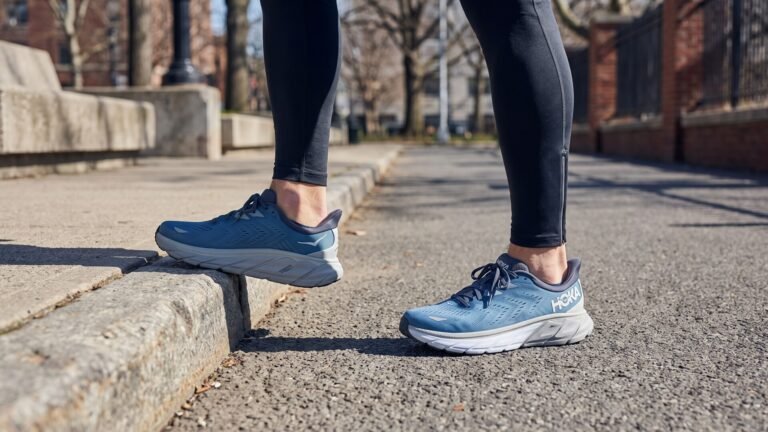
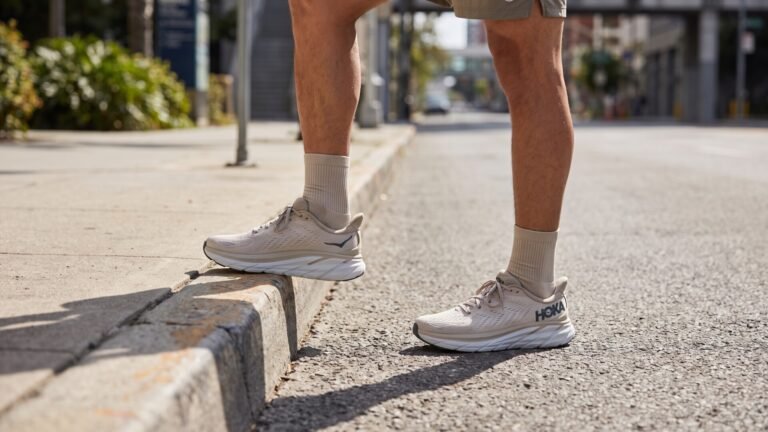
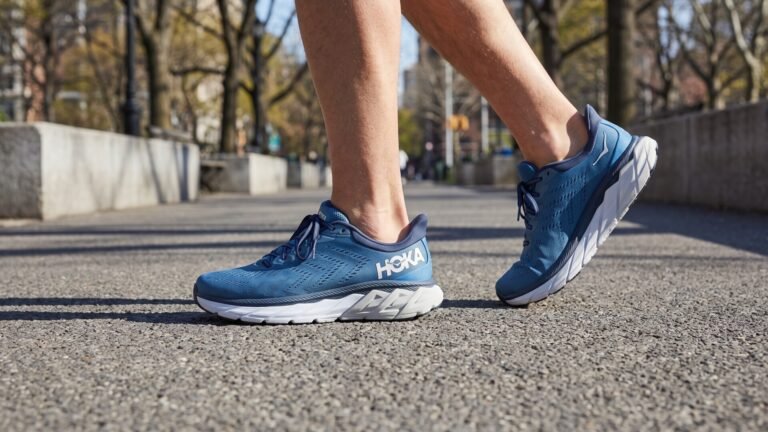
The Clifton is the most balanced shoe Hoka makes. It is the answer we give when someone says “I want a Hoka but I do not know which one.” The cushioning-to-weight ratio is the best in the lineup – soft enough to feel the Hoka signature, light enough that you forget you are wearing a max-cushion brand.
It works for everyday running, walking, commuting, and casual wear. That versatility is why it dominates the brand’s sales and why it keeps getting recommended year after year. For neutral-footed users who want a soft but not excessively bulky ride, this is the one.
The limitations are honest ones. It is not the most supportive option if you want firm guidance – that is Arahi and Gaviota territory. And it is not built for harsh trail conditions, so keep it on pavement, paths, and the occasional gravel stretch. Styling-wise, it is recognizable as a running shoe but easier to wear casually than the more extreme Hoka silhouettes. The Clifton does not look like a marshmallow on wheels. It looks like a proper sneaker.
[Internal: Read the full Hoka Clifton review]
[Internal: See how the Clifton compares to the Bondi]
Hoka Bondi
The Bondi is the maximum-cushioning choice, full stop. It is the shoe for walking, standing, recovery, and buyers who prioritize impact protection above everything else. The midsole stack is the tallest in Hoka’s road lineup, and you feel it from the first step – a soft, protected, almost suspended sensation that makes hard floors feel like forgiving surfaces.
For workers on their feet all day, travelers walking on concrete and tile, and anyone who wants a substantial underfoot platform, the Bondi earns its reputation. The popularity comes from comfort psychology: you can immediately feel the large, protective platform under you. There is no break-in period where you wonder if it will get better. It is good from step one.
But the weight is real, and the ride is not lively. For faster running, the Bondi feels like running through shallow water. The appearance is also the most performance-oriented in the road lineup – this is a shoe that looks like medical equipment in the best possible way, which means it does not dress up well.
[Internal: Read the full Hoka Bondi review]
[Internal: See the Bondi versus Clifton comparison]
Hoka Arahi
The Arahi is the lighter stability alternative. It delivers guidance without the full bulk of a maximum-support shoe, which makes it the stability model most people can actually live with every day. The J-Frame technology runs along the medial side to control overpronation, but the shoe keeps a relatively streamlined profile.
For daily running and walking when a neutral shoe feels unstable or insufficiently controlled, the Arahi is the smart pick. It also happens to be one of the better-looking Hoka models, with a cleaner silhouette that does not scream “orthotic.”
The flip side: if you do not need stability, you may find the Arahi less natural than the Clifton or Mach. The guidance is subtle compared to the Gaviota, but it is still there, and neutral-footed users sometimes describe a slight firmness along the inner edge that they cannot quite ignore.
[Internal: Read the full Hoka Arahi review]
[Internal: See our full Hoka stability shoe guide]
Hoka Gaviota
The Gaviota is the strongest support-oriented option among Hoka’s main road models. It combines the Bondi-level cushioning with the most substantial J-Frame guidance in the lineup. For buyers who specifically prioritize stability, a broad supportive platform, and maximum cushioning, this is the flagship.
The difference from the Arahi comes down to presence. The Gaviota is more substantial, more protective, and more imposing underfoot. The Arahi is lighter and less intrusive. Think of the Gaviota as the stability shoe for people who want to feel held, and the Arahi as the stability shoe for people who want to forget they are wearing one.
The limitations are the same ones that apply to any max-cushion stability shoe: weight, reduced agility, and guidance that can feel excessive for neutral users. If you have never needed stability support, the Gaviota will feel like overkill.
[Internal: Read the full Hoka Gaviota review]
[Internal: See the Arahi versus Gaviota comparison]
Hoka Mach
The Mach is the lighter, more energetic option in the road lineup. It is built for faster training, tempo work, and runners who dislike the slow-feeling ride of a heavily cushioned shoe. The midsole uses a different foam compound than the Clifton and Bondi, tuned for response rather than pure softness.
For experienced runners or buyers who want Hoka cushioning without the Bondi-style bulk, the Mach delivers. It feels closer to a traditional performance trainer than anything else Hoka makes, which is exactly the point.
But the Mach is less satisfying for standing all day or casual walking than the Clifton or Bondi. The firmer foam and lower stack height do not give you the same protective platform, and the shoe’s energy wants to be used for movement, not idling. This is a runner’s shoe first.
[Internal: Read the full Hoka Mach review]
[Internal: See the Clifton versus Mach comparison]
Hoka Speedgoat
The Speedgoat is the dedicated trail model, named after ultrarunner Karl Meltzer and built for uneven ground, technical paths, hiking, and serious off-road traction. Its value comes from grip, protection, and secure trail handling – not casual versatility. The outsole lugs are aggressive, the toe bumper is protective, and the midsole is tuned to absorb the impact of rocks and roots.
For trail runners and hikers who regularly leave pavement, the Speedgoat is the model to beat. It is the shoe you grab when the route description includes the word “technical.”
Outside the trail, it makes less sense. The aggressive outsole can feel awkward on smooth roads, the structure is stiffer than road models, and the look is unapologetically outdoorsy. Ownership also demands more attention: trail use exposes uppers and outsoles to abrasion, mud, and water, so cleaning and drying matter more than with a road shoe.
[Internal: Read the full Hoka Speedgoat review]
[Internal: See our best Hoka trail shoes guide]
Hoka Challenger
The Challenger is the road-to-trail compromise. It splits time between pavement, gravel, parks, and easy trails without demanding you commit to either world. The outsole is less aggressive than the Speedgoat, and the midsole is closer to the road lineup, which makes it a better one-shoe option for mixed surfaces.
For travel, light hiking, recreational walking, and varied routes, the Challenger is often the smarter buy than the Speedgoat. It does not punish you on the two miles of sidewalk before the trailhead, and it does not slide on the packed dirt once you get there.
The tradeoff runs both ways. It is not as road-smooth as a dedicated road shoe, and it is not as secure on technical terrain as the Speedgoat. If your trails are groomed and your pavement is honest, the Challenger is the versatile winner.
[Internal: Read the full Hoka Challenger review]
[Internal: See the Challenger versus Speedgoat comparison]
Hoka Transport
The Transport is the most lifestyle-friendly and travel-oriented model in the lineup. It is designed for commuting, airports, city walking, casual outfits, and buyers who want a less overtly athletic Hoka. The silhouette is chunkier and more fashion-forward than the running models, and the materials lean toward durability and easy cleaning.
What makes the Transport work is its practical design. The upper resists stains, the outsole handles wet surfaces, and the overall look passes as a regular sneaker rather than a running shoe. You can wear it through a full travel day, out to dinner, and back to the hotel without feeling like you are still in gym clothes.
The limitations are clear. This is not the first choice for serious running, technical trails, or buyers seeking maximum softness. The midsole is firmer than the Bondi, and the shoe trades some cushioning for versatility and style.
[Internal: Read the full Hoka Transport review]
[Internal: See our best Hoka travel shoes guide]
Choosing the Right Hoka for Real-World Use
Best Hoka for walking and standing all day
The Bondi wins for buyers who want the most cushioned, protective feel on hard surfaces. If your day involves concrete floors, tile, or long stretches of standing, the Bondi’s thick platform is the closest thing to walking on a gym mat.
The Clifton is the pick for buyers who want a lighter and more flexible all-day shoe. Standing comfort and walking comfort are related but not identical. Standing rewards cushioning – you want material between you and the floor. Walking rewards lower weight and easier transitions – you want the shoe to move with your stride, not drag against it. If you walk more than you stand, the Clifton often feels better by hour six.
Best Hoka for running
The Clifton is the safest daily-training starting point. It handles easy miles, moderate paces, and recovery runs without complaint. The Mach is the choice for faster sessions and runners who want a more responsive feel. The Arahi or Gaviota come into play when stability is a deliberate priority, not a guess.
A daily trainer is usually a better first purchase than a specialized speed or race model. The Clifton will do 90 percent of what most runners need. The Mach is a supplement, not a replacement.
Best Hoka for travel and commuting
The Transport is the recommendation for casual styling, city use, and mixed travel days. It is the shoe you can wear with jeans, through security, and across a cobblestone square without looking like you are heading to the gym.
The Clifton suits travelers who expect substantial walking and want a lighter running-shoe feel. The Challenger is the pick for trips involving parks, gravel, or light trails.
Cost-per-wear logic applies here. A versatile travel shoe can justify a higher price if it replaces separate walking and casual pairs. One shoe that does two jobs beats two shoes that each do one.
Best Hoka for trails and hiking
The Speedgoat is the recommendation for technical trail conditions. The Challenger handles mixed road, gravel, and easy trail use.
One warning: do not buy a trail shoe for primarily urban walking. The aggressive outsole and stiffer structure make it less comfortable on pavement, and the look is less versatile. Buy the tool for the surface you actually cover most days.
Fit, Sizing, and Foot Shape
The biggest source of Hoka returns is not the cushioning – it is the fit. Hoka sizing varies by model, with running-focused shoes generally offering a performance fit and lifestyle models sometimes feeling different through the upper.
Start with your true size, but check the specific model’s current fit guidance and return policy before ordering. Width options exist on select models, especially for buyers with wide feet or swelling during long shifts and travel. If you have wide feet, look for models offered in wide widths rather than hoping a standard width will stretch.
Different foot shapes need different things. Look for adequate toe room, no pressure across the instep, and a secure heel without over-tightening the laces. Extra cushioning does not solve a poor fit. A wide-feeling platform can still have an upper that is too narrow, and no amount of midsole foam fixes a shoe that pinches.
A practical home fit check: try shoes later in the day when your feet are at their largest, wear the socks you will actually use, walk on clean indoor surfaces, and confirm your toes are not touching the front of the shoe. If your foot slides forward on the downhills, the fit is wrong regardless of how soft the midsole feels.
See our Hoka sizing guide
Check out Hoka shoes for wide feet
Comfort, Durability, and Value After the Hype
The first step in a Hoka feels amazing. That is the brand’s superpower, and it is also the trap. The real question is what the shoe feels like at month six.
Comfort comes in different flavors. The Bondi is soft and protective, like walking on a thick mat. The Clifton is balanced – soft enough to notice, light enough to forget. The Arahi and Gaviota add guidance to the cushioning. The Mach is firmer and more responsive. The Speedgoat trades road smoothness for trail security.
The hidden tradeoff of oversized cushioning is that it can feel excellent on hard floors while adding weight, taking up more space in a bag, and making the shoe less nimble. You are trading agility for impact protection. That is a fair deal for some buyers and a bad one for others.
What tends to show wear first: outsole rubber in high-contact areas, exposed foam on the heel and forefoot, creasing in the upper, and a gradual compression of the midsole feel over time. These are common ownership patterns, not guaranteed failure points. A pair of Hokas worn regularly typically delivers somewhere in the range of 300 to 500 miles of running, or a year or more of daily walking, before the midsole noticeably loses its pop.
Cost-per-wear is the honest way to value these shoes. A $160 pair worn three times per week for a year costs roughly $1 per wear before replacement. A cheaper pair that causes discomfort or sits in the closet because it never quite works offers worse value at any price.
A Hoka is worth the premium when you walk a lot, stand for work, run regularly, or need one dependable daily pair. It is not worth it for occasional casual use, buyers who dislike thick soles, or shoppers who can get equal comfort from a less expensive daily trainer.
Care matters. Rotate pairs when possible, allow shoes to dry naturally after wet days, clean uppers gently, and do not treat a running shoe as a work boot in harsh conditions. Resale value is generally weaker than for limited streetwear sneakers – buy Hokas for use, not as an investment.
What Most Buyers Get Wrong About Hoka
More cushioning is not automatically more comfort. The Bondi may suit long standing, but the Clifton can be easier to walk in for buyers who dislike a heavy platform. Thicker is not always better. It is just thicker.
A stability shoe is not a universal upgrade. The Arahi and Gaviota make sense when guidance is wanted. Neutral users often find them less natural than the Clifton or Mach. Stability is a feature for a specific problem, not an improvement for everyone.
A popular running model is not always the best travel shoe. The Transport may be better for outfits, commuting, and city use even if the Clifton is the stronger running shoe. Buying the most famous Hoka does not mean buying the most useful Hoka for your week.
Hoka’s rocker does not suit every walking style. The Meta-Rocker geometry creates a rolling transition that some buyers love and others find unnatural. If you prefer a flatter, more flexible feel, the Hoka ride may never click for you regardless of the model.
The brand logo is not the main value. Hoka’s worth depends on use frequency, fit, and whether the shoe solves a real comfort or performance problem. The hype around the brand does not change how your foot interacts with the midsole.
Which Hoka Model Still Makes Sense in Three Years?
Trends shift. The thick-soled look has moved from niche running culture into mainstream fashion, and brands from every corner of the market now sell chunky sneakers. But the most durable purchase is still the model that matches your routine, not the most visible silhouette.
Best long-term all-rounder: The Clifton. It covers running, walking, travel, and casual use without being too specialized. Buyers who pick the Clifton rarely regret it a year later because it adapts to whatever their routine becomes.
Best long-term comfort purchase: The Bondi, if you regularly stand or walk on hard surfaces and accept its weight and appearance. The cushioning does not disappear after the honeymoon period.
Best long-term specialist purchase: The Speedgoat, but only for buyers who genuinely use trails and can justify a dedicated pair. A trail shoe you wear twice a month is a waste of closet space.
Best long-term lifestyle purchase: The Transport, for buyers who want a practical daily sneaker rather than a pure running shoe. It does not age out of your wardrobe the way a bright performance colorway might.
A three-question test before any purchase:
- How many days per week will the shoe be worn?
- What surface will it encounter most?
- What problem must it solve: cushioning, stability, weight, traction, or styling?
Answer those three and the model chooses itself.
Who Should Buy Which Hoka Model?
Buy Clifton if: you want one versatile Hoka for running, walking, commuting, and casual use.
Buy Bondi if: maximum cushioning and long hours on hard surfaces matter more than weight or agility.
Buy Arahi if: you want a lighter stability shoe for regular running or walking.
Buy Gaviota if: you specifically want substantial support and a broad, protective platform.
Buy Mach if: you value a lighter, faster-feeling shoe for training.
Buy Speedgoat if: you regularly run or hike on technical trails.
Buy Challenger if: your routes move between pavement, gravel, parks, and easy trails.
Buy Transport if: travel, commuting, casual outfits, and city walking are the priority.
Avoid Hoka if: you dislike thick soles, prefer minimal shoes, need a formal workplace shoe, or will only wear the pair occasionally. There is no shame in that last one. It just means the money is better spent elsewhere.
Final Verdict: The Best Hoka Model for Most Buyers
The Hoka Clifton is the overall winner for the broadest audience. It offers the strongest balance of cushioning, weight, running ability, walking comfort, and everyday versatility in the lineup. It is less specialized than the Bondi, more approachable than the stability models, and more practical for daily use than the Speedgoat. It has the best chance of staying useful over several years because it covers more routines.
The exceptions are clear. Choose Bondi for maximum cushioning and standing-heavy days. Choose Arahi or Gaviota when stability is a deliberate requirement. Choose Mach for a faster, lighter training feel. Choose Speedgoat for technical trails. Choose Challenger for mixed road-to-trail use. Choose Transport for travel, commuting, and casual styling.
Start with the model that matches your main weekly use. Verify the current fit and width options before ordering. Then compare current prices rather than assuming the most expensive model is the best value. The right Hoka is the one that solves your actual problem – everything else is just marketing.
Frequently Asked Questions About Hoka Sneaker Models
Which Hoka model is best overall?
The **Hoka Clifton** is the best overall recommendation for most buyers. It balances cushioning, weight, running ability, walking comfort, and everyday versatility better than the more specialized models. It is the safest first Hoka and the easiest to live with long term.
Are Hoka shoes good for walking all day?
Many Hoka models work well for long walking days, but the best choice depends on preference. The **Bondi** favors maximum cushioning, while the **Clifton** is lighter and generally more versatile. Walkers who cover serious distance often prefer the Clifton because its lower weight makes each step easier over time.
Which Hoka is best for standing all day?
The **Bondi** is the recommendation for buyers who prioritize a substantial cushioned platform on hard floors. Its thick midsole provides the most impact protection in the road lineup. Fit, socks, and your foot shape still matter more than cushioning thickness alone – a poorly fitted Bondi will not save your feet.
What is the difference between Hoka Clifton and Bondi?
The **Clifton** is lighter and more balanced for mixed use, handling running, walking, and casual wear without complaint. The **Bondi** is bulkier and more focused on maximum cushioning, walking, and standing comfort. If you want one shoe that does everything, choose the Clifton. If you want the softest possible platform, choose the Bondi.
Is Hoka Arahi or Gaviota better for stability?
The **Arahi** is the lighter, more streamlined stability option, while the **Gaviota** provides a more substantial and supportive platform. The better choice depends on how much guidance and cushioning you want. Buyers who want to forget they are wearing a stability shoe choose the Arahi. Buyers who want to feel held and protected choose the Gaviota.
Which Hoka is best for travel?
The **Transport** is best for casual styling and practical travel use, the **Clifton** suits heavy walking, and the **Challenger** works for trips that include gravel paths or easy trails. Travel is about versatility, so match the shoe to the surfaces you will actually cover.
Are Hoka shoes worth the price?
They are worth it for frequent runners, walkers, travelers, and workers who benefit from the cushioning or fit. At roughly **$1 per wear** for a regularly used pair, the cost is reasonable. They are less compelling for occasional wearers or buyers who dislike bulky shoes – the value only shows up with use.