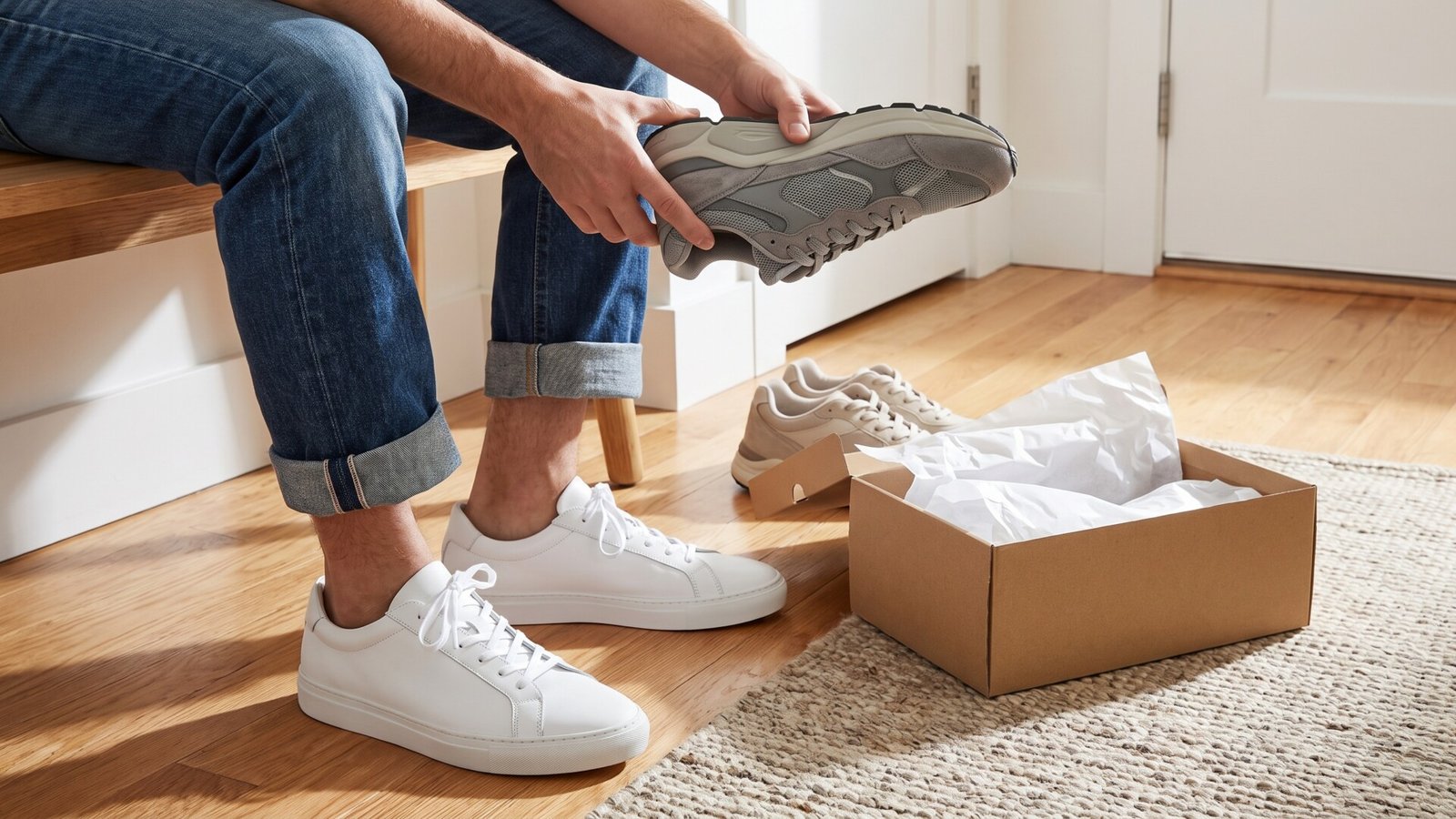
Sneakers Comparisons: Your Ultimate Guide to Choosing the Right Pair
When it comes to buying sneakers, the differences between models can be subtle or significant. Comfort, sizing, resale value, and purpose all matter, whether you’re a casual wearer or a collector chasing limited drops. This guide is the starting point for every head-to-head comparison on Street Sneakers Vault: it explains how to compare two pairs side by side, then points you to the detailed analysis for each matchup.
If you only have a minute: decide what the shoe is mainly for (walking, everyday style, or collecting), compare the fit and sizing notes before anything else, and only then look at price. The sections below walk through each step and link to the matchups we have covered so far.
Our Sneaker Comparisons at a Glance
Here is every head-to-head comparison currently on the site, with the question each one answers. Pick the row closest to the two pairs you are stuck between.
| Matchup | The question it answers | Read it |
|---|---|---|
| New Balance 550 vs 2002R | Retro basketball style or premium-material runner for collecting? | Full comparison |
| New Balance 990 vs 574 | Which classic NB silhouette suits your rotation? | Full comparison |
| Nike Air Max 90 vs Air Force 1 (wide feet) | Which has the roomier, more comfortable fit? | Wide-feet guide |
| Nike Air Max 90 vs Air Force 1 (sizing) | What size should you buy in each? | Sizing guide |
| Adidas Ultraboost 22 vs Hoka Clifton 9 | Which is better for casual walking? | Walking comparison |
| ASICS vs Hoka Clifton 9 | Stable and responsive, or maximum shock absorption, for road running? | Running showdown |
| ASICS GEL-Lyte III vs GEL-Quantum | Retro charm or modern cushioning for daily wear? | Lifestyle showdown |
| Luxury vs performance sneakers | Is a designer pair actually better than a technical one? | Which type is right |
How to Compare Two Sneakers Side by Side
Most product pages list ten specs and leave you to guess which ones matter. For two shoes you are cross-shopping, these are the comparisons that actually change how the shoe feels and how long it lasts.
| What to compare | What it tells you | Where to find it |
|---|---|---|
| Intended use | Whether the shoe was built for running, walking, court play or purely for style. A performance shoe and a lifestyle shoe of the same brand can feel nothing alike. | Brand product page category |
| Cushioning type | Foam midsoles (soft, light), gel or air units (targeted impact absorption) and flat rubber cupsoles (firm, low to the ground) all feel different. | Product description and tech section |
| Weight | Lighter shoes feel less tiring on long days; heavier leather shoes feel sturdier but warmer. | Brand spec sheet (usually listed per shoe, often for one size only) |
| Heel-to-toe drop and stack height | Drop is the height difference between heel and forefoot; stack height is how much material sits under your foot. Both affect how cushioned and how stable the shoe feels. | Mostly listed for running models, rarely for lifestyle retros |
| Upper material | Full-grain leather, suede, mesh and knit differ in breathability, break-in time and how they age and stain. | Materials line on the product page |
| Fit and width | Length, volume and available widths decide comfort more than any spec. | Brand size guide, width options, our sizing guides below |
| Price tier | Tells you whether you are paying for technology, materials, or the label. | Brand site and major retailers |
One caution on specs: running and lifestyle lines are updated regularly, and a shoe with the same name can change meaningfully between versions. Always compare the same version of each model, which is why our guides name the version (Clifton 9, Ultraboost 22, 990 and so on) rather than just the model line.
Lifestyle vs Collector Sneakers
Not all sneakers are created equal. Some are built for everyday wear, emphasizing comfort and durability. Others are aimed at collectors, where quality, limited availability, and resale value are paramount. Understanding the purpose of a sneaker can save you time, money, and foot discomfort.
New Balance 550 vs 2002R: Quality and Resale Value for Collectors
For collectors, the New Balance 550 and 2002R represent two very different approaches. The 550 blends retro basketball style with hype-driven resale potential, while the 2002R emphasizes premium materials and lifestyle wearability. Our in-depth guide explores build quality, historical significance, and resale trends to help collectors decide which model fits their goals. Read the full comparison here.
A note on resale: aftermarket prices swing with hype, colorway and platform, so we avoid quoting fixed numbers here. If resale matters to your decision, our resale market guide and guide to reselling limited sneakers online cover the mechanics, and our authentication guide is worth reading before you pay a premium for any pair.
Sizing & Comfort: Finding the Right Fit
Sneakers can fit differently even within the same brand, making sizing guides essential. Comfort, arch support, and width vary from model to model, so checking detailed reviews is key, especially for wide or high-volume feet.
Nike Air Max 90 vs. Air Force 1 — Sizing & Comfort Guide for Wide Feet
If you struggle with narrow sneakers, the classic Nike Air Max 90 and Air Force 1 offer very different fits. Our guide breaks down toe box space, midsole cushioning, and overall comfort, helping wide-footed wearers make the right choice for daily wear or casual style. Explore the sizing guide here.
Nike Air Max 90 vs Air Force 1 Sizing Guide
For general wearers, the Air Max 90 and Air Force 1 also differ in length and volume. This guide covers everything from standard sizing recommendations to how each shoe molds to your foot over time, ensuring you pick a pair that feels good out of the box. Check the full article here.
How to Compare Sizing Between Lines From the Same Brand
A common frustration: you wear a size 10 in one model, and the same brand’s other line feels long or snug in the same size. That happens because each shoe is built on its own last (the foot-shaped form it is shaped around), and a running-derived shoe, a retro basketball shoe and a skate-style cupsole shoe can all use different shapes, toe boxes and amounts of padding. A few habits make the comparison reliable:
- Start from the brand’s own size guide. Most major brands publish a foot-length chart in centimeters or inches; measure your foot in the afternoon, when it is slightly larger, and compare it to the chart rather than relying on your usual number.
- Compare length and width separately. Going up half a size adds length but only a little width. If a shoe feels tight across the ball of the foot, look for a wide-width option or a model with a roomier toe box instead of sizing up.
- Use a pair you already own as the benchmark. If your current pair of a given model fits well, read reviews that say “runs a half size big” or “fits snug” relative to that model, not in general terms.
- Treat “runs small” and “runs large” as tendencies, not rules. Reviewers’ feet differ, and sizing can shift between versions of the same model.
- Check the return policy before ordering. If you are buying online, free returns are worth more than any sizing advice.
If foot pain is the reason you are shopping, a podiatrist or a specialist running store can assess your feet in person. Footwear articles like ours can describe features such as cushioning, stability and toe box width, but we cannot diagnose or treat foot problems.
Running and Walking: Sneakers That Support Movement
Performance-oriented sneakers prioritize cushioning, responsiveness, and stability. Choosing the right model depends on your activity, gait, and distance.
Adidas Ultraboost 22 vs Hoka Clifton 9 for Casual Walking
For everyday walking, the Ultraboost 22 offers plush energy-return cushioning, while the Hoka Clifton 9 emphasizes lightweight support and a rockered sole. This comparison highlights long-term comfort, material quality, and lifestyle versatility to help you choose your go-to walking sneaker. Read the detailed comparison here.
Version note: both of these models have since been updated. Hoka’s current Clifton is the Clifton 10, which Hoka lists at roughly $100 to $125 on its US site during its current sale (the page notes an extra 3 mm of heel-to-toe drop over the previous version, for an 8 mm drop and a listed weight of about 9.8 oz). Adidas’s current US Ultraboost lineup lists the Ultraboost 5, Ultraboost 5X and Ultraboost DNA rather than the Ultraboost 22, with sale prices around $108 to $135 on the Ultraboost 5X at the time of writing. Last season’s versions are still widely available and the comparison principles carry over, but check the specs of the version you are actually buying.
ASICS vs HOKA Clifton 9 for Road Running
Road runners often weigh ASICS and Hoka Clifton 9 differently. ASICS delivers a stable ride with responsive gel cushioning, while the Clifton 9 focuses on maximum shock absorption and smooth transitions. Our comparison analyzes stride support, durability, and running style to guide your purchase. Explore the running showdown here.
If the Hoka side of that matchup interests you, we also have individual reviews of the Hoka Challenger, Hoka Mach and Hoka Gaviota, and our ASICS sneakers guide covers the brand’s lifestyle and running lines. For the all-day-on-your-feet question, see the most comfortable sneakers for standing all day and our Active Lifestyle page.
The New Balance 990 vs 574 comparison breaks down two of the brand’s most recognizable silhouettes, analyzing comfort, materials, pricing, and everyday wearability to help you decide which model fits your rotation best.
Lifestyle Sneaker Showdowns
Some sneakers blur the line between lifestyle and performance. Understanding the subtle differences helps with both comfort and style.
ASICS GEL-Lyte III vs GEL-Quantum: Lifestyle Wear Showdown
ASICS GEL-Lyte III and GEL-Quantum target lifestyle wearers but with distinct design philosophies. The GEL-Lyte III brings retro charm and casual appeal, while the GEL-Quantum integrates modern cushioning tech for all-day comfort. This comparison highlights design, fit, and material differences for your daily rotation. Check out the full article here.
The Nike matchup above belongs in this category too. The Air Force 1 (1982) and Air Max 90 (1990) both began as performance shoes and are now mostly worn as everyday style pieces. Nike currently lists the Air Force 1 ’07 at about $115 and the Air Max 90 at roughly $135 to $160 depending on the version. That small price gap is part of why the choice usually comes down to fit and look: the Air Force 1 is a flat, leather-heavy cupsole shoe, and the Air Max 90 has a visible Air unit in the heel and a more layered upper.
Comparing Lifestyle Sneaker Quality: Mainstream, Premium and Luxury
“Luxury versus premium” gets used loosely, so here is a practical way to compare quality across brands without leaning on the price tag alone. Ask these questions of any pair you are considering:
- What is the upper made of? Full-grain or smooth leather, suede and coated or corrected leather age very differently. Product pages usually say which one they use; if they only say “leather,” treat that as a question mark.
- How is the sole attached? A stitched cupsole or sewn construction generally survives longer than a sole that is only glued, and it is more repairable. Brands that use stitched construction normally mention it.
- Where was it made? “Made in” claims such as the US, UK or Italy usually apply to specific lines, not an entire brand, so read the listing for the exact pair.
- What are you paying for? Materials and construction, technology, or the logo. All three are legitimate reasons to spend, but they lead to different shoes.
Our child guides apply this thinking to specific budgets and brands: start with luxury sneakers vs performance sneakers, the rise of luxury sneakers, why expensive sneakers aren’t always better and best designer sneakers for men. If you are weighing cost against quality, best sneakers under $150, best sneakers under $200 and how to spot high-quality sneakers at a low price are the best next reads. Buying from another country’s designers? See the roundups of Italian and French sneaker brands.
Fashion Reviews vs Performance Reviews: Which to Trust
Sneaker reviews come from two very different places, and mixing them up is a common way to end up with the wrong pair. A fashion-focused review looks at silhouette, colorways, how the shoe styles with trousers and how it ages visually. A performance review looks at cushioning, stability, weight, durability and how the shoe behaves over distance.
For comfort on your feet all day, performance-style testing is usually the more useful signal, even if you are buying a lifestyle shoe: look for reviewers who describe walking or standing for hours. For an outfit decision, fashion coverage is more useful. When a review does not say which kind it is, check whether it mentions how the shoe was used and for how long; vague praise such as “super comfy” tells you very little. We aim to say plainly which it is in our own comparisons and to explain the differences in fit, materials and use rather than simply declaring a winner.
Which Comparison Should You Read First?
Not sure where to begin? Match your situation to a starting point:
- I want one clean everyday pair: best white sneakers for every style and budget or the minimalist white sneakers buying guide.
- I’m on a budget: best sneakers under $100, best cheap sneakers that look expensive, or the biggest mistakes when buying cheap sneakers.
- I’m dressing around wide or slim trousers: sneakers for wide-leg trousers or dad sneakers with slim-fit jeans.
- I like chunky shapes: best chunky dad shoes.
- I’m a retro basketball fan: best retro basketball sneakers for casual wear.
- I travel or stand a lot: best cheap sneakers for travel and sneakers for standing all day.
- I wear Vans: our Vans sneakers guide and the best Vans UltraRange for all-day comfort.
- I want rain-ready sneakers: top GORE-TEX sneakers that don’t look like hiking boots.
How to Use These Comparisons
When evaluating sneakers:
- Identify your primary purpose: performance, lifestyle, or collection.
- Check sizing and width recommendations.
- Consider resale value if collecting.
- Review cushioning, stability, and material quality.
Sneakers can look similar but feel completely different. Use the comparisons above to narrow the field, then confirm size and return policy before you order. Once the pair arrives, look after it: our sneaker care and longevity hub covers cleaning and storage, and the Sneakers Buying Guides page collects every buying guide in one place. For wider context, browse Sneaker Brands, Sneaker Models and Sneaker Culture & Trends.
Sneaker Comparison FAQs
How do I compare two sneaker models side by side?
Compare intended use first, then cushioning type, weight, upper material, fit and price. Use the brand’s own spec sheet and size guide, and make sure you are comparing the same version of each model.
How do I compare sizing between sneaker lines from the same brand?
Measure your foot length and compare it with the brand’s size chart for each line. Fit varies by model, so read reviews that compare the shoe to another model you already own, and check the return policy before ordering.
Should I trust fashion reviews or performance reviews for comfort?
For comfort over a full day, performance-style reviews that describe hours of walking or standing are usually more useful. Fashion reviews are better for judging how a shoe looks and styles.
What is the difference between luxury and premium sneakers?
There is no official line. Premium usually means better materials or construction than mainstream pairs at a moderate price, while luxury sneakers add designer branding and a higher price. Compare the upper material, sole construction and country of manufacture on the exact pair.
Is a lifestyle sneaker good enough for running?
Generally no. Lifestyle retros are designed around looks and casual wear. Use a running model for running, and check our running and walking comparisons for crossover options.
Where can I compare lifestyle sneakers before ordering?
Start with the comparison table at the top of this page, then check the brand’s product page for materials and the size guide for fit. Our buying guides collect the best picks by budget and use.